
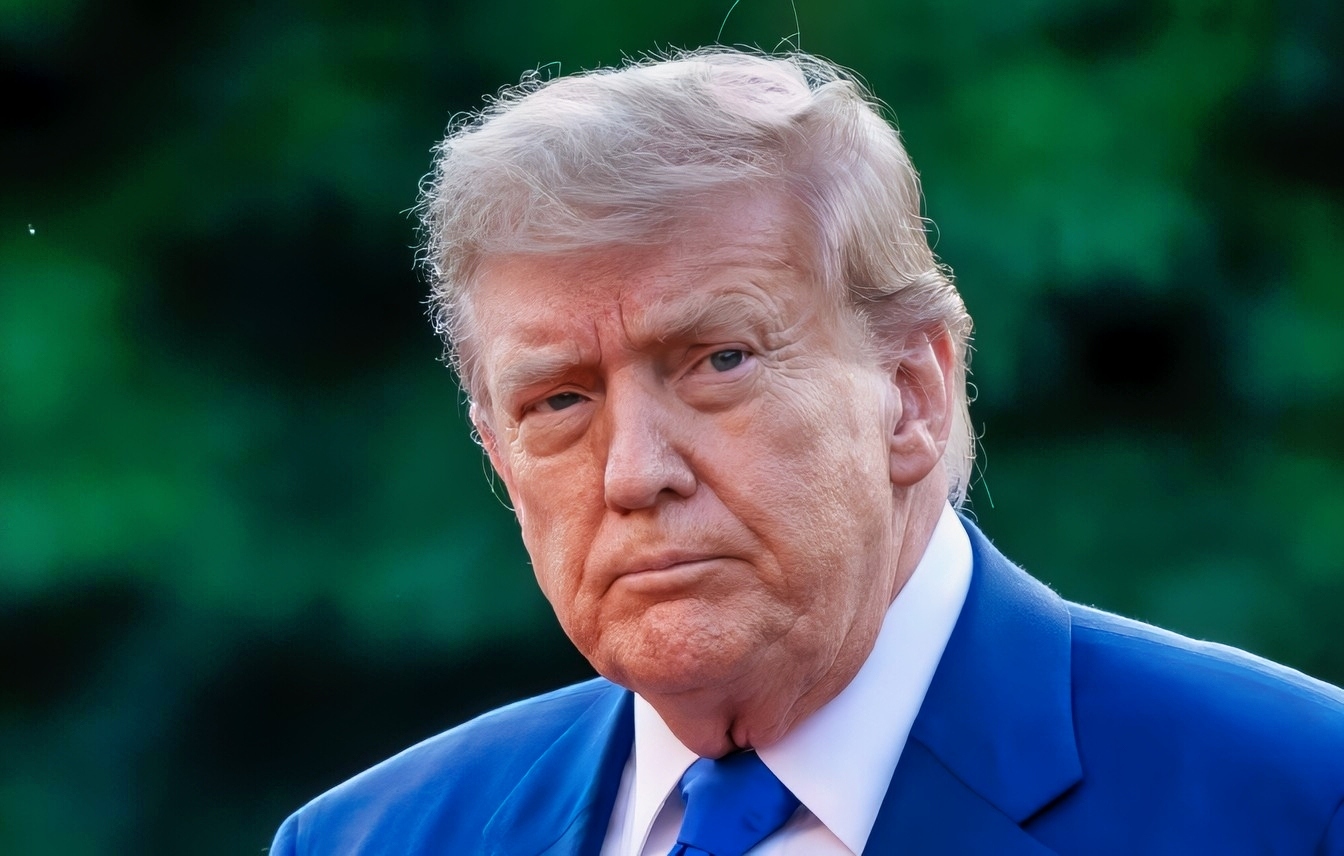
President Donald Trump once again threatened to wipe out Iran following reports that Tehran was considering a dirty bomb attack on American soil.
Reports have circulated in recent days about a potential threat of Iran dropping a dirty bomb on Washington, D.C. However, senior U.S. officials have stressed that no such imminent threat exists.

A B-2 Spirit makes a low pass flyover during the 2024 Warriors Over the Wasatch Open House and Air Show June 29, 2024, at Hill Air Force Base, Utah. The B-2 Spirit, the predecessor to the new B-21 Raider, has been the U.S. Air Force’s premiere stealth bomber for more than 20 years. (U.S. Air Force photo by Cynthia Griggs)
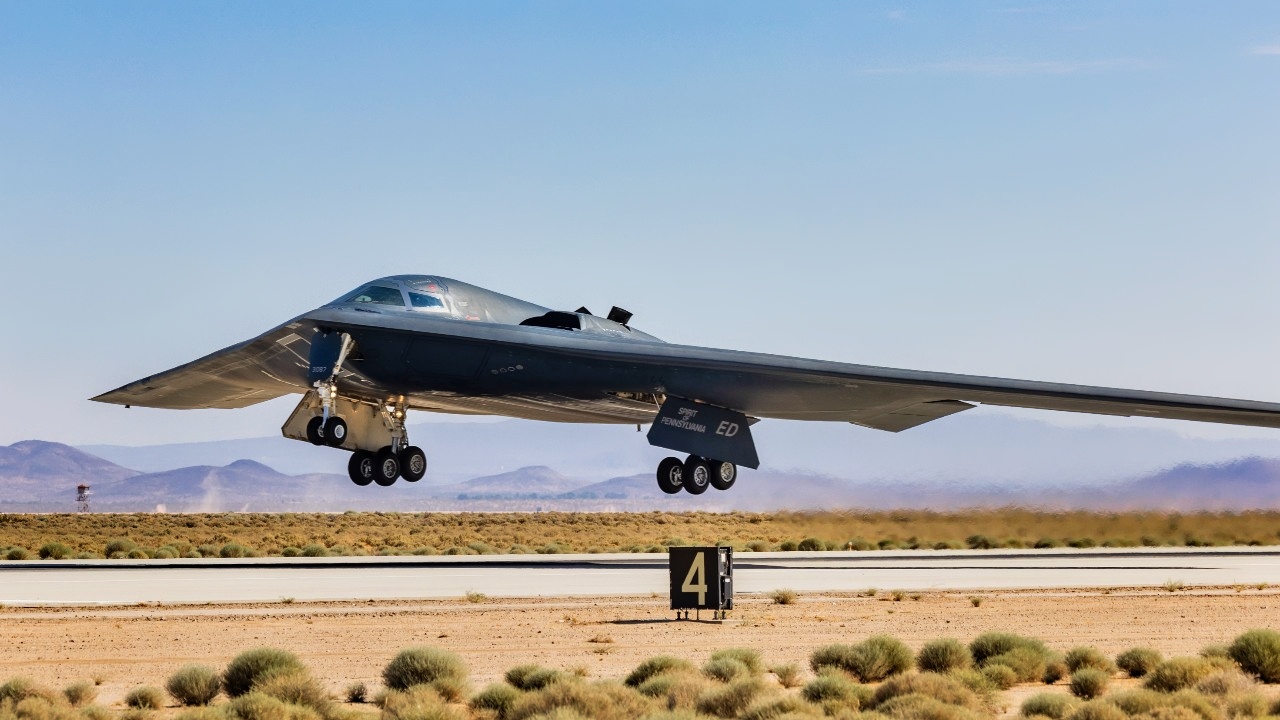
The Spirit of Pennsylvania B-2 Spirit assigned to the 419th Flight Test Squadron lands at Edwards Air Force Base, California, July 17. (Air Force photo by Lindsey Iniguez)
Such an attack, which would see radioactive material released alongside conventional explosives, would be the first in history.
Trump Says No Need for Panic
President Trump was in China for the Asia-Pacific Economic Cooperation summit ahead of a trilateral meeting with President Xi Jinping and Russian President Vladimir Putin when he was asked about the reported threat.
Pressed by Fox News correspondent Jacqui Heinrich on Wednesday, November 18, as to whether Washington residents should worry, Trump replied: “I don’t think so, no.”
He added: “I mean, look, if it does happen, we’ll wipe them out.”
Trump also alleged that Iran, which has denied the reported threat, was examining chemical and biological weapons, saying there was a “huge indication” that Tehran had been considering such options.
The previous day, the president said he took reports of a dirty bomb threat “very seriously” because Iran “happen to be crazy.”
“Well, if there is, they will pay a price the likes of which no country has ever paid before,” he added.
ABC News reported that sources had described intelligence chatter about potentially targeting U.S. officials with a dirty bomb in Washington.
Those sources cautioned that the credibility of the underlying intelligence had not been verified.
Officials Distinguish Elevated Threats from Imminent Attack
Director of National Intelligence Jay Clayton told lawmakers on Wednesday that Iranian threats against Americans at home and abroad had “substantially increased.”
“We remain committed to detecting, deterring, and combating the Iranian lethal plotting outside the United States and inside the United States,” he told a House Homeland Security Committee hearing. “These threats have substantially increased. Our women and men abroad, our women and men here in the United States, are under greater threat.”
Asked about the dirty bomb report, Clayton declined to comment directly, telling lawmakers: “There are a suite of threats that we refer to as, you know, civilian mass destruction threats or whatever you want, and they have been around for a long time.”
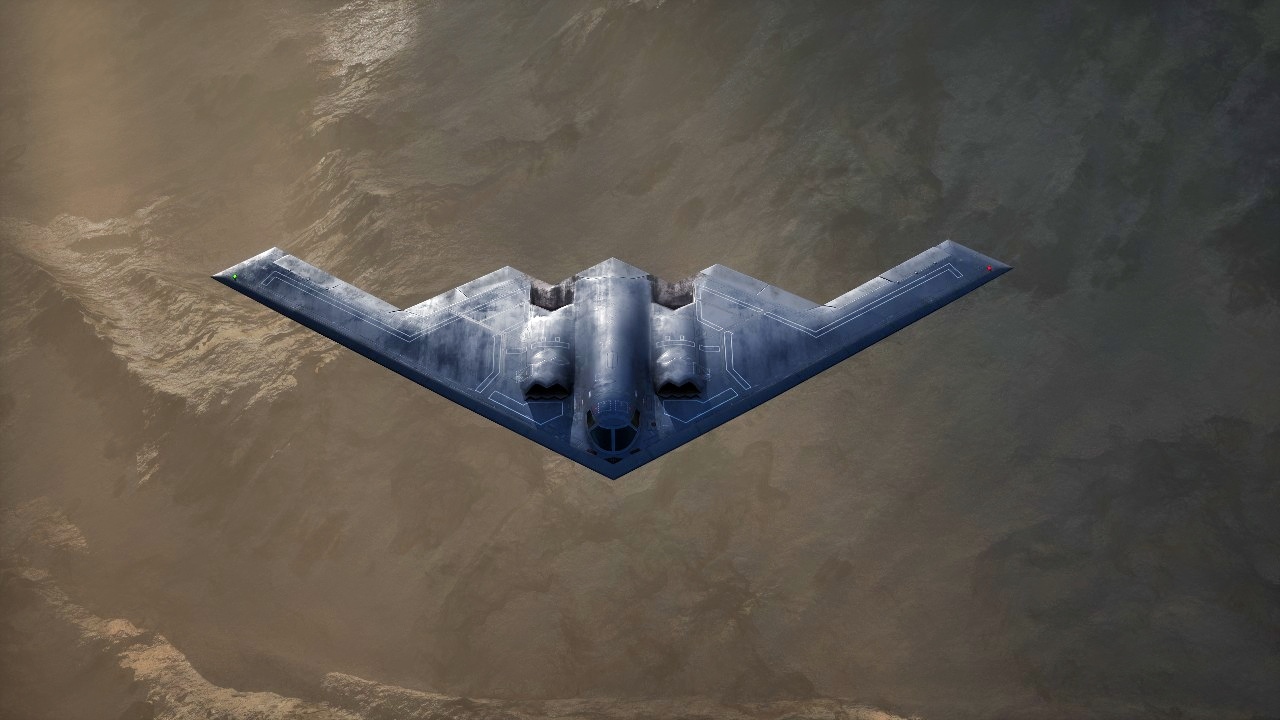
B-2 Stealth Bomber. Image Credit: Creative Commons.
Secretary of State Marco Rubio was also skeptical of an imminent threat to the U.S. capital, adding that the U.S. government was “always on the lookout for anything that’s a threat to the safety and security of the United States.”
The Differences Between Dirty and Nuclear Bombs
A dirty bomb differs from a nuclear weapon as it combines conventional explosives with radioactive material.
It disperses contamination through an explosion rather than producing the nuclear reaction associated with an atomic bomb.
The Nuclear Regulatory Commission says the conventional blast would generally pose a greater immediate danger than the radiation.
Contamination could nevertheless require costly cleanup, restrict access to property, and cause substantial disruption.
The Centers for Disease Control and Prevention similarly identifies the explosion as the principal danger. The scale of any radiological exposure would depend on the material, dispersal conditions, and people’s proximity to the incident.
Uncertainty Over the War’s Future
Although Washington has not resumed major combat operations against Iran after months of threats from President Trump, strikes in the Middle East are continuing.
Bahrain, home of the U.S. Fifth Fleet’s headquarters, has been struck four times in the past week by Iran, while Qeshm Island in the Strait of Hormuz was targeted by U.S. forces for the second time in a month on Tuesday.
Both Trump and Iranian Supreme Leader Mojtaba Khamenei have indicated different preferences for the war’s future direction.
The U.S. president signaled earlier this month that his administration intended to continue economic pressure on Iran, opting to avoid a renewed escalation or an unacceptable peace agreement.
Khamenei, who has not been seen publicly since the start of the conflict, has reportedly told senior officials to end the current status quo. “The supreme leader ordered us to end the no war, no peace situation,” said Iranian President Masoud Pezeshkian last week. “We can hold talks with dignity and bring the matter to an end with dignity.”
About the Author: Shay Bottomley
Shay Bottomley is a British journalist. He has written for the Western Standard, Business Insider, Maidenhead Advertiser, Slough Express, Windsor Express, Berkshire Live and Southend Echo.