

President Donald Trump is reportedly back to considering a new round of strikes against Iran, as Israeli Prime Minister Benjamin Netanyahu piles pressure on Washington to join a fresh bombing campaign against Tehran. Discussions are reportedly ongoing as American intelligence officials evaluate warnings offered by Jerusalem about Iran’s chemical and biological weapons programs and potential planned attacks against the United States.
The New York Times reported on November 18 that Netanyahu is pushing Trump to agree to a four-to-seven-day joint military campaign that targets Iranian military and civilian infrastructure.
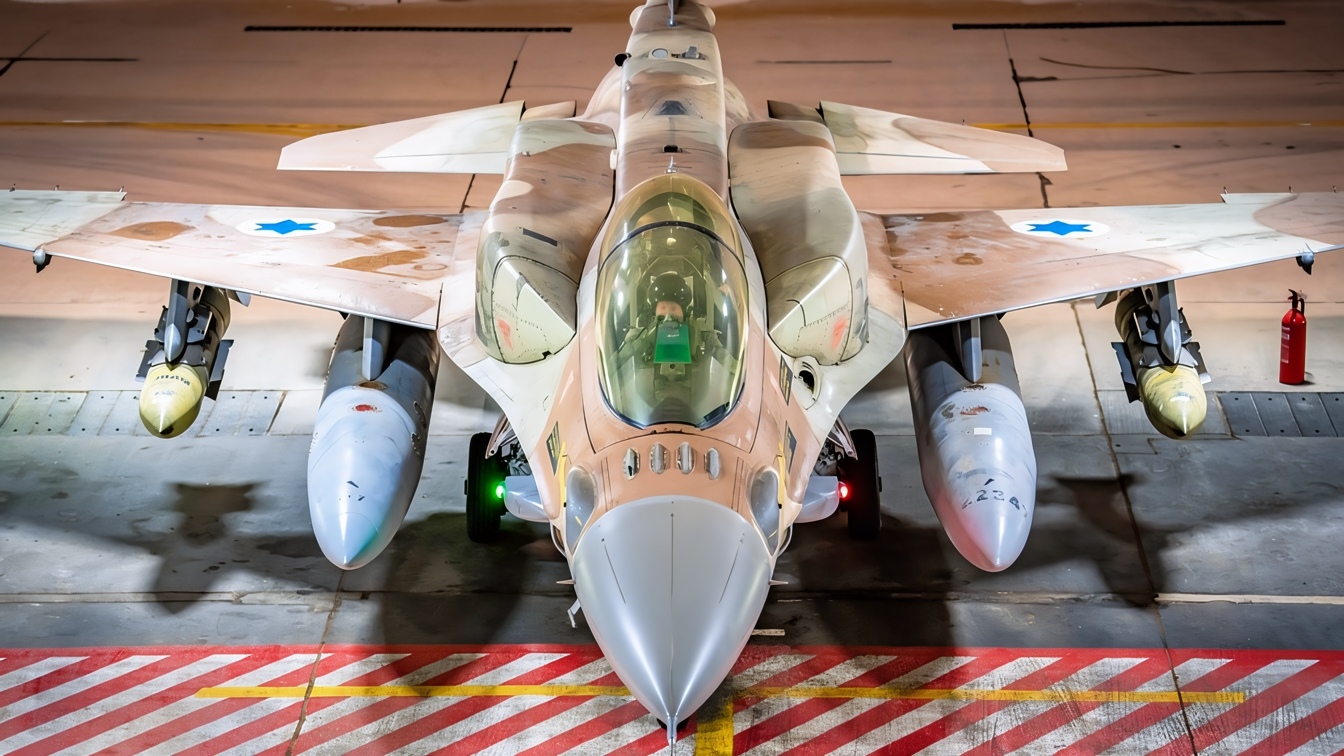
Israeli F-16I Fighter. Image Credit IDF

F-16I Sufa. Image Credit: Creative Commons.
The president has not approved the operations, but reports suggest that American military leaders have presented the president with several options for new strikes.
Axios reporting on November 19 also describes how the White House is examining what could happen in the wake of new strikes, specifically how Iran might retaliate against American allies.
Israel Urges Trump to Strike
Netanyahu has been pushing President Trump to return to large-scale military operations for months, with the two leaders reportedly discussing the possibility over a series of phone calls, including recently on November 5. According to Axios on November 13, in a report citing an unnamed U.S. official, President Trump resisted Netanyahu’s requests and said he preferred to maintain the naval blockade and campaign of economic pressure against Tehran.
Then, on November 9, President Trump again indicated that he would delay further strikes after meetings with Qatar’s prime minister and other allies in the region. The Qatari government has spent months mediating between Washington and Tehran.
But Netanyahu has persisted. On Friday, November 13, Mossad director Roman Gofman traveled to Washington, where he attended talks with CIA Director John Ratcliffe. He then traveled to Miami to meet with White House envoy Steve Witkoff.
Reports described that Gofman presented Israeli intelligence relating to Iran’s military capabilities and personally advocated for another joint U.S.-Israeli offensive.
Former Israeli minister Ron Dermer, who is a close ally of Netanyahu, also traveled to the United States and lobbied administration officials to resume strikes against Tehran.
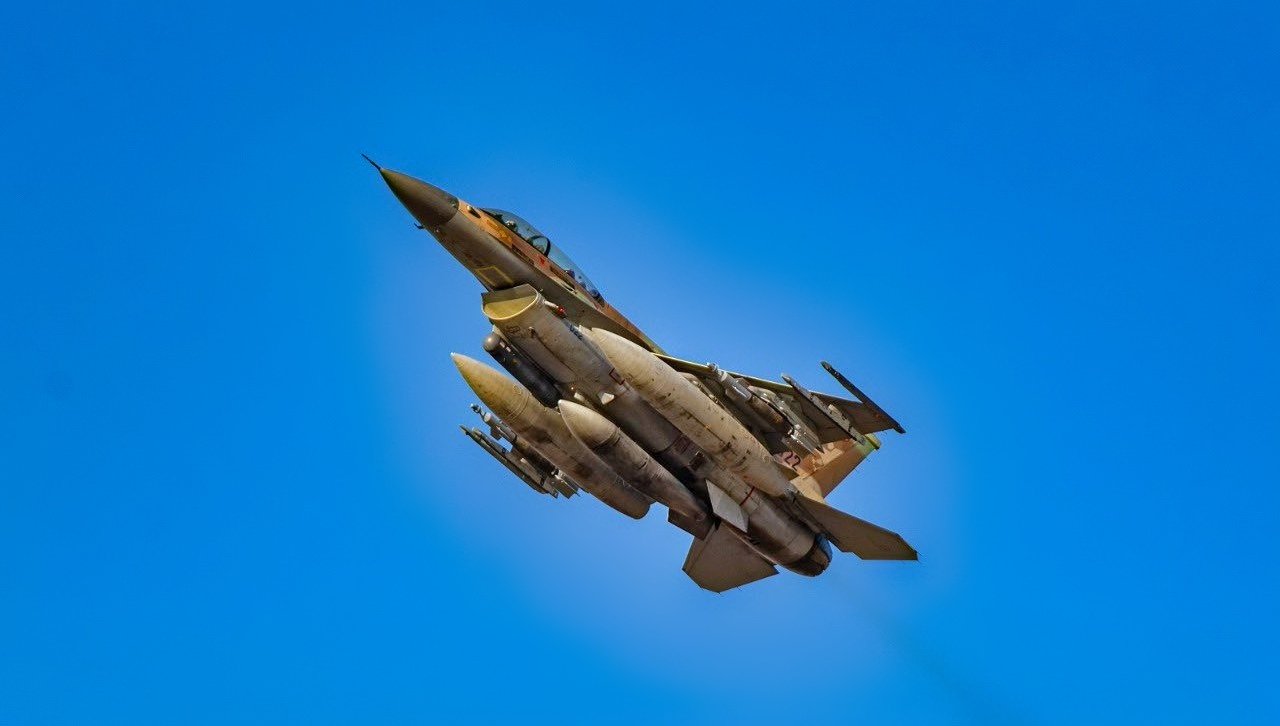
F-16I from Israeli Air Force. Image Credit: Creative Commons.

F-16I Sufa Fighter. Image Credit: Creative Commons.
On November 19, Gofman also presented intelligence that suggested that Iran has grown its chemical weapons research operations and is conducting tests.
A source told Axios that Gofman argued that delaying military action would make future operations more difficult.
President Donald Trump has since publicly suggested that Iran may be considering launching a chemical or biological weapon attack on the United States.
The Pentagon Prepares
While Trump weighs his options, the Pentagon has been preparing for the possibility of a return to military strikes.
Defense Secretary Pete Hegseth and Chairman of the Joint Chiefs of Staff Gen. Dan Caine have reportedly presented President Trump with several military options developed by U.S. Central Command commander Adm. Brad Cooper, and the plans are said to include strikes against Iranian missile and drone factories, command centers, missile sites, and energy infrastructure.
The Israelis are also reportedly proposing renewed strikes on nuclear facilities and power plants.
The preparations have included a significant deployment of U.S. naval and air assets to the Middle East. On Monday, November 16, the USS Theodore Roosevelt arrived in the region, temporarily bringing the number of American aircraft carriers operating in the Middle East to three.

F-15I Fighter from Israel. Image Credit: Creative Commons.
Some saw the arrival of a third aircraft carrier as an indication that new attacks were imminent. Still, the USS George Washington soon departed for the Pacific, leaving two carriers in the Middle East supporting operations against Iran.
American B-1 and B-2 bombers based in the United States have also been placed on 96-hour notice for potential operations against Iran.
Strike Next Year?
While many speculated that President Trump was preparing to launch strikes against Iran immediately after the November 3 midterm elections, President Trump has suggested that they could arrive as late as January 2027.
Speaking to Fox News during his visit to China this week, President Trump said that he would “see what happens” after January 1.
“We’re going to have a new year coming up, and we’ll see what happens after January 1. But they’ve been nasty,” he told Fox News.
The comments come as Iran continues its strike campaign against commercial shipping operations in the Strait of Hormuz and as the United States retaliates.
Iran also launched attacks against American military installations in the Persian Gulf, targeting Patriot air defense systems and missile launch facilities at the Ali Al Salem Air Base in Kuwait. Bahrain also reported intercepting Iranian attacks in recent days.
U.S. forces have responded to ongoing Iranian attacks with a limited, defensive airstrike against an Iranian missile installation on the strategically important Qeshm Island.
Netanyahu’s office continues to defend Israel’s position, telling the New York Times on November 18 that he has consistently acted to “safeguard” Israel’s security.
About the Author: Jack Buckby
Jack Buckby is a British researcher and analyst specializing in defense and national security, based in New York. His work focuses on military capability, procurement, and strategic competition, and he produces and edits analysis for policy and defense audiences. He brings extensive editorial experience, with a career output spanning over 1,000 articles at 19FortyFive and National Security Journal, and has previously authored books and papers on extremism and deradicalization.


