

Despite a drop in global oil prices, Middle Eastern crude oil exports have continued to edge downward for the third week in a row.
This has prompted questions as to whether energy markets underestimated the risk of a resumption of hostilities between Iran and the United States.
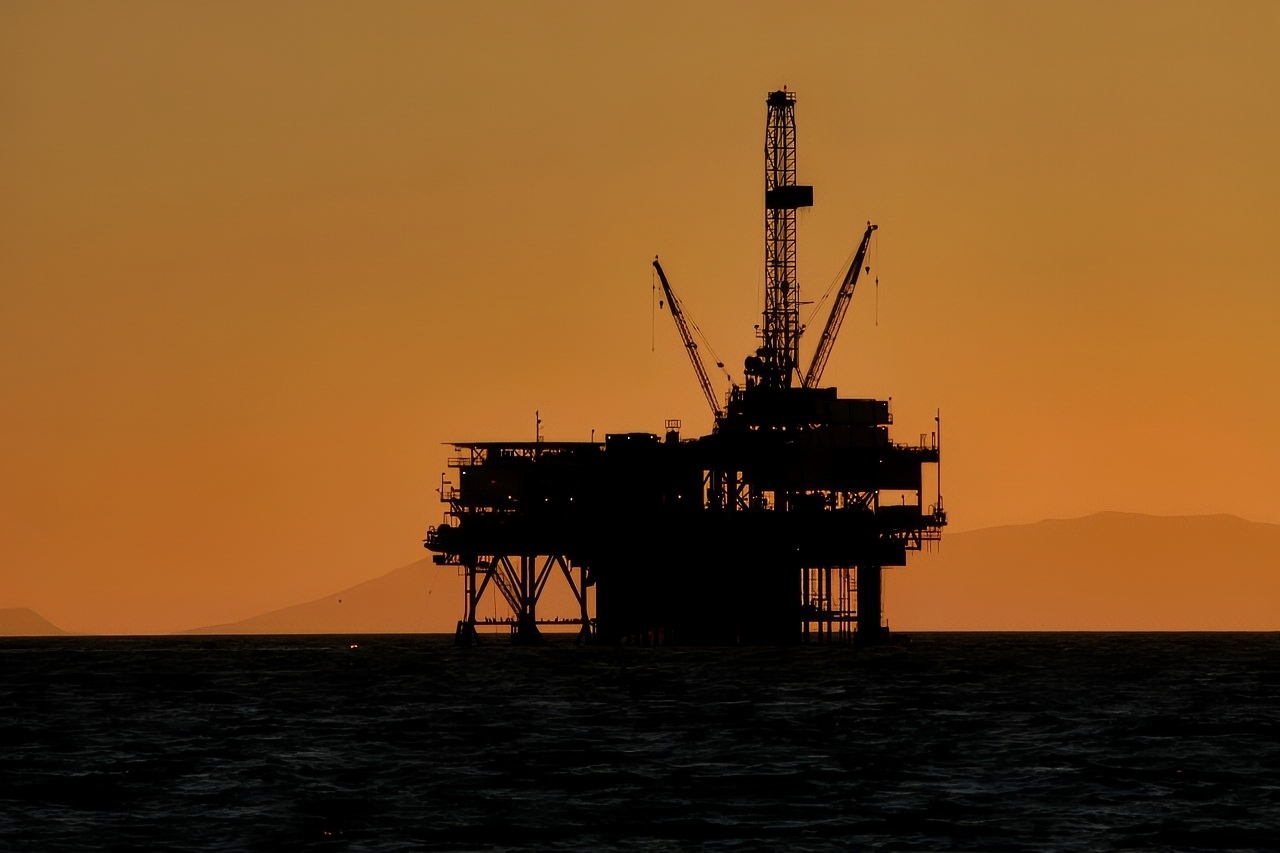
Oil Platform. Image Credit: Creative Commons.

Generic Oil Tanker Image. Image Credit: Creative Commons.
Iran’s Islamic Revolutionary Guard Corps (IRGC) says, despite U.S. security support, three oil tankers have caught on fire following mine hits in the Strait of Hormuz.
Washington added new sanctions against key parts of Tehran’s global financial networks on Monday, November 23. Efforts to revive peace talks to try to end the almost nine-month-long war are continuing.
Middle East Oil Exports Slump
During the week starting November 16, Middle Eastern crude oil exports dropped to 13.96 million barrels per day (bpd), down from 20.29 million in the week beginning October 26, according to Kpler shipping data quoted by Reuters.
Average exports had been running at 18.56 million bpd in the three months before war broke out on February 28.
While there has been a downward trend, Brent crude futures have now retreated by some 24 percent from a six-month high of $118 per barrel on October 30.
Reuters commodities columnist Clyde Russell wrote on Tuesday that “stalemate doesn’t equal stasis.”
Asian refiners – which receive around 80 percent of Middle Eastern crude exports – are probably still benefiting from a rebound in Middle East oil exports seen in September and October; prolonged export problems might start to affect supplies later.
ANZ senior commodity strategist Daniel Hynes warned in a client note cited by Reuters on Tuesday that “logistics remain constrained and inventory buffers are thin.”
Iran Claims Tankers Hit Mines
Iran’s IRGC Navy said in a Telegram post on Monday that three tankers had been “engulfed in flames” after hitting mines while trying to pass through the Strait of Hormuz.
The statement, reported by the Associated Press news agency on Tuesday, added that the ships were operating “in violation of regulations.”
Neither the alleged mine strikes nor the U.S. military escorts have been independently verified.
Furthermore, the United Kingdom Maritime Trade Operations (UKMTO) said on November 21 that a tanker had also been attacked.
It said the tanker, which was heading out to sea, was hit by an “unidentified projectile” and damaged as a result.
Data released by the Joint Maritime Information Center recorded attacks on 12 vessels so far this month. This follows 17 recorded strikes on vessels in October.
Washington Hits Iran’s Oil Revenue
On Monday, the U.S. Treasury Department added more than two dozen Iranian financial entities and individuals to its sanctions list as part of its Operation Economic Outcast.
“Iran’s economy is underwater, and its leaders are panicking,” Treasury Secretary Scott Bessent said in the November 23 announcement.
He also framed Iran’s parallel banking system as the “last financial lifeline of a bankrupt regime.”
Dubai-based OGA Global General Trading was also targeted. The Treasury said that this firm had handled millions of dollars for the National Iranian Tanker Company.
In addition, the U.S. Treasury noted on Monday that U.S. federal law enforcement officers had identified approximately $14.7 billion in transactions, potentially connected to Iran’s parallel banking system, between January 2025 and August 2026.
Bessent added that financial institutions were frequently the “first line of defense” against Iranian regime-linked money entering the U.S. economy.
U.S.-Iran Talks Deadlocked
Vice President JD Vance and Secretary of State Marco Rubio each met Qatari Prime Minister Sheik Mohammed bin Abdulrahman Al Thani in Washington on Monday, the Associated Press reported.
Qatar has been mediating in hopes of securing a relaxation of Hormuz shipping controls in return for some easing of sanctions against Iran.
President Donald Trump told a White House news conference on November 20 that “we want to make a real deal, not a fake deal.”
But Iranian Parliament Speaker and lead negotiator Mohammad Bagher Qalibaf said on Tuesday, addressing an open session of the Iranian Parliament, that talks would not recommence until Iran’s seven requirements had been fulfilled.
These include the suspension of sanctions, lifting of the U.S. naval blockade of Iranian ports, and repatriation of Iranian frozen assets, Iranian media have said.
Experts Forecast Further Export Issues
The U.S. Energy Information Administration (EIA) said on November 19 that oil exports from key Middle East shipping chokepoints rose 19 percent in the third quarter.
But it said that global oil inventories had fallen by 400 million barrels by the end of October, from where they stood at the start of April.
The EIA added in its November Short-Term Energy Outlook that Middle Eastern crude flows would “remain susceptible to disruption,” potentially generating “more volatility in short-term price movements” than its monthly reports indicate.
It also forecasts that Brent crude oil will average $99 per barrel in December and $86 in 2027.
About the Author: Georgia Gilholy
Georgia Gilholy is a journalist based in the United Kingdom who has been published in Newsweek, The Times of Israel, and the Spectator. Gilholy writes about international politics, culture, and education.


