

Former Republican Rep. Marjorie Taylor Greene has launched an extraordinary attack on President Donald Trump and his administration, calling for the president and Defense Secretary Pete Hegseth to be ‘locked up’ over the U.S. Army’s plans to destroy a stockpile of unstable explosives in Iowa.
In recent comments, Greene said that the Trump administration was prioritizing military operations over the safety of American citizens, siding with concerned local people over the potential for toxic lead dust to be spread across residential areas and agricultural land.

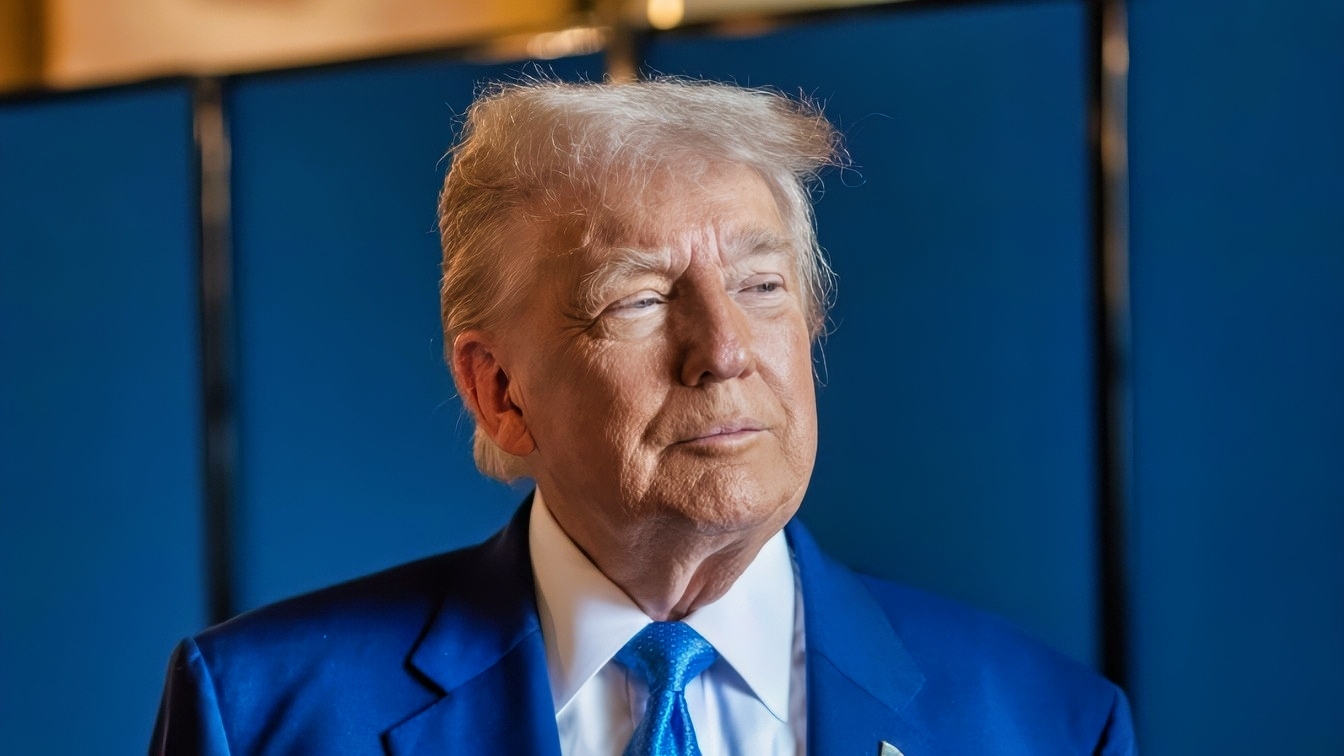
President Donald J. Trump attends the Memphis Safe Task Force roundtable on public safety at Tennessee Air National Guard Base, Tennessee on Monday, March 23, 2026. (Official White House photo by Molly Riley)
President Donald Trump speaks with Vice President JD Vance and Defense Secretary Pete Hegseth before the Memorial Day ceremony at Arlington National Cemetery, Monday, May 26, 2025, in Arlington, Virginia. (Official White House Photo by Daniel Torok)
The controlled detonation took place Wednesday, November 25, at the Iowa Army Ammunition Plant near Middletown. Video footage shared by local media outlets shows the moment that the weapons were detonated, with plumes of smoke seen rising into the air.
The Army was permitted to proceed after a federal appeals court rejected an emergency motion filed by environmental groups seeking to block it.
On Wednesday morning, reports revealed Greene’s scathing attack on the Trump administration and plans by federal health authorities to activate an emergency response to help Iowa deal with potential contamination.
Greene Says They Should Be Locked Up
Writing on social media platform X yesterday, Greene responded to a report by MS NOW describing the potential for hundreds of Iowa farms to be affected by lead contamination after the operation.
“DONALD TRUMP @realDonaldTrump IS POTUS AND COMMANDER-IN-CHIEF AND PETE HEGSETH IS SECRETARY OF WAR! THEY WILL SPEND BILLIONS TO BLOW UP CHILDREN IN IRAN AND BUT WILL NOT SPEND A PENNY OF YOUR TAX DOLLARS TO STOP A DIRTY BOMB IN IOWA! I HOPE AMERICANS SUE THEM AND LOCK THEM UP!” Greene wrote.
In a follow-up post, Greene shared a screenshot of an emergency alert that she said Iowa residents received on their smartphones.
The alert contained a final reminder from FEMA of a “Controlled detonation at Iowa Army Ammunition Plant (Middletown) today at 9 am.” The warning added that “EVACUATION IS NO LONGER SAFE OR ADVISED!” with all residents within 20 miles advised to stay indoors with the windows closed to block lead dust.
“People in Iowa are getting this alert on their cell phones because the Army is detonating 5 tons of lead azide, a neurotoxin, and nearly every mainstream TV news channel is not even talking about it!” she said.
The former congresswoman is not the only conservative figure to criticize the Trump administration over the issue, either. Meghan McCain, the daughter of the late Senator John McCain, argued during an episode of her podcast that the handling of the situation was indicative of why Republicans performed so poorly in the midterm elections.
McCain also said she hoped Democrats would intervene and stop the plans.
Why the Army Is Doing It
The U.S. Army caused controversy when plans to destroy approximately 10,000 pounds of deteriorating explosive material stored at the Iowa Army Ammunition Plant were revealed.
The facility is located near Middletown in southeastern Iowa.
The material in question, known as lead azide, is a chemical compound used in the manufacture of military munitions.
Residents quickly expressed concern that destroying the material could release toxic lead particles into the atmosphere, potentially contaminating residential properties and agricultural land.
The stockpile was consolidated in the Iowa facility in 2009 after the material was collected from military installations across the United States.
The Army retained the explosives in case they were needed.
However, during an inspection conducted in March of this year, the chemical compound was found to have deteriorated during storage, making it unstable.

President Donald J. Trump delivers remarks at the UP.Summit technology showcase at NASA’s Kennedy Space Center at Cape Canaveral, Florida, Friday, November 6, 2026. (Official White House Photo by Patrick Witty)
The Army determined that transporting the material to another location for disposal would pose an unacceptable risk of an accidental explosion, meaning it could only be detonated on site.
The Army concluded that a controlled detonation at the military installation was the safest viable option, even if it carried environmental consequences.
Aware of the controversy surrounding the decision, the military implemented a series of measures to limit the amount of lead released into the atmosphere.
However, residents were still advised to relocate during the blast or remain indoors temporarily.
Speaking at a Tuesday press conference, U.S. Army Sustainment Command commanding general Maj. Gen. Eric Shirley defended the decision to proceed and warned that leaving the deteriorating explosives in storage would pose a major security risk.
Disposal Complete
Local news outlet KWQC confirmed that the Army detonated the material at 9 am local time on Wednesday.
Attention will now turn to the potential environmental consequences of the decision, with Environmental Protection Agency personnel reportedly deployed to the area to test soil, water, and air samples.
Displaced residents must await confirmation from federal authorities that it is safe to return home, while those who chose not to leave have been advised to stay indoors for now.
About the Author: Jack Buckby
Jack Buckby is a British researcher and analyst specializing in defense and national security, based in New York. His work focuses on military capability, procurement, and strategic competition, and he produces and edits analysis for policy and defense audiences. He brings extensive editorial experience, with a career output spanning over 1,000 articles at National Security Journal, and has previously authored books and papers on extremism and deradicalization.


