

Key Points and Summary – China’s strategic bomber force has evolved from relying on upgraded Soviet-era designs to posing a direct threat to the United States.
-Its large fleet of modernized H-6 bombers can now launch long-range cruise missiles and hypersonic anti-ship missiles, threatening U.S. naval forces in the Pacific.
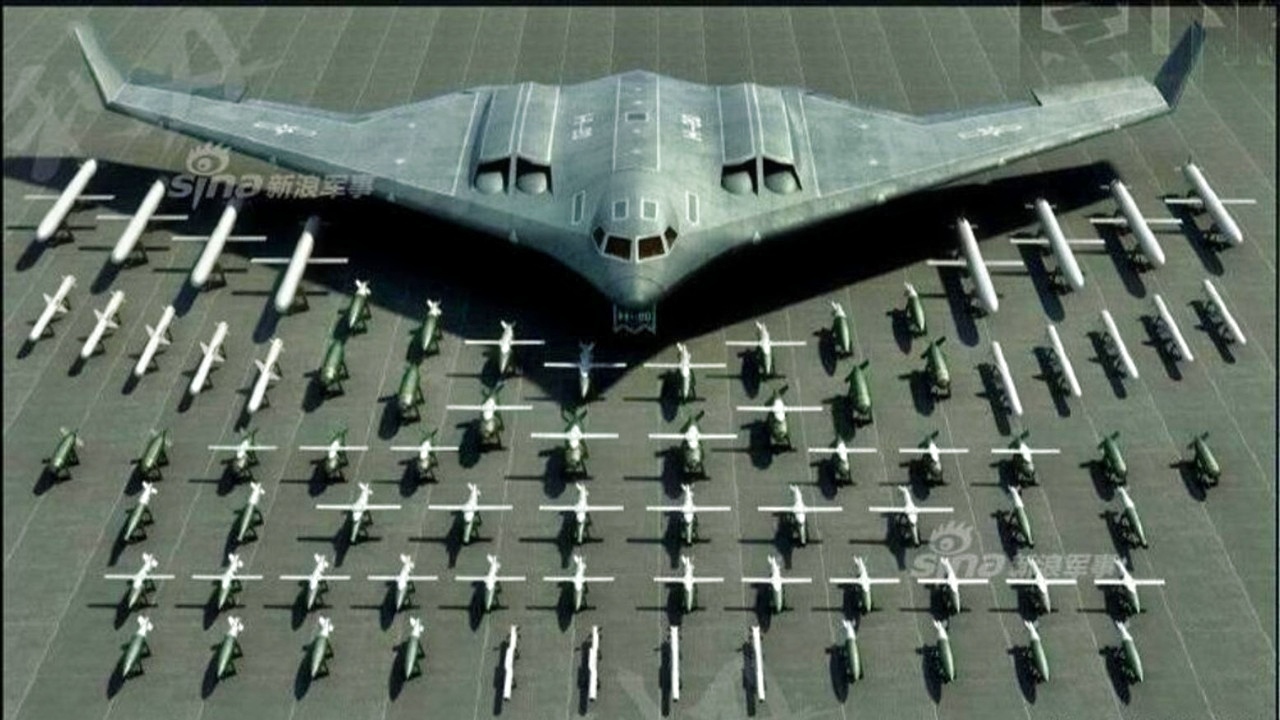
-More significantly, China is developing the H-20, an intercontinental stealth bomber designed to rival the American B-2.
-The H-20 will complete China’s nuclear triad and give it the ability to strike targets across the ocean, including Guam, Hawaii, and even parts of the continental U.S.
China’s Bomber Fleet Wants Stealth Bombers
Over the past decades, China’s aerospace industry has grown significantly more advanced. China has made significant progress with its fleet of advanced fighter jets, featuring models such as the J-20, J-35, and the upcoming J-36.
The PLAAF’s strategic bomber forces have also undergone their fair share of modernization. Currently, China relies primarily on domestically upgraded Soviet designs; however, it has recently made significant progress in developing its first stealth bomber.
This makes the CCP a significant threat to the United States and its regional allies.
The H-6: China’s Bomber of Choice
The H-6 bomber currently forms the backbone of China’s strategic bomber forces. Originally based on the Soviet-era Tu-16, the H-6 has been continuously upgraded to meet modern combat requirements.
The H-6K variant, introduced in the early 2000s, features more efficient D-30KP turbofan engines, improved avionics, and a redesigned airframe. These upgrades have significantly extended its range and payload capacity, allowing it to carry advanced air-launched cruise missiles such as the CJ-10A, which can strike targets over 1,500 kilometers away. Additionally, the H-6K can be armed with anti-ship missiles like the YJ-12 and YJ-21, some of which are hypersonic and pose a serious threat to U.S. naval forces.
The H-6N is the latest and most advanced variant. It includes aerial refueling capability, which extends its operational range, and is designed to carry air-launched ballistic missiles, potentially including nuclear-capable types.
This variant is also believed to be capable of deploying hypersonic glide vehicles, further enhancing its strategic reach and survivability against missile defenses. As of 2025, China operates more than 230 H-6 bombers across its air force and navy, including these modern variants. This gives it a formidable regional strike capability that can target Taiwan, Japan, and U.S. bases such as Guam.
Development of the H-20
The H-20 is the latest and most advanced bomber for the PLAAF, which is expected to enter service within the next few years. The H-20 is designed to rival the U.S. B-2 Spirit and B-21 Raider, featuring a flying-wing design that minimizes radar cross-section and enhances stealth. It is projected to have an intercontinental range of 8,500 to 10,000 kilometers and a payload capacity between 10 and 40 tons.
This would allow it to carry a wide array of conventional and nuclear weapons, including long-range cruise missiles like the CJ-20, which can reach targets over 2,000 kilometers away.
The H-20’s development marks a significant shift in China’s strategic doctrine. For decades, China relied primarily on land-based missiles and submarines for nuclear deterrence. The integration of bombers like the H-6N and H-20 into its nuclear triad reflects a broader effort to diversify and strengthen its deterrent posture.
Pentagon analysts estimate that China could field at least 50 H-20 bombers by 2035, each capable of carrying up to 16 weapons. This would enable China to target U.S. territories such as Guam, Hawaii, and even parts of the continental United States, significantly expanding its strategic reach.
Why China’s Bombers Are a Threat to the U.S.
China is currently a world leader in hypersonic missile technology, which it has been working hard to integrate with its bomber forces. Missiles like the YJ-21, which can reach speeds of Mach 6, pose a serious challenge to existing U.S. missile defense systems.
When launched from platforms like the H-6K, these weapons can threaten U.S. aircraft carriers and forward-deployed forces with little warning. The combination of long-range bombers and hypersonic missiles enhances China’s ability to conduct precision strikes and complicates U.S. strategic planning.
However, China’s bomber force still lags behind the U.S. and possibly even Russia in terms of its technology. Bombers like the B-1 and B-2 far surpass China in terms of avionics, payload capacity, and range. However, China’s ability to mass-produce aircraft and leverage its civil-military fusion strategy could allow it to field a larger bomber fleet more rapidly. While the U.S. plans to build 7 to 15 B-21s per year, China could potentially produce 50 H-20s by 2035, based on its track record with the H-6 and commercial aircraft production.
China’s bomber fleet is increasingly integrated into a multi-domain warfare strategy that includes cyber, space, and missile forces. This holistic approach enhances the strategic value of its bombers beyond traditional roles. For example, bombers can be used to deliver electronic warfare payloads, conduct reconnaissance, and serve as command-and-control nodes in a networked battlespace. This integration makes them more versatile and survivable in modern combat environments.
Where the PLAAF Still Lags Behind
Despite these advancements, China’s bomber fleet still faces several limitations. Engine development remains a significant challenge, particularly for stealth-compatible engines that can support long-range missions. The actual radar cross-section and stealth performance of the H-20 are also uncertain and may not match that of U.S. stealth bombers. Additionally, the PLAAF lacks the combat-tested bomber doctrine and global deployment experience of the U.S. or even the Russian Air Force, which could limit its effectiveness in high-intensity conflict scenarios.
Nevertheless, China’s fleet of strategic bombers poses a significant threat to the U.S. and its allies in the region. Regionally, the H-6 variants provide credible strike options against Taiwan, Japan, and U.S. bases in the Pacific.
The H-20 enables intercontinental nuclear and conventional strikes, altering the balance of power and forcing the U.S. to reconsider its force posture and deterrence strategies.
Technologically, China’s integration of hypersonic weapons, dual-use missiles, and stealth platforms complicates U.S. defense planning and increases the risk of miscalculation in a crisis.
About the Author:
Isaac Seitz, a Defense Columnist, graduated from Patrick Henry College’s Strategic Intelligence and National Security program. He has also studied Russian at Middlebury Language Schools and has worked as an intelligence Analyst in the private sector.
Military Affairs
China’s Stealth Air Force Has 1 Mission


