


Summary and Key Points: The People’s Republic of China’s Chengdu J-20 fifth-generation stealth fighter may outrange the United States Air Force’s F-22 Raptor and F-35 Lightning II AESA radar systems through superior nose radome integration, according to Air University China Aerospace Studies Institute analysis.
-The J-20’s PL-15 air-to-air missile may also outrange American AIM-120D and AIM-9X air-to-air weapons. But raw technical advantages may matter less than the OODA Loop framework developed by the late Air Force Colonel John Boyd — the pilot who completes Observation, Orientation, Decision, and Action cycles fastest wins air-to-air engagements.

China J-20 Fighter 2025. Image Credit: Weibo.

J-20 Fighter In All Yellow. Image Credit: Creative Commons.
-The F-22 Raptor’s unique supercruise capability (Mach 2.25 sustained without afterburners) and “aerial quarterback” data exchange with 4th and 5th-generation warplanes may provide the decisive U.S. advantage.
J-20 vs. America’s Stealth Fighters
Endless volumes of speculative research continue to be written about the technological attributes and performance parameters regarding exactly how the U.S. F-22 and F-35 would compare to China’s J-20 in aerial combat. The dearth of available technical detail on the J-20 suggests that much of the open-source analysis raises more unanswered questions than it provides substantive metrics or reliable answers.
Unanswered questions about J-20 weapons, radar, mission systems, AI-enabled computing, and targeting could overshadow or cast doubt on the accuracy of any preliminary technical comparison between the jets.
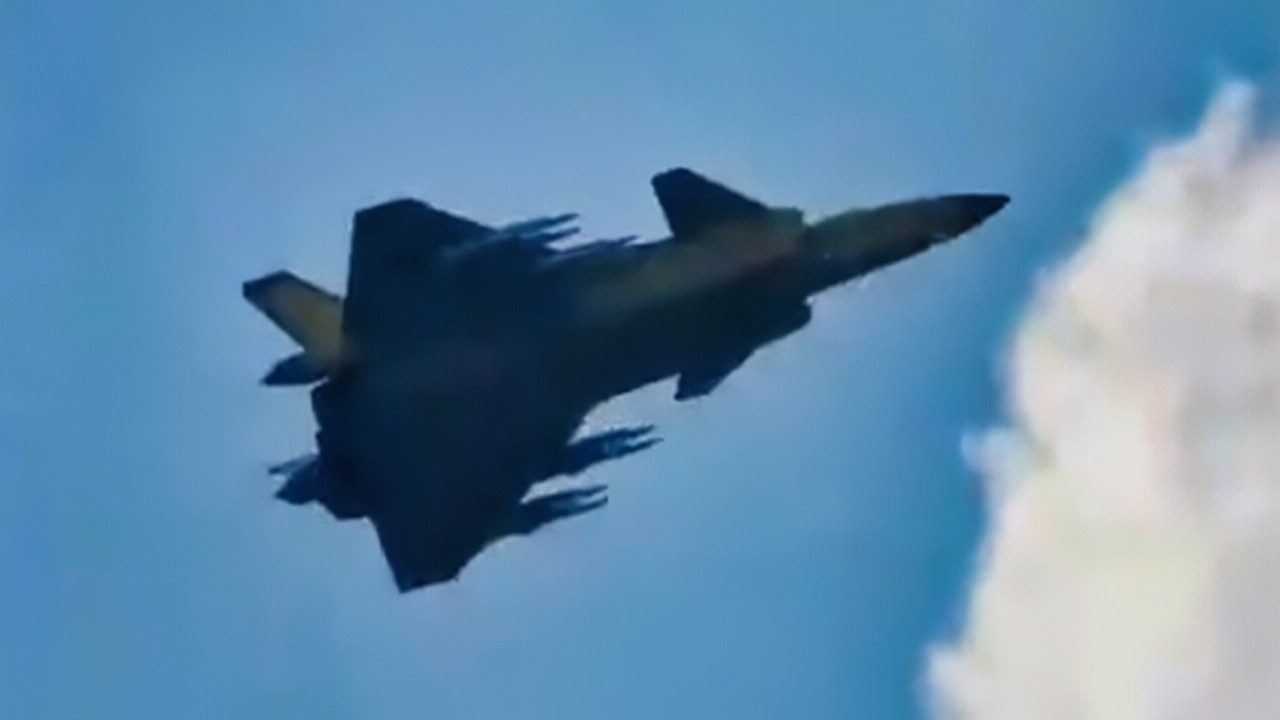
China J-20 Fighter in Beast Mode. Image Credit: X Screenshot.
Pilot performance, however, is much less ambiguous or mysterious, meaning any technological differences between the J-20 and its U.S. 5th-Generation rivals could ultimately prove much less defining than simple pilot capability.
The true margin of difference between victory and defeat may depend less on technical performance parameters and more on the pilot’s ability to maneuver into position, make decisions, and employ weapons effectively under pressure. The ultimate “metric” when it comes to 5th-generation air superiority in a close-in fight may be found in less quantifiable human variables.
OODA Loop
Much of this can be understood in terms of the famous OODA Loop concept, developed years ago by former Air Force fighter pilot and theorist Colonel John Boyd.
The idea of the Observation, Orientation, Decision, Action (OODA) decision-making loop suggests that the human pilot who completes this process more quickly and accurately will prevail in a dogfight.
The intent for a pilot would be to get in front of, ahead of or “inside” of an enemy’s OODA Loop decision cycle, complete the process more quickly and therefore be in position to destroy the opposing jet “before” getting hit or becoming vulnerable.
A pilot who can use sensor data, targeting specifics, vectoring ability, and angle of attack to maneuver into a lethal strike position more quickly is likely to prevail. Completing the OODA Loop relies on distinctly “human” decision-making capability, suggesting that a pilot’s prowess or “ability” is likely to prove far more decisive in determining the outcome than minor technical differences between the airplanes.
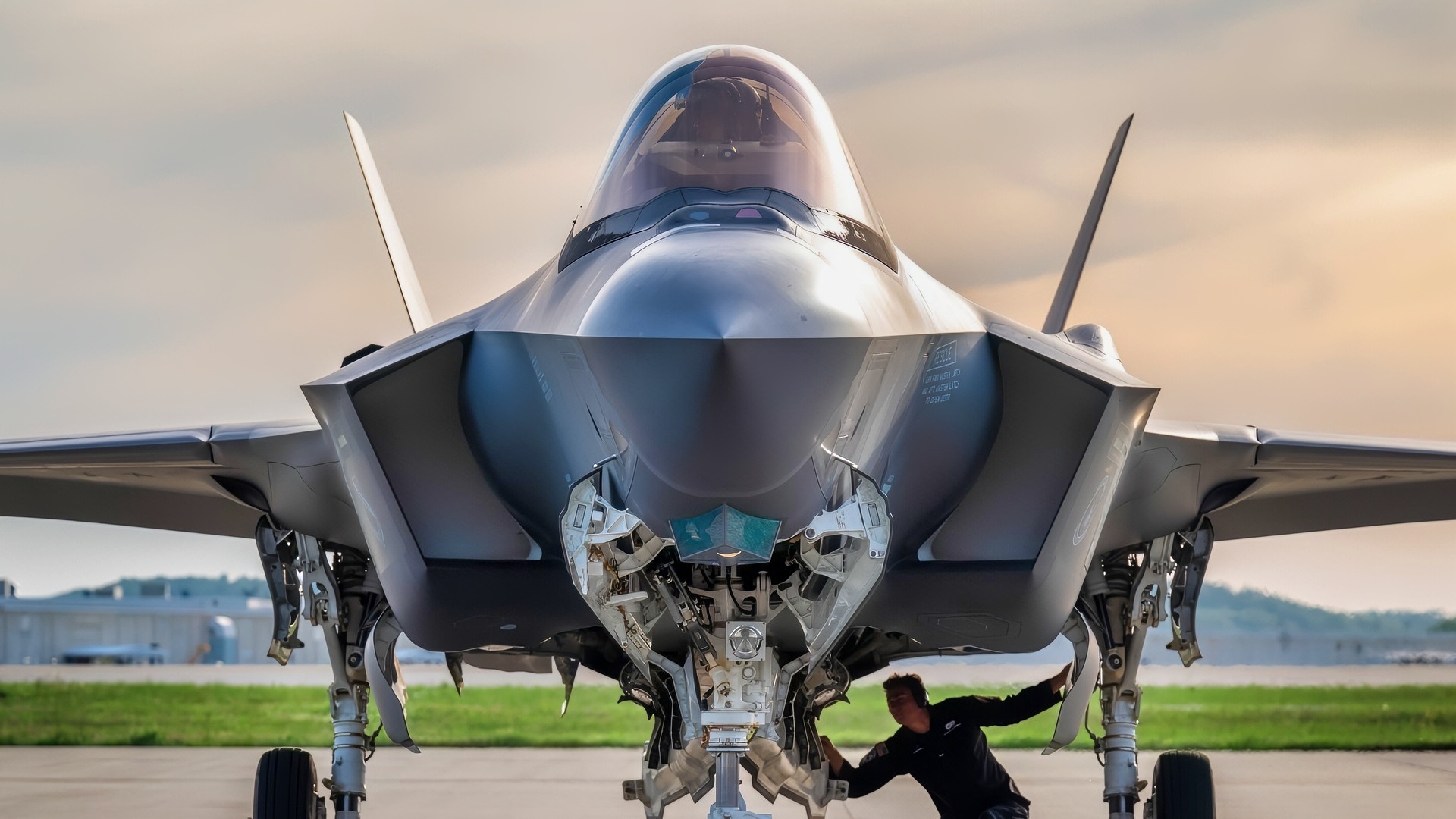
An aircraft from the U.S. Air Force F-35 Lightning II Demonstration Team arrives at the Kentucky Air National Guard Base in Louisville, Ky., April 19, 2023, in advance of the Thunder Over Louisville air show. The annual event, to be held along the banks of the Ohio River on April 22, will feature more than 20 military and civilian aircraft. (U.S. Air National Guard photo by Dale Greer)
This is not to suggest that sensor range and fidelity, radar sensitivity, and targeting precision are not equally critical in determining an outcome, but rather to posit that these factors alone are woefully insufficient to determine the ultimate result of an air-to-air engagement.
Alongside these hugely significant yet less “calculable” human variables, pure technical capabilities are also of massive importance as well.
Victory in air war would doubtless result from an optimal blend or balance between human and technological factors.
J-20 vs. F-22 & F-35 “Sensing”
Apart from the J-20s’ visible external configuration and many Chinese press reports about its domestically built, improved engine and fast-improving performance, there may be little-known information about the PLA aircraft’s mission systems, computing, sensors, or weapons interfaces.
There is research from the National Defense University suggesting that the J-20’s larger “nose radome” AESA radar may be built to outrange the detection capabilities of an F-35 or F-22 AESA, yet the J-20’s sensor fidelity, targeting precision, computing, and fire-control integration would determine whether its AESA is ultimately more effective.
A research essay called “A Look at the J-20 AESA Radar” from Air University’s China Aerospace Studies Institute raises the question of whether “packaging” technologies used in integrating large numbers of transmit/receive nodes into the J-20 AESA radar give the jet a detection advantage.
Detection is merely one factor in deciding air-combat outcome, as it may prove less significant than agility and the ability to vector and maneuver into an advantageous position. The Chinese J-20 certainly appears slightly larger than an F-22 or F-35 stealth jet fighter, something which might suggest it is less “agile” than its U.S. rivals.
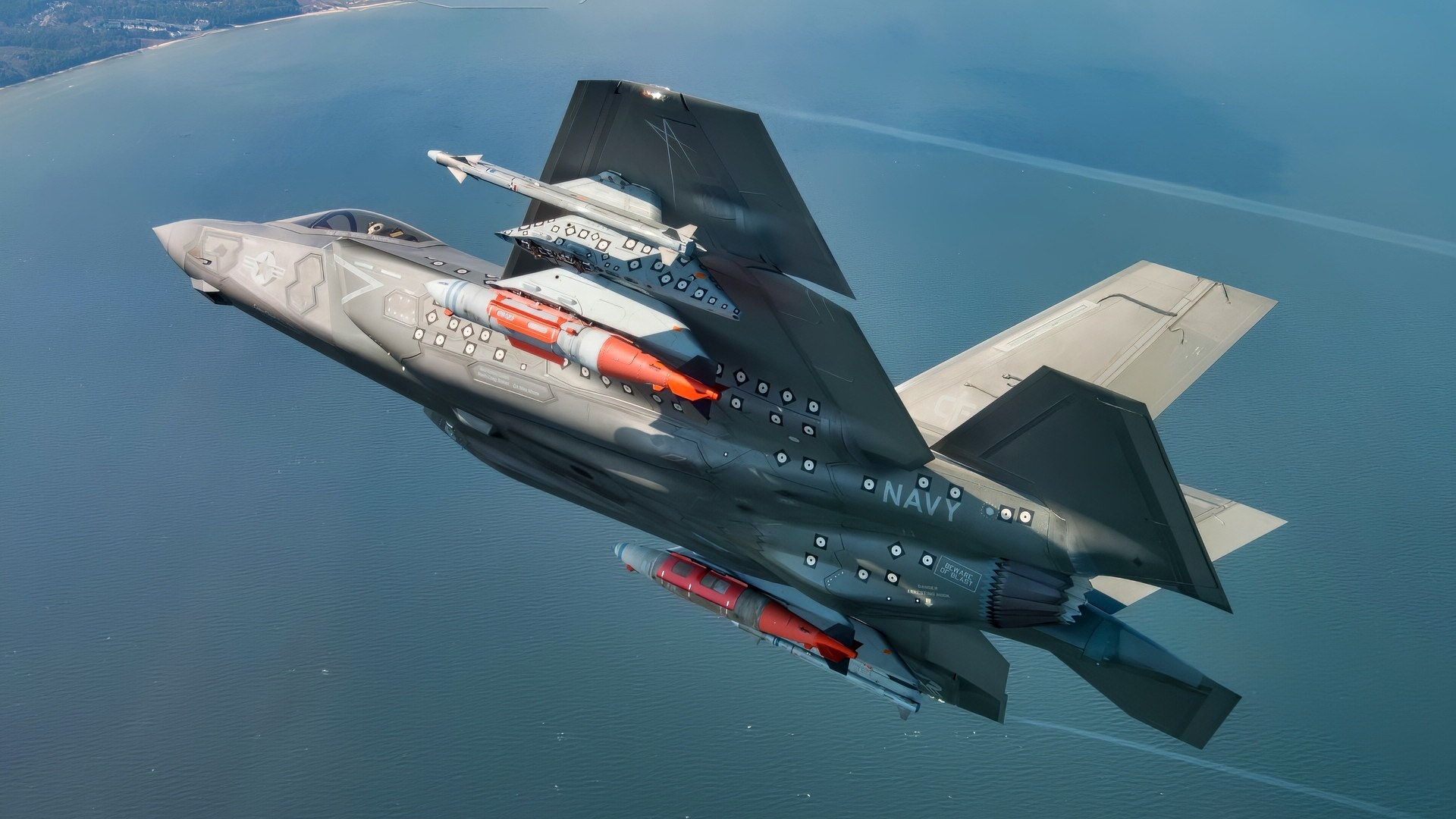
The final SDD Test flight CF-2 Flt 596 was piloted by BAE Test pilot Peter Wilson, April 11, 2018, from the F-35 Pax River Integrated Test Force. The F-35C completed a mission to collect loads data while carrying external 2,000-pound GBU-31 Joint Direct Attack Munitions (JDAM) and AIM-9X Sidewinder heat-seeking missiles. (Photo courtesy of Lockheed Martin)
The additional length and weight of the J-20 may in part result from its dual-wing configuration, an engineering approach used to optimize airflow and achieve improved aerodynamic performance, including flight stability. While the wing configurations of a J-20 and F-22 are decidedly different, the J-20 fuselage itself appears to resemble that of an F-22 with two engine exhausts and blended, curved, or rounded main body exterior.
What would it mean to truly rival or surpass the F-22 stealth fighter? Now that the J-20 has been modified with the integration of a new, domestically built WS-15 engine, some might wonder if the Chinese aircraft could achieve any kind of “supercruise” capability that has—so far—been unique to the F-22.
F-22 vs. J-20 “Speed”
The F-22 has a 44-foot wingspan and, at high altitudes, can reach speeds up to Mach 2.25.
Various data sheets and articles cite that, by comparison, a J-20 is several meters longer but has a similar 44-ft wingspan. Available specs suggest that the J-20 can reach Mach 2.0, placing it between the Mach 2.25 F-22 and the Mach 1.6 F-35.
Regardless of a J-20’s speed, a key F-22 advantage is that it not only can reach supercruise speeds but also sustain them without needing afterburners, a major technical enhancement. Also, a slightly shorter, sleeker, and more streamlined fuselage, coupled with potentially unmatched levels of propulsion, thrust, and high-speed maneuverability, could very well give the F-22 a decisive advantage.
The F-22 is armed with massively upgraded weapons, including the now-software-enhanced AIM-120D and AIM-9X air-to-air and air-to-ground/surface missiles. However, some open-source information suggests that China’s PL-15 air-to-air missile, fired by the J-20, may outrange these U.S. weapons. Pure range, in terms of air-to-air weapons, is less consequential without precision-guidance, hardening and targeting technology, so it seems unclear which aircraft would “see” the other first from a position to strike effectively.
Networking: The Biggest Factor in What Platform Wins?
Ultimately, the advantage may reside in the question of pure “sensing” range and fidelity, meaning the point at which an aircraft can “see” and “destroy” the other without being detected or successfully targeted.
This is where networking comes into play, something of great significance to the F-35 and the F-22. The F-35 is known for its Multifunction Advanced DataLink (MADL), and the F-22 is often described as an “aerial quarterback,” an ability innovators say it can exchange real-time, two-way information amid warfare with both fourth- and fifth-generation American and allied warplanes.
The F-22 and F-35 are also known to be capable of manned-unmanned teaming, essentially controlling “loyal wingman” drones from the cockpit. Air superiority between the J-20 and U.S. 5th-generation aircraft would also rely heavily upon whether the J-20 was in any way comparable in these areas.
About the Author: Kris Osborn
Kris Osborn is the Military Technology Editor of 19FortyFive. Osborn is also President of Warrior Maven – Center for Military Modernization. Osborn previously served at the Pentagon as a highly qualified expert in the Office of the Assistant Secretary of the Army—Acquisition, Logistics & Technology. Osborn has also worked as an anchor and on-air military specialist at national TV networks. He has appeared as a guest military expert on Fox News, MSNBC, The Military Channel, and The History Channel. He also has a Master’s Degree in Comparative Literature from Columbia University


