


Key Points and Summary – For decades, the U.S. monopolized stealth aviation. That era is ending as China fields the J-20 and pushes ahead with its H-20 stealth bomber and sixth-generation J-36/J-50 concepts.
-The H-20 aims to give Beijing a true nuclear and conventional long-range strike option, potentially threatening bases from Guam to Hawaii.

China’s H-20 Stealth Bomber. Image Credit: Creative Commons.
-The J-36 and J-50, if produced at scale, could pair deep-range air superiority with manned-unmanned teaming to contest U.S. control of the skies over Taiwan.
-Yet China still trails in bomber experience, sustainment, and integration. The real race now is less about prototypes and more about production, training, and logistics.
China’s Stealth Airpower Surge: H-20 Bomber, J-36 Fighter, and the Race With America
For several decades, the U.S. Air Force enjoyed a monopoly on stealth aircraft. However, adversaries such as Russia and China are now developing and fielding their own fifth-generation fighters.
China, in particular, has made significant progress in the field of stealth aircraft, with its first sixth-generation fighters already taking to the skies.
China is also actively developing its indigenous stealth bomber, the Xian H-20, which is expected to mirror the capabilities of the B-2.

(Dec. 9, 2019) This poster is designed to communicate the aircraft specifications of the B2 Spirit Stealth Bomber. The B2 bomber was introduced on Jan. 1, 1997 by the Northrop Corporation.
These developments in tandem significantly enhance China’s prospects in the Indo-Pacific region and potentially complicate any U.S. intervention in the event of a conflict over Taiwan.
China’s Newest Aircraft
The H-20, long rumored and repeatedly teased by Chinese officials, is widely assessed to be a subsonic flying wing akin to the U.S. B-2 and B-21, designed to carry both nuclear and conventional payloads over intercontinental distances.
Open-source estimates often cluster around a range of 8,500 to 10,000 kilometers without refueling, paired with internal bays sized for standoff munitions, including cruise and potentially hypersonic weapons.
Analysts draw a consistent picture of a platform intended to give China a true air leg within a complete nuclear triad and, equally important.
This penetrating conventional strike capability extends beyond the Second Island Chain to Guam, northern Australia, and, with tanker support, potentially Hawaii.
This is less about matching a single U.S. aircraft than about denying the United States the presumption of air sanctuary across the central Pacific and complicating bomber presence operations and logistics hubs that have underpinned regional deterrence for decades.

J-36 Fighter. Image Credit: Screenshot from X.
The J-36 is an entirely different beast. The PLA has yet to acknowledge the aircraft officially, but work on this aircraft has been known for some time.
It features an unconventional design with a tri-jet configuration, a tailless flying-wing design with a double-delta wing configuration, and a side-by-side cockpit layout, suggesting longer-range missions.
The airframe appears to incorporate multiple ventral bays, including a large central cavity that specialist outlets suggest could accommodate very-long-range air-to-air missiles or heavy strike payloads.
This suggests a role that blends air superiority, escort for deep-strike packages, and quarterbacking of manned-unmanned teaming at extended ranges.
Observers have also highlighted rapid iteration between prototypes in 2025, including reworked serrated exhausts and revised landing gear, emblematic of an aggressive sprint to solve the stability, thermal, and integration challenges inherent to tailless, low-observable designs.
Implications for the Region
The development of the H-20 with sixth-generation platforms such as the J-36 and J-50 poses two problems for the U.S. and its regional allies.
The development of the H-20 greatly increases China’s ability to perform deep strikes well behind enemy lines.
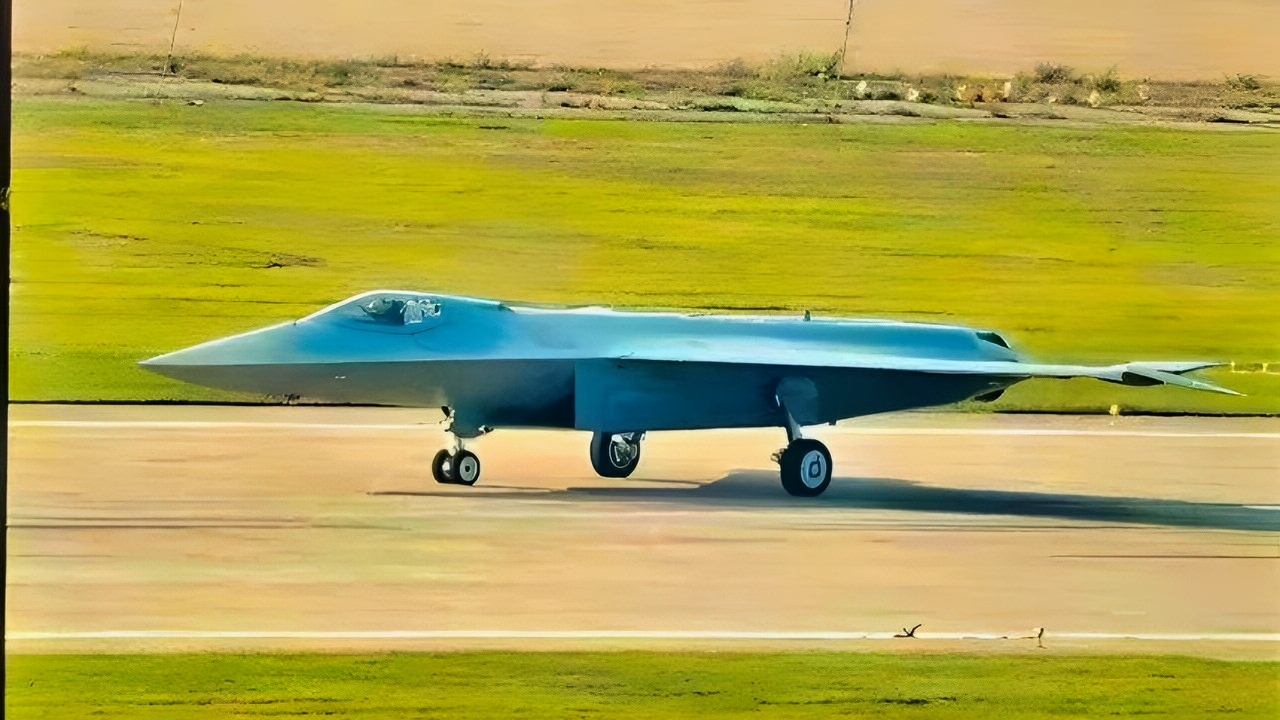
J-50 Image. Image Credit: X Screenshot.
Depending on how good the aircraft actually is, it can carry out strikes on targets as far away as Hawaii, putting strategic targets like Pearl Harbor at risk.
The J-36 and J-50, on the other hand, pose a threat to the U.S.’ control of the skies. While it is unclear whether the J-36 is primarily a fighter-bomber, it is highly likely that it will be able to perform air-to-air missions as well as air-to-ground strikes.
Their ability to remain undetected significantly complicates any U.S. attempt to intervene in a potential military conflict over Taiwan.
In practical terms, the U.S. and its allies must be prepared not only for the increase of stealth platforms from China but also for any strikes on bases far from mainland China. With the J-36 and the J-50, China would have four different stealth fighters in operational service, more than even the U.S. has.
If the J-20 is any indicator, then China will likely be able to produce these fighters in large quantities. With the H-20, allies must prepare for sudden strikes on critical assets like airbases, naval ports, or other sensitive sites that may be in the bomber’s range.
All in all, the United States must enhance its stealth detection capabilities.
The Race is Not Lost Yet
The U.S. still enjoys an advantage in the bomber department.
Despite China’s recent developments in aerospace engineering, the H-20 still appears to be in the early stages of development, while the B-21 is currently in low-rate initial production.
The design of the H-20 has not even been publicly shared yet, and it is unclear when the aircraft will take its first flight. The J-36, on the other hand, is more of an issue as the aircraft is already taking its first test flights.
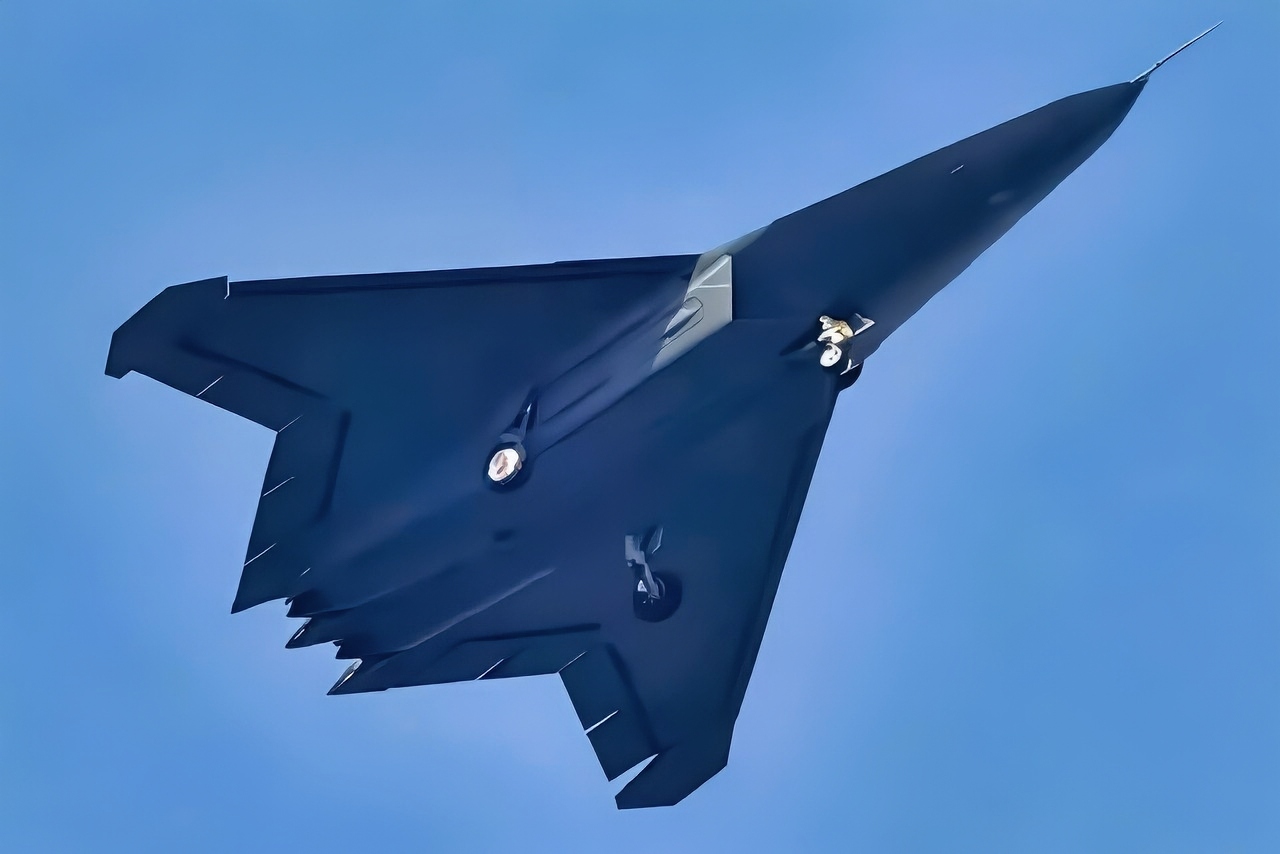
J-50 Fighter from China Weibo Image
This aircraft is likely to enter service sometime in the 2030s at the latest, although the discrepancy between the two prototypes suggests that the final design has not yet been finalized.
This gives the U.S. some breathing room in the near future, but the gap between America and China is rapidly closing.
Neither a revolutionary bomber nor a path-breaking sixth-generation fighter matters in isolation if production numbers remain low.
Fielding advanced aircraft is useless if you don’t have the budget to maintain them, the resources to train pilots, or the logistics to sustain them.
One advantage that the U.S. will always maintain is its expertise and experience in stealth technology and bomber production.
The same is true for J-36: the leap from prototype to campaign-credible force depends on reliable propulsion, integrated mission systems, robust data links, and enough aircraft to matter in a distributed fight.
About the Author: Isaac Seitz
Isaac Seitz, a Defense Columnist, graduated from Patrick Henry College’s Strategic Intelligence and National Security program. He has also studied Russian at Middlebury Language Schools and has worked as an intelligence Analyst in the private sector.


Shit-ta-ya
December 15, 2025 at 5:09 pm
Today, ahem, is 2025.
2025 is THE YEAR spaceX is expected to produce over 200 space launches.
2025 is no more 1941.
Today, satellites watch every patch of real estate on Earth, including over the oceans.
Thus, the idea of a subsonic bomber flying all the way over to Oahu would be pure madness.