


Summary and Key Points: Stephen Silver, a veteran national security contributor, evaluates the Type 003 Fujian, China’s first carrier equipped with an Electromagnetic Aircraft Launch System (EMALS).
-Formally commissioned in November 2025 by President Xi Jinping, the 80,000-ton vessel supports the J-35 stealth fighter, J-15T, and KJ-600 early warning aircraft.
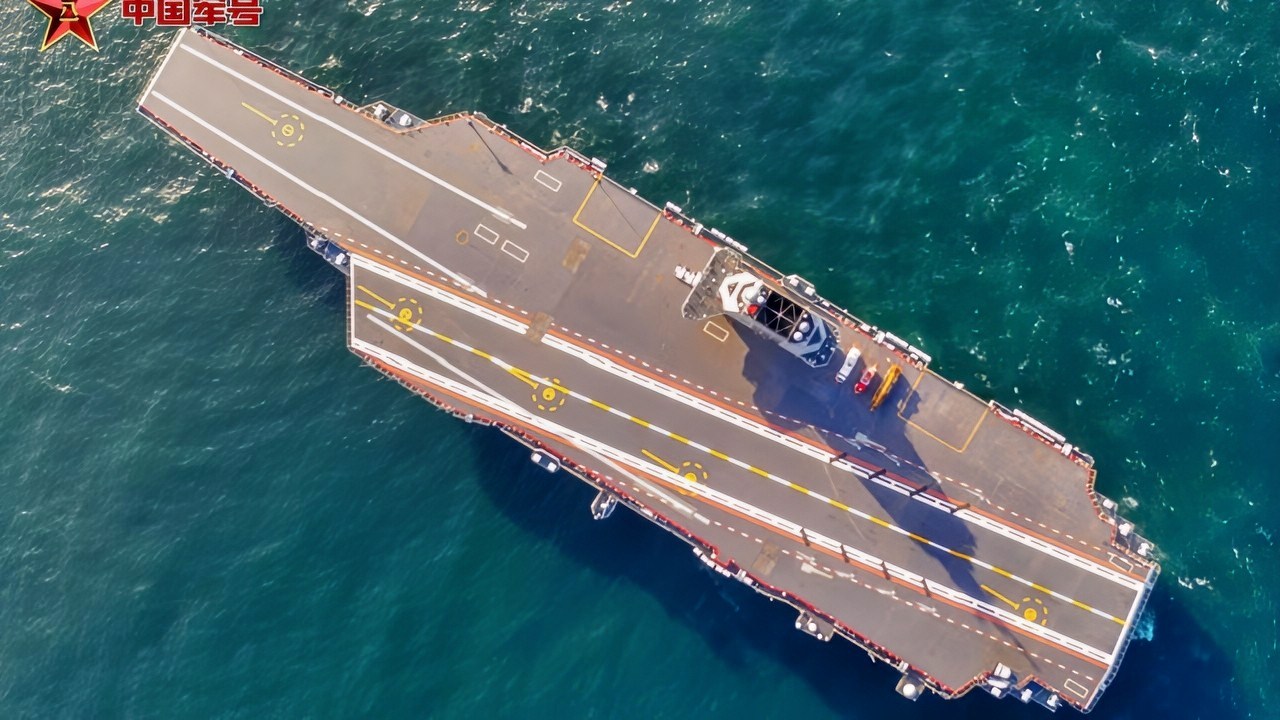
CV-18 Fujian aircraft carrier from China. Image Credit: Creative Commons.
-This 19FortyFive report scrutinizes a potential design flaw in the Fujian’s flight deck layout that may create launch and recovery bottlenecks, contrasting its 280,000-horsepower conventional propulsion against the nuclear-powered USS Gerald R. Ford and evaluating the strategic impact of its projected 300 launches per day.
The Fujian’s Fatal Flaw: Why China’s Newest Aircraft Carrier May Face a Combat Bottleneck
Last November, China’s latest aircraft carrier, the Fujian, was formally commissioned.
Per TWZ, “the commissioning ceremony put particular emphasis on the ship’s electromagnetically-powered catapults, with President Xi Jinping shown pressing the launch button inside the control ‘bubble’ built into the flight deck.”
The ceremony took place on November 5, TWZ said, with “ J-35 and J-15 fighters, the KJ-600 airborne early warning and control aircraft, and the Z-20F helicopter” among the aircraft visible on its deck.
The carrier was first launched in 2022 and had undergone sea trials since 2024, TWZ said.
“The 80,000-ton Fujian is China’s first carrier equipped with an electromagnetic catapult system (EMALS) — a generational leap from ski-jump launches,” the Chinese media outlet Gauncha reported. “Its 280,000-horsepower propulsion rivals the U.S. Nimitz-class, allowing fighters like the J-15T and J-35 to take off fully armed and fuelled. It can reportedly conduct up to 300 launches per day, quadrupling previous efficiency.”
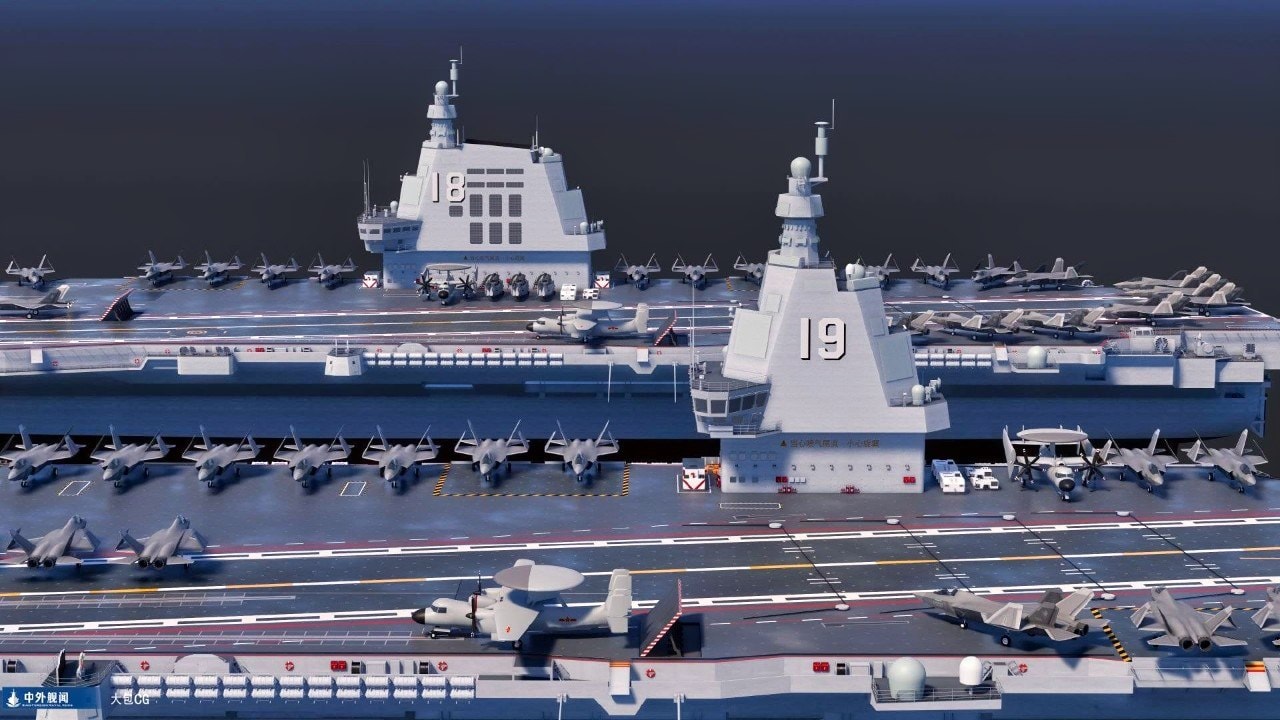
China Aircraft Carriers. Image Credit: Creative Commons.
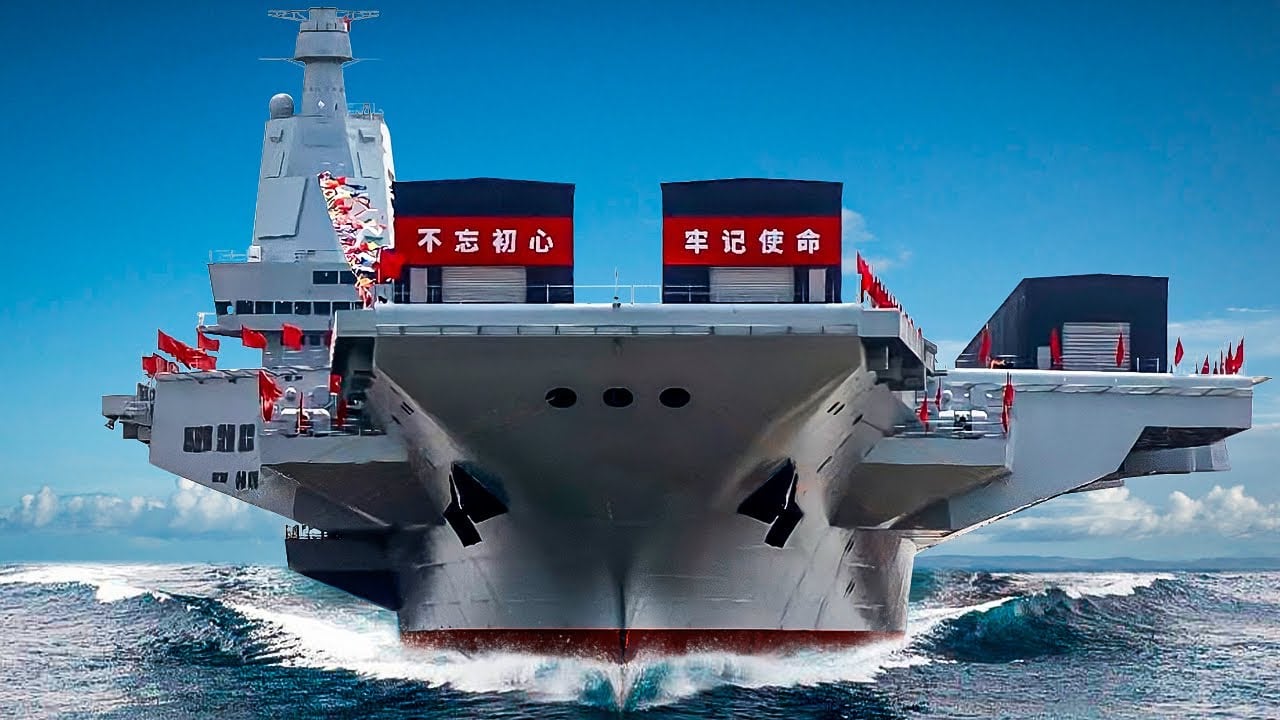
China Aircraft Carrier Creative Commons Image.

J-35 China Weibo Screenshot.
Fujian’s Achilles Heel?
According to an analysis by Slashgear, published this week, the new Chinese carrier may have a problem.
“Its introduction saw it crowned as the world’s largest non-nuclear powered warship. Which should be a distinct feather in the cap for the builders of China’s first domestically designed aircraft carrier,” the report said.
“And while its conventional power is a disadvantage when compared to American carriers like the Gerald R. Ford, the rest of the ship looks like a pretty serious upgrade for China’s naval capabilities. For instance, other than the aforementioned Gerald R. Ford, the Fujian is the only carrier in the world boasting electromagnetic catapults.”
However, soon after the new carrier was launched, observers began to notice a potential problem with the carrier’s flight deck layout.
“Technical assessments of this design trait seem to point to a layout that can potentially create launch and recovery bottlenecks during combat operations,” the Slashgear story says. “This is critical, as the flaw introduces constraints in the very area that ultimately defines a carrier’s combat value — just how quickly it can launch and recover aircraft.”
What’s the issue with the deck layout?
“Modern aircraft carriers are far removed from the early carriers that appeared almost as soon as aviation was a thing,” the Slashgear story says. “However, regardless of the generation of carrier, one attribute has been critical throughout the type’s history — how quickly it can launch and recover aircraft. This tempo is referred to as sortie generation, and it depends heavily on flight deck geometry, hardware, and a carefully choreographed flight deck sequence.”
The Experts Speak
Last October, shortly before Fujian’s official commissioning, CNN interviewed some former U.S. officers about their impressions of the new carrier.

Aircraft Carrier USS Nimitz Coming Home. Image Credit: Creative Commons.

A U.S. Navy MH-60S Seahawk helicopter with Helicopter Sea Combat Squadron (HSC) 9 transfers ammunition between aircraft carriers USS George H.W. Bush (CVN 77), foreground, and USS Harry S. Truman (CVN 75) in the Atlantic Ocean Feb. 17, 2011. (U.S. Navy photo by Mass Communication Specialist 3rd Class Leonard Adams/Released)
“The officers told CNN the configuration of the flight deck of the Fujian, expected to be commissioned soon, limits the pace at which aircraft can be launched and recovered, especially when compared with the Nimitz-class US carriers,” the CNN story said. The story added that the issues may have come from China’s decision to build a new carrier “from scratch.”
“The Fujian’s operational capability is only about 60% of that of the Nimitz class,” Carl Schuster, a former US Navy captain, told CNN in the October story.
Retired Lt. Cmdr. Keith Stewart, a former US naval aviator, had a similar reaction in the CNN story.
“There is an old Navy proverb which states ‘all carrier operational rules and regulations are written in blood,’ which means somebody was either seriously injured or killed during flight ops,” Stewart told CNN. “Flying off a carrier in daylight and good weather is not too difficult. The hard part, and what makes flyers pucker their cheeks, is flying and landing on a nasty, rainy, windy night when the deck is wallowing up to 18 feet, you are low on fuel, and you are scared.”
CNN noted that the issue was raised after the release of a video by a Chinese military blogger, titled “Charge—Toward First-Class Military Strength.”
“Both of the catapults are situated close to the middle-front section of the landing area, so either the J-15 or J-35 (China’s two carrier-based fighter jets) would roll over the catapults when they land, temporarily preventing them from being used for launch operations and thus affecting the takeoff efficiency of the fighter jets.”
The Chosun Daily newspaper in South Korea also picked up the story in October.
Catapults on U.S. Carriers?
According to the Slashgear story, “The inclusion of an electromagnetic catapult system alone expands the types of aircraft it can launch and the payloads they can carry. As noted, the Gerald R. Ford is the only other operational ship boasting such a system.”
Also, last October, per TWZ, President Trump announced plans for an executive order to “compel the U.S. Navy to use steam-powered catapults and hydraulic elevators on new aircraft carriers.”
“I’m putting out an order, I’m going to sign an executive order, when we build aircraft carriers, it’s steam for the catapults, and it’s hydraulic for the elevators,” Trump said on a visit to the USS George Washington, which was in port in Yokosuka, Japan, at the time.
“I’m gonna put in an order, seriously,” Trump added in that October speech. “They’re spending billions of dollars to build stupid electric. And the problem is, when it breaks, you have to send it up to MIT, get the most brilliant people in the world, and fly them out. The steam, they said, can be fixed with a hammer and a blowtorch. And it works just as well, if not better.”
It does not appear, however, that such an executive order was ever signed; no such order is mentioned on the White House’s website.
In December, Trump announced plans to revive American battleships, as part of the new “Golden Fleet” initiative.
About the Author: Stephen Silver
Stephen Silver is an award-winning journalist, essayist, and film critic, and contributor to the Philadelphia Inquirer, the Jewish Telegraphic Agency, Broad Street Review, and Splice Today. The co-founder of the Philadelphia Film Critics Circle, Stephen lives in suburban Philadelphia with his wife and two sons. For over a decade, Stephen has authored thousands of articles that focus on politics, national security, technology, and the economy. Follow him on X (formerly Twitter) at @StephenSilver, and subscribe to his Substack newsletter.


