


Key Points and Summary – The U.S. Navy’s Columbia-class ballistic missile submarines remain late and wildly expensive, but there are genuine signs of progress.
-The bow section of lead boat USS District of Columbia (SSBN-826) is moving to Electric Boat for final assembly, with construction roughly 60 percent complete.
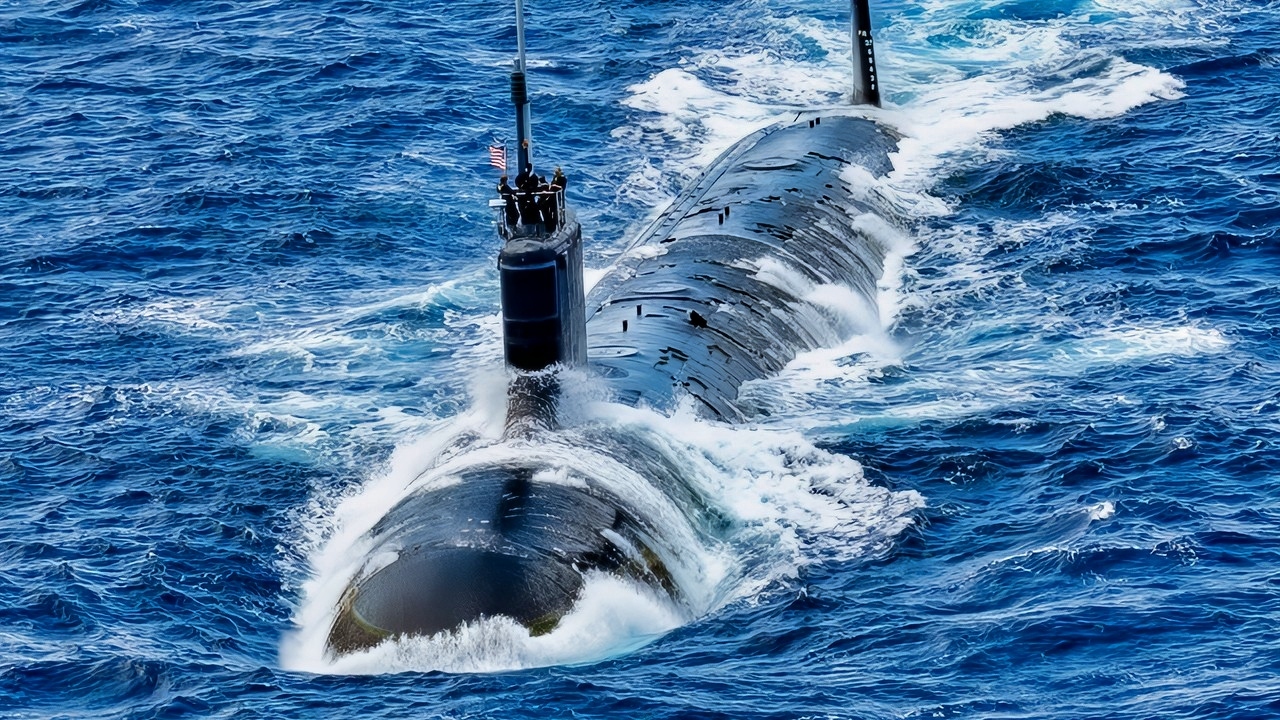
Virginia-class attack submarine USS North Carolina (SSN 777) sails in formation, off the coast of Hawaii during Exercise Rim of the Pacific (RIMPAC) 2024, July 22. Twenty-nine nations, 40 surface ships, three submarines, 14 national land forces, more than 150 aircraft and 25,000 personnel are participating in RIMPAC in and around the Hawaiian Islands, June 27 to Aug. 1. The world’s largest international maritime exercise, RIMPAC provides a unique training opportunity while fostering and sustaining cooperative relationships among participants critical to ensuring the safety of sea lanes and security on the world’s oceans. RIMPAC 2024 is the 29th exercise in the series that began in 1971. (U.S. Navy photo by Mass Communication Specialist 1st Class John Bellino)
-Follow-on boats like USS Wisconsin and USS Groton are advancing, backed by a multibillion-dollar contract for hull work through SSBN-832.
-Yet the program still faces a crippling skilled-labor shortfall as the Navy pushes its “BuildSubmarines” campaign and a “1+2+Sustainment by 2028” plan to deliver one Columbia and two Virginia-class subs per year.
Hopeful Signs of Progress for the Columbia-Class Submarines?
The US Navy’s vaunted, time-honored, and battle-tested submarine force, AKA “The Silent Service,” has been entering into rough seas (metaphorically speaking) as of late.
In the category of nuclear-powered fast-attack submarines (SSNs), the venerable Los Angeles-class boats are getting long in the tooth, only three (out of 29 planned initially) of the successor Seawolf-class subs were built, the Virginia-class SSNs are coming along at a depressingly slow pace, and the would-be SSN(X) class is facing a flimsy and fickle fiscal future.
Moving over to nuclear-powered ballistic missile submarines (SSBNs), the Ohio-class SSBNs are also aging (having been built between 1976 and 1997), and their intended successors, the Columbia class, is running late and overbudget, to the tune of $348 billion USD and slated to be delivered to the USN around 12 to 16 months late (in Fiscal Year 2028 )!
But unlike the SSN(X), there appears to be at least a glimmer of hope for the Columbias.
At Least One Sign of Progress
One somewhat encouraging story comes to us courtesy of USNI (as in U.S. Naval Institute) News reporter Caitlyn Burchett in a November 20, 2025, article titled “Bow Section of First Columbia-class Sub Heading to Electric Boat.”
“Electric Boat” as in the General Dynamics Electric Boat company (established in 1899 and headquartered in Groton, Connecticut), where the USS District of Columbia (SSBN-826) will be assembled and tested after the bow section arrives from Huntington Ingalls Industries, Inc.’s (HII’s) Newport News Shipbuilding.
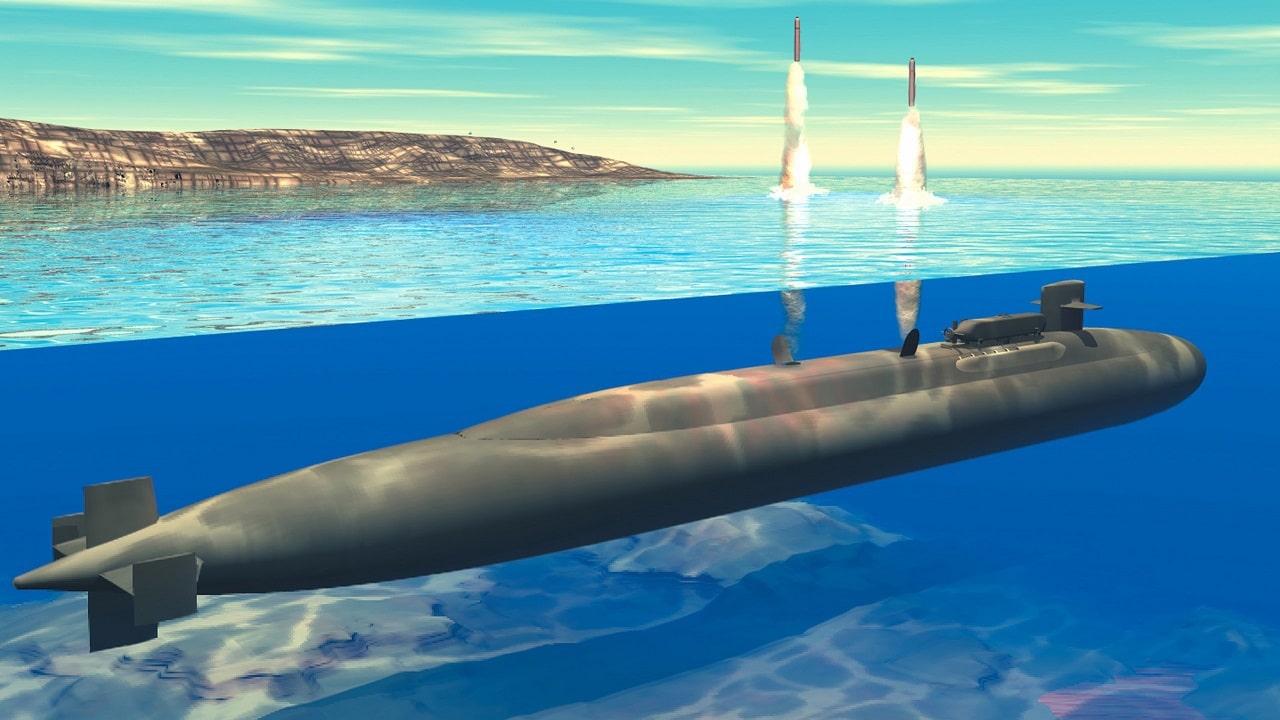
Ohio-class SSGN. Image Credit: Creative Commons.
Burchett quotes an unnamed Navy spokesperson as stating that “This significant milestone marks completion of the majority of NNS’s work on SSBN-826. With all of SSBN-826’s major modules at EB, the boat will begin final assembly and testing.”
She also cites General Dynamics Electric Boat CEO Phebe Novakovic, who stated during an October sales call that the future District of Columbia was about 60 percent complete and added that “‘By the end of this year, we’ll have all the major modules at Groton ready for assembly and test.'”
Additional Indicators of Columbia-Class Program Progress
These come from an undated and anonymously authored article in a November 22, 2025, article by MilMag reporter Rafał Muczyński titled “USA: Progress of the Columbia strategic submarine program.”
To wit, “Meanwhile, on November 5, 2020, steel cutting for the second submarine, the future USS Wisconsin (SSBN-827), took place, while on August 27 of this year, its keel was laid at the Electric Boat facility in Quonset Point. The third submarine already ordered is to be the USS Groton (SSBN-828).”
For good measure, on November 17, NAVSEA published information on the contract awarded five days prior to General Dynamics Electric Boat, worth $2,283,291,317 for additional advance procurement and advanced construction of the hulls of five submarines, from the aforementioned USS Groton through the subsequent, as yet unnamed, SSBN-829, SSBN-830, SSBN-831, and SSBN-832.
Additional Challenges Remain, However
One of the biggest such challenges is the fact that the Navy is so desperately short of the estimated 140,000 skilled workers needed to build the new boats that they’ve been running a BuildSubmarines recruiting push—which is sponsored by the Department of the Navy (DON) in tandem with the BlueForge Alliance—since November 2022.
As the mission statement declares, “The Navy is on a once-in-a-generation journey to completely transform its nuclear-powered submarine fleet and maintain its critical undersea advantage…And there’s not a moment to spare.”
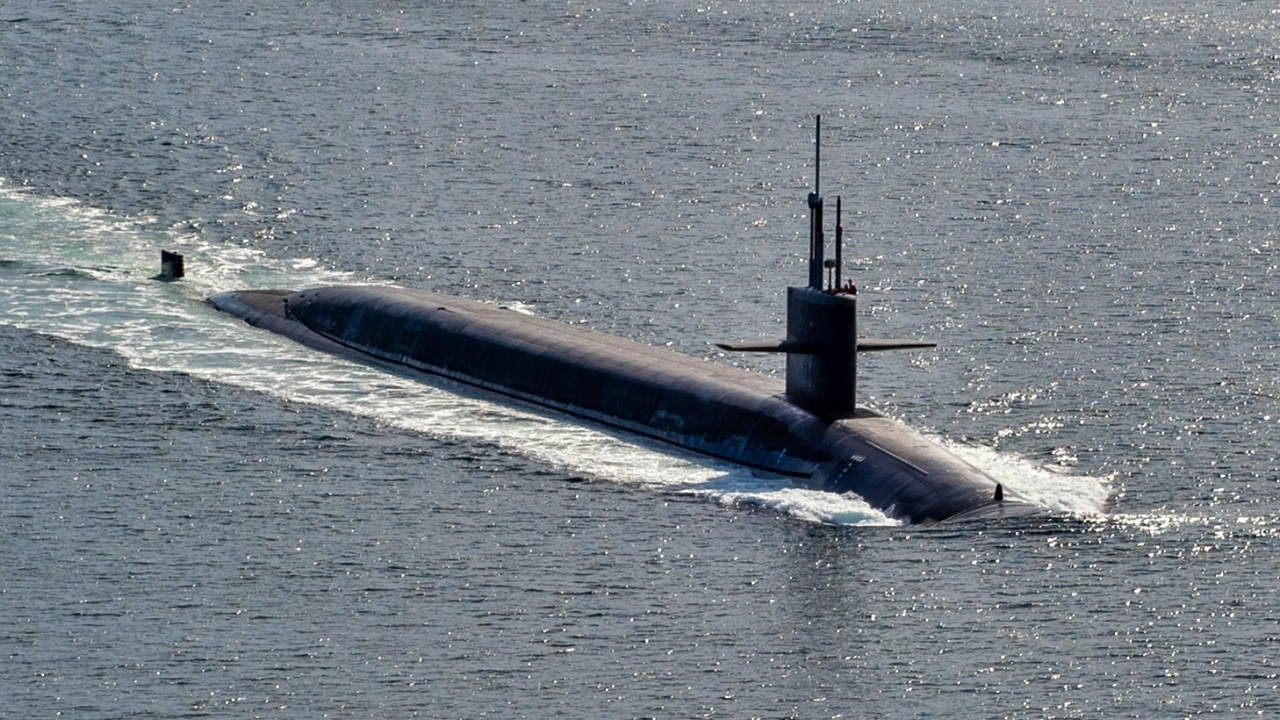
The Ohio-class ballistic-missile submarine USS Maine (SSBN 741) transits the Puget Sound during routine operations, March 18, 2025. Commander, Submarine Group (SUBGRU) 9, exercises administrative control authority for assigned submarine commands and units in the Pacific Northwest providing oversight for shipboard training, personnel, supply and material readiness of SSBNs and their crews. SUBGRU-9 is also responsible for nuclear submarines undergoing conversion or overhaul at Puget Sound Naval Shipyard in Bremerton. (U.S. Navy photo by Mass Communication Specialist 1st Class Ryan Riley)
To give our readers a further appreciation of that sense of urgency, current American submarine production averages only 1.3 completed subs per year.
However, the Navy has set a lofty goal of boosting that to three completed hulls per year—specifically one Columbia-class and two Virginia-class boats—by 2028, via a program known as the “1+2+Sustainment by 2028.” The “Sustainment” part of that label refers to foreign military sales (FMS) obligations such as the AUKUS pact, i.e., the trilateral security agreement between the United States, Australia, and the United Kingdom to provide the Royal Australian Navy (RAN) with nuclear-powered submarines.
Sounds like an awfully tall order, given that the BuildSubmarines effort is a long way from meeting its recruiting goals.
Nonetheless, Rear Admiral Jonathan Rucker, program executive officer, attack submarines (PEO SSN), waxed optimistic during remarks at last years Naval Submarine League’s Annual Symposium and Industry Update (which was hosted at the Hyatt Regency Hotel in Arlington, Virginia), stating that “‘We developed [the plan] starting in February of 2023,’ the foundation of which is Columbia, the ‘number one priority…[T]he whole system has to be uplifted. We’re on that journey. We’re about halfway there, and we’re going to continue to get there.”
About the Author: Christian D. Orr, Defense Expert
Christian D. Orr is a Senior Defense Editor. He is a former Air Force Security Forces officer, Federal law enforcement officer, and private military contractor (with assignments worked in Iraq, the United Arab Emirates, Kosovo, Japan, Germany, and the Pentagon). Chris holds a B.A. in International Relations from the University of Southern California (USC) and an M.A. in Intelligence Studies (concentration in Terrorism Studies) from American Military University (AMU). He is also the author of the newly published book “Five Decades of a Fabulous Firearm: Celebrating the 50th Anniversary of the Beretta 92 Pistol Series.”
More Military
The Navy Wanted 29 Stealth Seawolf-Class Nuclear Attack Submarines. It Got Only 3


