
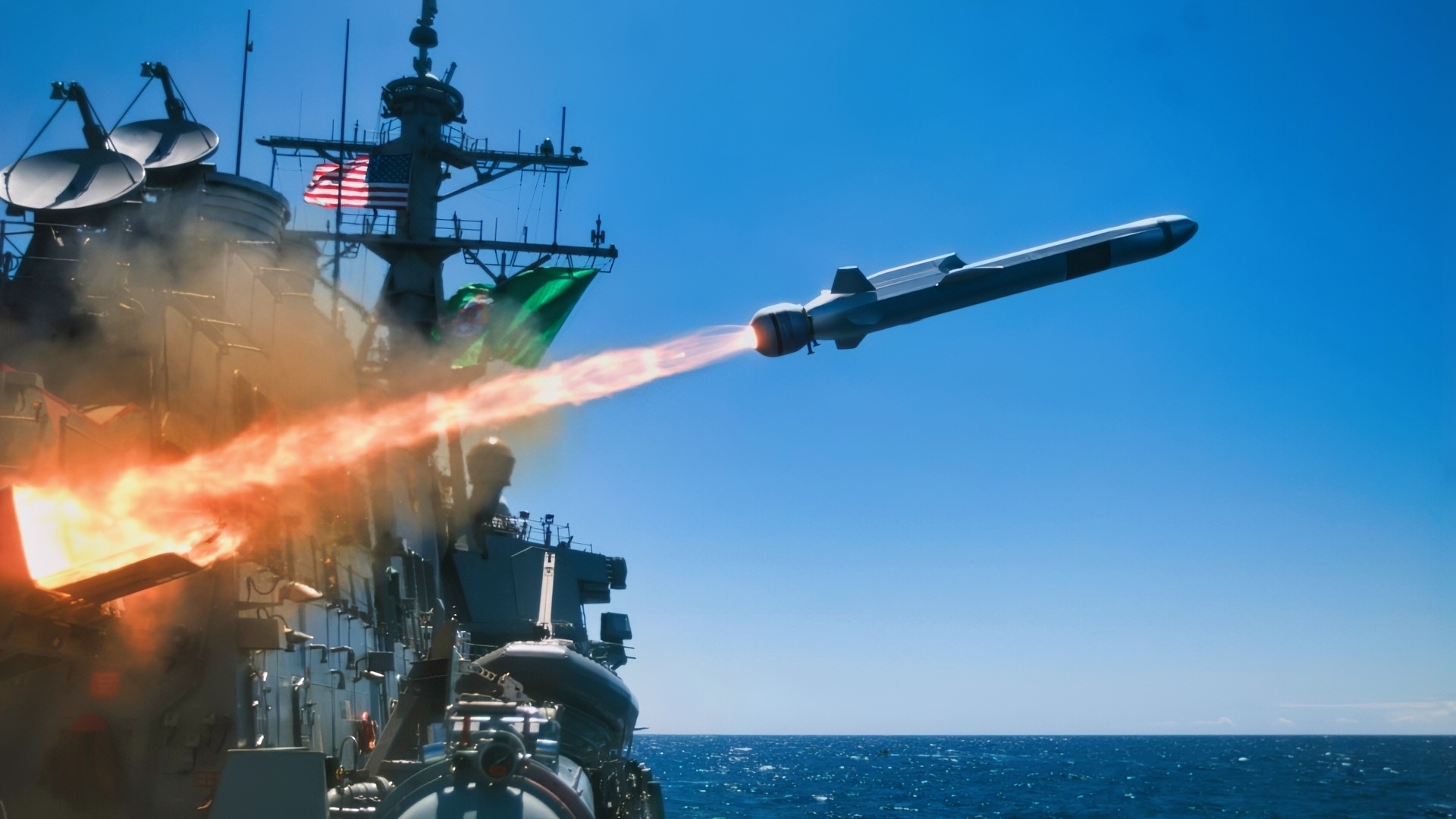
Oil prices are rising again as Iran ramps up shipping attacks in the Strait of Hormuz: Optimism grew that prices would decline after Middle Eastern oil exports returned to pre-war levels at the end of September as producers sought alternative export routes.
However, Iran has ramped up strikes on commercial shipping in the Strait of Hormuz, with traffic returning to the lowest level seen in months.
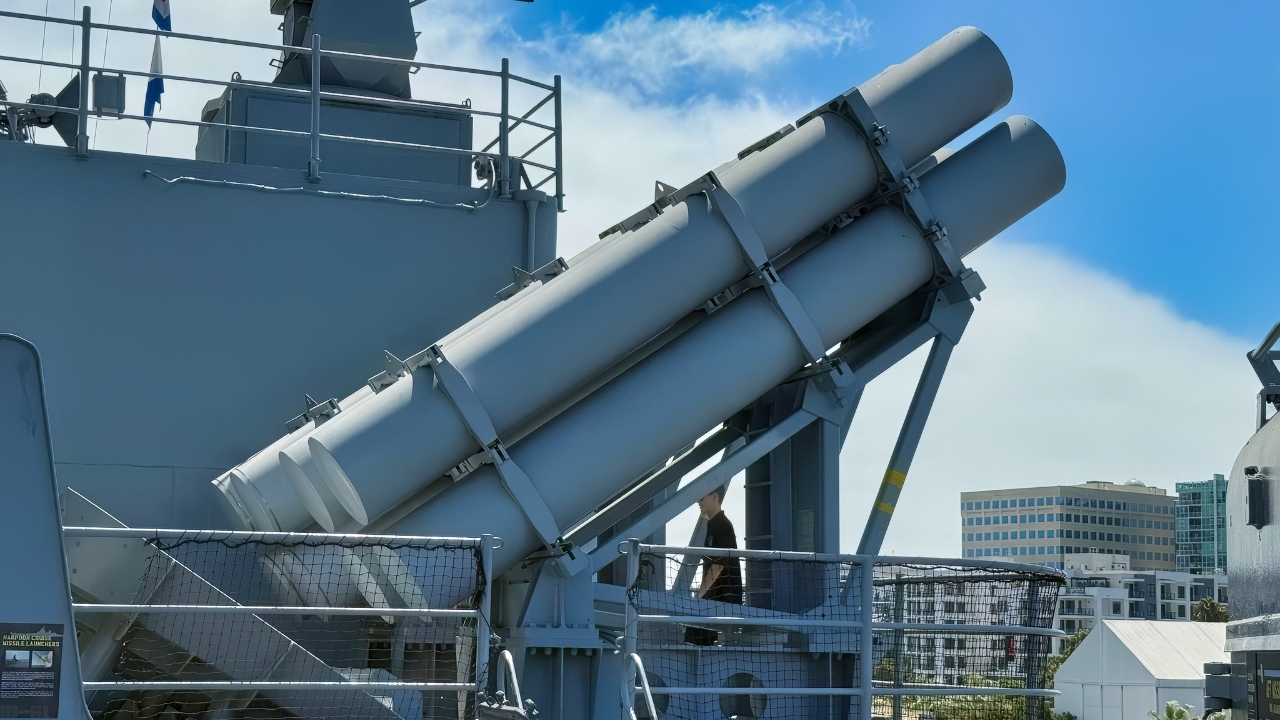
USS Iowa Harpoon Canister. Image Credit: Harry J. Kazianis/National Security Journal.
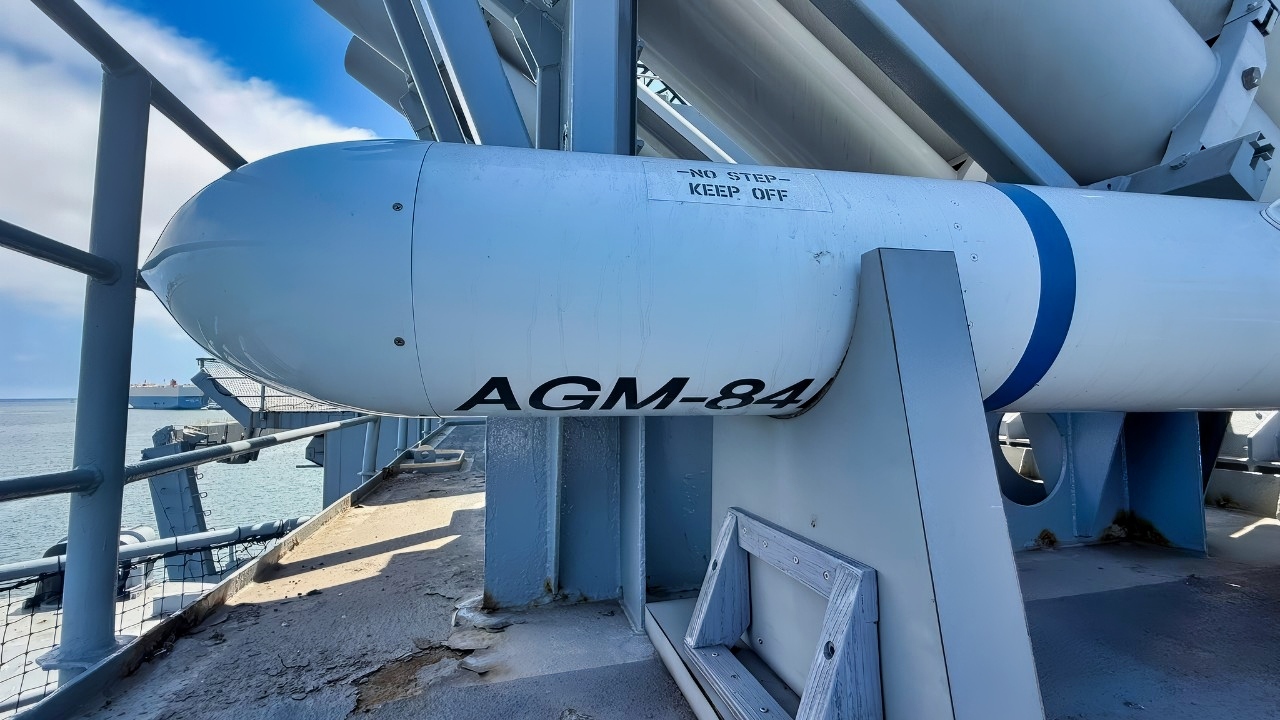
Harpoon Missile Onboard USS Iowa. Image Credit: National Security Journal.
U.S. President Donald Trump faces mounting pressure to lower prices as key elections approach.
Oil Prices Rising
Brent crude, the global benchmark for oil prices, rose by more than 5% on Thursday, 8th October, to $105.46 per barrel shortly after 7 am EDT.
It marks a week above $100 per barrel after prices fell at the end of a turbulent September.
The price hike followed just seven tankers passing through the Strait of Hormuz on Tuesday, 6th October. That’s the lowest number since Thursday, 23rd July, and less than half the seven-day moving average, according to Kpler data.
Iran has ramped up its attacks on commercial vessels in recent days. In the week commencing Monday, 28th September, ten tankers were struck in the Strait of Hormuz – surpassing the weekly record for attacks on commercial shipping of six.
Although Iranian attacks partly explain shipowners’ hesitancy to transit the strait, concerns are mounting over potential supply losses from Hurricane Isais, which is due to pass through America’s Gulf Coast refineries. Oil producers Shell and Chevron have already announced plans to cut production and evacuate some staff ahead of the incoming weather front.
IEA To “Accelerate” Releases
European national gas and diesel prices are also rising, fueling inflation fears and driving a large selloff in European bonds for a continent reliant on imported energy.
ICE Gasoil Futures, a benchmark for European diesel prices, closed 6% higher on Wednesday after the International Energy Agency warned that member governments would not release any more barrels of oil beyond the 400 million previously agreed in March.
Of that 400 million, the IEA said 325 million barrels of oil have already been released, with another 100 million still to be brought to the market.
In a meeting on Wednesday, IEA member governments “expressed support” for accelerating the oil stock releases announced in March, as well as “the prioritization of the release of diesel stocks.”
“Participants in the meeting expressed strong appreciation for the IEA’s response to the energy impacts of the Strait of Hormuz crisis,” said the agency in a statement. “IEA Member governments still have significant levels of publicly held emergency oil stocks – equivalent to around 1.1 billion barrels, including over 200 million barrels of diesel. The IEA stands ready to release more of these stocks to the market if and when required.”
Iran Doubles Down
On Wednesday, Iranian media reported that Iran would soon close transit routes through the Strait of Hormuz that it deems illegal. Mohammadreza Naqdi, a senior officer in Iran’s Islamic Revolutionary Guard Corps, said a “few routes” had been created through the straits by blasting rocks to clear passages for small boats that would then “smuggle oil and transfer it to tankers.”
He added: “The Strait of Hormuz is closed, and the armed forces of the Islamic Republic of Iran have control over it. The situation will continue until Iran’s legitimate demands are met.”
Oil Exporters Diversify
With Iran closing the Strait of Hormuz for more than seven months, Middle Eastern oil exporters have sought alternatives to bypass the key shipping lane.
Saudi Arabia, for example, has resumed shipping through its East-West oil pipeline, while the United Arab Emirates enjoys a similar advantage by rerouting oil to its Fujairah export terminal just outside the Strait of Hormuz.
It is also building a new pipeline expected to be completed next year.
Another tool at its disposal is the ability to conduct ship-to-ship transfers in open waters, allowing a larger tanker to transfer cargo to a smaller vessel that is much harder for Iranian shore-based trackers to detect when they are turned off.
The result of these combined measures has seen oil exports from the Middle East return to pre-war levels despite continual attacks by Iranian projectiles on shipping in the Strait of Hormuz.
About the Author: Shay Bottomley
Shay Bottomley is a British journalist. He has written for the Western Standard, Business Insider, Maidenhead Advertiser, Slough Express, Windsor Express, Berkshire Live and Southend Echo.