

Is the Iran war over, or is it not? That’s a very interesting semantic question, since there hasn’t been shooting for several months, yet no official agreement has been reached to end the war.
For a time before the midterm elections, President Donald Trump had promised not to attack Iran again before the voting, while implying that a major military action would take place afterward; however, after the Republicans suffered a midterm wipeout, with the Iran war seen as a major reason why, it likely became untenable for Trump to restart the war.
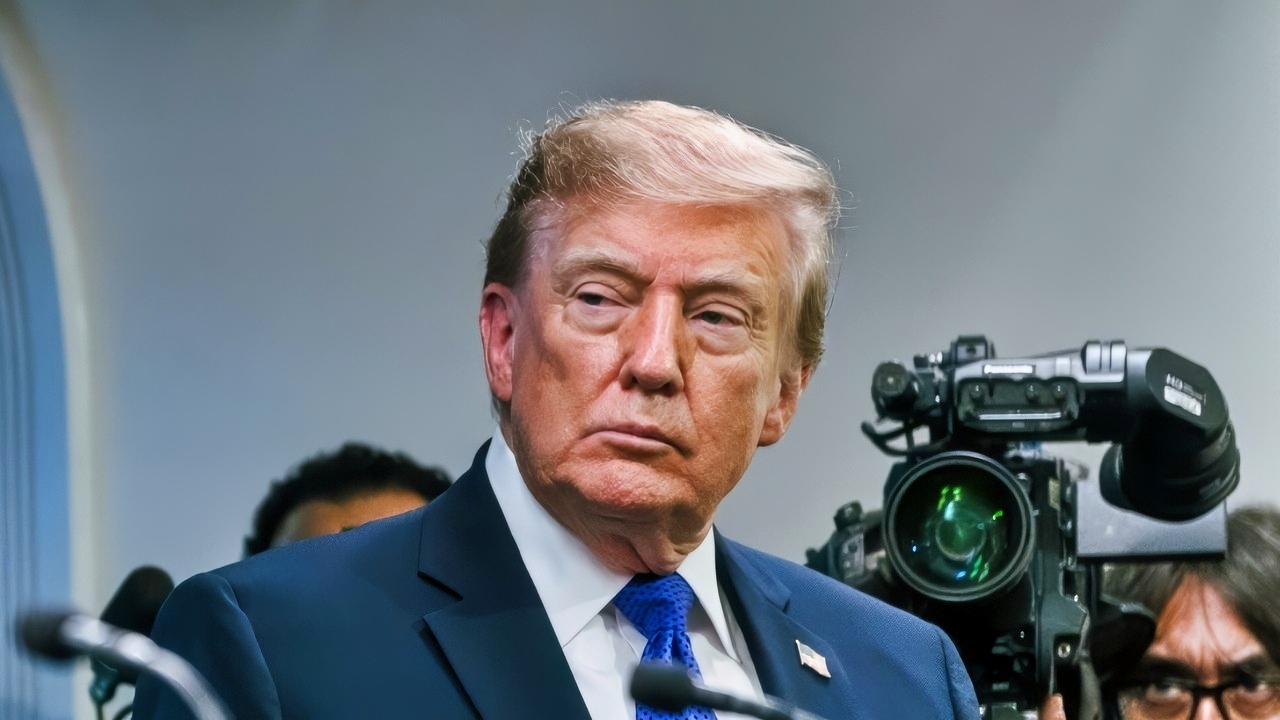
So, about a month after the elections, where does the Iran war stand now? The President discussed that this week.
“Sort of Whenever I Want it to Be”
According to The Hill, Trump said on Thanksgiving that the war in Iran will end “sort of whenever I want it to be.”
The comments came on Thanksgiving Day, when the president was at Mar-a-Lago and was calling deployed soldiers.
“You’re going to continue that deployment, and we have victory at hand,” Trump said during the phone calls. “It’s going to be whenever, sort of, whenever I want it to be, to be honest.”
The president also said of the Iranians that “we’re trying to be nice … we’re giving them every chance to make a deal and save a lot of lives.”
As The Hill noted, the calculus of the war may very well change in January when Democrats take control of Congress. Democrats, with a clear electoral mandate from an electorate that voted against the war, will take control of the purse strings and will be able to deny Trump any further funding for the war.
Resolutions this year have attempted to pull authorization for the war, and while those have failed, that will change when Congress’s composition does. The Hill reported that the Democrats see cutting off funding for the Iran war as a top priority. The report added, though, that Democrats have not yet reached consensus on how to approach the funding question.
“A Silent War”
The Wall Street Journal reported this week on what it described as a “silent war” in Iran, with the country’s president, Masoud Pezeshkian, recently going on television to declare that “we have no money,” amid the continuing U.S.-led naval blockade near the Strait of Hormuz. The Iranian president went on to describe the current conditions as “an economic war.”
The Journal reported that food and beverage prices in Iran have increased 110 percent year over year, while the rial currency has dropped to 2.9 million per dollar, compared to 32,000 per dollar in 2015, when the JCPOA agreement was reached.
Meanwhile, tensions have increased between moderates and hardliners within the Iranian regime, the newspaper said.
“Iran has been living on borrowed economic time for months,” Ali Vaez, of the Brussels-based International Crisis Group, told the Journal.
“What’s remarkable is how long Tehran has managed to postpone the reckoning.”
Iran has also been forced into hard choices, such as cutting gasoline subsidies, which it did this summer. Rolling blackouts have also hit parts of the country, and they are expected to get worse this winter. Industrial flour has also seen a sharp price increase, making food more expensive.
Another expert, Esfandyar Batmanghelidj of the think tank the Bourse & Bazaar Foundation, told the Journal that even those measures haven’t been enough.
“We are seeing a lot of half-measures that fail to address the root causes of economic mismanagement,” Batmanghelidj told the newspaper. “The best Iran can do is muddle through, possibly until a change in the U.S. administration.”
The Divide
As the Journal points out, different factions within the Iranian regime are at odds, and protests have emerged against leaders such as Pezeshkian, Foreign Minister Abbas Araghchi, and parliament speaker Mohammad Bagher Ghalibaf. Protesters believe these leaders, who have pursued talks with the U.S., are not doing enough to fight.
The newspaper reported that a group of women, “dressed in white burial shrouds,” protested in front of Iran’s Islamic Revolutionary Guard Corps, accusing the IRGC of “not doing enough to retaliate against the U.S.”
About the Author: Stephen Silver
Stephen Silver is an award-winning journalist, essayist, and film critic, and contributor to the Philadelphia Inquirer, the Jewish Telegraphic Agency, Broad Street Review, and Splice Today. The co-founder of the Philadelphia Film Critics Circle, Stephen lives in suburban Philadelphia with his wife and two sons. For over a decade, Stephen has written thousands of articles on politics, national security, technology, and the economy. Follow him on X (formerly Twitter) at @StephenSilver, and subscribe to his Substack newsletter.


