

As anyone who has watched television in the last three months knows, data centers are a major part of political messaging in the current midterm elections, with candidates frequently accusing each other of supporting their construction.
This issue cuts across partisan lines, with the right and left each having distinct reasons to oppose the proliferation of data centers.
In many cases, politicians took pro-data-center positions before the issue became as politically toxic as it is today.
Beyond their association with artificial intelligence, which many people fear will take most of our jobs and possibly even bring about human extinction, objections to data centers include everything from excessive noise to overuse of water and power to inefficient land use.
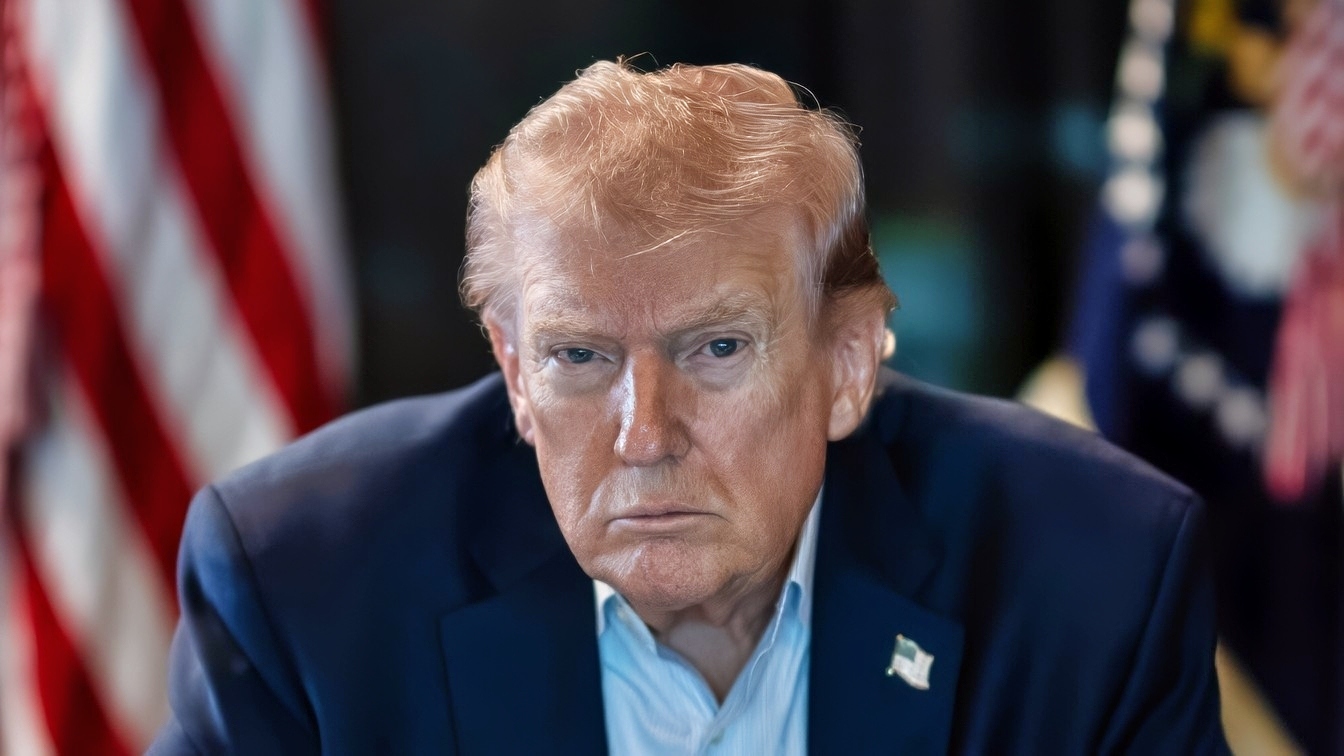
Now, President Donald Trump has an idea to make data centers more popular.
A Data Dividend
According to Reuters, Trump floated a new idea in a Truth Social post on Wednesday: companies that want to build data centers should pay a “dividend” to the communities where they want to build them to make them more popular.
“I have been watching Data Centers very closely, and have come to a very strong conclusion,” was how Trump began the post.
“I have watched the process closely, and data centers that were highly unpopular in a certain area have become extremely popular when a financial deal is struck,” Trump said in the social media post.
The president went on to point to past instances when such financial deals made data centers more popular, though he did not provide specific examples of places where that has happened.
Trump has been a major booster of AI in his second term, as well as data centers.
However, he has insisted that the technology be called “super intelligence” rather than “artificial intelligence.” In September, he hosted the heads of major AI companies at the White House to sign his executive order, “Inaugurating the Era of Super Intelligence.”
How It Could Work
According to CNBC, Nebius Chief Revenue Officer Marc Boroditsky told the network that “it’s not crazy” for the industry to consider such a concept, and that the company is already talking about investing in some communities.
Speaking to CNBC at a conference in Germany, he added that the company wants to develop a framework “where the rewards are actually funneled back to the community.”
Distributing the Spoils
Meanwhile, stories this week suggested that AI companies are grappling with how to handle the disruption their products are likely to cause.
Reuters laid out how Anthropic and Elon Musk’s SpaceX, which now owns what’s called SpaceXSI, are taking different approaches to that question.
Anthropic this week announced it is setting aside 5 percent of its shares for a new fund for “the public good,” called the Anthropic Public Benefit Fund.
Beyond the 5 percent, the company’s contribution will increase, with “an additional 2% added at the board’s discretion for every 50% increase in the company’s value above a set baseline.”
Anthropic, best known for Claude, is not yet public, but it reportedly plans to launch an IPO.
The company has not announced where that money will go, saying it could fund “large donations to traditional nonprofits or direct distributions to specific populations.” In addition, Anthropic said it has already committed $200 million to studying the labor disruption AI technology could cause, while acknowledging that “bolder approaches may be needed.”
Meanwhile, Musk has announced that next year, he will give one SpaceX share to “every kid in America.” The president said the contributions will go toward the “Trump accounts” program.
The New York Times calculated that, with 72 million children under 18 as of last year and SpaceX’s stock currently worth about $148 a share, the donation would total about $10.5 billion, Musk’s largest-ever philanthropic gift.
The newspaper noted, however, that Musk has not always followed through on charitable pledges.
Last week, The Economist described Musk’s personal charitable foundation as “opaque, miserly and self-serving.”
About the Author: Stephen Silver
Stephen Silver is an award-winning journalist, essayist, and film critic, and contributor to the Philadelphia Inquirer, the Jewish Telegraphic Agency, Broad Street Review, and Splice Today. The co-founder of the Philadelphia Film Critics Circle, Stephen lives in suburban Philadelphia with his wife and two sons. For over a decade, Stephen has written thousands of articles on politics, national security, technology, and the economy. Follow him on X (formerly Twitter) at @StephenSilver, and subscribe to his Substack newsletter.


