

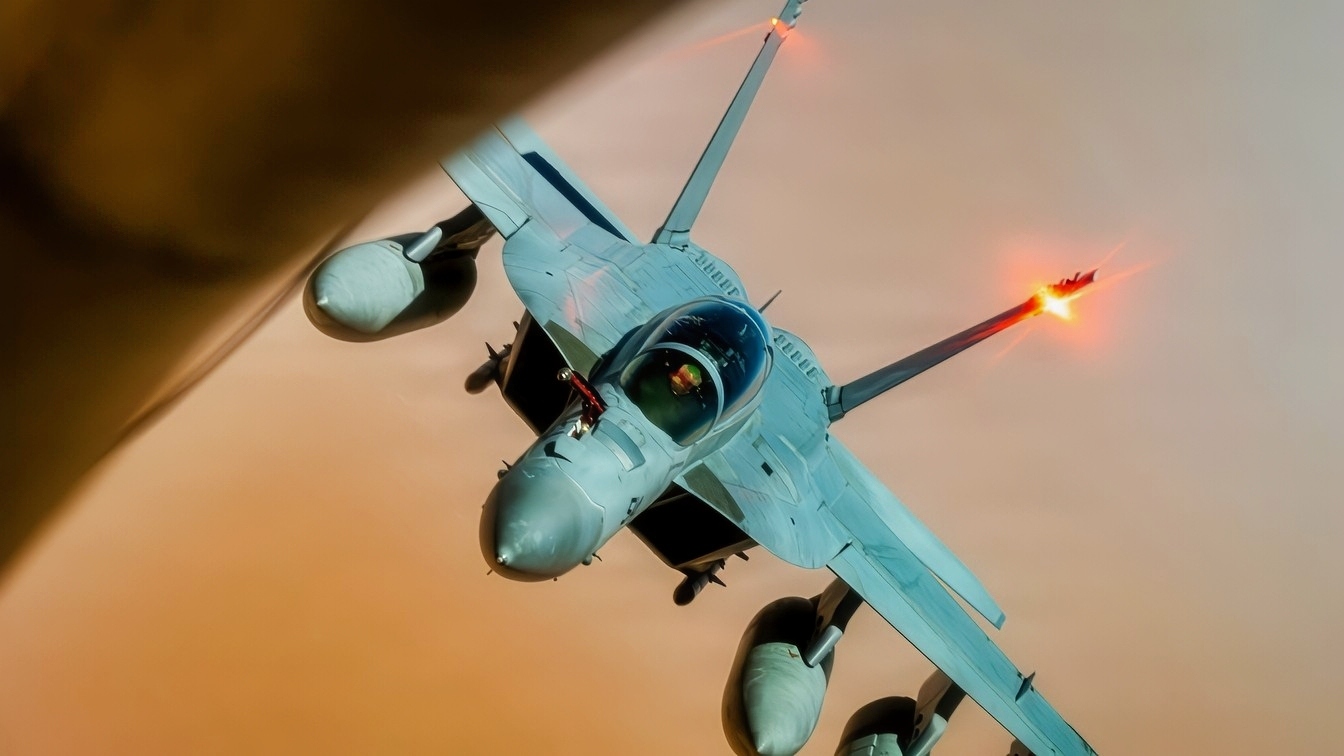
Tehran is currently campaigning hard in the American midterm election. Unlike before, it doesn’t need a single fake social media account. Two senior Iranian officials told Reuters that Tehran is deploying new tactics against ships in the Strait of Hormuz, with the goal of keeping oil prices high and influencing November’s midterm elections.
One said the shift began about 10 days ago and has already driven up the number of attacks.
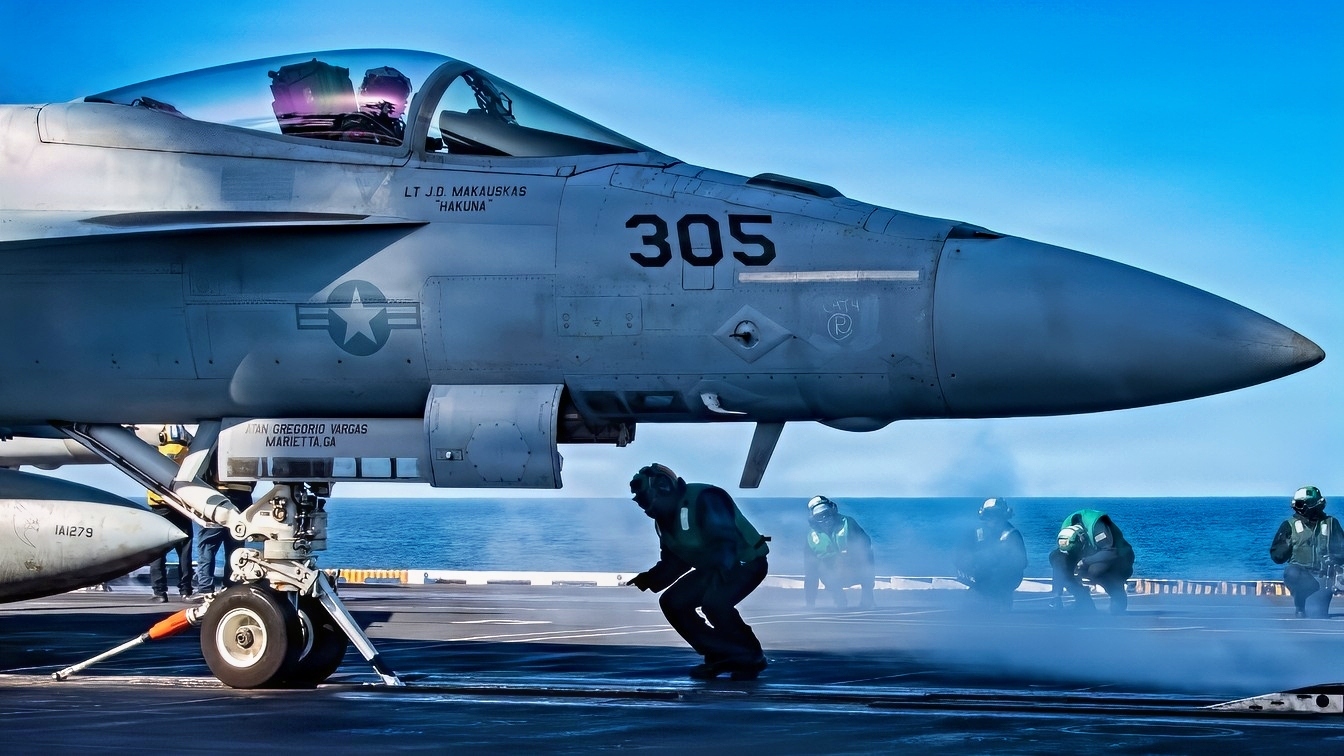
An F/A-18E Super Hornet, attached to the “Kestrels” of Strike Fighter Squadron (VFA) 137, prepares to launch from the flight deck of the Nimitz-class aircraft carrier USS Nimitz (CVN 68) in the Pacific Ocean, April 22, 2026. Nimitz is deployed as part of Southern Seas 2026 which seeks to enhance capability, improve interoperability, and strengthen maritime partnerships with countries throughout the region through joint, multinational and interagency exchanges and cooperation.
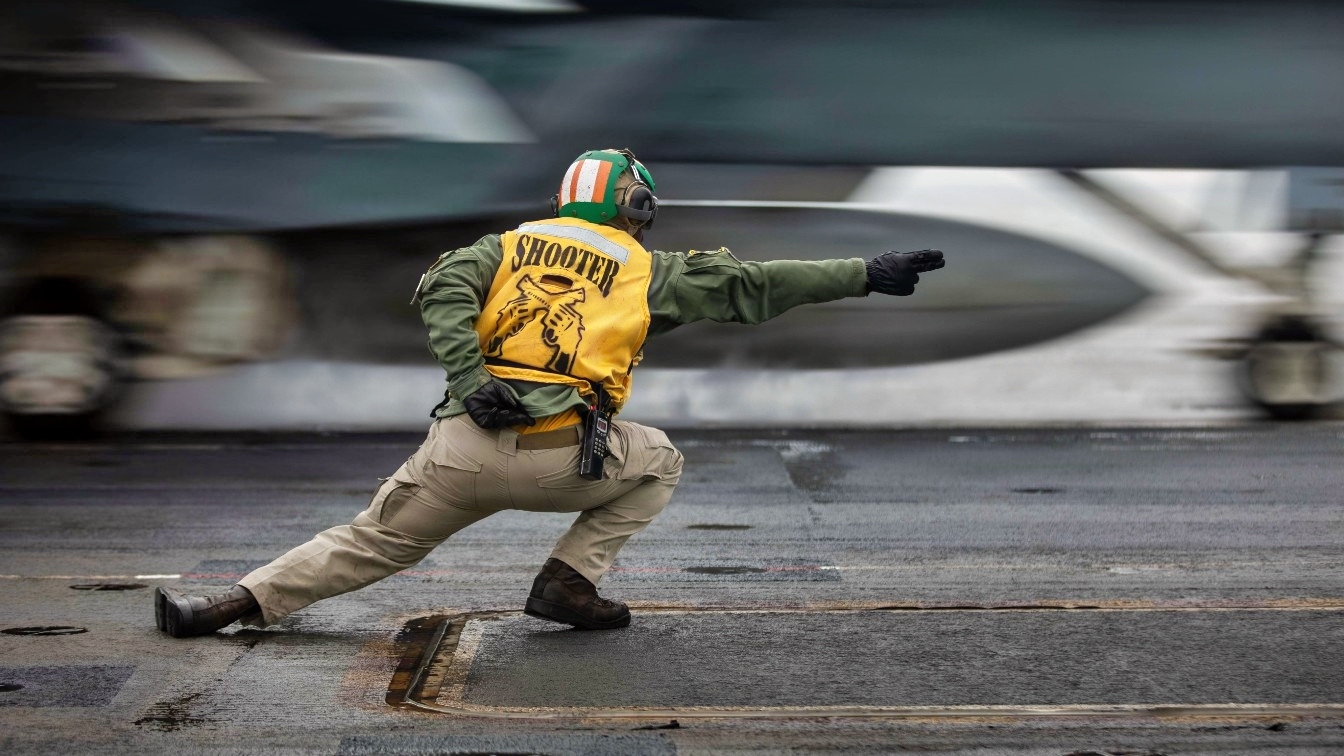
U.S. Navy Lt. Miguel Smith launches an F/A-18E Super Hornet, attached to the “Pukin Dogs” of Strike Fighter Squadron (VFA) 143, from the flight deck of Nimitz-class aircraft carrier USS Dwight D. Eisenhower (CVN 69) May 7, 2026. Eisenhower is underway conducting flight deck certification in the Atlantic Ocean in preparation for future operations. (U.S. Navy photo by Mass Communication Specialist 3rd Class Jamison Sutton)
Both said the decision came from the highest levels of Iran’s leadership and was coordinated across the regime.
That’s not an anonymous analyst guessing at motives. That’s Tehran telling us the plan.
Gas Prices Are The Big Focus At The Ballot Box
Before the US and Israel launched airstrikes on Iran on February 28, roughly a fifth of the world’s oil and liquefied natural gas trade moved through the Strait of Hormuz.
Since restricting that passage, Iran has spent months building leverage over Washington.
The war now costs about $3 billion a month, and it has become a central issue on the campaign trail, with control of Congress on the line.
Voters feel it at the pump.
Gas prices have been climbing again, and nearly half of Americans say gas prices will affect their vote.
President Trump all but acknowledged the problem in September, saying oil prices are “going to be tumbling downward” right after the election.
Tehran heard that too.
The second Iranian official told Reuters that Iran won’t let Trump bring prices down before November, calling the effort a “game of chess”. Every time prices start to drift lower, Iran plans to push them back up.
And a slow squeeze is better politics than a single shock.
A full closure of the Strait would spike prices once.
A steady series of attacks keeps them high through Election Day.
What Actually Changed
The Iranians wouldn’t detail the new tactics, but they don’t have to; it is plain to see.
However, a US military official filled in part of the picture.
After American strikes wrecked much of Iran’s radar coverage, the IRGC began using unarmed spotters in small boats to find targets, including US Navy ships.
Last week, US forces caught spotters working from a dhow and calling in targets to the IRGC.
They ordered the crew off and destroyed the boat.
No casualties.
That’s a classic move for a force that has lost its high-end surveillance.
You fall back on eyeballs, radios, and boats that look like they belong to fishermen.
Low-tech, hard to stop, and cheap to replace.
The tempo is up, too.
Maritime security data showed at least five incidents involving tankers and other commercial ships in a 48-hour span, including drone strikes, roughly matching a spike from October 3-5.
One maritime security source told Reuters the increase looked deliberate. A blind man can see that.
The map is getting bigger, too.
The officials said Iran will push operations beyond Hormuz into the Gulf of Oman and waters farther out, and recent attacks off Qatar and the United Arab Emirates suggest that’s already underway.
One official put it bluntly: “It will be complete closure soon.”
The Trade-Off
Tehran doesn’t advertise the flip side.
The same US official said Iran has been unable to stop a ramp-up in oil exports through the strait, largely because it won’t risk its remaining fast boats after US strikes gutted its navy.
Spotters in dhows are a workaround.
They’re also an admission.
Iran is fighting with what it has left, and what it has left is the ability to make shipping expensive, and insurers raise their rates.
The US Navy-led Joint Maritime Information Center still rates the threat to merchant shipping in Hormuz as severe, its second-highest level.
Premiums move on that word alone.
That’s exactly the point. Iran doesn’t need to win a naval engagement, and won’t.
All it needs is a burning tanker on the evening news once or twice a week until November 3.
Influence Ops Without A Keyboard
Iran has tried to meddle in American elections before, and it usually looked like the playbook everyone expects.
In 2024, Microsoft reported that IRGC-linked hackers phished a presidential campaign official and stood up fake news sites aimed at voters on both sides of the aisle.
This year, the Brennan Center notes that Iran-linked actors hit at least 100 water systems across a dozen states, and a Meta threat report flagged an Iran-linked network targeting American audiences.
None of that is going away.
However, this new approach is different: Fake accounts can be taken down.
You can’t fact-check gas prices.
Say what you want about whether voters should blame the White House, Tehran, or the oil market for what they pay at the pump.
That’s beside the point.
Iran is betting voters will blame someone, and that someone will be on the ballot.
This conflict that has been characterized as “Trump’s conflict of choice” conveniently ignores the fact that Iran has been at war with the United States and is responsible for the death of thousands of Americans for 47 years.
And it won’t stop just because a mid-term election goes the way it wants.
Tehran won’t magically stop attacking shipping on November 4th regardless of the election results.
Trump has foolishly said he won’t strike Iran again before the vote.
Tehran knows it, and it’s using the window.
Washington has its own levers in play, including a naval blockade of Iranian ports and expanded sanctions.
The Iranian economy is in freefall, and they’re playing for time to see the sanctions and blockade lifted.
The real race this fall is whether those squeeze Iran faster than Iran squeezes the American driver.
Iran can’t vote in November. It’s doing the next best thing.
It’s campaigning at the gas pump.
About the Author: Steve Balestrieri
Steve Balestrieri is a National Security Columnist. He served as a US Army Special Forces NCO and Warrant Officer. In addition to writing on defense, he covers the NFL for PatsFans.com and is a member of the Pro Football Writers of America (PFWA). His work was regularly featured in many military publications.


