

Key Points and Summary – The F-15EX Eagle II and F-16V Viper are top-tier 4th-gen upgrades with distinct strengths.
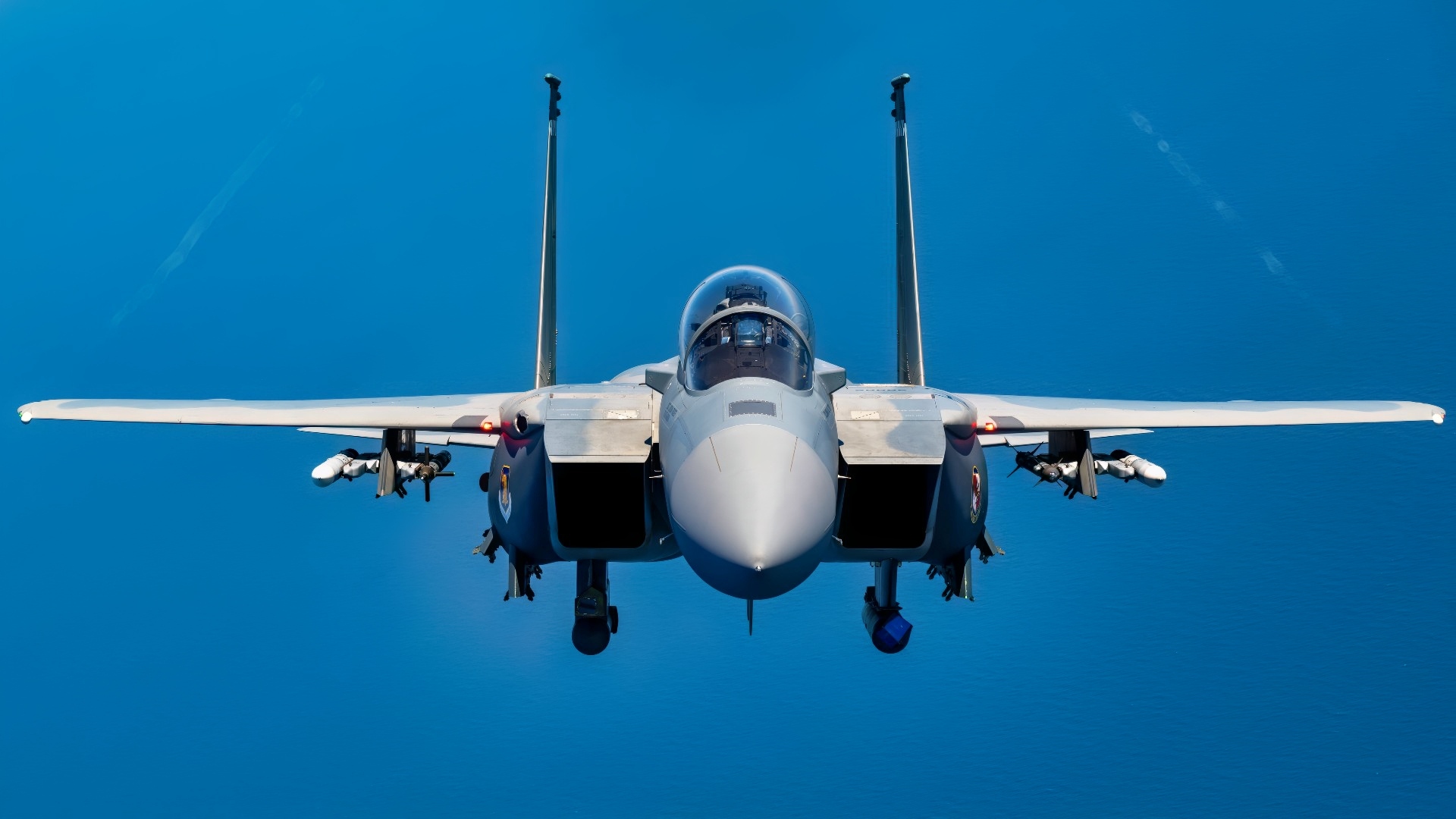
-F-15EX brings twin-engine power, huge payloads (up to 22 AAMs), long range, and EPAWSS electronic warfare to dominate at distance.
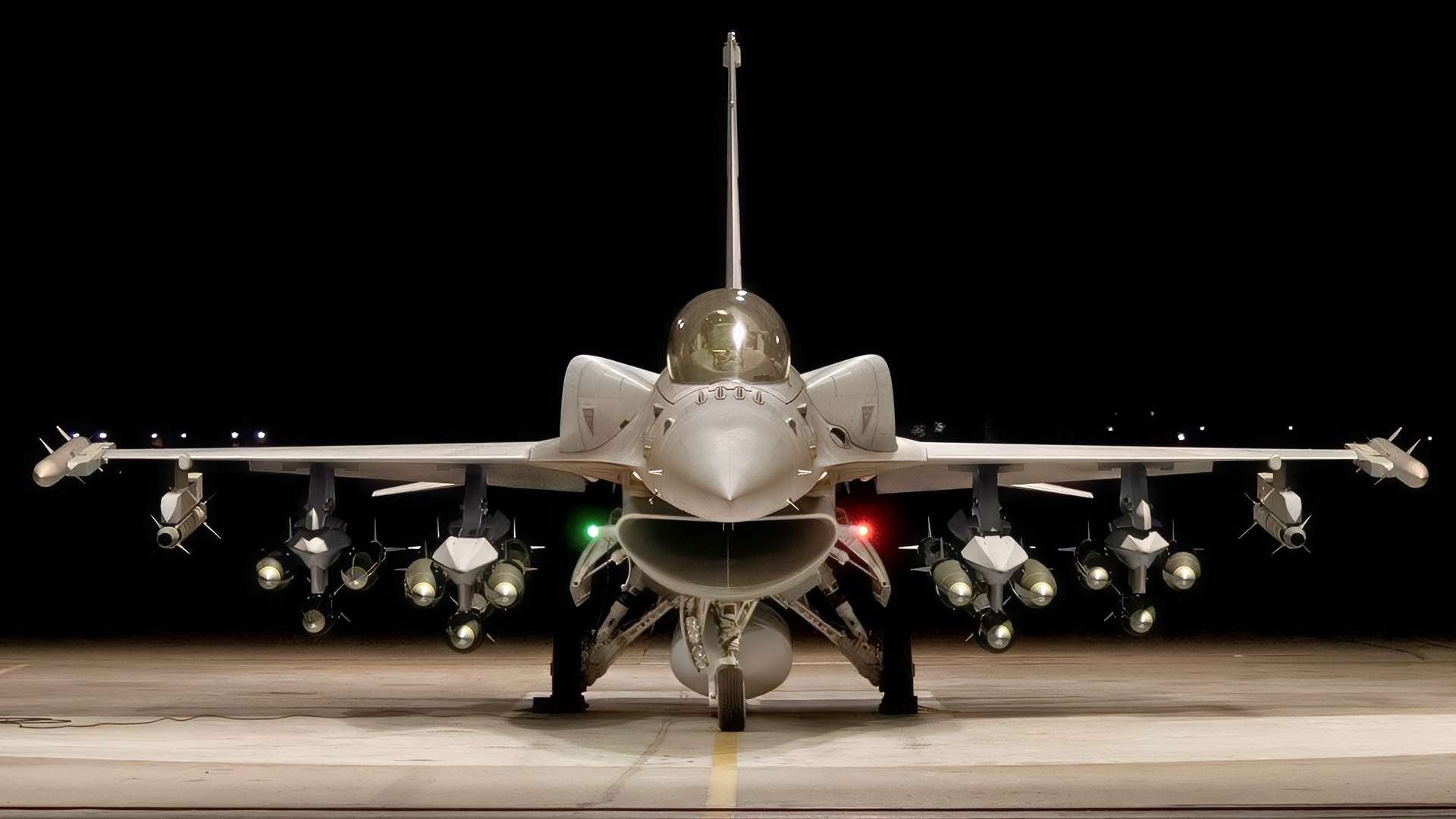
F-16V Viper Lockheed Martin Image.
-F-16V counters with agility, lower cost, and the APG-83 AESA plus modern cockpit and ECM. In BVR, F-15EX’s magazine depth, speed, and EW likely let it detect, engage, and overwhelm first.
-In WVR, the Viper’s smaller size, high agility, HOBS missiles, and cueing make it dangerous, though the Eagle’s energy advantage can reset the fight.
Bottom line: context and pilot skill decide—both can win.
F-15EX Eagle II vs F-16V: Which 4th-Gen Icon Wins a Dogfight?
The F-15EX Eagle II and the F-16V Viper are two of the most advanced fourth-generation fighters in the world today.
Both aircraft are deep modernizations of legacy Cold War platforms.
Both incorporate advanced avionics and various other upgrades that significantly increase performance and lethality.
The F-15 and F-16 were designed for different missions and purposes, but both are competent multi-role fighters that excel in air superiority and strike missions.
But which aircraft would win in a one-on-one fight?
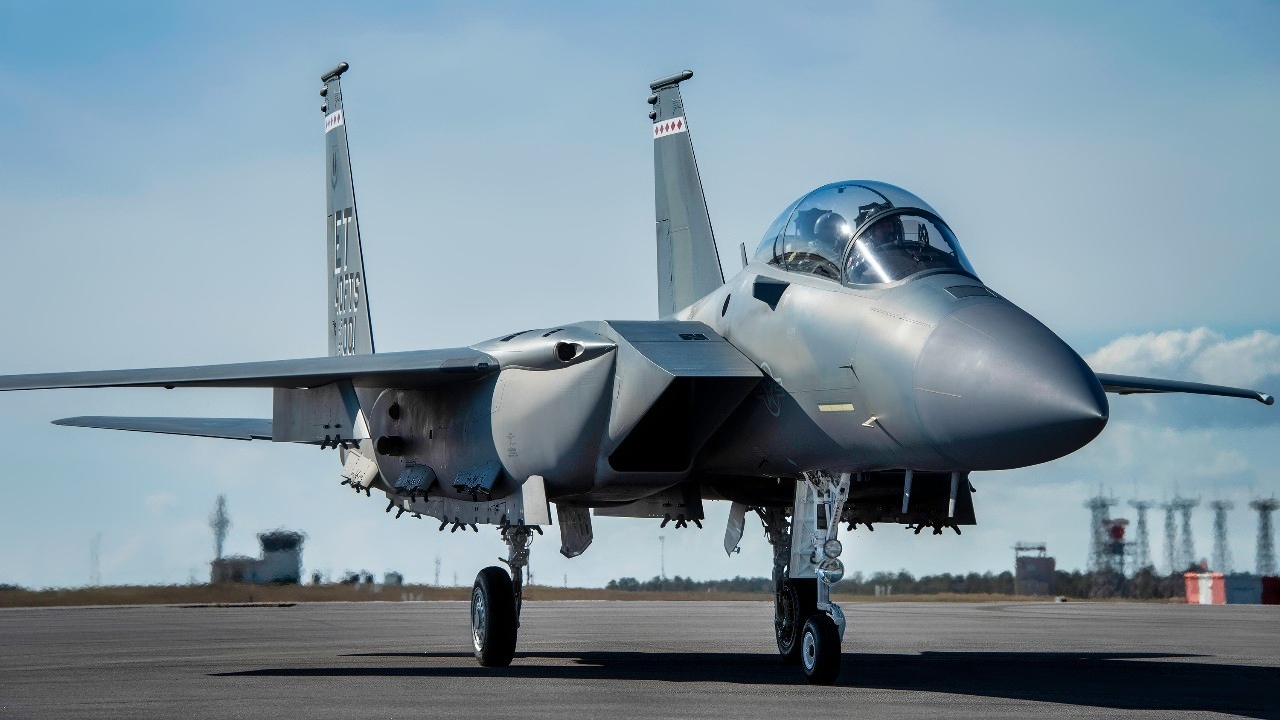
The F-15EX, the Air Force’s newest fighter aircraft, arrives to Eglin Air Force Base, Florida March 11. The aircraft will be the first Air Force aircraft to be tested and fielded from beginning to end through combined developmental and operational tests. The 40th Flight Test Squadron and the 85th Test and Evaluation Squadron personnel are responsible for testing the aircraft. (U.S. Air Force photo/Ilka Cole)
America’s Best Fourth-Gen Fighters
The F-15EX is a direct descendant of the F-15 Eagle, initially developed in the 1970s as an air superiority fighter.
The EX-variant incorporates cutting-edge avionics, a digital backbone for rapid upgrades, and the ability to carry a massive payload.
It is designed to complement fifth-generation fighters, such as the F-35, by providing long-range firepower and electronic warfare support.
One or two crew members can fly the aircraft and are capable of carrying up to 29,500 pounds of ordnance, including air-to-air missiles, air-to-ground munitions, and even hypersonic weapons.
In contrast, the F-16V is the latest and most advanced version of the F-16 Fighting Falcon, a platform known for its agility and cost-effectiveness.
The Viper upgrade features a new AESA radar, enhanced cockpit displays, and improved mission systems.
It is a single-seat, single-engine fighter that can carry around 17,000 pounds of ordnance.
While it lacks the raw power and payload capacity of the F-15EX, the F-16V is designed to be a nimble, multirole platform that can perform a wide range of missions at a lower cost.
Avionics and Armament
When it comes to avionics and sensors, both aircraft are well-equipped.
The F-15EX is equipped with an AN/APG-82(V)1 AESA radar, which offers around 180 km in range, high resolution, and target tracking capabilities. It also features the EPAWSS (Eagle Passive/Active Warning Survivability System), a state-of-the-art electronic warfare suite that enhances survivability in contested environments.
In comparison, the F-16V is equipped with the AN/APG-83 SABR AESA radar, which is a descendant of the radar used by the F-35. It has an impressive range of around 370 km, though its range varies depending on the angle. The F-16V also features improved electronic countermeasures and data fusion capabilities, positioning it alongside, if not ahead of, the F-15EX in terms of survivability.
In terms of weapons and payload, the F-15EX is unmatched among fourth-generation fighters. It can carry up to 22 air-to-air missiles, such as the AIM-120 AMRAAM, and is capable of launching a wide variety of air-to-ground munitions, including standoff weapons and hypersonic missiles.
This makes it an ideal platform for both air superiority and deep strike missions. The F-16V, while capable of carrying a respectable loadout of 6 to 8 air-to-air missiles and precision-guided bombs, simply cannot match the F-15EX in terms of firepower or versatility.
Its smaller size and single-engine design limit its payload capacity and range of weapon options.
Engine Performance and Survivability
Performance-wise, the F-15EX is a powerhouse. With two powerful engines producing a combined thrust of around 58,000 pounds, it can reach speeds in excess of Mach 2.5 and has a combat radius of over 1,100 nautical miles, which can be extended with external fuel tanks. Its high thrust-to-weight ratio and large wing area give it excellent acceleration, climb rate, and energy retention.
The F-16V, while not as fast or powerful, is extremely agile thanks to its relaxed static stability and fly-by-wire controls.
It can reach speeds of Mach 2.0 and has a combat radius of around 800 nautical miles. In a dogfight, the F-16V’s agility and smaller size could give it an edge in close-quarters maneuvering, but the F-15EX’s superior speed and energy management would allow it to dictate the terms of engagement.
In terms of survivability, neither aircraft is equipped with advanced stealth technology. The F-15EX features advanced electronic warfare systems, high-speed escape capabilities, and a robust airframe, making it more survivable in high-threat environments.
It is designed to operate alongside stealth aircraft and provide support in contested airspace. The F-16V, while harder to detect due to its smaller radar cross-section, lacks the same level of electronic protection and redundancy.
It relies more on agility and electronic countermeasures to survive, which may not be sufficient in heavily defended areas.
Who Wins in 1 Word: Draw?
Now, considering a hypothetical one-on-one engagement between the F-15EX and the F-16V, the outcome would depend heavily on the conditions of the fight. In a beyond-visual-range (BVR) scenario, the F-15EX has the upper hand.
While the F-16V has the better radar, the F-15EX compensates with better EW systems, and a higher missile capacity would allow it to detect, track, and engage the F-16V before the latter could respond. The F-15EX could launch multiple AMRAAMs from long range, potentially overwhelming the F-16V’s defenses.
In a within-visual-range (WVR) dogfight, the situation becomes more complex. The F-16V’s agility and smaller size would make it a difficult target, and with modern helmet-mounted cueing systems and high off-boresight missiles like the AIM-9X, it could pose a serious threat.
However, the F-15EX’s superior thrust and energy retention would allow it to disengage and re-engage at will, giving it a tactical advantage even in close combat.
Overall, the F-15EX and the F-16V are extremely closely matched. The F-15EX has better engine performance and payload capacity while the F-16V sports better avionics. Realistically, a battle between these two fighters would likely boil down to pilot skill/experience.
Either fighter could come out victorious in any given combat engagement between the two.
The F-15EX and F-16V are two distinct fighters that excel in their respective roles, yet are almost evenly matched against each other.
About the Author: Isaac Seitz
Isaac Seitz, a Defense Columnist, graduated from Patrick Henry College’s Strategic Intelligence and National Security program. He has also studied Russian at Middlebury Language Schools and has worked as an intelligence Analyst in the private sector.
More Military
B-1B Lancer: The Bomber The Air Force Needs to Keep Flying
Su-37 ‘Terminator’: The Thrust-Vectoring Super Flanker Fighter That Never Was
Russia or China Would Love to Have the Aircraft Carrier USS Harry S. Truman
NATO’s Big Fear: Putin Drops a Tactical Nuclear Weapon on Ukraine
The U.S. Military’s Big F-22 Raptor Stealth Fighter Mistake Cuts Deep


Michael
October 5, 2025 at 1:50 am
Ummm, you may want to check your research. The F-15EX most certainly has a better and longer range radar than the F-16V. The APG-82 has long been regarded as the best radar in US inventory (it’s also the newest). The size of the radar array dwarfs the F-16’s, which likely means it can transmit more power and reach further out. The EX also has a single large area display that has better sensor fusion than the F-16V’s scattered displays.