

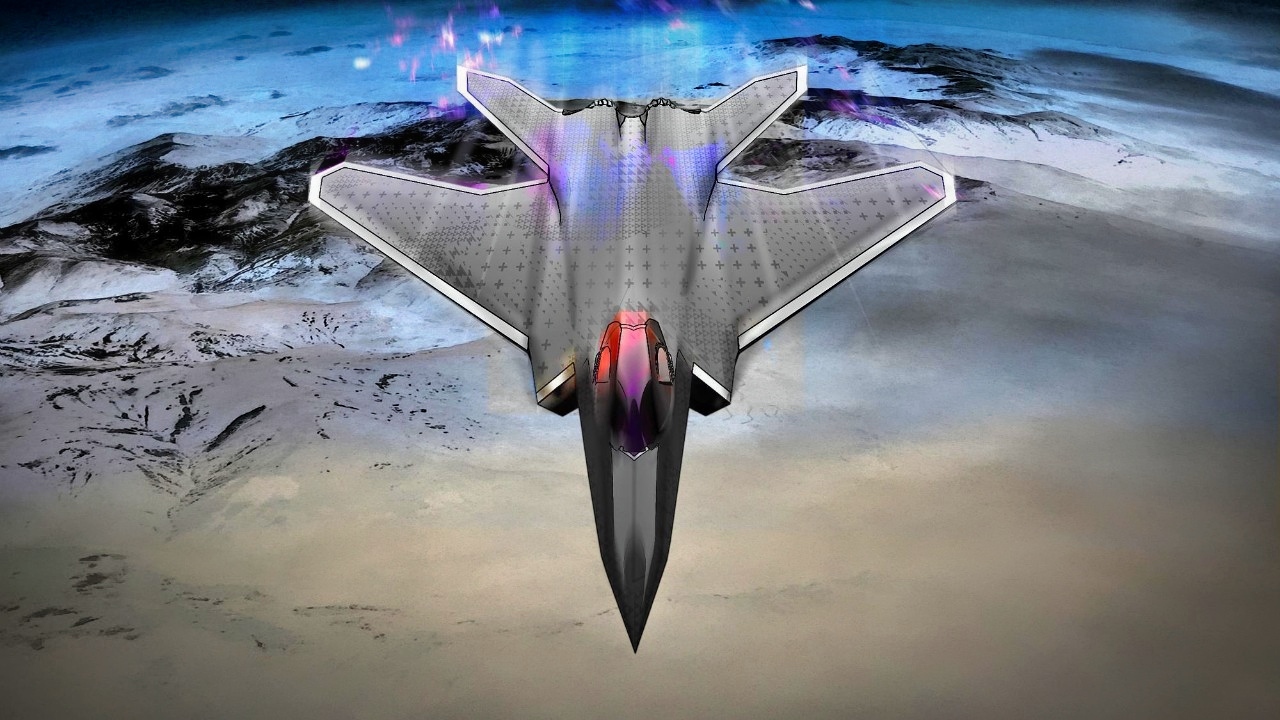
Key Points and Summary – Europe’s sixth-generation Future Combat Air System (FCAS) should be the jet that carries NATO airpower into the 2040s and beyond.
-Instead, the French-German-Spanish program is paralyzed by industrial rivalry, political backlash in Berlin, and a $116 billion price tag.

FCAS Artist Photo Creation. Image Credit: Creative Commons.
Dassault and Airbus are fighting over control of design and production, while some German lawmakers now openly call for cancellation.
-All this unfolds as Russia pushes its Su-57 and future MiG-41, and as the UK-Japan-Italy GCAP project gains momentum.
-If Paris and Berlin cannot impose discipline soon, Europe risks losing its next-gen fighter race before it even begins.
European FCAS Sixth-Generation Fighter Jet Suffering from Infighting
This European next-generation fighter jet program is a mess. The countries involved are bickering.
Their parliamentarians are getting frustrated. And the airplane may not have a bright future even if it is not cancelled outright. I’m referring to the FCAS – the Future Combat Air System.
The FCAS is a sixth-generation fighter being developed by France, Germany, and Spain. It is badly needed to keep up with the Russian stealth fifth-generation Su-57 Felon and the sixth-generation MiG-41 PAK DP.
Some Politicians Want to Cancel the Entire Project
However, the entire FCAS program is up in the air, leaving lawmakers frustrated. A German Member of Parliament is now saying it should be cancelled outright. MP Volker Mayer-Lay, whose policy portfolio includes the German air force, has seen enough.
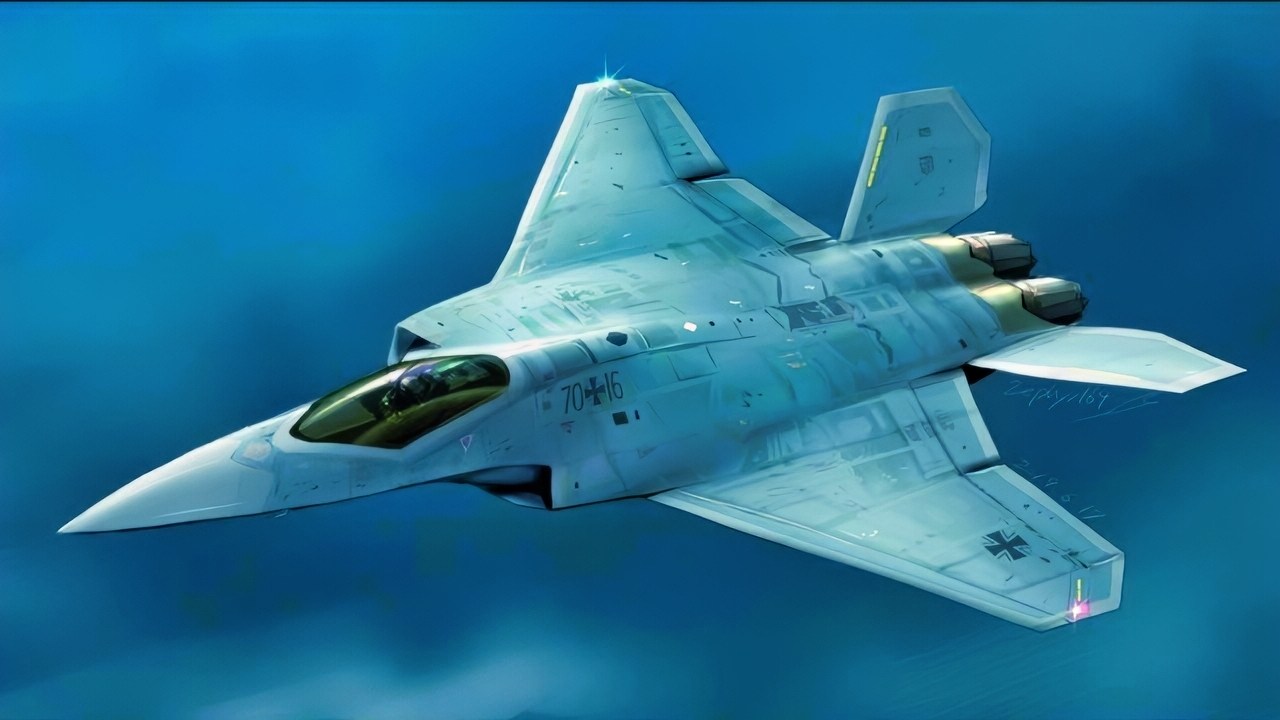
FCAS Photo Artist Image. Image Credit: Creative Commons.
The legislator said on December 4 that “terminating FCAS is likely the only functional solution to the existing problem.” This comes ahead of a pivotal meeting among France, Germany, and Spain next week to try to reconcile their differences.
French and German Defense Contractors Don’t See Eye to Eye
The imbroglio stems from a disagreement between Dassault Aviation, based in Paris, and Airbus Defence, based in Berlin.
The dispute has even come to the attention of heads of state. French President Emmanuel Macron and German Chancellor Friedrich Merz want to figure out the program’s future by the end of this year.
Critical Asset for NATO
FCAS will cost $116 billion. This is a heavy lift for countries with tight defense budgets, but the Russians are forging ahead with next-generation flight, and the Europeans must keep up. With Vladimir Putin, one never knows about his designs on NATO.
The Su-57 and MiG-41 could be a dominant one-two punch against the allies. NATO now relies on non-stealthy aircraft like the Eurofighter Typhoon and the JAS 39 Gripen. There are 3,312 fighter jets in the alliance, but many are obsolete and no match for Russia’s next-generation fighters.

FCAS Fighter Mock Up. Image Credit: Creative Commons.
The deadline to decide on the continued development of FCAS is December 18. That suspense date refers to signing a contract on the “core principles of cooperation,” Reuters reported on November 25, and includes a “decision roadmap” drafted by Berlin.
Would the Germans Pull the Plug On Such an Important Fighter?
But with political opposition mounting in Germany, the FCAS is in jeopardy. The agreement in question would give the second phase of the project the go-ahead in 2026. This is then a badly needed contract for the fighter’s development that the stakeholders must iron out.
“Berlin and Paris are also reported to be preparing for a retreat, such is the tension between the contractors. Airbus DS and Dassault have made it clear they are ready to go their own way if their conditions are not accepted for working on the vast FCAS project,” according to SLDinfo.com.
Germany is distraught because work has come to a halt. Berlin wants the production to start without delay, as manufacturing facilities and suppliers sit idle waiting for orders. The workforce could be used for other defense programs. Meanwhile, France and Dassault have also dug in their heels.
The issue is one of control. Dassault should be the prime contractor with final say in all design and the desire to lead the second phase of research and development. Naturally, the Germans believe they should have the “final cut” of the production.

(July 20, 2008) Lt. Cmdr. Christopher Biggs shoots a French F-2 Rafale off the aircraft carrier USS Theodore Roosevelt (CVN 71) during combined French and American carrier qualifications. This event marks the first integrated U.S. and French carrier qualifications aboard a U.S. aircraft carrier. U.S. Navy photo by Mass Communication Specialist 3rd Class Jonathan Snyder (Released)
This is not surprising when you have too many cooks in the kitchen for such an ambitious airplane.
The FCAS is an interesting warbird. It will have ultra-stealth and admirable speed. The FCAS will be able to control a “Loyal Wingman” drone to improve intelligence and reconnaissance collection and to maximize electronic warfare efforts. The FCAS could also carry “swarming kamikaze drones” for greater destruction of ground targets.
The FCAS will have an upgradable artificial intelligence capability that is enabled by a “system of systems” with sensor fusion. Situational awareness will be excellent, and the future warbird will have excellent interoperability with existing NATO warplanes.
Canada Is Looking Ahead to Its Warplane Needs
Some alliance members, like Canada, are pondering the future of their air forces and wondering whether the FCAS will eventually be available. The country is not an official partner of the troubled next-generation airplane, but it may want to be a customer.
Canada has been in the news because of its earlier agreement to buy 88 F-35s from the United States. This deal is still under review by the Canadian government. The Great White North could certainly bolster its future air force plans with the FCAS in the 2030s and 2040s.
Additionally, there is the question of competition for the FCAS program.
The United Kingdom, Japan, and Italy are also moving forward with their own GCAP (Global Combat Air Program). This is another sixth-generation airplane that will be ready in the next two decades. GCAP also features AI and machine learning in the cockpit.
For example, pilots will use augmented reality headsets to improve situational awareness and control weapons.
This is a hairy situation for Europe. With Vladimir Putin’s belligerence and warmaking ability, the continent needs a new fighter it can depend on. The FCAS has many exciting qualities and should have willing customers, such as Canada and other members, who want next-generation flight capabilities.
However, cooler heads may prevail. The French and German governments will finally realize that many aerospace jobs are at risk. The continent could use more people employed in advanced manufacturing, which can boost the overall economy.
Plus, strategically, operationally, and tactically, the FCAS makes sense. We’ll see what Macron and Merz decide. They can mitigate the hard feelings between the defense contractors and order everyone to play nice, keeping the FCAS in business.
About the Author: Brent M. Eastwood
Author of now over 3,000 articles on defense issues, Brent M. Eastwood, PhD is the author of Don’t Turn Your Back On the World: a Conservative Foreign Policy and Humans, Machines, and Data: Future Trends in Warfare plus two other books. Brent was the founder and CEO of a tech firm that predicted world events using artificial intelligence. He served as a legislative fellow for US Senator Tim Scott and advised the senator on defense and foreign policy issues. He has taught at American University, George Washington University, and George Mason University. Brent is a former US Army Infantry officer. He can be followed on X @BMEastwood.


Matthew Hatton
December 5, 2025 at 10:15 am
Nope- this European project is doomed (largely caused by greed & arrogance on the French side….again!)
Fact is it’s way, way behind British led GCAP (Tempest) in any case- which will hoover up Australian, Canadian, Saudi and very likely German orders too!!
It has as they say in France….ad it!