

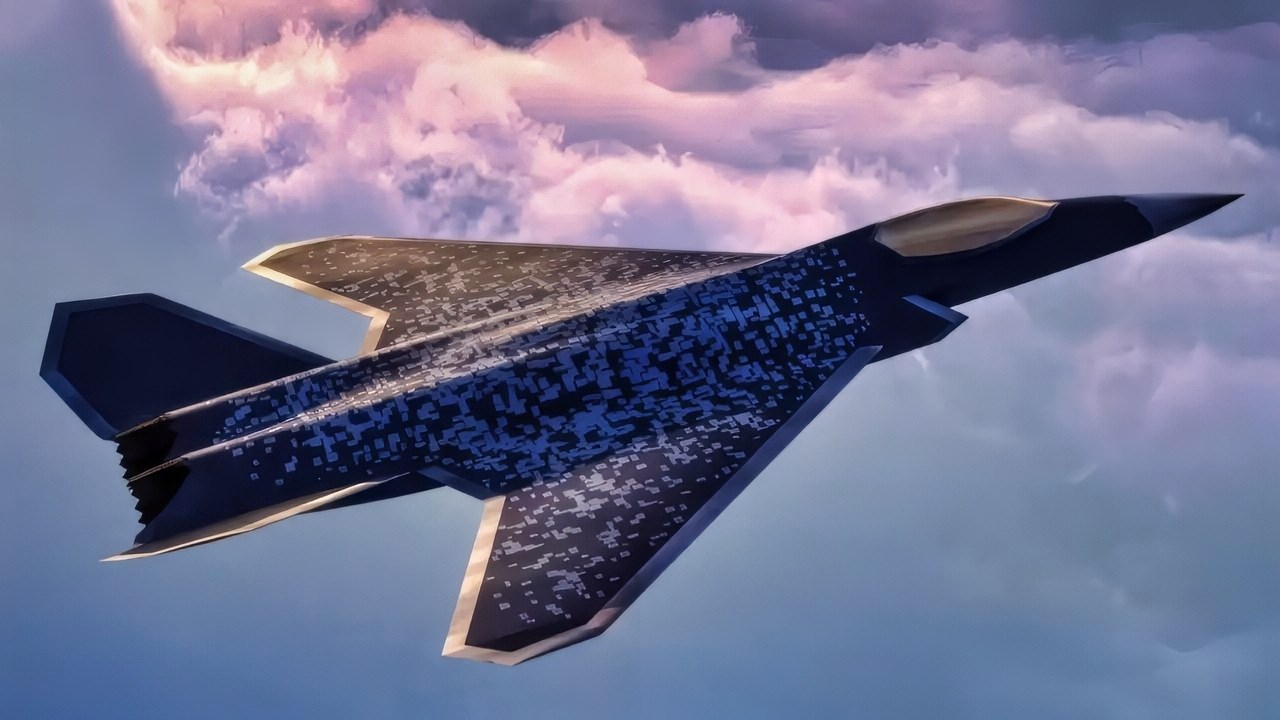
Key Points and Summary – Europe’s flagship Future Combat Air System is in crisis. Berlin and Paris are now openly debating whether to gut the €100 billion program’s centerpiece—a new sixth-generation fighter—and refocus on a shared “combat cloud” command-and-control network.
-Years of deadlock between Dassault and Airbus over leadership, workshare, and intellectual property have stalled progress, even as France racks up Rafale exports and hints it could go it alone.

FCAS Fighter Mock Up. Image Credit: Creative Commons.
-Germany, flush with new defense cash, is weighing other partners. High-level meetings may yet keep FCAS alive, but for now the project is flying through extreme political and industrial turbulence.
Mayday: The Future Combat Air System (FCAS) Is In Trouble
Internal FCAS divisions have spilled into the open, potentially shooting down the project’s future.
Berlin and Paris are reconsidering the future of their Future Combat Air System, or FCAS, with discussions reportedly revolving around how to downsize the multi-billion Euro defense project, instead jointly developing a command and control system called “combat cloud.”
Dissention in Development
The crux of the issue is disagreement between FCAS’s two main contractors, Airbus and Dassault Aviation.
The two aerospace firms are at loggerheads, locked in dispute over what exactly the FCAS should be and what it should do.
The Future Combat Air System program’s shift to a cloud-based command and control system would, in theory, link pilots with a wide array of sensors on the ground, at sea, in space, and to other assets in the air, both manned and unmanned.
Though no final decision has been made about the future of FCAS, a cloud-based command component is already part of the future fighter jet program.
Speaking to the Financial Times, a trio of officials familiar with the FCAS project’s status outlined the direction the realigned FCAS program could take.
One official explained that “we [Europeans] can live with several jets in Europe but we need one cloud system for all of them,” with a second individual affirming that “all the other elements [of FCAS] are working well. Why would we stop doing that? There is no need for FCAS to founder completely—there is a need for a combat cloud system.” A third individual raised the project’s timeline, given the seemingly digital-only FCAS future, and suggested that the FCAS program could be sped up to 2030, up from the previously projected 2040 end goal.
Previous friction within the FCAS program revolved around the firms’ leadership responsibilities and the division of labor within the project. Berlin has accused Dassault of blocking the upcoming prototyping phase of FCAS, and the company’s CEO, Eric Trappier, has said his firm can move forward on building a next-generation aircraft without assistance from the Germans.
As one of the continent’s few nuclear-armed powers, Paris may be understanding of Dassault’s insistence on FCAS leadership. Integration with French nuclear weapons would be an absolute must for the FCAS project.
But Berlin is buoyed by a once-in-a-generation funding splurge to boost its military capabilities, and had to amend the German constitution to do so. The money recently made available to Germany’s defense establishment is fueling the sentiment that FCAS could go forward without the French.
High-level meetings between the French and German defense ministers are slated for next week in Paris, with the two countries’ respective leaders set to meet in Berlin concurrently. But the prospects for the leaders to tamp down on the private industry squabbling that is tearing FCAS apart seem dim.
Dassault Successes
France’s Dassault recently scored an export win, securing a deal with Ukraine for up to 100 of the aerospace firm’s Rafale fighter jets. Ukraine has long pleaded with Western countries for aircraft to augment the country’s limited Air Force.
And though Kyiv has acquired a handful of F-16 fighter jets from several countries, they have been delivered in too small numbers to exert real influence on the course of the ongoing war against Russia.
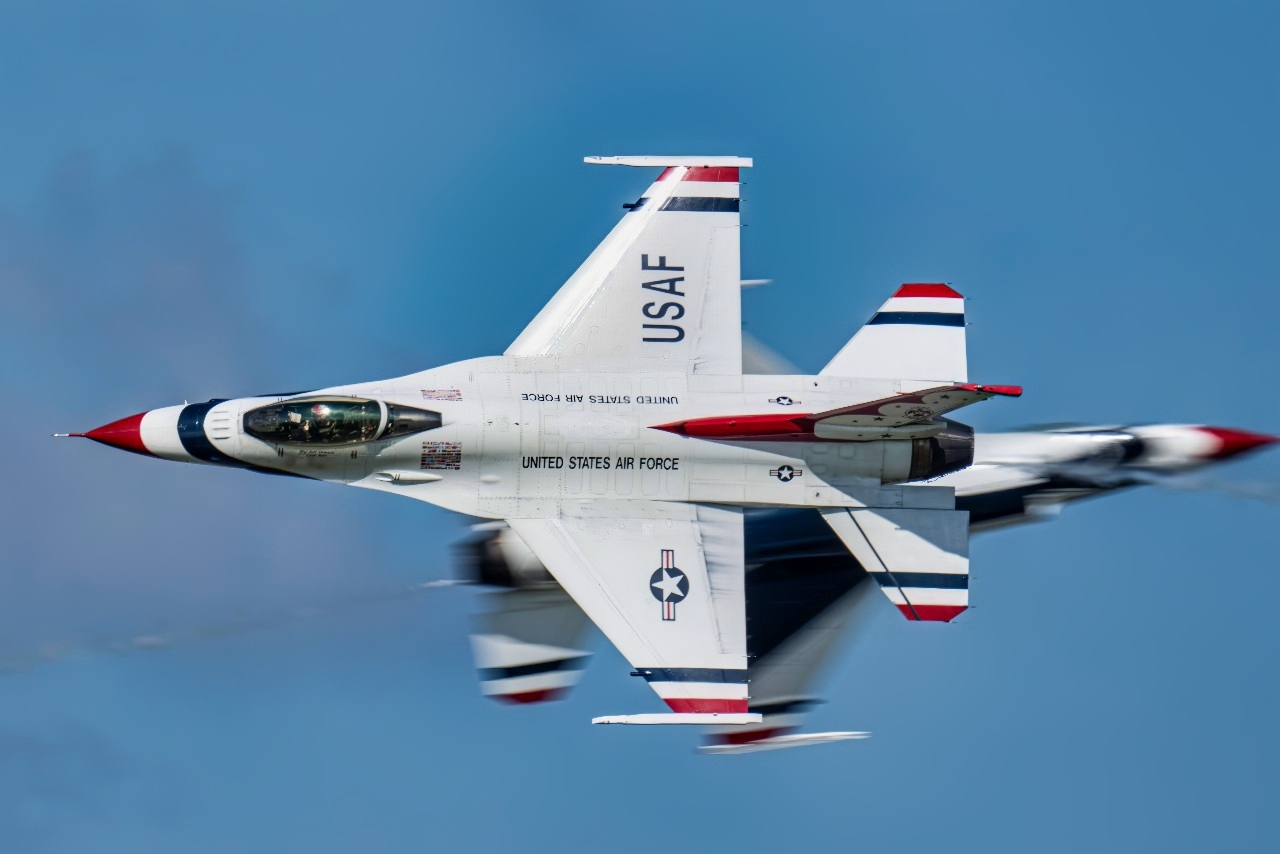
The United States Air Force Air Demonstration Squadron “Thunderbirds” perform at the Defenders of Liberty Airshow at Barksdale Air Force Base, Louisiana, March 29-30, 2025. The Thunderbirds perform at air shows across the country to showcase the capabilities of the United States Air Force, its Airmen, and the F-16 Fighting Falcon. During World War II, Barksdale served as a major bomber training base, and it has since become the home of the 2nd Bomb Wing, the oldest bomb wing in the Air Force. (U.S. Air Force photo by Tech. Sgt. Keith James)
Russia has launched massive drone and missile strikes against Ukraine, targeting civilian power and critical infrastructure ahead of the punishingly cold winter months. Kyiv and other major civilian areas are regularly plunged into darkness following Russian strikes.
And while Dassault’s news comes at a welcome time for Ukraine, the agreement is, in fact, a “declaration of intent to acquire the Rafale fighter jet” rather than a concrete commitment with a definitive timeline.
If Dassault pulls out of the Future Combat Air System, it would not be the first time the French firm has abandoned a joint fighter project. In the 1980s, Dassault withdrew from the Eurofighter Typhoon project, citing differing design priorities.
Today, Germany, the United Kingdom, Saudi Arabia, Kuwait, Oman, Qatar, Austria, Italy, and Spain all operate the Eurofighter.
But France instead opted to build its Rafale fighter.
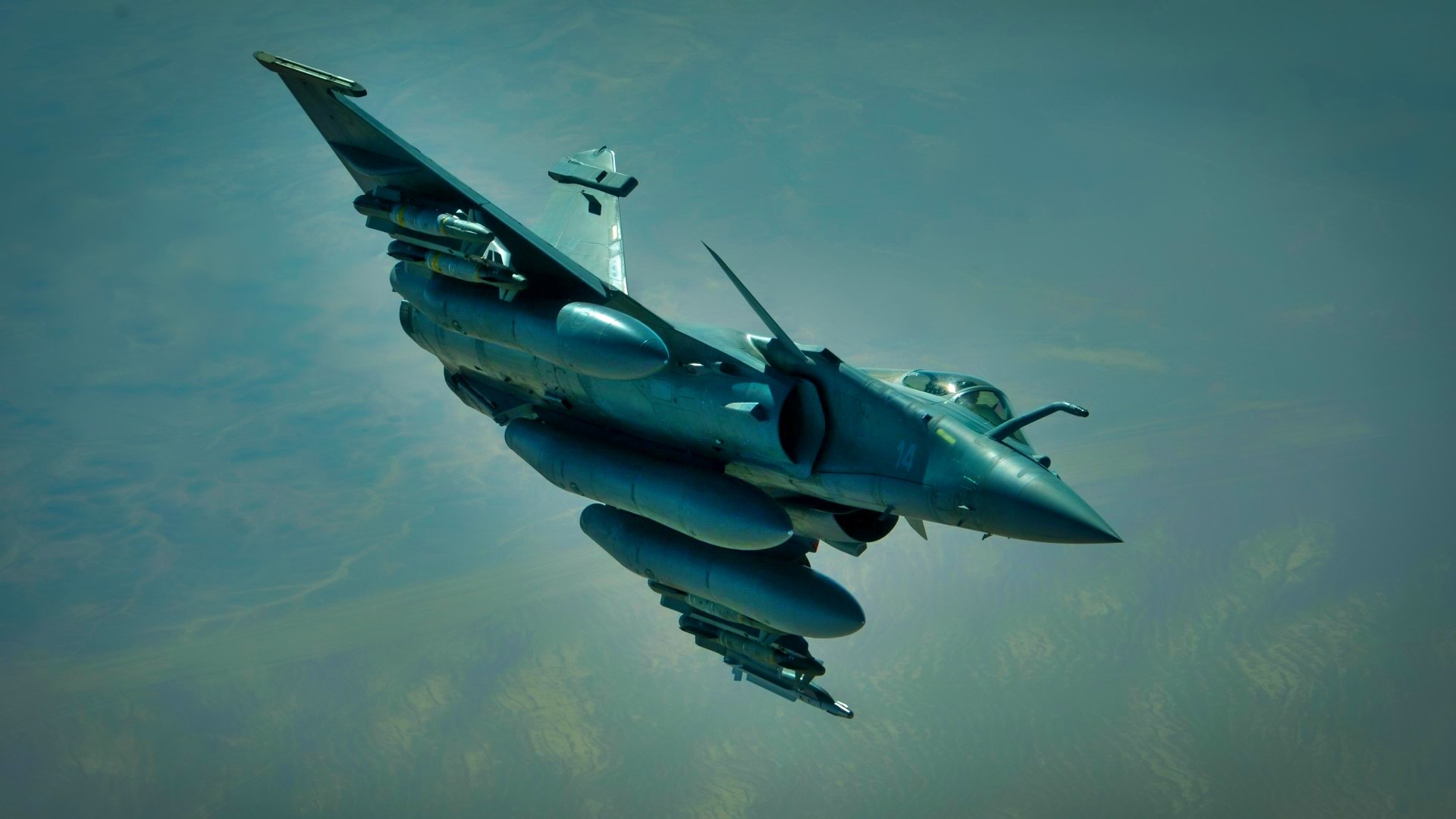
A French Naval Rafale departs after receiving fuel from a 908th Expeditionary Air Refueling Squadron KC-10 Extender during a flight in support of Operation Inherent Resolve June 2, 2017. Rafale is a French twin-engine, canard delta wing, multirole fighter aircraft with a wide range of weapons. The Rafale is intended to perform air supremacy, interdiction, aerial reconnaissance, ground support, in-depth strike and anti-ship strike missions. (U.S. Air Force photo by Staff Sgt. Michael Battles)
With FCAS in shambles, Germany will likely be on the hunt for other partners to join the project, with the United Kingdom and Sweden perhaps prime candidates given their considerable aerospace expertise.
In the end, however, it may be the commitment to buy European kit rather than American that keeps the FCAS in the air. In any case, the project is in a period of extreme turbulence.
About the Author: Caleb Larson
Caleb Larson is an American multiformat journalist based in Berlin, Germany. His work covers the intersection of conflict and society, focusing on American foreign policy and European security. He has reported from Germany, Russia, and the United States. Most recently, he covered the war in Ukraine, reporting extensively on the war’s shifting battle lines from Donbas and writing on the war’s civilian and humanitarian toll. Previously, he worked as a Defense Reporter for POLITICO Europe. You can follow his latest work on X.
More Military
JASSM: The ‘Stealth’ Cruise Missile That Keeps Russian Generals Up at Night
The Day a B-2 Stealth Bomber Disintegrated on Takeoff
The U.S. Military’s Superpower Muscles Are Getting Old
The Mach 6.7 X-15 ‘Hypersonic Rocket Plane’ Has a Message for the U.S. Air Force


