
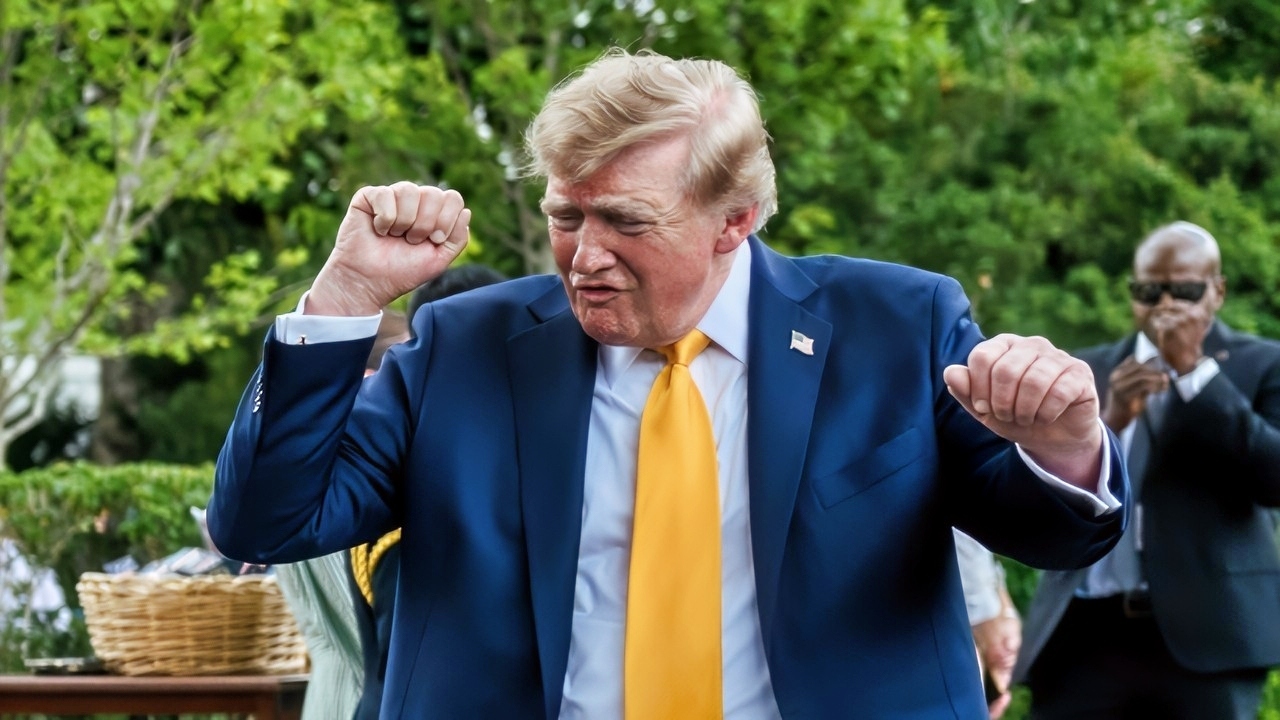
Even as the Trump administration struggles to wind down the conflict with Iran, the U.S. president has said that he is seriously considering the possibility of launching a military operation against Cuba before he leaves office in January 2029.
In comments made during an interview with conservative radio host Hugh Hewitt on Thursday, November 12, President Donald Trump said that he was hopeful he could resolve the situation in Cuba before the end of his presidency.
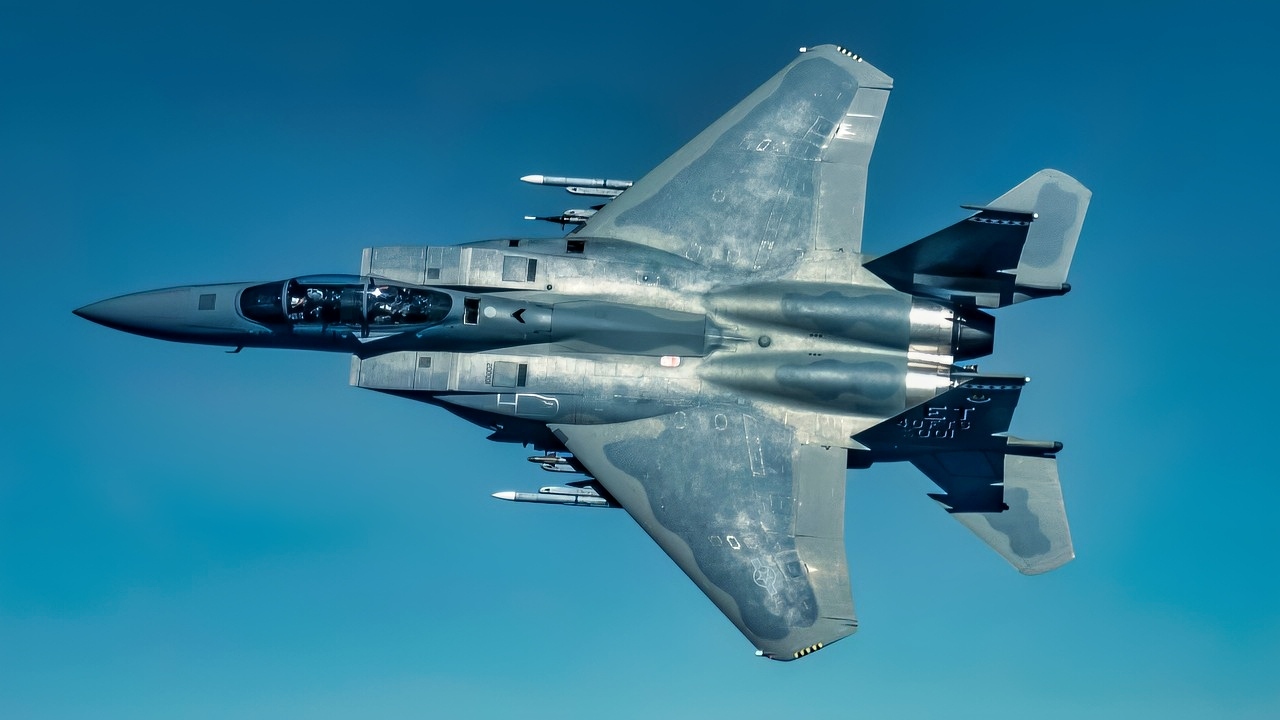
U.S. Air Force Lt. Col. Richard Turner, 40th Flight Test Squadron commander flies 40 FLTS Senior Enlisted Leader, MSgt Tristan McIntire during a test sortie in the F-15EX Eagle II over the Gulf of Mexico on Jun. 14, 2022. Assigned to the 96th Test Wing at Eglin Air Force Base, Fla., the F-15EX Eagle II is the Air Force’s newest 4th generation fighter being tested at the 40 FLTS. (U.S. Air Force photo by Tech. Sgt. John McRell)
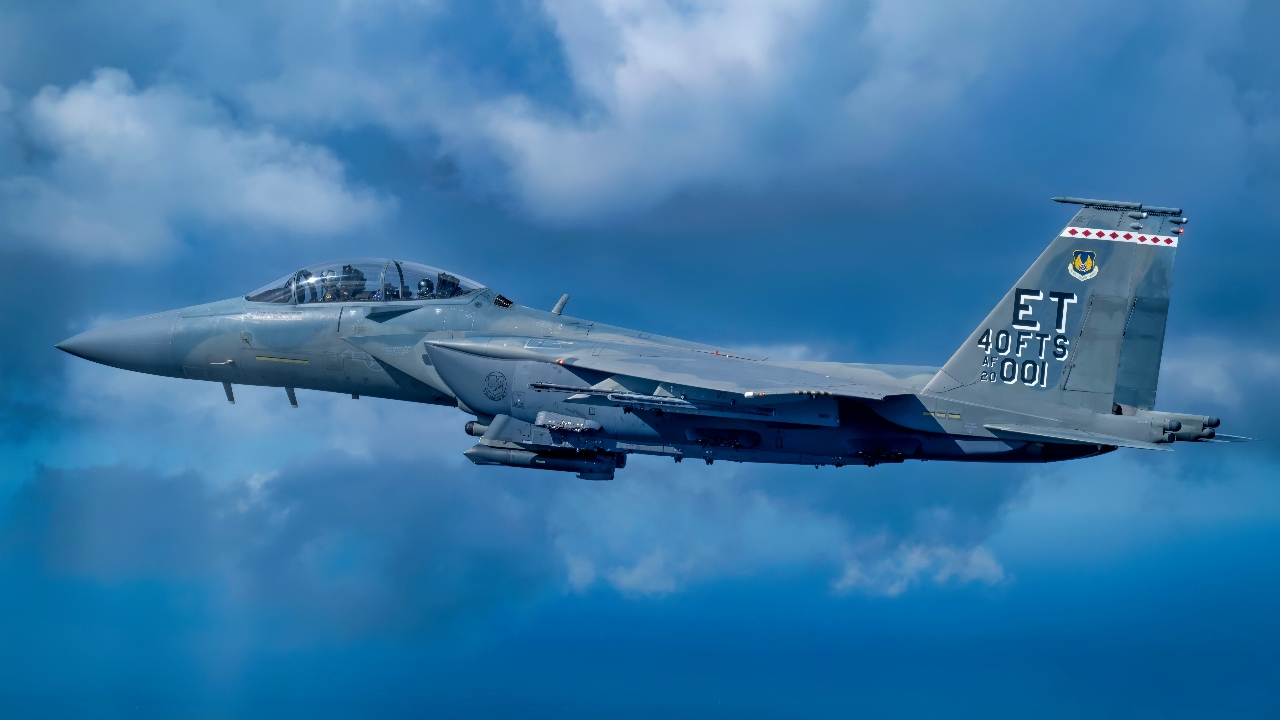
A U.S. Air Force F-15EX Eagle II fighter jet assigned to Eglin Air Force Base, Florida, flies near Jacksonville, Florida, Nov. 2, 2024. Airmen from the 40th Flight Test Squadron and 96th Aircraft Maintenance Unit supported a flyover for the annual Florida-Georgia college football game. (U.S. Air Force photo by Staff Sgt. Blake Wiles)
He suggested that Secretary of State Marco Rubio would play a major role in the effort.
The president’s words come after months of increasing economic pressure on Havana, including sanctions on government officials and businesses and a sweeping energy blockade.
President Trump has repeatedly predicted that the communist government in Cuba is likely to collapse.
Still, his latest comments suggest that he believes a military conflict would be required to finish the job.
Trump Says Military Force Is Possible
During Thursday’s interview, Hewitt asked Trump if he would consider military force to free Cuba from communist rule.
“Well, I want to get Cuba done before I leave, yeah. And we have a very good, talented guy from Cuba named Marco,” he said. The president also said that Rubio would “love” to take action.
Trump praised Rubio extensively in the interview, explaining how the secretary of state’s parents emigrated from Cuba.
When Hewitt asked the president if he would support a limited military option lasting about one week, the president responded, “I would be, I would certainly consider that, yes.”
What Trump Intends to Achieve
So, what is the Trump administration looking to achieve in Cuba?
In short: to end communist rule and eliminate what Washington sees as a national security threat just 90 miles away from the American mainland.
On January 29, 2026, the president signed an executive order that declared a national emergency over Cuba’s activities.
It accused Havana of supporting terrorist organizations and hostile governments. Specifically, the Trump administration accused Cuba of hosting Russia’s largest overseas signals intelligence facility, which it said was being used to collect American national security information.
The same executive order also accused Havana of expanding its cooperation with China on intelligence and defense, providing a safe environment for Hezbollah and Hamas to establish regional networks.
In that sense, the Cuba issue is more of a global one.
President Trump has also accused the Cuban government of providing military and intelligence assistance to American adversaries, and of attempting to undermine and bypass international sanctions.
Those same accusations have been made by Secretary of State Marco Rubio, who announced sanctions against five Cuban entities and eight individuals on August 6.
Those individuals and entities were accused of supporting the country’s military procurement operations.
Rubio accused Cuba of allowing Iran, Russia, and China to engage in activities against American interests from Cuba.
“The Cuban Communist regime is a state sponsor of terrorism that uses its military and intelligence apparatus to spy on the United States, provide material support to violent radicals and terrorist groups, and spread poisonous Marxist ideology within our borders and polity, all while serving as a staging ground for other U.S. adversaries such as Russia, China and Iran to conduct operations against the United States,” Rubio said in a statement.
“Cuba’s military and intelligence institutions are also the key enforcers of domestic repression and nodes of kleptocracy, notably through the military-run conglomerate Grupo de Administración Empresarial S.A. (GAESA).
“Today, the Trump Administration is taking further action to protect our national security by sanctioning entities and individuals who facilitate Havana’s military relationships and the shipments of arms to the Cuban regime,” the statement continued.
Pentagon Has Already Considered Military Operations
President Trump’s words were more than just an off-the-cuff remark. Reports have indicated for months that the Pentagon has been exploring potential military operations against Cuba, including plans that could involve thousands of American troops.
On July 15, reports revealed that senior defense officials had explored possible operations, including an air assault supported by troops from the U.S. Army’s 101st Airborne Division.
A CBS News report cited multiple U.S. officials with direct knowledge of the planning.
The planning has since continued, with another CBS News report from September 26 revealing that an internal Army message showed the U.S. Army Reserve was exploring the possibility of providing military police and support units to Southern Command within four months.
The document did not explicitly mention Cuba, but officials familiar with the preparations said that the request was related to contingency planning involving the island.
And earlier, in May 2026, Axios reported that the military had conducted a planning exercise across multiple agencies exploring a possible military operation following political unrest that could arise after the collapse of the Cuban government.
About the Author: Jack Buckby
Jack Buckby is a British researcher and analyst specializing in defense and national security, based in New York. His work focuses on military capability, procurement, and strategic competition, and he produces and edits analysis for policy and defense audiences. He brings extensive editorial experience, with a career output spanning over 1,000 articles at National Security Journal, and has previously authored books and papers on extremism and deradicalization.


