
Satellite imagery reviewed by The Wall Street Journal suggests Iran has rapidly repaired and begun rebuilding some of its key military infrastructure that was damaged over months of sustained U.S. and Israeli airstrikes.
The news comes as the U.S. completes its 12th consecutive night of strikes against the country and prepares for what President Donald Trump has said could be the biggest single assault on the country yet.

U.S. Air Force Maj. Joshua “Cabo” Gunderson, F-22 Raptor Demonstration Team commander and pilot, performs during the Orlando Air and Space Show at the Orlando Sanford International Airport, Florida, Oct. 30, 2022. The F-22A is a fifth-generation fighter incorporating fourth-generation technology, radical maneuvering capabilities, the ability to fly at supersonic speed without afterburners and unprecedented pilot situational awareness. (U.S. Air Force photo by Airman 1st Class Joshua Hastings)
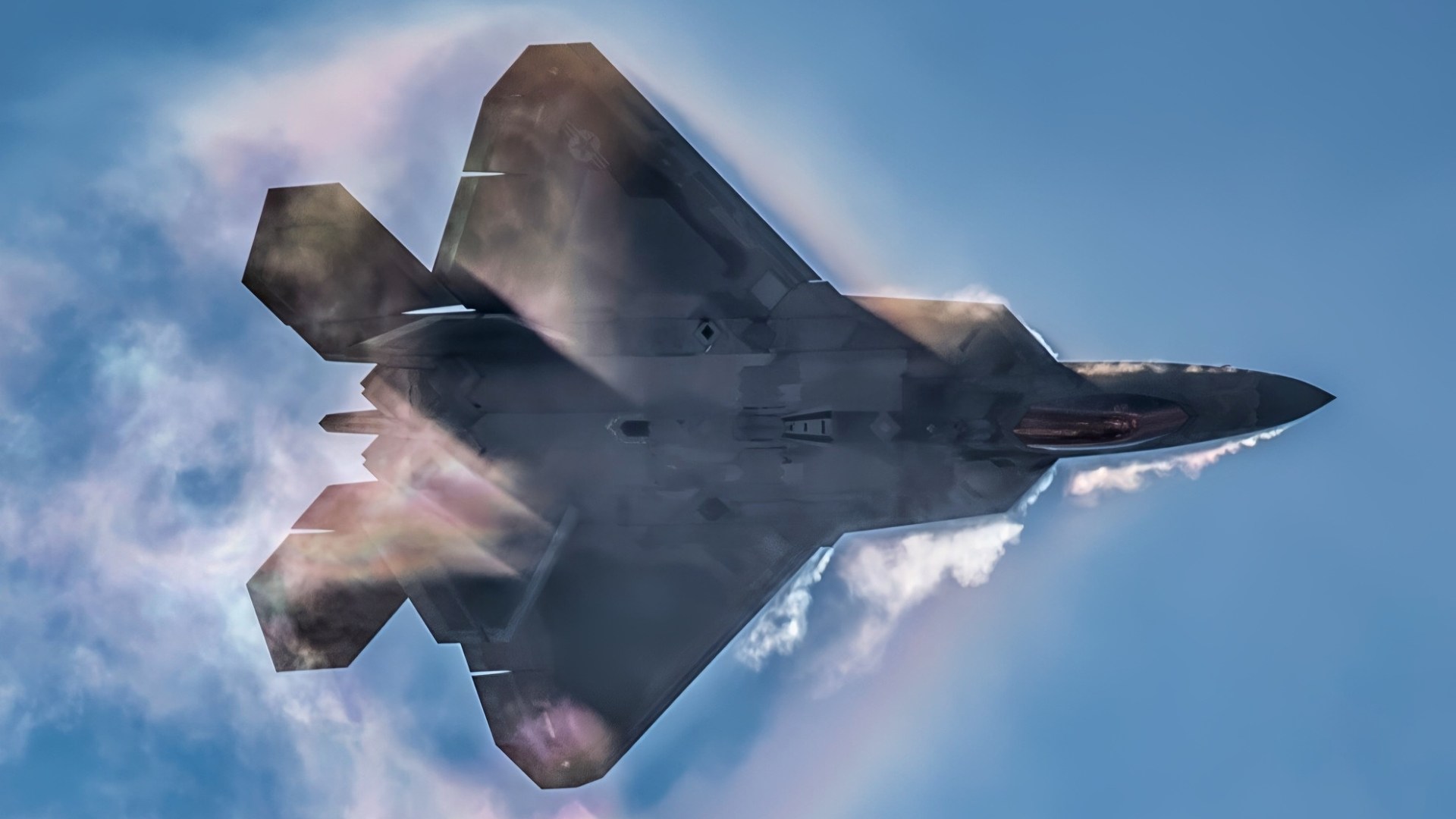
U.S. Air Force Maj. Josh ‘Cabo’ Gunderson, F-22 Raptor Demonstration Team commander, performs during an air show in Fort Worth, Texas, Oct. 17, 2020. The F-22’s raw power and thrust vectoring technology gives the aircraft super maneuverability in the air-to-air battlespace. (U.S. Air Force photo by 1st Lt. Sam Eckholm)
The report, published on Thursday, July 23, cites satellite imagery from Planet Labs and Airbus alongside assessments from Israeli military officials and Western officials.
Together, they indicate that Iran has already restored access to several missile facilities and repaired damaged roads and bridges, as well as having resumed work at military production sites and begun reconstructing infrastructure struck earlier this year.
The findings come after more than five months of conflict in which the United States and Israel have carried out tens of thousands of strikes against Iranian military targets, extending a war that Washington did not believe would become a protracted conflict.
Although Washington has repeatedly argued that the campaign has severely degraded Iran’s military capabilities, the latest imagery suggests that Tehran has proved itself capable of restoring some elements of its military infrastructure considerably faster than many expected.
What Satellite Images Show
The Wall Street Journal’s report describes how Planet Labs imagery taken in March appears to show two tunnel entrances and an access road heavily damaged after airstrikes intended to block access to an underground missile complex near Kangavar in western Iran.
The images show that, within weeks, a freshly paved road had been built, leading to newly excavated tunnel entrances. The imagery, released by Airbus, indicates that repair crews had restored access to a site that had been believed to be inaccessible.
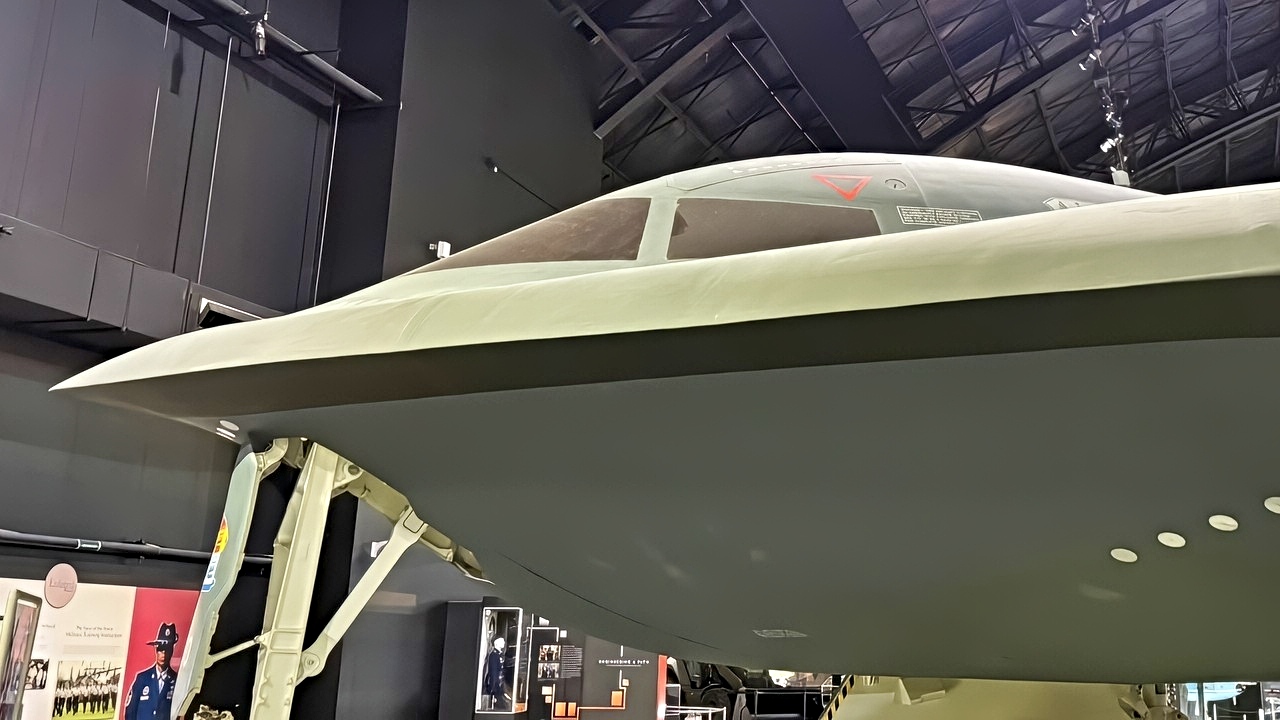
B-2 Bomber Sitting in Museum National Security Journal Photos. All Rights Reserved.

B-2 Stealth Bomber July 2025 National Security Journal Photo.
A second missile base north of Kermanshah also appeared to have undergone significant reconstruction. Satellite imagery showed crews repairing damaged roads while trucks cleared debris from collapsed tunnel entrances that Israeli officials say had been sealed by previous bombing.
Similar activity was also observed at a missile base near Dezful, which Israel struck both during June 2025 attacks and again during the opening stages of the current war.
Only three months after airstrikes buried tunnel entrances to the facility, Airbus satellite imagery again showed excavation equipment reopening multiple entrances to the complex.
This kind of activity has been witnessed all over the country as well, and it doesn’t just center around missile facilities.
According to the report, Planet Labs imagery also showed partial rebuilding at Raja Shimi Industries near Tehran, a facility believed by researchers at King’s College London to manufacture missile components. New structures appeared to have been erected in areas previously damaged during Israeli strikes.
And further north, satellite imagery also shows that reconstruction work appears to have begun at Bandar Anzali on the Caspian Sea after Israeli attacks earlier this year targeted an IRGC-linked shipyard and command facilities that were believed to be an important element of the Russia-Iran supply network.
Did the Air Campaign Work?
The speed at which Iran has proven capable of rebuilding key assets has reportedly surprised some Israeli military officials who were involved with the campaign.
According to The Wall Street Journal, one Israeli official said Iran repaired a bridge destroyed by three Israeli bombs within days – a fact that raises questions about whether certain strikes had achieved lasting effects.
Other officials reportedly expressed concern that many attacks succeeded only in collapsing tunnel entrances rather than destroying the underground facilities themselves.
If weapons stockpiles and production equipment inside those mountain complexes survived intact, reopening the entrances may allow Iran to recover capabilities far more quickly than originally anticipated.
Former Israeli air defense commander Ran Kochav also told the outlet that Iran had already demonstrated similar abilities to quickly reconstruct damaged sites following the 2025 conflict, saying that they had “refilled their stockpiles” and have “impressive industrialization and reconstruction capabilities.”
Tan Inbar, a senior analyst from the Missile Defense Advocacy Alliance, also argued that reports that Iran had exhausted its missile arsenal had proven inaccurate.
“It turns out that the rumors about the end or the significant dwindling of the missiles were wrong,” Inbar said.
Why Rebuilding Matters
The reconstruction effort suggests that Iran is attempting to remain resilient in the face of new U.S. strikes. Having reportedly rejected a U.S. ceasefire proposal in recent days, Iran continues to reconstruct, repair, and rebuild – and continues to expand its asymmetric campaign at the same time.
While Washington keeps escalating, Iran appears to be determined to fight for as long as possible. It is, after all, a fight that will determine whether the regime survives or falls.
Utilizing its regional proxy groups, the regime in Tehran appears to be willing to fight until it has nothing left, prioritizing its own survival over the citizens of the country.
It’s bad news for the West and Washington, as continued disruption in the Strait of Hormuz will inevitably lead to major global economic problems far worse than what the world is already witnessing.
About the Author: Jack Buckby
Jack Buckby is a British researcher and analyst specializing in defense and national security, based in New York. His work focuses on military capability, procurement, and strategic competition, producing and editing analysis for policy and defense audiences. He brings extensive editorial experience, with a career output spanning over 1,000 articles at 19FortyFive and National Security Journal, and has previously authored books and papers on extremism and deradicalization.
Note: The imagery of this article has been updated for clarity.


Steven Kasselmann
July 24, 2026 at 8:38 pm
President Trump needs to drop multiple bunker busting bombs followed by a nuke or two.
American patriot
July 24, 2026 at 9:56 pm
What the hell is wrong with you?
THOMAS M PATTON
July 25, 2026 at 11:47 am
Bomb the hell out Tehran and it will be over