

Key Points and Summary – Iran is driving the Middle East toward its most dangerous crisis in decades, combining nuclear opacity, proxy warfare, and maritime coercion with growing confidence it can survive—and even win—a region-wide war.
-Tehran sees the U.S. as distracted, Israel constrained, and Europe preoccupied, while its networks in Lebanon, Gaza, Iraq, Syria, and Yemen harry opponents on multiple fronts.

Iran’s Drones That Russia Is Using. Image Credit: Creative Commons.
-With IAEA oversight collapsing and missile forces expanding, the risk of miscalculation is soaring.
-The article argues Washington and its allies must restore nuclear transparency, bolster deterrence, and build a broader regional security framework now, before Iran’s escalation triggers a conflict no one can contain.
Iran Is Pushing the Middle East Toward a War No One Can Control
Miscalculation, ambition, and opacity in Tehran could ignite a conflict far larger than any the Middle East has seen in decades.
The Middle East has entered its most volatile period since the fall of the Shah in 1979. That event shattered the region’s balance of power by replacing a pro-Western anchor state with a revolutionary theocracy bent on exporting its ideology. This ignited four decades of proxy warfare, sectarian rivalry, and strategic instability across the Middle East.
The danger today is not a single spark or a lone miscalculation — it is the convergence of Iran’s nuclear opacity, its proxy warfare, its maritime coercion, and its expanding belief that a region-wide confrontation is not only survivable, but winnable.
This is the fundamental threat facing the international system: an Iranian regime that feels emboldened, unmonitored, and unrestrained.
Iran’s public message after the 12-Day War this summer was that the regime emerged victorious, retained its cohesion, and could absorb far greater costs. This public posturing signals a dangerous confidence that Iran can outlast its adversaries in a prolonged regional war.

Iran Missiles. Image Credit: Creative Commons.
Recent intelligence makes clear that Iran is preparing for a conflict of far greater scale than the skirmishes that have dominated headlines in recent years. Tehran’s seizure of an oil tanker in the Strait of Hormuz, its public preparations for mass missile salvos, and its refusal to grant the International Atomic Energy Agency access to bombed nuclear sites all point in the same direction. This is a country acting as if war is inevitable and shaping its posture accordingly.
Multiple escalatory paths are converging at once. Iran’s leadership no longer sees confrontation as something to be deterred. It sees opportunity.
Across Lebanon, Gaza, Syria, Iraq, and Yemen, Iran’s proxy network has survived the shocks of the past year, and it has adapted . Hamas, despite suffering catastrophic losses, remains capable of internal repression and has reasserted control over areas of the Gaza Strip vacated by Israel. Hezbollah, degraded early in the conflict by Israel, has regained a portion of its raid capability and is rebuilding its infrastructure across southern Lebanon. In Iraq, Shiite militias aligned with Tehran are pressuring the political system while mobilizing against American and Israeli interests. In Yemen, the Houthis are openly mobilizing tribes under banners calling for “death to America” and “victory to Islam.”
These developments reflect a coordinated Iranian strategy to stretch adversaries across multiple fronts, overwhelm decision-making cycles, and create enough ambiguity to mask Tehran’s own hand in escalation.
At the heart of this strategy lies Iran’s nuclear program. The collapse of transparency mechanisms, limited as they were, has created an intelligence vacuum that benefits only Tehran. With inspectors blocked, bombed facilities uninvestigated, and enriched uranium quantities unverified—and a new facility at Pickaxe Mountain—Iran has created the conditions for a crisis in which each side perceives the worst about the other and acts accordingly. Miscalculation thrives in darkness.
The world has been here before, including earlier this year in the lead up to the 12-Day War. What is different now is that Tehran’s leadership appears to have concluded that confrontation is inevitable and may even strengthen its hand. It sees the United States divided and overstretched, Israel constrained politically and militarily, and Europe distracted by Ukraine and internal fragmentation. It sees the Strait of Hormuz as a lever over global energy markets. And it sees its proxies as a force multiplier capable of bleeding opponents without triggering direct retaliation on Iranian soil.

Iran’s missile capabilities. Image Credit: Creative Commons.
This assessment is dangerously flawed. The next war Iran fights against Israel would not resemble the recent conflicts in Gaza or Lebanon. It would be broader, faster, and far more destructive. American forces in the Gulf would be targeted immediately. Israel would face the largest missile and drone barrage in its history. The Strait of Hormuz could close, even temporarily, sending global energy markets into chaos. And regional states—Saudi Arabia, the United Arab Emirates, Jordan, Iraq—would be forced into the conflict whether they wished to participate or not.
Such a war would not stay contained. It would hit supply chains, global inflation, maritime insurance rates, and international energy flows. It would strain NATO unity, complicate great-power competition in the Indo-Pacific, and create an opportunity for Russia and China to exploit Western distraction and strained unity. Iranian-backed terrorist entities are likely to attack targets in Europe, North America, and potentially South America.
Moreover, Iran has spent years refining an information warfare program that would activate in the opening hours of a conflict. State-controlled media, cyber units, and proxy disinformation networks would amplify narratives designed to fracture Western publics, undermine trust in governments, and complicate coordinated decision-making. Iran’s integration of cyber operations with kinetic planning is now far more sophisticated than during previous escalations, raising the likelihood that infrastructure in Europe and North America, not just in the Middle East, could face disruption.
Western middle powers such as Canada, Australia, or the United Kingdom, too often lulled into thinking that Middle Eastern crises are distant, would not be insulated. A major conflict would disrupt global markets, spike inflation, threaten energy security, and force tough decisions about alliance commitments. It would test intelligence services, military readiness, and diplomatic agility at a time when all are already under strain.
The world cannot afford to stumble into this conflict.
First, policymakers must recognize that the current dynamic is not static. Iran’s nuclear opacity, proxy synchronization, maritime coercion, and political radicalization are all escalatory signals.
For years, the West has relied on assumptions about Iranian restraint, internal factionalism, or the moderating influence of economic pressure. Those assumptions no longer hold. Iran’s leadership has demonstrated a willingness to absorb sanctions, endure domestic unrest, and take significant military risks in pursuit of its revolutionary ambitions. The international community must build policy around this reality.
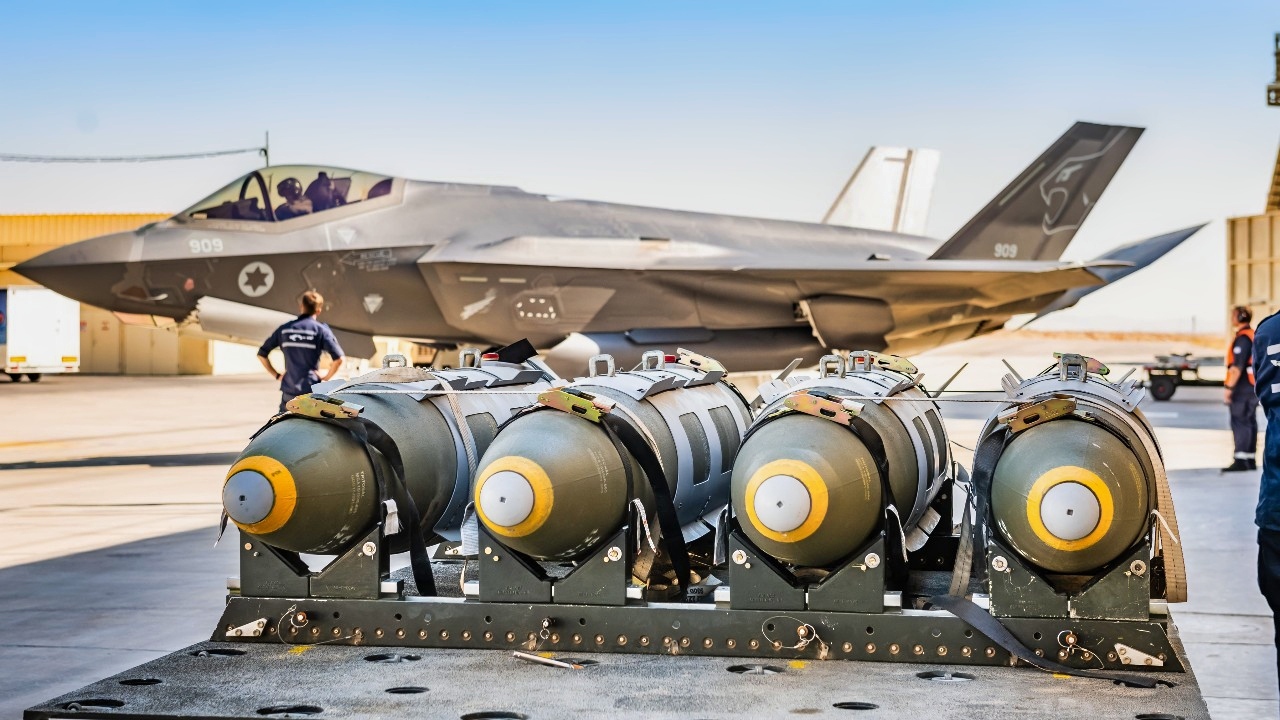
Israel F-35I Adir Stealth Fighter. Image Credit: IAF.
Second, the international community must restore meaningful nuclear oversight. Without transparency, every movement becomes a potential trigger; every rumor becomes a threat.
Third, the United States and its allies must shore up deterrence. This means sustained, not symbolic, military posture. It means credible red lines for maritime interference. It means a coordinated message to Tehran that a multi-front escalation will not succeed.
Finally, regional actors must be brought into a diplomatic framework that addresses both immediate risks and long-term security architecture. The Middle East has endured decades of episodic ceasefires and temporary truces. What it needs now is sustained engagement that reduces the incentives for Iran to gamble on war.
History is full of wars that leaders believed they could manage. Few of them ended as intended. Iran is moving the region toward a conflict that would engulf not only its neighbours, but the world. The warning lights are flashing. The responsible course is to act before they turn red. The choice before us is simple: confront Iran’s escalation today or confront a region-wide war on Iran’s terms tomorrow.
About the Author: Joe Verner
Joe Varner is the Deputy Director of the Conference of Defence Associations, a Senior Fellow of the Macdonald-Laurier Institute in Ottawa, and the Center for North American Prosperity and Security in Washington, D.C.


Bent Rim
December 4, 2025 at 9:21 am
I see Iran as being at it’s weakest in decades. I believe Joe’s view overestimates Iran’s current capabilities and appetite for renewed, open conflict.
Jim
December 4, 2025 at 6:05 pm
The 12 Day War was initiated by the state of Israel as an attempt at regime change. It failed and left the Middle East in a far more dangerous state than before the attack.
That being said, the author is right: the Middle East is a dangerous tinderbox.
Iran has promised an overwhelming response to another Israeli attack.
I think Iran is making a dangerous miscalculation and so would the Netanyahu government in Jerusalem as well. There is a dangerous fatalism in Tehran about the consequences of another war and there also seems to be a similar fatalistic mindset in Jerusalem.
I’m worried this exchange could go nuclear. There are claims President Trump’s bombing of Iran’s nuclear facilities was to preempt a potential Israeli nuclear strike on those same facilities, after Netanyahu informed President Trump Israel was planning such an attack.
It’s not in anybody’s interest for a nuclear strike to occur. It matches the author’s description and ups it by another order of magnitude.
The conditions for this potential abyss must be addressed by all parties in the region, not just Iran. Making Iran the sole cause of the instabilities ignores the other main antagonist in this longstanding and increasingly dangerous conflict.
The United States needs to act with skill and determination to untie this diplomatic Gordian Knot.
Taking a one-sided approach increases the chances such a disaster happens rather than diminishes it.