

Iran’s President Wants Peace – But Will Hardliners Listen? – Hardliners in Tehran want to extend the war to the November midterm elections or even until after U.S. President Donald Trump leaves office, but others, like the country’s president, are calling for peace instead. Iranian President Masoud Pezeshkian now says Tehran is prepared to immediately return to the terms of the June memorandum of understanding that briefly halted the war with the United States, offering Washington a potential path out of the six-month-long conflict just as direct fighting appears to be reigniting.
A Return to the MOU
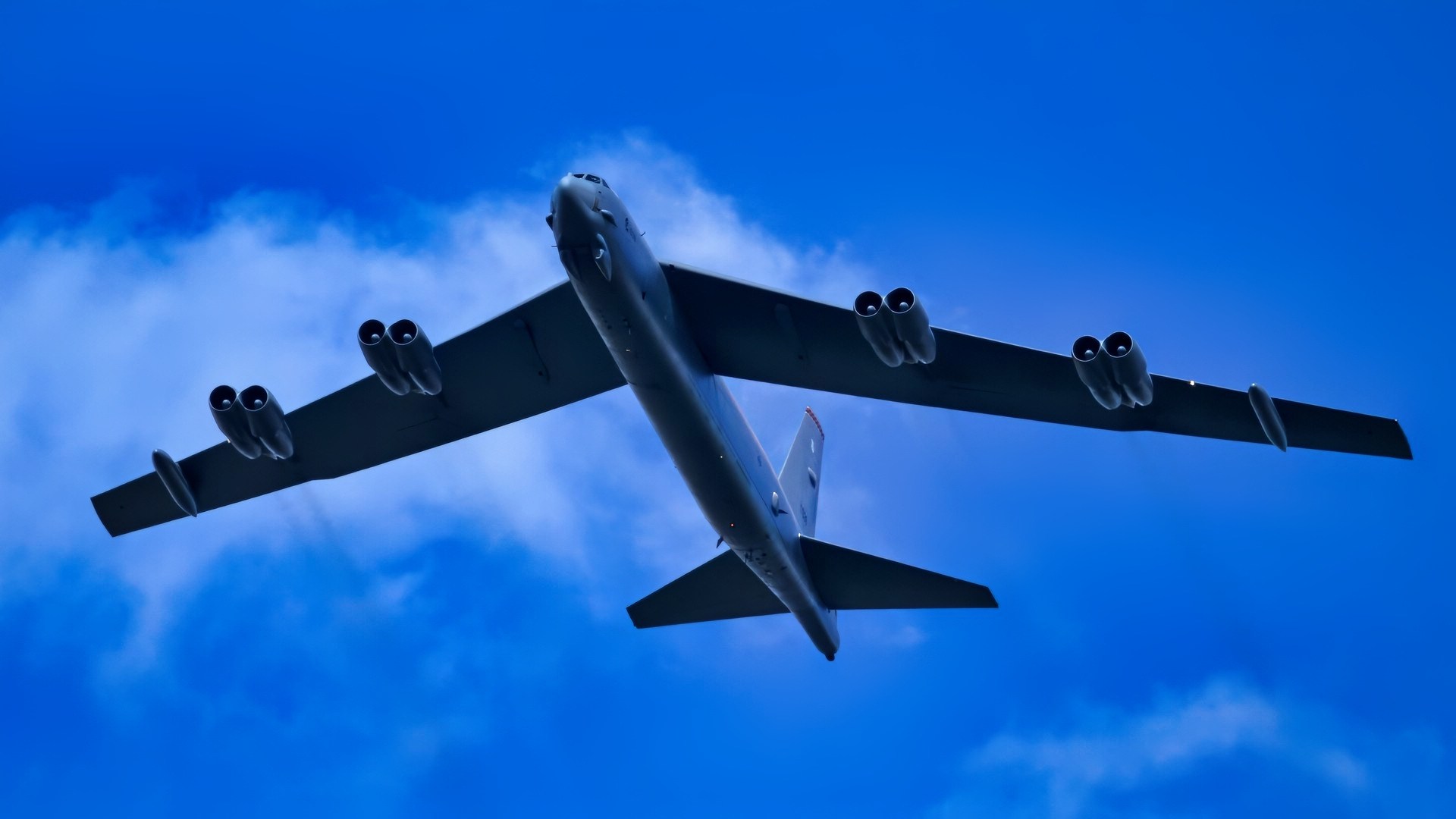
Boeing B-52H Stratofortress. Image Credit: Creative Commons.

Capt. Karla Arango, 20th Bomb Squadron pilot, communicates to crew inside a B-52 Stratofortress during Global Thunder 2019 at Barksdale Air Force Base, La., Nov. 3, 2018. Global Thunder is an annual U.S. Strategic Command (USSTRATCOM) exercise designed to provide training opportunities to test and validate command, control and operational procedures. The training is based on a notional scenario developed to drive execution of USSTRATCOM and component forces’ ability to support the geographic combatant commands, deter adversaries and, if necessary, employ forces as directed by the President of the United States. (U.S. Air Force photo by Senior Airman Philip Bryant)
Speaking at the Shanghai Cooperation Organization summit in Bishkek, Kyrgyzstan, on Tuesday, September 1, Pezeshkian said Iran would reciprocate if President Donald Trump restored Washington’s commitments under the agreement.
“I am stating clearly that if the US returns to its commitments under the memorandum of understanding, the Islamic Republic of Iran will immediately reciprocate,” Pezeshkian said.
The comments came shortly after the first direct exchange of attacks between the two countries since late July, and just before the United States announced a series of new strikes on Tuesday afternoon targeting military sites around the Strait of Hormuz. U.S. forces first struck Iranian positions on Larak Island on Sunday, with Iran then launching ballistic missiles toward U.S. bases in Jordan.
Pezeshkian’s offer is a tough one for Washington. If accepted, it would give Washington breathing room and allow diplomacy to continue — assuming Iran is willing to back down on its maximalist demands, which Washington will not entertain. But doing so would also give Iran more time to rebuild military infrastructure and missile launch sites that the U.S. has expended enormous quantities of missiles destroying — potentially putting the White House back to square one within a matter of months, right before a national election.
Pezeshkian Has Been Calling for Peace for Weeks
Whether Pezeshkian’s comments are rooted in a desire to make concessions to Washington and ensure lasting peace or not, it’s true that he has been making these kinds of comments for weeks. He has, however, pitched the idea to Iranians — and supporters of the regime — as a strategy of negotiating from a position of “power.”
On August 9, Pezeshkian publicly called for Iran to escape what he described as a state of “neither war nor peace.”
He argued that violations of the June agreement should be handled through a mechanism established by the two sides rather than being used to justify renewing the fighting. And then, on August 21, he was even clearer, insisting that the war must come to an end.
“It is better that we bring the war to an end now as we are in a position of power and dignity,’ Pezeshkian said.
Peacemakers?
On August 23, he once again defended the June agreement against criticism inside Iran, arguing that agreements reached by the government also needed the support of the wider political establishment. He acknowledged the economic pressures facing Tehran, including financing government spending and maintaining imports and exports amid widening sanctions.
And Pezeshkian isn’t the only one saying these things. Parliament Speaker Mohammad Bagher Ghalibaf, who has played a central role in communicating with Washington, warned on August 20 that military strength would ultimately mean very little if Iran’s economy continued to deteriorate.
“No matter how much military power we have, if people are hungry and we don’t have financial circulation, economic growth and domestic production, we will not endure,” Ghalibaf said.
Hardliners Push Back
Not everyone in Tehran supports those arguments. Maj. Gen. Ahmad Vahidi argued on August 21 that Iran’s enemies would not abandon their hostility toward the Islamic Republic and called for the country to continue expanding its offensive and defensive capabilities.
On the same day, Maj. Gen. Ali Abdollahi, chief of staff of Iran’s Armed Forces, warned that another American military “miscalculation” would receive a devastating response. And, in the wake of the most recent round of U.S. strikes, Tehran is warning of a more extreme response to come this evening.
A Deal Could Give Hardliners Time
A return to the June MOU seems unlikely for now, but it is clearly attractive to Pezeshkian and others in Tehran who believe Iran needs an economic reprieve and a negotiated end to the conflict. For Trump, though, another temporary agreement carries a huge risk — and it may not be one he is willing to accept again.
Any pause in hostilities now, without a concrete deal, would give Iran’s hardliners and military establishment time to repair damaged facilities and disperse equipment. It would allow the IRGC to replenish missile inventories, rebuild launch sites, adapt its defenses, and await imports of new ammunition and weapons systems from supportive countries.
And that would be a disaster for Washington.
About the Author: Jack Buckby
Jack Buckby is a British researcher and analyst specializing in defense and national security, based in New York. His work focuses on military capability, procurement, and strategic competition, producing and editing analysis for policy and defense audiences. He brings extensive editorial experience, with a career output spanning over 1,000 articles at 19FortyFive and National Security Journal, and has previously authored books and papers on extremism and deradicalization.


