


Israel’s Finance Minister Says the U.S.-Iran War Is ‘Best’ When Israel Stays Out – Israeli Finance Minister Bezalel Smotrich says Israel should remain outside the latest U.S. campaign against Iran while American forces carry the fight. Smotrich described the arrangement as the “best” outcome for Israel, according to a Military.com report, because Jerusalem advances its security goals without reentering the war directly.
Smotrich spoke on July 21 at the Katif Conference for National Responsibility. He said the limited confrontation between Iran and the United States was “the right one and the best for us,” according to reporting on his remarks. He also argued that Israel’s long-term objective is to weaken Iran’s government until it falls, a goal he acknowledged does not necessarily match Washington’s.
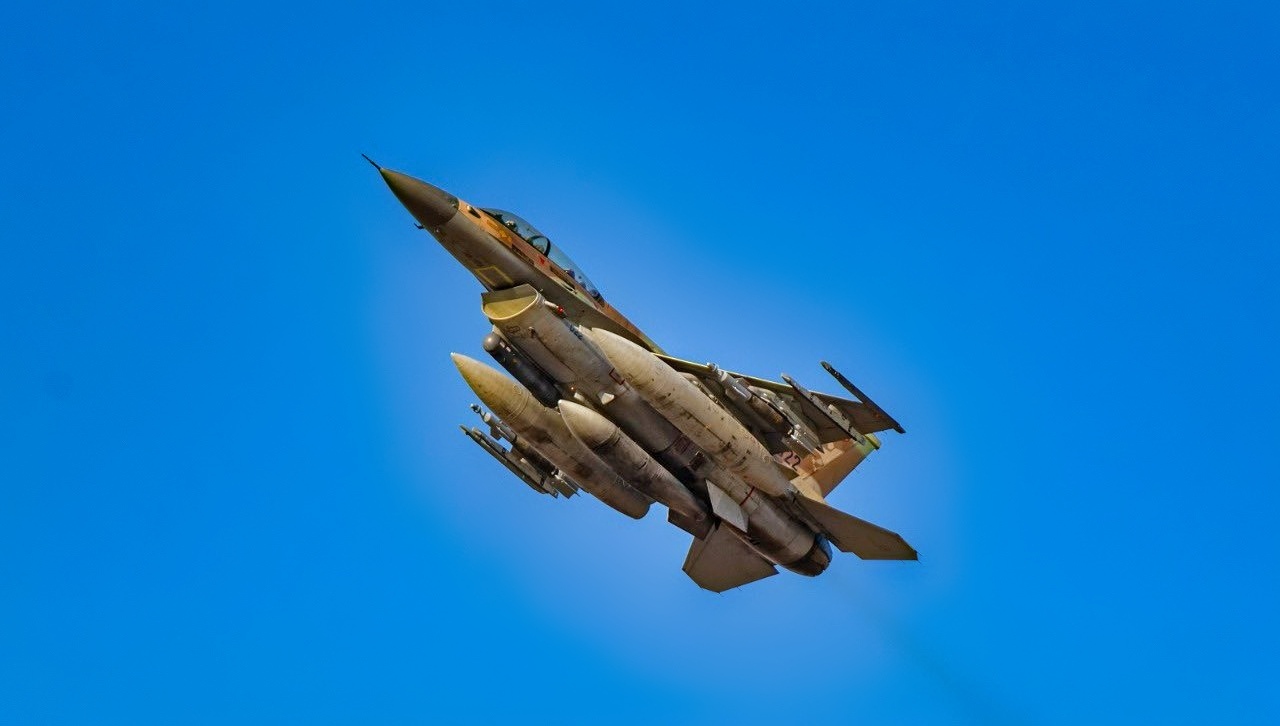
F-16I from Israeli Air Force. Image Credit: Creative Commons.

F-16I Sufa Fighter. Image Credit: Creative Commons.
Israel sat out the latest two-week U.S. bombing campaign, although it remained aligned with Washington and warned Iran against attacking Israeli territory. President Donald Trump paused the strikes over the weekend, and Tehran said it would suspend retaliatory attacks for as long as the American pause holds. Prime Minister Benjamin Netanyahu left for Washington on July 27 with Iran at the top of his agenda for talks with Trump.
Smotrich’s formulation lands differently in the United States, where the Pentagon has reported growing human and financial costs. Defense Secretary Pete Hegseth told senators that the war had cost $37.5 billion by July 21. The conflict had also killed 18 U.S. service members and wounded more than 500, according to Associated Press reporting.
Smotrich Put the Strategic Divide Into Plain English
Israel and the United States agree on preventing Iran from rebuilding its nuclear and ballistic-missile programs. Their desired endpoints are less clear. Israeli officials have repeatedly discussed creating conditions for regime collapse, while Washington has focused on stopping attacks, protecting bases and reopening the Strait of Hormuz. Iran has warned that renewed American strikes would expand the conflict geographically.
The present arrangement limits Israel’s direct exposure while placing the combat burden on American forces. U.S. ships and aircraft have expended large numbers of precision weapons, including Tomahawk cruise missiles, while Patriot and THAAD batteries defend bases across the region. The Pentagon now faces shrinking missile-defense inventories, and replacement production requires years rather than weeks.
The Comment Carries a Political Cost in Washington
Smotrich’s statement risks strengthening the argument that the United States is paying for an Israeli strategic objective. An official Ipsos polling summary published July 13 found that 79 percent of Americans expected U.S. involvement to continue for an extended period. Earlier polling also found broad resistance to the war’s costs.
That perception threatens the alliance even if American and Israeli leaders remain closely aligned. An Associated Press analysis warned in March that a prolonged war risked deepening the belief that Netanyahu had drawn Washington into a conflict centered on Israel’s security priorities. Smotrich has now supplied critics with a direct quotation supporting that case.
Israel Benefits Only While Iran Leaves It Outside the Fight
Smotrich does not control Israeli military policy, and Netanyahu has warned that Israel would answer any Iranian attack with overwhelming force. The arrangement he praised therefore depends on Tehran continuing to target American forces and regional partners without reopening direct attacks on Israel. That calculation remains vulnerable as the Strait of Hormuz crisis continues and American interceptor stocks fall, including the limited THAAD inventory.
As of July 27, the United States and Iran were observing a temporary pause in attacks. Iran’s Foreign Ministry said Tehran had not requested renewed negotiations, and conditions in the Strait of Hormuz had not changed.
About the Author: Harry J. Kazianis
Harry J. Kazianis (@Grecianformula) was the former Senior Director of National Security Affairs at the Center for the National Interest (CFTNI), a foreign policy think tank founded by Richard Nixon based in Washington, DC. Harry has over a decade of experience in think tanks and national security publishing. His ideas have been published in the NY Times, The Washington Post, The Wall Street Journal, CNN, and many other outlets worldwide. He has held positions at CSIS, the Heritage Foundation, the University of Nottingham, and several other institutions related to national security research and studies. He is the former Executive Editor of the National Interest and the Diplomat. He holds a Master’s degree focusing on international affairs from Harvard University.


