

PUBLISHED on August 16, 2025, 9:15 AM EDT – Key Points and Summary: After losing the F-47 contract, Lockheed Martin is proposing to create a “Super” F-35 by integrating its sixth-generation technologies into the existing platform.
-The goal is to deliver 80% of the F-47’s capability at half the cost.
-Concepts, championed by former YF-23 designer Darold Cummings, include creating new variants inspired by past experimental aircraft like the F-16XL and the tailless X-44 MANTA.
-These upgrades, such as a stretched fuselage and thrust vectoring, would significantly increase the F-35’s range and stealth, keeping it dominant against emerging threats and potentially reviving waning international sales.
It’s Time to Make a “Super” F-35 With New Variants
When next-generation fighter programs are being considered for a new contract award, two or more defense contractors duel to develop incredible technologies.
The losers of each competition often are left asking, “what if?” But it can be a blessing in disguise – sometimes the newfangled features and space-age components from rejected proposals can be integrated into other airplanes.
That is what seems to be happening at Lockheed Martin. The manufacturer of the F-35 Lightning II hoped to be the prime contractor for the F-47. It eventually lost out to Boeing. While the loss was a bitter disappointment, Lockheed’s engineers and designers are convinced they can take the best elements from their F-47 proposal and integrate these technological breakthroughs into the F-35 program.
Rejuvenated Leadership from Defense Contractors Is Needed
Lockheed Martin’s CEO James Taiclet aims to bring sixth-generation technology to the F-35. He thinks there will be cost benefits, because much of the research and development for that technology was already completed during the F-47 competition.
“How do we bridge capability there?” Taiclet asked. “We’re going to port a lot of our own NGAD R&D over to the F-35, and potentially the F-22 as well, striving to get 80 percent of the effectiveness of sixth-generation in stealth, and other aspects at 50 percent of the cost per unit.”
Increasing the Lethality of the F-35
If the F-35 can be improved at a reduced cost, that would be a win for the U.S. military, and for international partners that have plowed so much money into the Lightning II program.
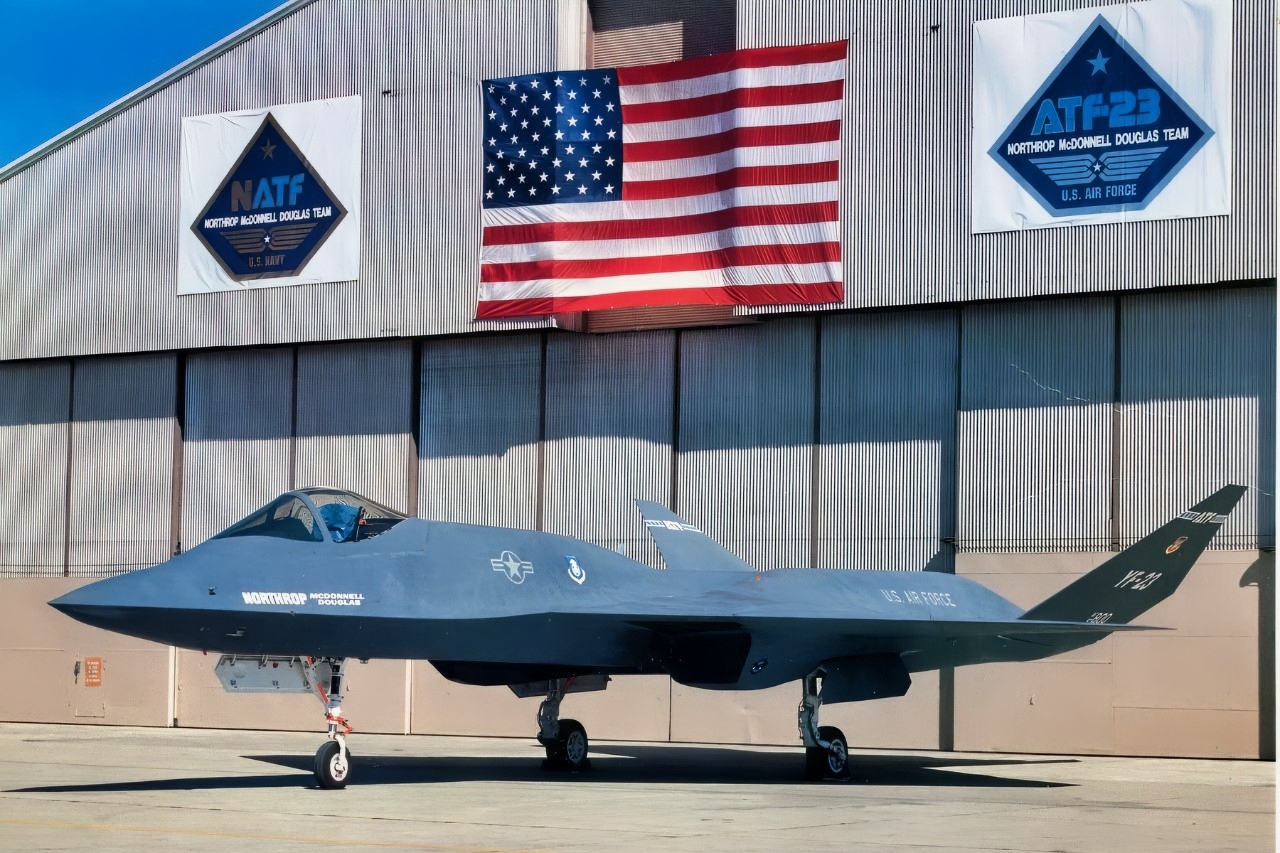
Other defense contractors are also turning back the clock to past airplanes that have lost competitions. The YF-23 was seen as superior in some ways to the airplane it competed against, the YF-22, which later became the F-22. This was also a heated battle between two great airframes.
What Could the F-35 Program Learn from the YF-23’s Mastermind?
Darold Cummings was chief designer for the YF-23 fighter, and he has some new ideas about how the F-35 can be improved.
“I believe one way Lockheed Martin can meet its goals is by employing two strategies,” he said. “One is stretching the airframe to add fuel and improve fineness ratio, as well as adding lifting area with a canard or more wing area. The second is to use thrust vectoring to eliminate the tail.”
These are heady ideas, but they make sense. If Taiclet can make them work, the F-35 will continue to be relevant in future years, and it will do so at a lower cost, because the research has already been done.
Time for Improvements to the F-35
Cummings has already developed new designs.
He has configured three stages of improvements – for the short-term, medium-term, and long-term. His ideas could give a shot in the arm to the F-35 program that is seeing international demand wane because of problems with President Donald Trump’s tariffs, and other geopolitical reasons. Canada is mulling not fulfilling its full agreement to buy 88 F-35s. Spain is refusing to buy F-35s, and Switzerland is on the fence about the Lightning II; it may cut its order.
However, the F-35 is showing its value in battle. The Israeli model, the F-35I Adir, enjoyed a sterling combat record against Iran. The F-35I was able to suppress enemy air defenses and destroy other targets during the 12-day Iranian war, while suffering zero losses.
Israel and other countries could make their F-35s even more successful by incorporating new ideas from Lockheed’s F-47 proposals.
Do You Remember the F-16XL and the X-44 MANTA?
Cummings also wants to incorporate concepts from the F-16XL to improve the F-35. This really turns back the clock, but aspects of the Fighting Falcon could help improve the F-35.
“The short length of the F-35, combined with the fuselage cross-sections necessary to contain weapon bays and landing gear, contribute to a poor fineness ratio,” Cummings said. “This is the main reason the F-35 cannot supercruise. The F-16XL solved this problem with a 56-inch fuselage stretch. Stretching the fuselage increases the fineness ratio for higher lift-to-drag ratio in supersonic flight while adding volume for fuel and equipment.”
Could the F-35 extend its fuselage another 56 inches? That may be a bridge too far, but I like the way Cummings is thinking. There could be a variant called the “F-35EX.” Using past American concepts and adding them to an existing platform is like having money in the bank for future use.
This F-35EX would have 30 percent more fuel capacity than the baseline F-35C. This would be great for U.S. Navy and Marine Corps aviators who conduct operations from aircraft carriers. One of the biggest concerns for American flat-tops is the range of their fighter jets. They need to operate from beyond the range of Chinese ship-killing missiles. Extending combat radius is extremely important for stealth jets.
Another far-out notion is making the F-35 into the “F-35FX.” This would be based on the X-44 MANTA (Multi-Axis No-Tail Aircraft). The F-35FX would have a “lower radar cross-section and better supersonic area distribution, as well as an advanced, stealthy 3D vectoring nozzle.”
Why not try to improve the F-35? Time, money, and resources are always scarce, but I enjoy pondering new improvements that could help the U.S. military reap additional benefits from F-35 variants. China and Russia’s fifth-generation fighter programs are improving. It will take the best American engineers and designers to keep pace.
The Bottom Line
The Department of Defense and its contractors should integrate the most interesting concepts from past experimental aircraft and pursue ways to make new F-35 models that could bolster sales on the international market and make American pilots more lethal. This is the kind of can-do attitude that won the Cold War and could push the United States to victory in an aerial fight with Russia or China.
About the Author: Dr. Brent M. Eastwood
Brent M. Eastwood, PhD is the author of Don’t Turn Your Back On the World: a Conservative Foreign Policy and Humans, Machines, and Data: Future Trends in Warfare plus two other books. Brent was the founder and CEO of a tech firm that predicted world events using artificial intelligence. He served as a legislative fellow for U.S. Senator Tim Scott and advised the senator on defense and foreign policy issues. He has taught at American University, George Washington University, and George Mason University. Brent is a former U.S. Army Infantry officer. He can be followed on X @BMEastwood.
Military Matters
The F-22 Raptor Just Keeps Getting Better


