

Key Points and Summary – The B-21 Raider, America’s newest stealth bomber, has sparked debate over whether it will be obsolete by the time it reaches full strength.
-Critics point to rapid advances in quantum radar, hypersonic weapons, and drone swarms, plus a slow production rate of about ten aircraft per year.
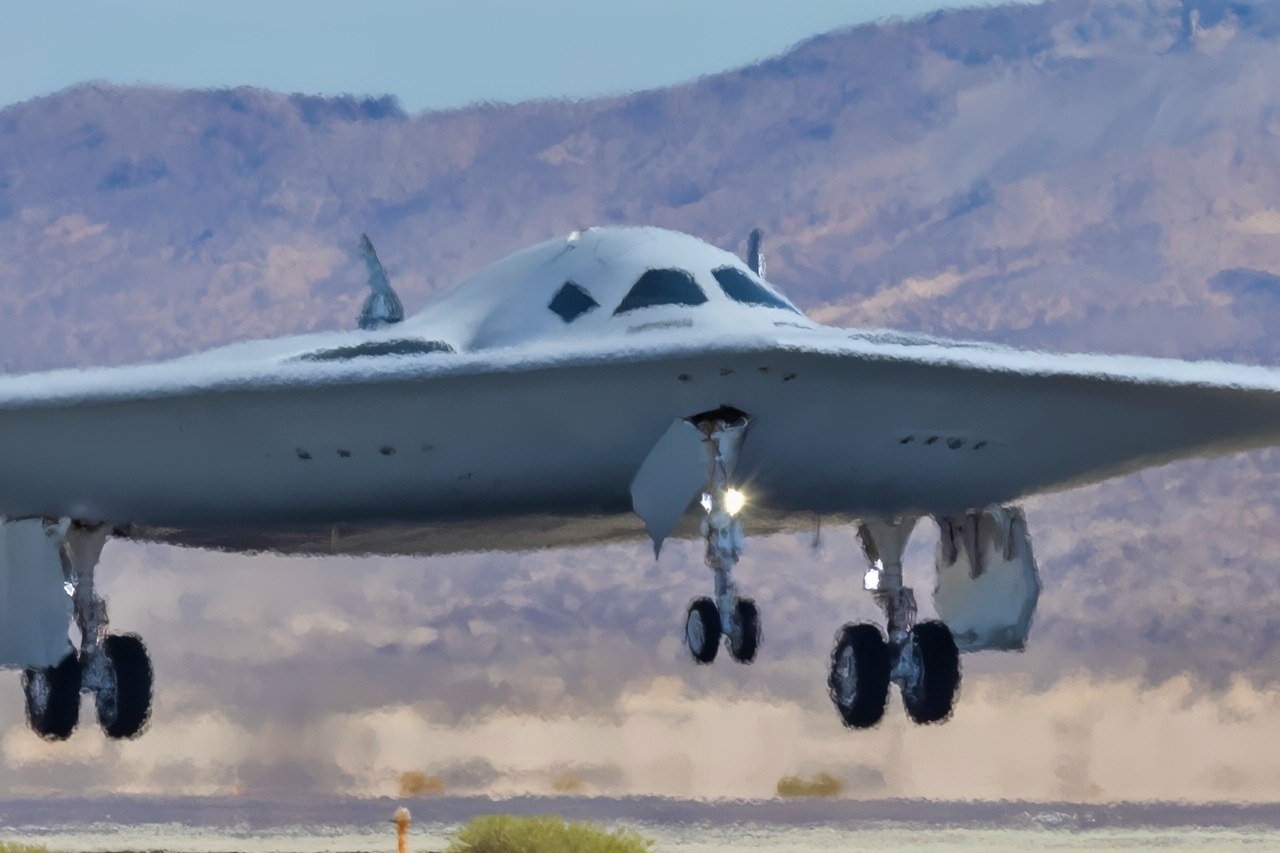
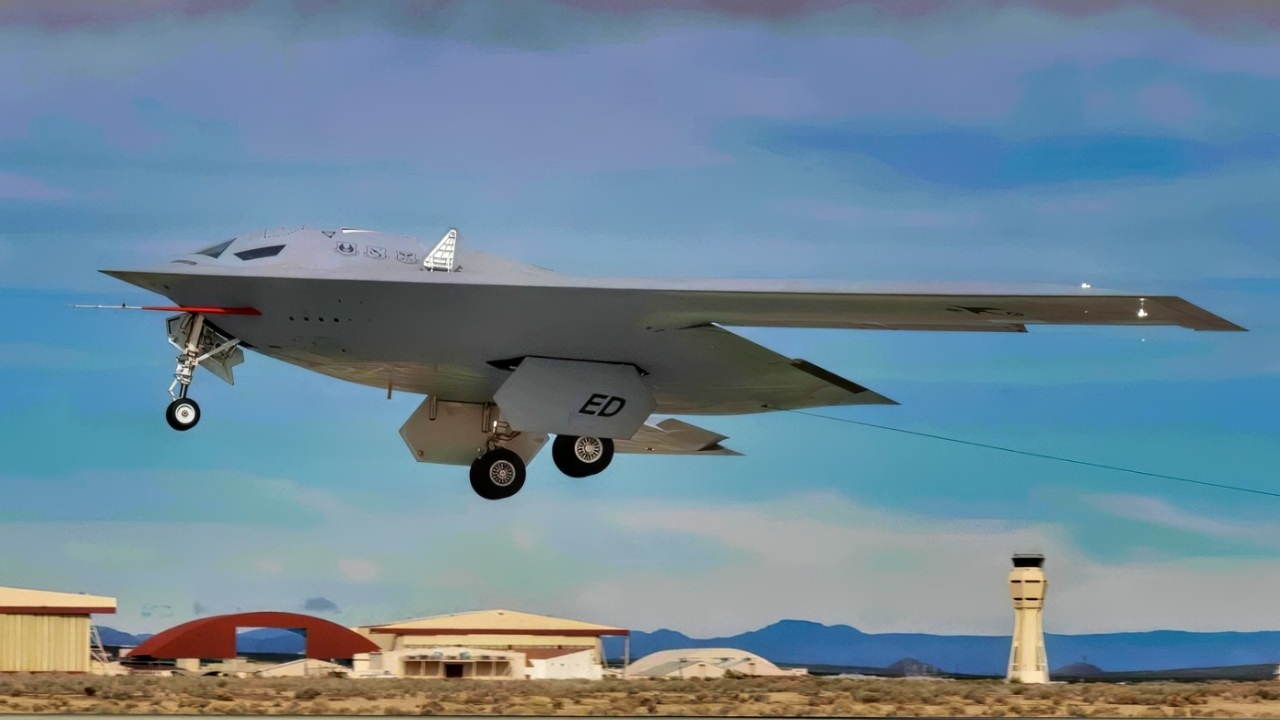
A B-21 Raider test aircraft lands at Edwards Air Force Base, Calif., during ongoing developmental flight testing, Sept. 11, 2025. The B-21 will be the backbone of the bomber fleet; it will incrementally replace the B-1 Lancer and B-2 Spirit bombers. (U.S Air Force photo by Todd Schannuth)
-Isaac Seitz argues those concerns miss the point: the B-21 was built around open-architecture systems for rapid upgrades and fills an irreplaceable long-range, survivable strike role, especially in the Indo-Pacific.
-Its relevance will hinge on execution—keeping production on track, integrating it into a networked force, and staying ahead of rival counter-stealth tech.
Can the B-21 Raider Survive China’s Quantum Radars and Drones?
The B-21 is the newest strategic bomber for the U.S. Air Force, which is currently in flight testing.
With its first flight in 2023, the B-21 is arguably the first sixth-generation fighter to take flight (that we know about).
Despite the program’s success, the project has its detractors.
Some experts and analysts have argued that due to the rapidly advancing pace of technology, the B-21 will likely be obsolete by the time it enters production.
B-21 Raider Bomber: Dead Upon Arrival?
Despite its cutting-edge design, some critics argue that the B-21 could be obsolete by the time it is fully operational.
One primary concern is the rapid pace of technological advancement, particularly among potential adversaries such as China and Russia.
These nations are investing heavily in advanced radar systems, including quantum radar, which could detect stealth aircraft.
They are also developing hypersonic weapons capable of targeting airbases and supporting infrastructure, as well as drone swarms that could challenge traditional air superiority. If these technologies mature faster than anticipated, they could erode the B-21’s stealth advantage and limit its effectiveness.
Another concern is the slow production rate. With only 10 aircraft produced annually, the B-21 fleet will take a decade or more to reach full strength.
This delay could mean that early models are outdated by the time the last ones are delivered, especially if adversaries continue to innovate at a rapid pace.
Additionally, the rise of unmanned systems has led some to question the relevance of large, crewed platforms. Autonomous drones and hypersonic missiles offer cheaper, faster, and potentially more survivable alternatives.
Prominent voices in the tech and defense sectors have argued that the future of warfare lies in AI and remote operations, not in traditional manned bombers.
The B-21 Raider was Built to be Upgraded
There are legitimate reasons to be concerned about the B-21’s feasibility; however, the designers of the were fully aware of the dynamic nature of warfare and took steps to account for it. One of its most important features is its adaptability.
The open systems architecture allows for rapid software and hardware upgrades, enabling the aircraft to evolve in response to emerging threats. This design philosophy ensures that the B-21 is not a static platform but one that can be continuously improved over time.
The B-21 Raider fills a critical role that cannot be easily replaced. In regions like the Indo-Pacific, where distances are vast and forward bases are limited, long-range, stealthy, and survivable bombers are essential. The B-21 can strike targets thousands of miles away, penetrate dense air defenses, and deliver nuclear deterrence.
No existing drone or missile offers the same combination of flexibility, range, and payload capacity. Shelving the B-21 because of a technology that might exist one day is simply foolish.
Always Ahead of the Curb
Moreover, the B-21 is not intended to operate in isolation.
It is part of a broader, multi-domain strategy that includes fighter jets, unmanned systems, cyber capabilities, and space assets. Its ability to coordinate with other platforms makes it a force multiplier, enhancing the effectiveness of the entire military ecosystem. Rather than being a relic of the past, the B-21 is designed to complement and enhance modern warfare capabilities.
Nonetheless, the B-21 will face significant challenges in the future. China’s anti-access/area denial (A2/AD) strategy, which includes long-range missiles and integrated air defenses, is specifically designed to deter U.S. forces from operating in the region.
The B-21’s stealth and range are tailored to counter this threat, but success will depend on maintaining its technological edge.
Electronic warfare and cyberattacks will also play a significant role in future conflicts. The B-21’s resilience to jamming, spoofing, and cyber intrusions will require robust cybersecurity protocols and continuous upgrades.
How Many B-21s Does the U.S. Need?
The projected cost of the B-21 is approximately $692 million per unit, based on 2022 estimates. The Air Force plans to acquire at least 100 aircraft with the possibility of more being purchased later.
Some have argued that 100 bombers are not enough to meet the U.S.’ strategic needs. The B-21 is intended to replace the B-1 and B-2 bombers in service.
Currently, there are around 45 B-1Bs in service and around 19 B-2s. These bombers are expected to remain in service until the 2030s when the B-21 enters active operational status. Critics argue that phasing out legacy models combined with the slow production of the B-2 will leave the U.S. at a critical disadvantage.
Unfortunately, purchasing another 100 bombers is much easier said than done.
With its high price tag and slow rate of production, the U.S. would still have to wait many years to reach its full B-21 fleet size.
Expanding the B-21 fleet offers very few advantages compared to the strain it puts on an already struggling budget. While I am in favor of obtaining as many bombers as possible, we have to be realistic here. The U.S. does not have the resources necessary to procure, produce, and maintain 200 B-21s without making some tough sacrifices in other areas.
To put it another way, the B-21 Raider is not inherently obsolete, but its long-term relevance depends on its execution.
Suppose the U.S. Air Force can maintain agile development cycles, accelerate production, and integrate the B-21 into a networked, multi-domain force.
In that case, it will remain a vital asset well into the 2040s and beyond.
However, if production lags, upgrades stall, or our adversaries leap ahead in detection/counter-stealth technologies, the B-21 could become a costly relic.
About the Author:
Isaac Seitz, a Defense Columnist, graduated from Patrick Henry College’s Strategic Intelligence and National Security program. He has also studied Russian at Middlebury Language Schools and has worked as an intelligence Analyst in the private sector.


Ehud Gavron
August 21, 2025 at 12:57 am
> …deliver nuclear deterrence…
You don’t “deliver” deterrence. Go look up detterence, get a new degree (and no, “Russian” is not a degree) and try again.
Thomas A Mills
August 21, 2025 at 11:57 am
Why don’t we just fly B-52s to a 100 years old while waiting for the obsolete 8th generation B-52 stealth bomber.
John Swift
August 22, 2025 at 5:32 pm
It is “ahead of the CURVE” not curb.
Gary Cleland
August 23, 2025 at 2:48 pm
I spent a career in the military when Russia/USSR was the adversary. They are still a nuclear power, but pretty sure they lost credibility the last 4 yrs. China is concerning.
Timothy Ledin
August 23, 2025 at 6:43 pm
Yeah, how is it that people are getting so ignorant? It’s CURVE, like when testing in school, the grades are on a graphical curve and the front of the curve is where the smart people reside. Totally lost all credibility.
Krystal cane
August 23, 2025 at 8:30 pm
Trump sold all the secrets to Russia and China nothing is secret with a PDF felon in office
Joe
August 23, 2025 at 9:12 pm
“With its first flight in 2023, the B-21 is arguably the first sixth-generation fighter to take flight (that we know about).”
This article is obviously written by AI. Do better. Learn how to write your own articles. You suck.