

Key Points and Summary – The U.S. risks losing its air superiority by 2030 if it fails to build its next-generation aircraft in sufficient numbers.
-For a “strategic restraint” approach, where the new F-47 fighter and B-21 bomber are not for global policing but for credibly deterring great-power war in the Atlantic and Pacific.

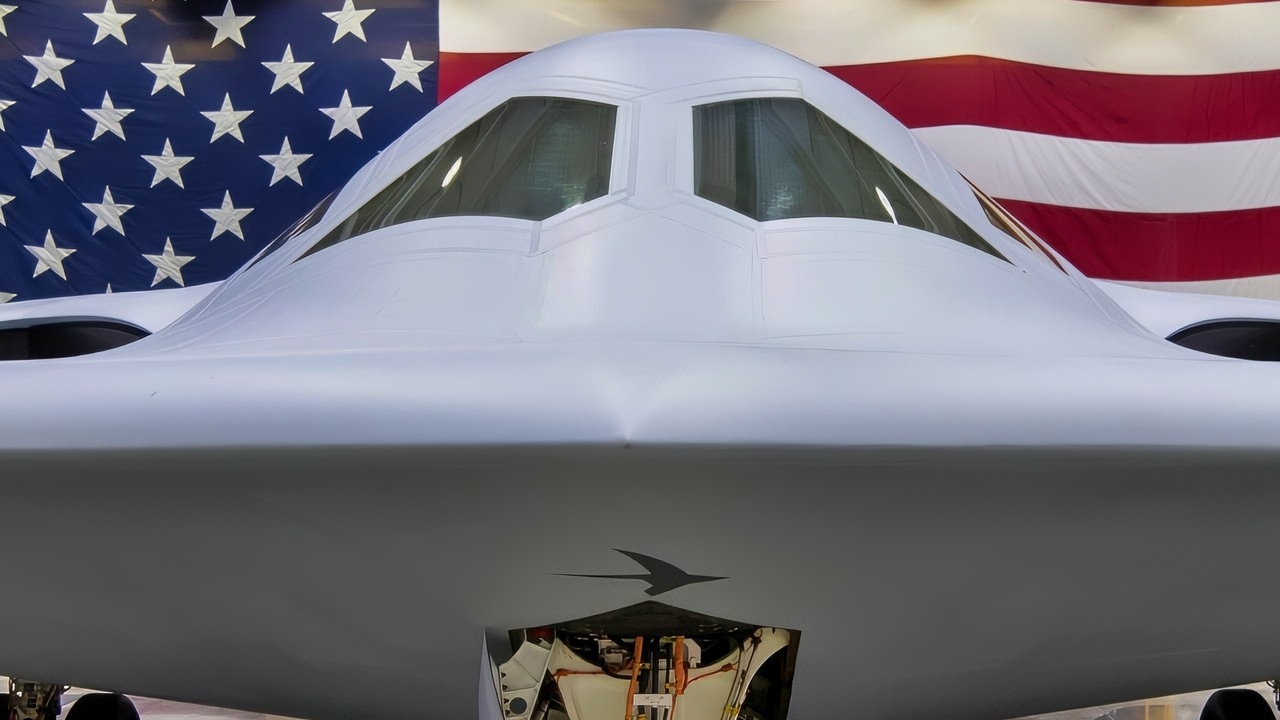
B-2 Bomber from U.S. Air Force Display. Image Credit: Harry J. Kazianis/National Security Journal.
-To achieve this, the U.S. needs a minimum of 200-300 F-47s and at least 145 B-21s. These numbers are essential to absorb combat losses, reassure allies, and deter adversaries like China and Russia.
B-21 Raider and F-47: The Numbers Question We Need Answered
Airpower has been the greatest weapon in the U.S. military’s arsenal since World War II. Air superiority over Europe in the 1940s and Iraq’s deserts in 1991 proved decisive.
By 2030, however, if Washington does not get serious about developing next-generation aerial fleets, U.S. superiority will be little more than fond memory. The F-47 fighter and the B-21 Raider bomber, on which the Air Force has staked its modernization program, aren’t about equipping the United States to project military force to dominate every corner of the globe. Rather, these two aircraft will determine whether the United States can defend its essential interests in a world of growing great-power competition.
If those of us who take strategic restraint seriously are to have any impact on how the F-47 and B-21 are built, we must make clear that these aircraft must be built in sufficient strength not to enable a quixotic quest for global primacy, but to ensure credible deterrence where it most matters: in defense of the United States and its allies, and to secure the balance of power in the North Atlantic and Indo-Pacific.
Washington must do what is vital, not what is merely desirable. For too long, American defense policy has been driven by illusions about what U.S. forces could do to police the so-called rules-based international order. The wars in Iraq and Afghanistan bled treasure and blood in conflicts of choice while leaving U.S. forces ill-prepared for a high-end fight in defense of core interests.
The next decade will be less forgiving. Beijing and Moscow are building forces designed to exploit U.S. vulnerabilities. Acquiring the F-47 and B-21 in merely token numbers will exacerbate those vulnerabilities. Procuring them in strength will allow Washington to field the credible forces it needs to dissuade coercion without pretending to global hegemony.
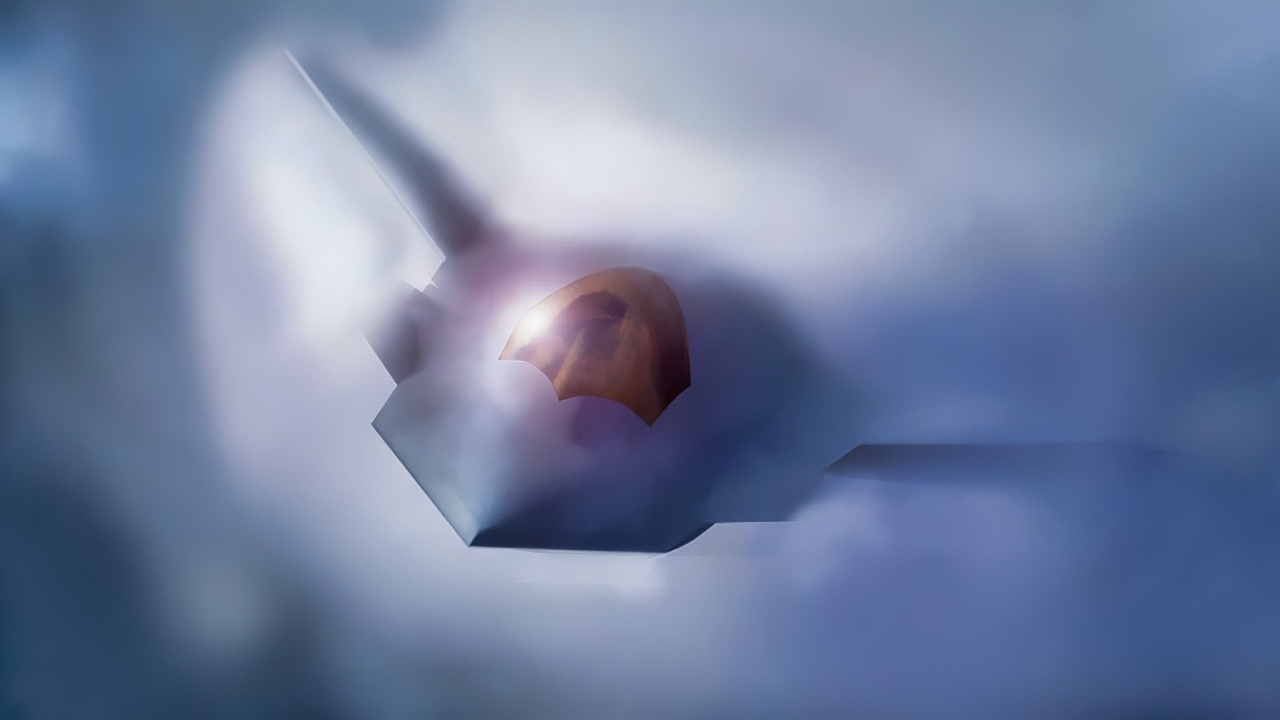
Shown is a graphical artist rendering of the Next Generation Air Dominance (NGAD) Platform. The rendering highlights the Air Force’s sixth generation fighter, the F-47. The NGAD Platform will bring lethal, next-generation technologies to ensure air superiority for the Joint Force in any conflict. (U.S. Air Force graphic)
The F-47 is a good place to start. Recently selected as the centerpiece of the Next Generation Air Dominance (NGAD) program, it will be the first generational leap in fighter design since the F-35. More than a mere fighter, the F-47 will be a command node in a network of drones, sensors, and electronic warfare platforms that will project effects across the battlefield. But a restrained America does not need thousands of them. It does, however, need several hundred F-47s, spread across key theaters in order to ensure the U.S. can win air superiority in one or two major operations at a time. The alternative – to bet that drones and AI-enabled systems can substitute for mass – simply is not credible against peer adversaries that can absorb losses.
Restraint does not require the F-47 to achieve air dominance everywhere. It does, however, require the ability to win air superiority where vital interests are on the line.
The same is true of the B-21. First flown in 2023, this manned bomber is designed to penetrate advanced defenses and deliver both conventional and nuclear payloads. A restrained grand strategy would not require the kind of fleet necessary to sustain global bomber patrols. But no strategy would be credible with just a handful of these bombers.
At least 145 Raiders are needed to deter nuclear coercion, credibly strike across theaters, and absorb the loss of the Cold War bomber fleet. Anything less would invite rivals to create simultaneous crises in Europe and Asia and bet that Washington could not respond to both. Restraint does not mean defending every ally everywhere. It does mean ensuring the U.S. can deter great-power wars in the Atlantic and Pacific.
Deterrence is as much about perception as capability. In order for a restrained America to deter, it must be seen to have both the will and the means to respond to aggression in vital areas. Small numbers of F-47s and B-21s would project hesitation, not resolve. Beijing and Moscow are watching closely. If they see Washington is unwilling or unable to absorb losses, deterrence will atrophy. Restraint demands clarity. By investing in sufficient numbers of its most important platforms, Washington demonstrates a commitment to core interests rather than scattering its resources on peripheral priorities.
Attrition reinforces the point. A high-end fight will see rapid and severe losses. Even the most advanced aircraft can be lost in a single strike. If Washington has token fleets, they will be bled out rapidly and cannot be replaced in time to matter – production cycles take years, not weeks. Building in strength is essential to a restrained strategy: it ensures the United States has enough to fight, and, ideally, to deter, so it does not have to fight at all.

F-47 Fighter from U.S. Air Force. Image Credit USAF.
Alliances depend on this credibility. NATO and the U.S.’s Indo-Pacific partners rely on Washington’s ability to defend them in strength. Restraint does not mean abandoning alliances. It does mean focusing them on core security interests rather than global crusades. Left without credible U.S. airpower, allies will hedge, cut deals with rivals, or distance themselves from the U.S. A restrained strategy therefore requires a measured but robust air arsenal: not overextended to guarantee control over the entire globe, but sufficient to reassure allies in the regions that matter most.
Naysayers will point out that submarines, missile defenses, and cyberweapons deserve equal, if not greater, investment. Those platforms indeed matter greatly, but none is decisive. Air superiority and long-range strike capabilities are the sinews of American military power. Restraint does not mean an end to balancing the different pieces of the force. It does mean that the U.S. government must invest disproportionately in the F-47 and the B-21.
The logic of restraint is not to build as many fighters and bombers as possible, but to field the minimum number that can credibly deter aggression and, if deterrence fails, fight and win a high-end conflict in one or two theaters. This means, quite simply, that the United States must build the F-47 at scale.
A restrained America does not need thousands of these fighters. It does, however, need at least 200 such aircraft – enough to assure air superiority in the North Atlantic and the Indo-Pacific simultaneously, with a margin for attrition. Anything less would risk strategic strangulation; it would leave the United States unable to prevail against peer adversaries that can absorb significant losses.
The same logic applies to the B-21 Raider. Long-range strike capacity must be large enough to penetrate advanced air defenses, deter nuclear coercion, and sustain conventional strike across theaters. A credible figure is at least 145 aircraft. That number allows the United States to replace its aging Cold War bomber fleet; to hold multiple adversaries at bay in both Europe and Asia at once; and to absorb the losses that any high-end war will impose.
The Numbers Matter for the F-47 and B-21 Raider
The credibility that flows from strength is vital for alliances. NATO and Indo-Pacific partners do not expect the United States to defend every corner of the globe. They do, however, expect it to field enough power to defend the theaters where conflict is most likely and most important. A restrained grand strategy, therefore, requires robust but bounded numbers: roughly 200–300 F-47s, and 145 B-21s.
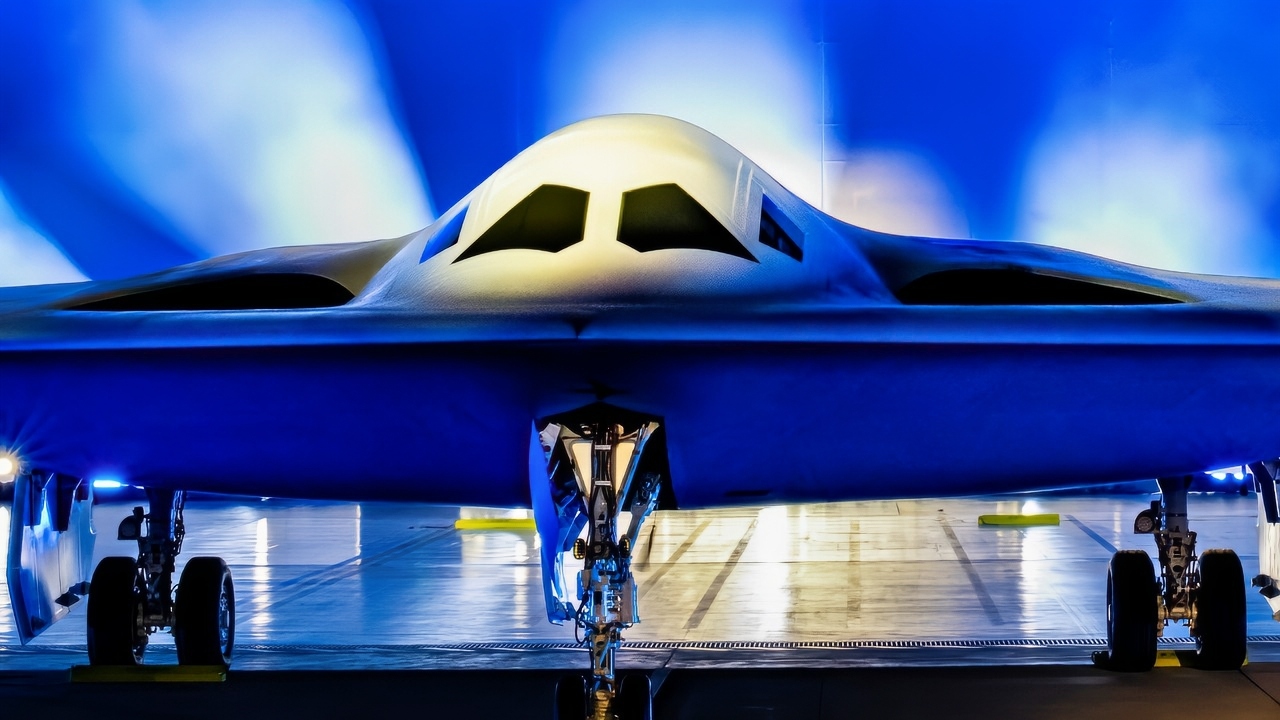
A B-21 Raider is unveiled at Northrop Grumman’s manufacturing facility on Air Force Plant 42 in Palmdale, California, Dec. 2, 2022. The B-21 will be a long-range, highly survivable, penetrating strike stealth bomber capable of delivering both conventional and nuclear munitions. (U.S. Air Force photo by Airman 1st Class Joshua M. Carroll)
These are not numbers to build an empire, but rather the smallest credible arsenals for deterring great-power war in the only regions that truly matter.
About the Author: Dr. Andrew Latham
Andrew Latham is a non-resident fellow at Defense Priorities and a professor of international relations and political theory at Macalester College in Saint Paul, MN. You can follow him on X: @aakatham. He writes a daily column for National Security Journal.
Military Affairs
China’s Stealth Air Force Has 1 Mission


Zhduny
August 20, 2025 at 2:30 pm
Not too many.
The reason is the US will have a national debt exceeding 50 trillion bucks during the years following or after 2030.
Right now, the debt is 37 trillion bucks. But since the US govt is decreasing taxes and increasing spending, it will give way to the phenomenon of debt runaway, THUS after 2030, the debt will become so large, nobody dares to buy US treasury bills any longer.
When that happens, the US defense industry will no longer have easy access to pork benefits from the DoD.
No access, no aeroplanes.
Bernard
August 21, 2025 at 2:34 pm
Russia is not building for anything other than defense. There military was so weak, it couldn’t overpower Ukraine. That it plan is to overrun Europe is ludicrous. China on the other hand has Taiwan and lesser Philippine islands in its sights. So a realistic view is very necessary to balance build with threat. Everything is short term thinking. Procurement needs to balance construction with funds and threat. This article doesn’t do that.