

For all intents and purposes, the US strategy against Iran — which has so far been largely economic rather than military — is working.
But given that the Strait of Hormuz is still closed, ships attempting passage are still being attacked, and the global supply of oil is still in flux, is the US really using all the tools at its disposal to end the conflict?
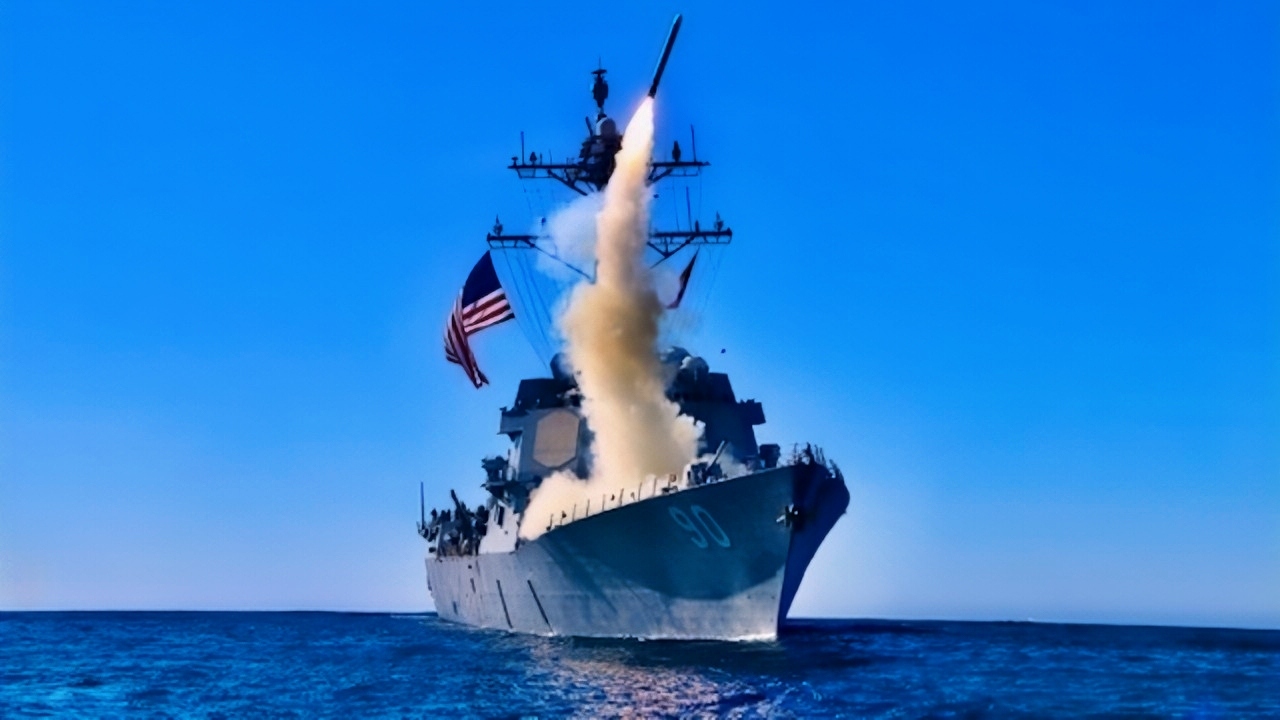
(Dec. 01, 2020) – The guided-missile destroyer USS Chafee (DDG 90) launches a Block V Tomahawk, the weapon’s newest variant, during a missile exercise. This event marked the first time a Block V Tomahawk missile was operationally tested, marking the Navy’s transition to a more advanced capability for the fleet. Block V includes an upgrade that will enhance navigation performance and provide robust and reliable communications. Chafee is currently assigned to Carrier Strike Group ONE and is homeported in Pearl Harbor. (U.S. Navy photo by Ens. Sean Ianno/Released)

(March 7, 2016) An F/A-18E Super Hornet assigned to the Warhawks of Strike Fighter Squadron (VFA) 97 performs a flyby during an aerial change of command ceremony above USS John C. Stennis (CVN 74). Providing a ready force supporting security and stability in the Indo-Asia-Pacific, Stennis is operating as part of the Great Green Fleet on a regularly scheduled 7th Fleet deployment. (U.S. Navy photo by Mass Communication Specialist Seaman Tomas Compian/Released)
Iran Feels the Effect of US Sanctions
Since the US began putting the economic screws on Iran in earnest through its “Operation Economic Outcast” in August this year, the effects on the Muslim state have been significant. When it launched, US Treasury Secretary Scott Bessent said that the goal was to “sever every economic lifeline that sustains this tyrannical regime until Tehran stands alone.”
It looks like it’s working. According to Iran’s Central Bank, the country’s inflation was a whopping 83.8% in September.
Even before increased economic pressure, the war was already taking a toll on the cleric-run country — its economy shrank 10.1% year-over-year from March to June.
It’s going so well, in fact, that US Secretary of State Marco Rubio believes there’s little point in committing too many resources to military action.
At a G7 meeting in Paris, Rubio said that while the US stands ready to launch military strikes if the occasion calls for it, “eventually the economic realities penetrate the skull of even the most radical lunatic.”
Shifting Away from Diplomacy
Despite the admission that the war in Iran was a major factor in the Republicans’ staggering losses in the midterm elections, President Donald Trump has seemingly pivoted away from finding a diplomatic solution to the conflict.
While Vice President JD Vance has sought to kick off peace talks with Iran, the president’s tone on Truth Social has been different.
“We don’t need a deal with Iran. Those days have long since passed. We’ve got their money, Hundreds of Billions of Dollars, and we’ve got their Strait!” Trump said on the social media platform.
The president also announced that Vance would be redirecting his efforts to address the “massive corruption and crime” he alleges is going on in Democrat-run states such as Illinois, California, and Minnesota.
Rubio agrees with the president’s policy, saying that the US is achieving its objectives through economic pressure.
He also implied that diplomacy was not going anywhere, since Iranian officials’ demands have been “outrageous and ridiculous.”
Ready To Rumble
Regardless of the White House’s current approach to dealing with Iran, the US still has a significant presence in the region.
About 50,000 US personnel are deployed in the region, supported by three aircraft carriers. Trump had initially wanted to attack Iran anew after the midterm elections, but held off at the request of the Saudi Arabian government.
“Saudi Arabia has asked me to please let it be the way it is now for a while,” Trump revealed at a White House press event.
Reports also indicate that while the US stands at the ready to attack, there may be little point in escalating the offensive against Iran. US intelligence has supposedly said that renewed military action would do little to shift Iran’s demands.
The US may also need to be more practical with its resources — according to the Center for Strategic and International Studies, the US has already used roughly two-thirds of its prewar Patriot Interceptors.
Hormuz Remains a Major Point of Contention
All said and done, however, the Strait of Hormuz remains closed. Ship-tracking firm Kpler reports that only five ships crossed the Strait ot Hormuz on November 7, with none crossing the next day.
Passage through the strait is around 65% below prewar levels, according to the UK Maritime Trade Operations (UKMTO), which also recorded an attack against a tanker over the weekend, while the Iranian Revolutionary Guard claimed that it attacked and set fire to two more vessels.
Americans continue to pay the price for the war, forking out an average of $3.78 a gallon for gas and $5.98 for diesel.
The war in Iran is now also considered the largest oil supply disruption in history, according to the International Energy Agency.
Europe has spent an additional €18 billion to €33 billion on imported gas due to the conflict.
In Asia, liquefied natural gas prices rose by an average of 80% year-on-year.
About the Author: Tim Ramos
Tim Ramos has written for various publications, corporations, and organizations, covering everything from finance, politics, travel, entertainment, and sports – in Asia and the U.S. for more than 10 years.