


Key Points and Summary – Russia’s Ukraine war economy is hitting a breaking point. A Financial Times–cited study shows arms plants have tripled since 2022, driving unemployment to record lows—but cash might be running out.
-The Yaroslavl Shipbuilding Plant hasn’t paid its 850 workers since September as the defense ministry’s progress payments stalled.
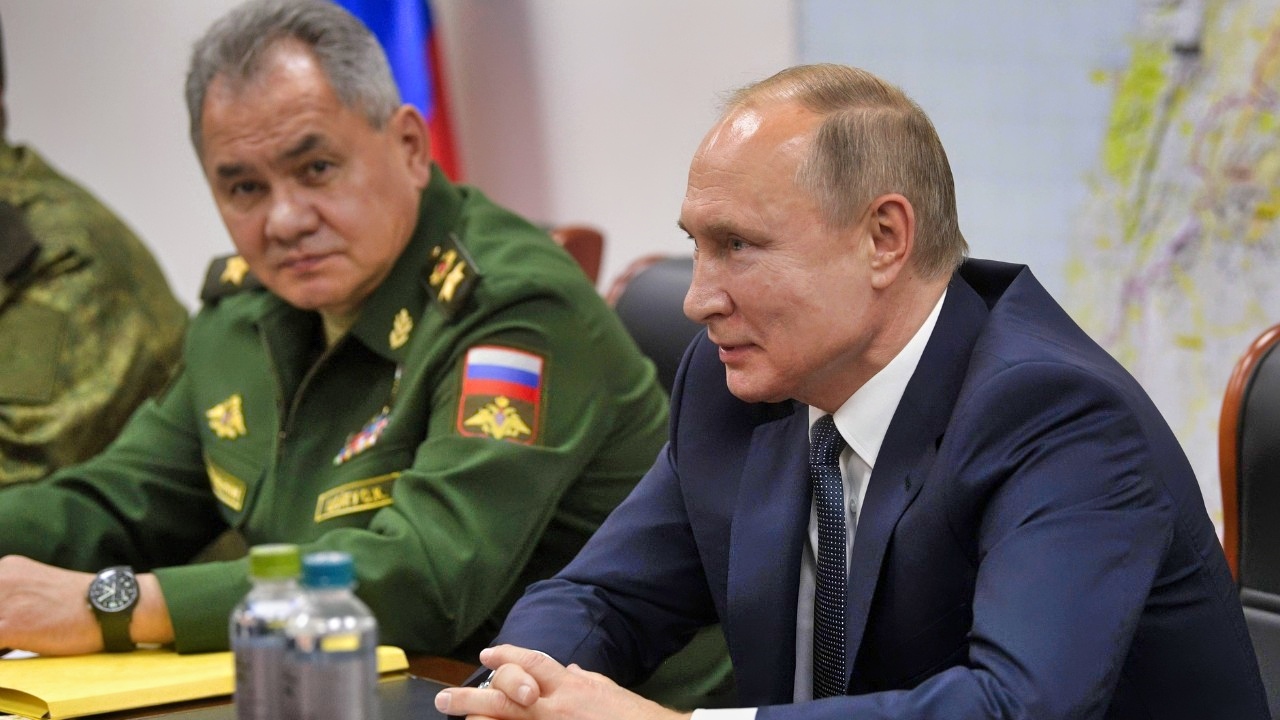
Vladimir Putin in Syria. Image Credit: Creative Commons.
-Regional governments, not Moscow, fund huge enlistment bonuses, and those treasuries are collapsing under the strain.
-Yakutia has stopped all war bonuses and injury/death compensation after funds were depleted, while other regions have slashed or canceled payouts.
-With regional deficits soaring and incentives vanishing, Russia’s ability to recruit, pay, and sustain its war effort is now in real doubt.
Russia’s Economy in Crisis Thanks to the Ukraine War
A Saturday, December 6 report details that Russian President Vladimir Putin may be facing mounting economic problems as his defense sector apparatus “appears to be faltering.”
The report states that factories and regional administrations are struggling to pay both workers and soldiers due to dwindling funds.
Laborers in military enterprises and soldiers in the field are not being paid as regional governments and factories simply run out of money.
The Kremlin has been pouring billions into its defense sector to surge production of weapons systems amid extremely high combat losses. Still, the funding for all this largesse is beginning to run out.
A study conducted by the London Financial Times compiled last year revealed that the number of Russian arms-producing enterprises tripled from approximately 2,000 pre-war to around 6,000 today. Due to the expansion in the defense sector, many Russians have ended up in jobs supporting the war effort.
Thanks to the number of new weapons making plants and drone production lines, Russia’s unemployment fell to a record low of 2.8 per cent.
But in recent months, the Russian defense-industrial sector has been facing escalating production demands coupled with an employment crisis. Experts who spoke to media outlets explain that these enterprises are failing to cope with severe labor shortages, critical cash flow issues, and a shortage of imported essential components in weapons, which must be supplied through various supply chains.
No Pay For Months
One of the Russian enterprises that has received extensive publicity along these lines is the Yaroslavl Shipbuilding Plant, which manufactures amphibious landing craft and patrol vessels. The plant has been unable to pay its 850 employees since September, as the Russian Ministry of Defense has ceased making progress payments for the contracts the plant is fulfilling. The shipyard has been under sanctions since 2019, further complicating its ability to obtain financing.
At the same time, Putin’s military machine has also been relying on a steady stream of replacement soldiers from Russia’s regions.
They are the only solution to maintaining pressure on the Ukrainian front lines due to extremely high combat casualty rates.
What has attracted many of these recruits from impoverished regions made up of provincial towns and villages is the prospect of a military paycheque.
They are thousands of miles removed from the country’s large cosmopolitan cities, and in their part of the country, a soldier’s pay is far better than in any other line of work.
At the same time, the Kremlin has been offering attractive enlistment bonuses and other financial inducements to lure young men into signing on for military service contracts.
But the payments for these bonuses are not drawn from the Russian federal budget or some Defense Ministry line item.
Regional Budget Crisis
Instead, they must be paid from the different regional government treasuries. But they face their own budgetary shortfalls.
A constant call from Moscow for them to mobilise more recruits, but without providing any funding to pay those bonuses, it is bankrupting these far-off municipalities.
At the same time, the drive to provide more able-bodied personnel for the army and more factory workers for military enterprises is depleting the civilian labor market. Other reports further state that this decline in capable workers is exacerbated by the emigration of those who oppose the war effort and by the lack of viable means to replace them with imported labor.
The region of Yakutia has now stopped paying any military bonuses after its funding mechanisms were depleted. This news marks the first publicly acknowledged budget collapse directly attributable to the costs of military mobilization.
Russian Finance Minister Ivan Alexeyev stated, “Unfortunately, this is indeed our situation.” This region previously served as one of the primary sources of new military recruiting for contract soldiers following the February 2022 invasion. Bonuses paid before the funding sources ran dry had reached $29,000 for signing a contract to serve in the military.
Russian officials also admit they cannot calculate how much they currently owe military personnel. Compensation payments of $8,300 for injuries and $11,000 to next of kin in the event of death have also been suspended.
Yakutia’s fiscal troubles are only the tip of a financial turmoil iceberg that is being seen across numerous provinces of Russia. As of the end of September, Russian regions were carrying a combined deficit of 724.8 billion rubles or £7 billion sterling.
In October, the regional governments in Tatarstan, Chuvashia, Mari El, and Belgorod announced reduced enlistment payouts, while other regions have eliminated additional bonuses.
Without the prospect of receiving these bonuses, there will be little to no incentive for Russians to enlist in the military.
About the Author: Reuben F. Johnson
Reuben F. Johnson has thirty-six years of experience analyzing and reporting on foreign weapons systems, defense technologies, and international arms export policy. Johnson is the Director of Research at the Casimir Pulaski Foundation. He is also a survivor of the Russian invasion of Ukraine in February 2022. He worked for years in the American defense industry as a foreign technology analyst and later as a consultant for the U.S. Department of Defense, the Departments of the Navy and Air Force, and the governments of the United Kingdom and Australia. In 2022-2023, he won two awards in a row for his defense reporting. He holds a bachelor’s degree from DePauw University and a master’s degree from Miami University in Ohio, specializing in Soviet and Russian studies. He lives in Warsaw.


