

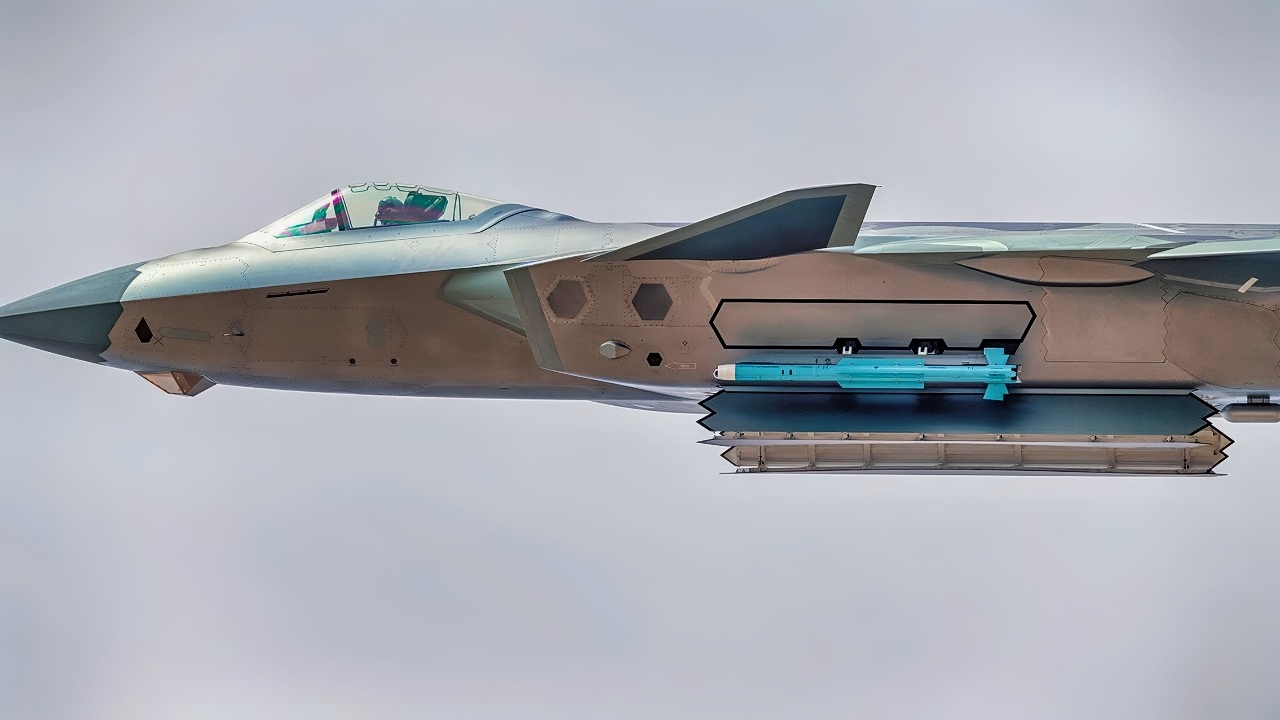
The Chengdu J-20A — the upgraded variant of China’s J-20 Mighty Dragon stealth fighter — is being assigned to top-tier PLAAF formations within direct operational reach of Taiwan and the First Island Chain. Senior National Security Editor Brandon Weichert argues the J-20A is best understood not as China’s answer to the F-22 Raptor but as a long-range battle manager — a flying quarterback designed to orchestrate the wider kill chain across PL-15 long-range missiles, drone swarms, naval forces, ground-based missile batteries and airborne early warning aircraft. The indigenous WS-15 engine gives the aircraft sustained supercruise, longer range and more electrical capacity for sensors and electronic warfare.
China’s J-20A Stealth Fighter Is A Serious Warplane
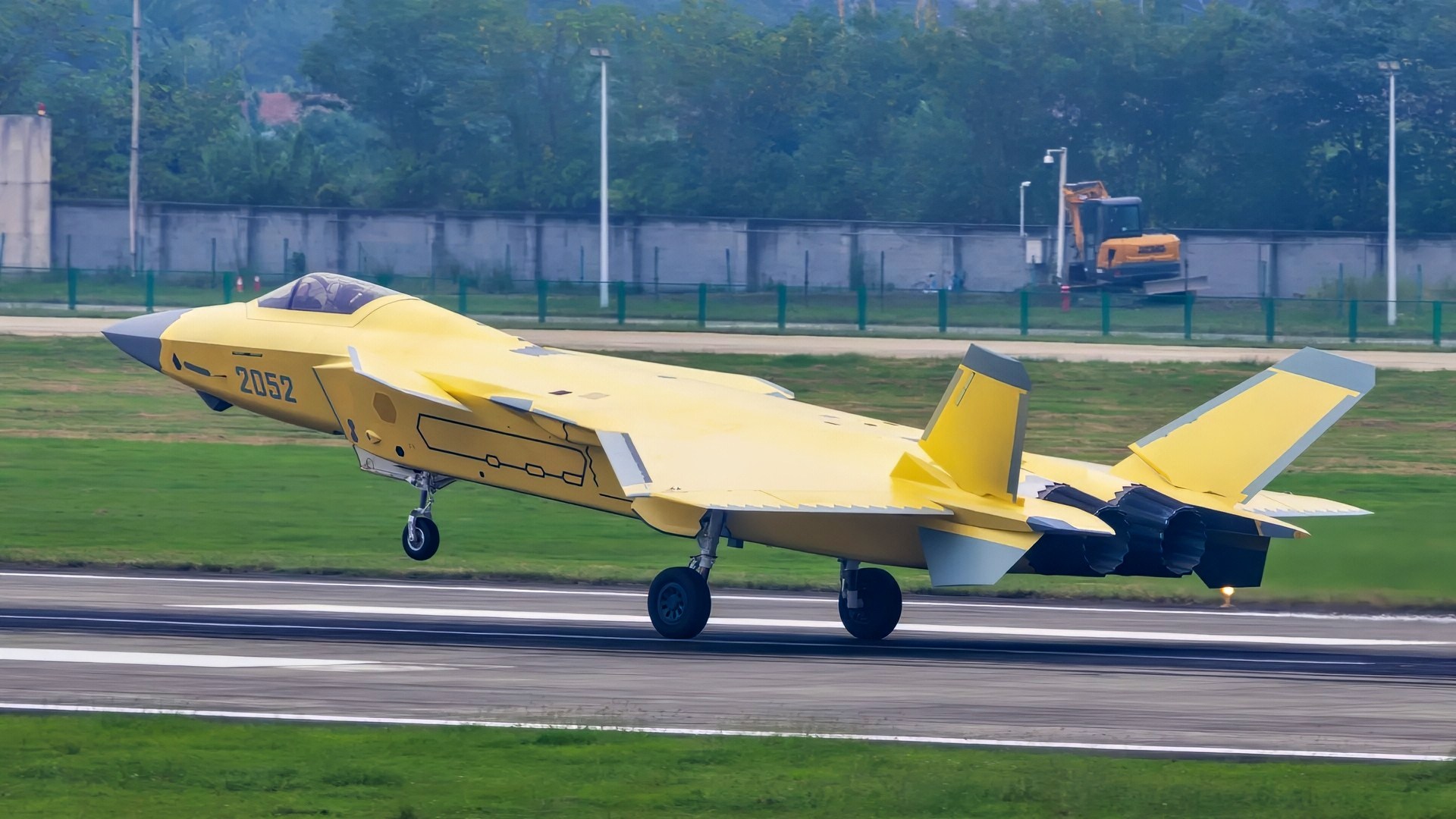
J-20A Fighter in Yellow. Image Credit: X Screenshot.
China’s disturbing rise as both a dynamic economic power and an advanced military power continues to shock audiences everywhere.
This new reality is evident across multiple new platforms.
Still, onet one notable development is the advent of the J-20A, an upgraded variant of the Chengdu J-20 “Mighty Dragon” fifth-generation warplane (China’s answer to America’s F-22 Raptor).
Like so much of what China develops for its military, the J-20A is an example of Beijing’s attempt to create a more mature, heavily networked, long-range air-dominance platform, specifically optimized for a Taiwan contingency and broader anti-access/area-denial (A2/AD) warfare in the Western Pacific.
The J-20A Is China’s Attempt at a “True” Fifth-Generation Warplane
The original J-20 entered service for the People’s Liberation Army Air Force (PLAAF) in 2017. At the time, though, critics ridiculed the J-20 as being a poor knockoff of America’s superior F-22. In many respects, the earliest iterations of the J-20 were a bad copy of the iconic American fifth-generation warplane.
But, as with so much of what China does, the original version was not intended to be the final one.
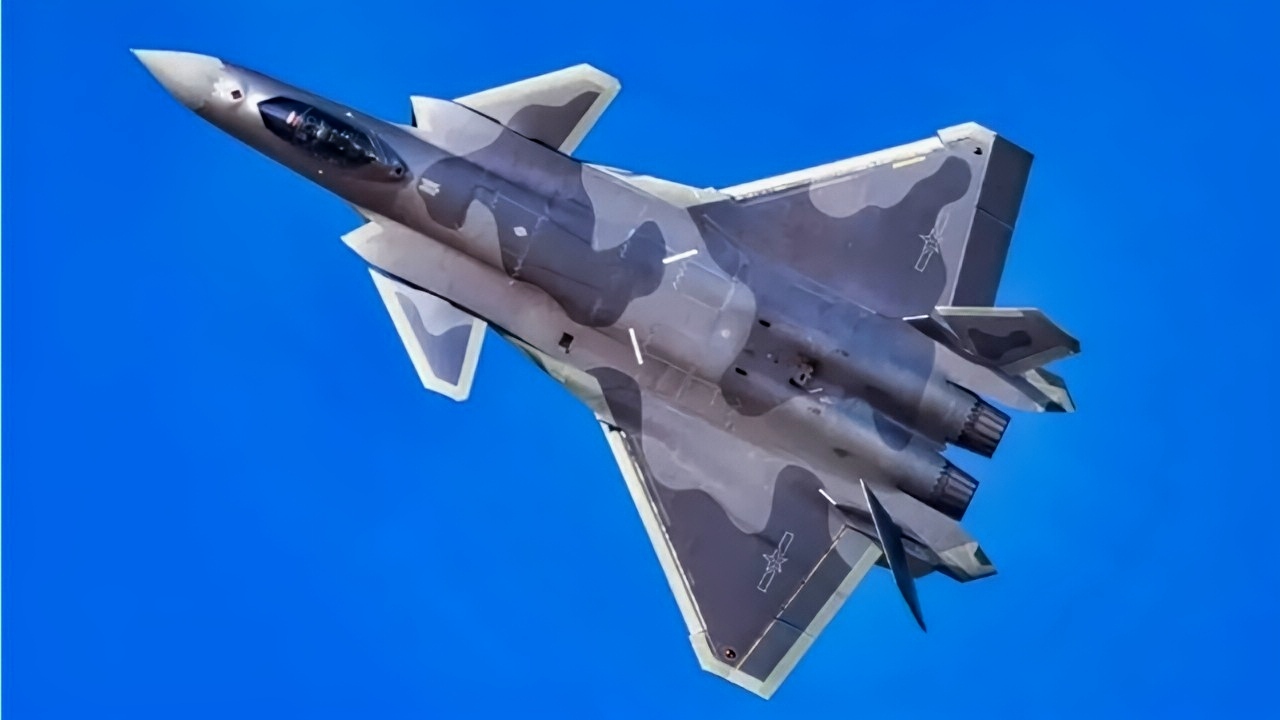
China J-20 Mighty Dragon in 2021. Image Credit: Chinese Internet.
So, as Western observers criticized the initial tranche of J-20s for having Russian-made AL-31 engines or interim Chinese WS-10 variants, these systems limited the J-20’s supercruise performance, acceleration, and reliability in the early versions.
After years of work, the J-20A addresses the engine problem by introducing the new, indigenously developed WS-15 engine. With the WS-15, China’s fifth-generation air superiority warplane finally has the thrust needed for sustained supercruise, improved maneuverability, better range, and more electrical generation capacity for sensors and electronic warfare (EW) systems.
Indeed, the advent of the WS-15 is undoubtedly the most important breakthrough in the entire program. It demonstrates that even when Western experts assume China is hopelessly behind more advanced Western systems, the Chinese always surprise them with a little homegrown gumption.
Beijing Positions the J-20A for Taiwan Operations
Military Watch Magazine assessed that Beijing is assigning the aircraft to top-tier PLAAF formations operating within direct operational reach of Taiwan and the First Island Chain (the region extending from the Kamchatka Peninsula through Japan and Taiwan down to the Philippines and the South China Sea).
That’s important because it demonstrates that the J-20A is not just a typical air superiority platform. China clearly envisions the aircraft as being a long-range “battle manager” or “flying quarterback.”
Rather than focusing solely on dogfighting performance, China is building a stealth command-and-control node to orchestrate the wider kill chain. That kill-chain includes PL-15 long-range missiles, drone swarms, naval forces, land-based missile batteries, and airborne early warning aircraft.
In other words, it’s an encapsulation of China’s broader A2/AD doctrine aimed at pushing the US Navy’s carrier force farther from Taiwan and the First Island Chain, and at negating the threat that US forces forward-deployed to places like Guam pose to Chinese elements operating within the First Island Chain.
China J-20 Fighter X Screenshot.
The Aircraft Is Becoming a Core Node in China’s Air Warfare Network
Several analysts now argue that the most important J-20A improvements are not aerodynamic but electronic. China is shifting from simple platform competition toward integrated system warfare.
The J-20 isn’t valuable because it can shoot better than its opponents. J-20’s true value for China rests in the fact that it can see, process, and coordinate in ways that few other warplanes in the world can today.
J-20A comes with enhanced radar, improved AI-assisted processing, expanded EW suites, improved sensor integration, and greater capacity for networking with drones and other friendly assets during missions.
China’s rapid military modernization resembles an advanced, distributed-architecture approach in which stealth fighters are essentially airborne information hubs.
Implications for the US
The J-20A is yet another painful reminder of how narrow the gap between US and Chinese military technology has become.
China does not need the J-20A to outperform American warplanes, such as the F-22 and F-35 Lightning II fifth-generation multirole fighters, on its own. Beijing needs the aircraft to function effectively within its layered A2/AD ecosystem near Taiwan.
That ecosystem includes dense missile coverage and ground-based air defenses. It incorporates space-based intelligence, surveillance, and reconnaissance (ISR), along with large numbers of aircraft and drones.

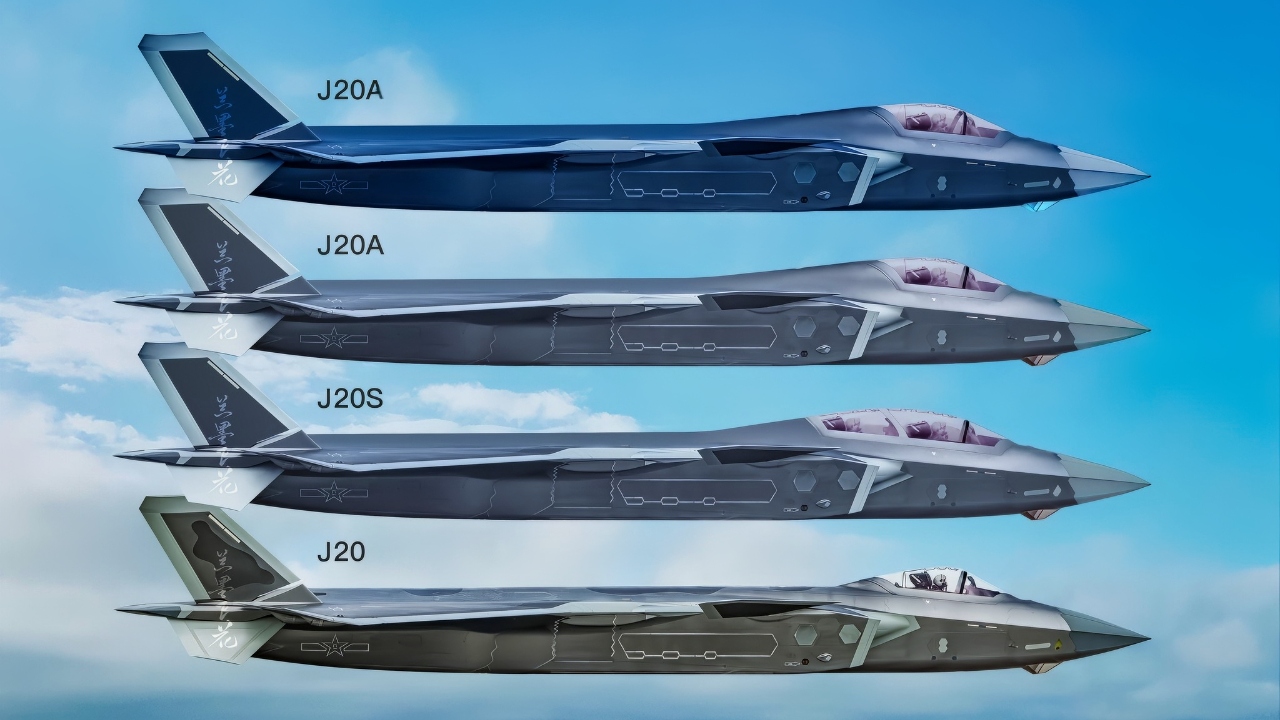
China J-20S Fighter. Image Credit: Creative Commons.
Since any fight between China and the United States would take place within the First Island Chain, China already has serious advantages. Add in the fact that China has serious numerical advantages over any US forces, as well as superiority in industrial capacity, and it almost boggles the mind that Washington is not seriously rethinking its commitment to holding onto the First Island Chain.
Nevertheless, the J-20A is yet another important sign that the military balance of power has, sadly, shifted against the United States in the First Island Chain. It’s another question entirely as to whether Washington understands this new reality.
About the Author: Brandon J. Weichert
Brandon J. Weichert is Senior National Security Editor. Recently, Weichert became the editor of the “NatSec Guy” section at Emerald. TV. He was previously the senior national security editor at The National Interest. Weichert hosts The National Security Hour on iHeartRadio, where he discusses national security policy every Wednesday at 8 p.m. Eastern. He hosts a companion show on Rumble entitled “National Security Talk.” Weichert consults regularly with various government institutions and private organizations on geopolitical issues. His writings have appeared in numerous publications, among them Popular Mechanics, National Review, MSN, and The American Spectator. And his books include Winning Space: How America Remains a Superpower, Biohacked: China’s Race to Control Life, and The Shadow War: Iran’s Quest for Supremacy. Weichert’s newest book, A Disaster of Our Own Making: How the West Lost Ukraine, is available for purchase at any bookstore. Follow him via Twitter/X @WeTheBrandon.


