

Why Switzerland May Buy Fewer Than 36 F-35A Stealth Fighter
Citing rising costs, Switzerland will truncate its order of 36 F-35A stealth fighter jets. In a statement released by the Swiss Federal Department of Defense, Civil Protection and Sport (DDPS), Bern explained the problem is the price tag, and not any technical insufficiency or preference for a European-built fighter.

PHILIPPINE SEA (Dec. 11, 2023) An F-35C Lightning II, assigned to the “War Hawks” of Strike Fighter Squadron (VFA) 97, recovers aboard Nimitz-class aircraft carrier USS Carl Vinson (CVN 70). Vinson, the flagship of Carrier Strike Group ONE, is deployed to the U.S. 7th Fleet area of operations in support of a free and open Indo-Pacific. (U.S. Navy photo by Mass Communication Specialist 2nd Class Benjamin Ringers)
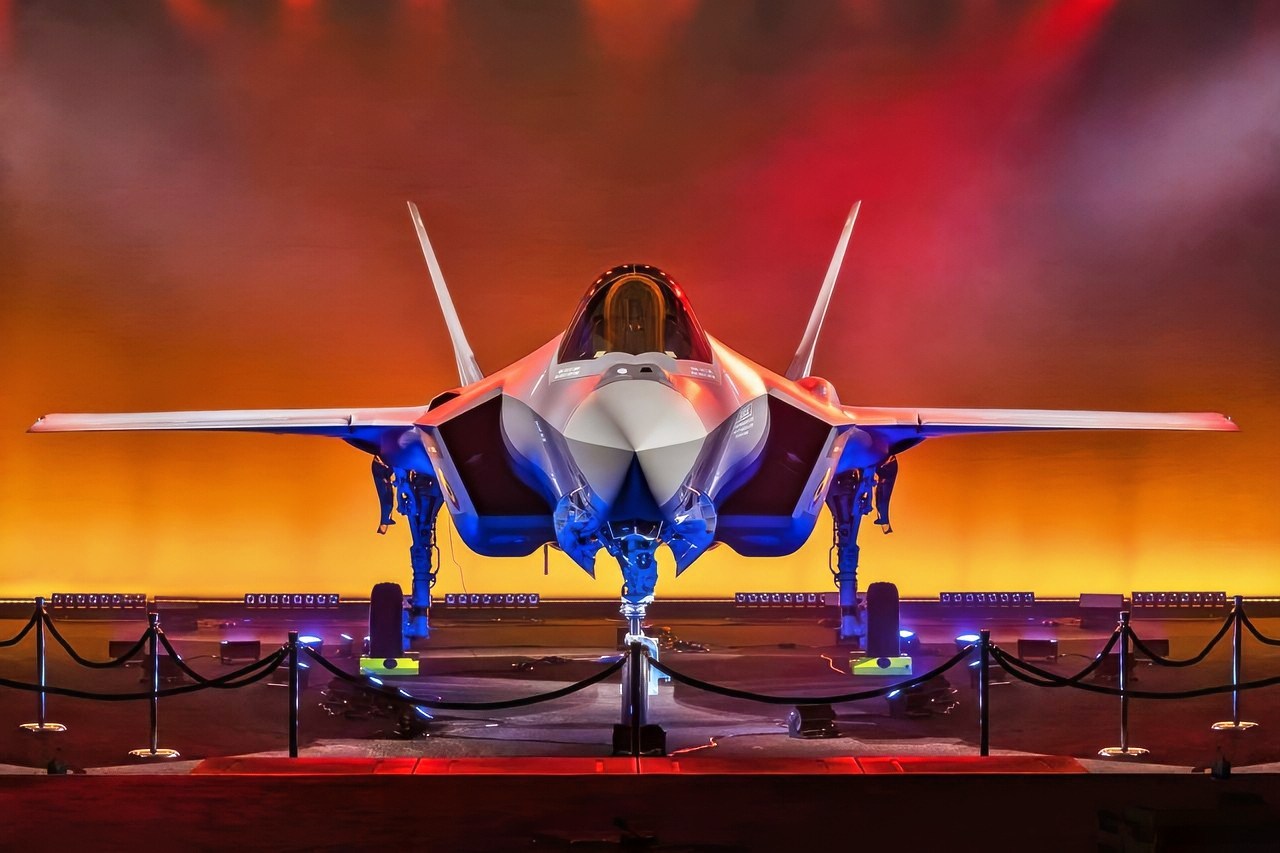
F-35 Fighter in Belgium. Image Credit: Creative Commons.

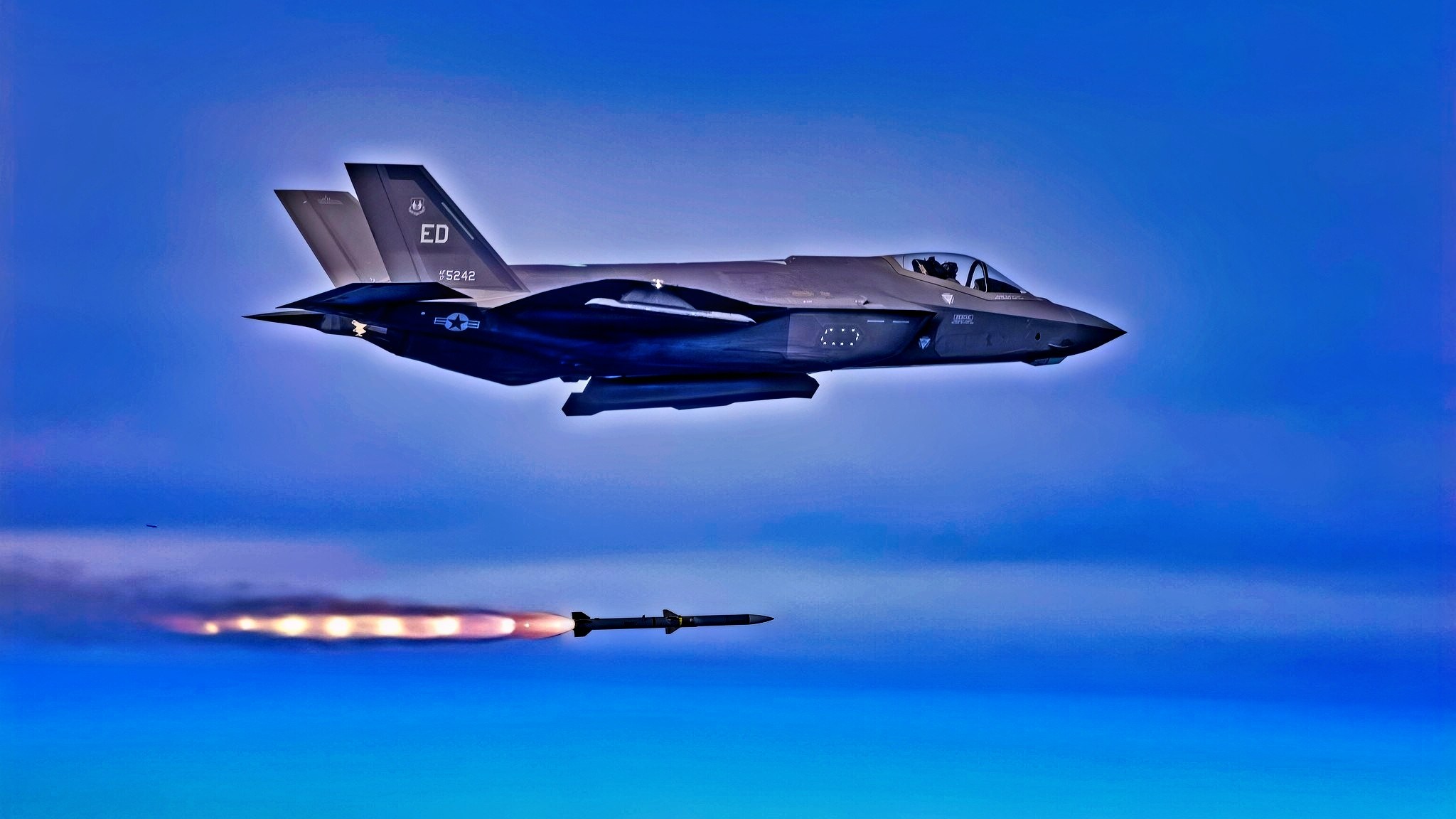
An F-35 Lightning II assigned to the 56th Fighter Wing performs a strafing run during exercise Haboob Havoc, April 26, 2023, over Barry M. Goldwater Range, Ariz. Haboob Havoc is a total force competition enabling pilots from various bases to demonstrate their skills across a diverse range of aircraft while also testing their abilities in different mission sets such as dogfighting and gun-runs. (U.S. Air Force photo by Airman 1st Class Mason Hargrove)
“At its meeting on December 12, the Federal Council decided on the next steps in the procurement of the F-35A,” the Swiss body explained. “It has instructed the DDPS to procure the maximum possible number of F-35A aircraft within the financial framework of CHF 6 billion approved by voters. Due to the foreseeable additional costs, it is not possible from a financial policy perspective to maintain the originally planned number of 36 F-35A aircraft. The Federal Council’s decision means that no additional credit is required and the will of the people is being respected.
KEY POINTS: Switzerland is rethinking its planned 36-aircraft F-35A buy after the Federal Council directed the defense ministry to purchase only as many jets as fit within the voter-approved CHF 6 billion ceiling.
-Bern says talks with Washington showed it cannot enforce the contract’s fixed-price terms, with the U.S. citing inflation and higher input costs.
-The decision lands amid a broader European debate: concerns that U.S. politics and trade disputes could translate into supply-chain leverage, plus uncertainty over costly future upgrades such as Block 4.
-Lockheed Martin says Swiss components have entered production, with deliveries slated to begin in 2027.
“Talks with the US in the summer showed that Switzerland cannot enforce the contractually agreed fixed price for the F-35A fighter jet. The US is claiming additional costs due to inflation, developments in raw material prices, and other factors.”
While the Swiss will pay what they agreed to, the F-35 program has faced strong headwinds in recent months. Deeply concerned by U.S. President Donald Trump’s trade policies, and increasingly disillusioned by the abrasive rhetoric coming from the White House, several European countries have decided to eschew the U.S. stealth fighter in favor of a European alternative.
Spain recently announced that it would seek a made-in-Europe solution to replace its older Hornet jets, which are also a U.S. platform. Portugal and Spain both expressed strong reservations about their involvement in the American-led F-35 program, citing a desire to build European strategic autonomy and distance themselves from what is widely seen in Europe as an unreliable ally in Washington.
Beyond disputes over trade, there is a real concern that the United States, if pushed, could cut off the supply of parts and components that keep F-35s aloft. One Danish lawmaker expressed his deep apprehension on X.
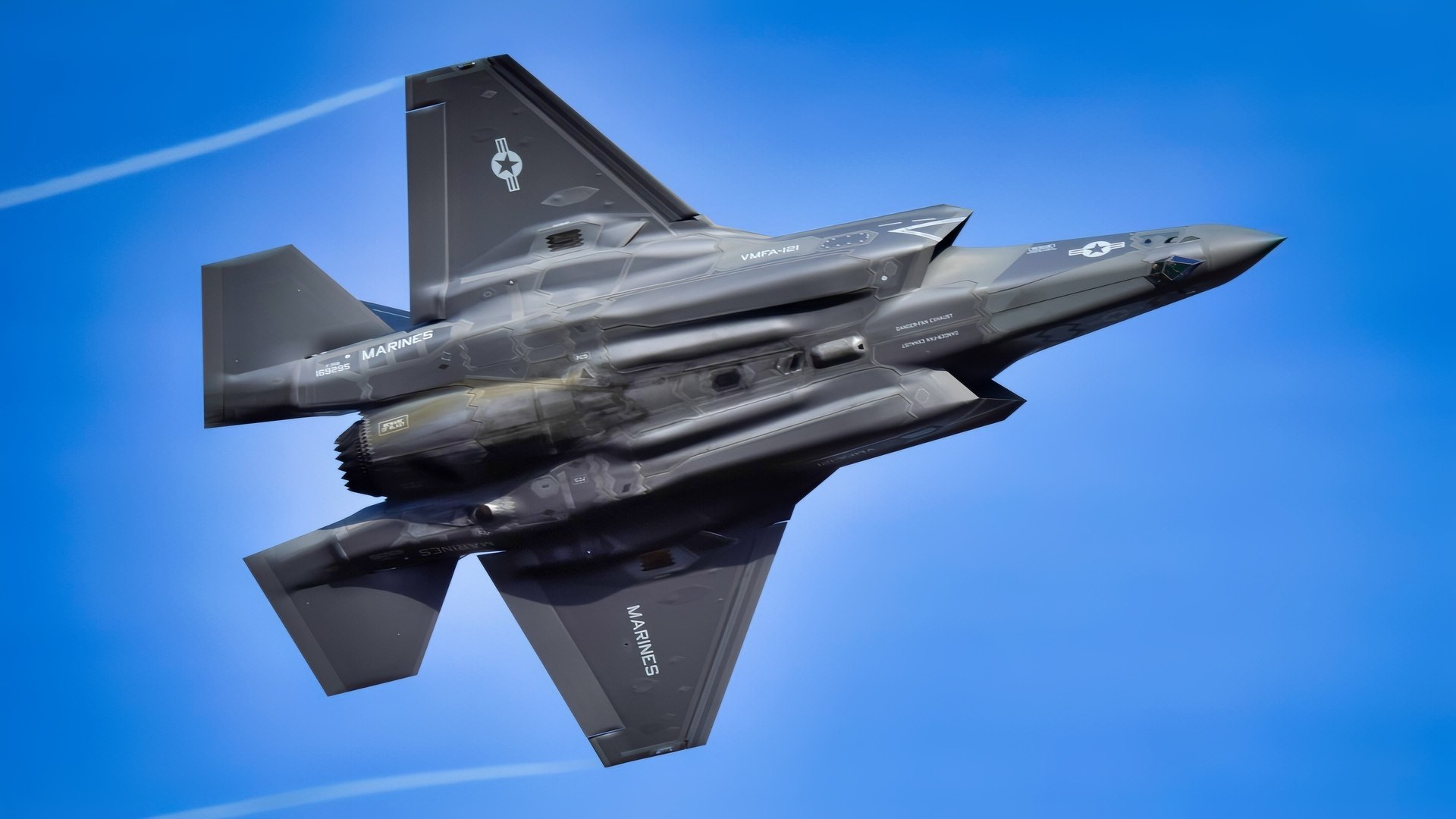
JOINT BASE ELMENDORF-RICHARDSON, Alaska – A U.S. Marine Corps F-35 Lighting II attached to Marine Fighter Attack Squadron 121 from Marine Corps Air Station Iwakuni, Japan, takes off for a training mission during Northern Edge, May 2, 2017. Northern Edge 2017 is Alaska’s premiere joint-training exercise designed to practice operations, techniques, and procedures as well as enhance interoperability among the services. Thousands of participants from all the services; Airmen, Soldiers, Sailors, Marines, and Coast Guard personnel from active duty, Reserve and National Guard units, are involved. (U.S. Navy photo by Mass Communications Specialist 2nd Class Travis Litke/Released)

Capt. Kristin “BEO” Wolfe, F-35A Lightning II Demonstration Team pilot and commander, flies during an airshow demonstration practice Mar. 5, 2020, at Hill Air Force Base, Utah. The team will make its first of 20 appearances at the Yuma Air Show, Mar. 13-14, 2020, at Marine Corps Air Station, Yuma, Ariz. (U.S. Air Force photo by Cynthia Griggs)

U.S. Air Force Maj. Melanie “Mach” Kluesner, the pilot for the F-35A Demonstration Team, performs aerial maneuvers in a USAF F-35A Lightning II during the first day of the airshow at Jacksonville Naval Air Station, Florida, on 18 October, 2024. The Demo Team performs at various airshows across the globe to display the power, agility, and lethality of America’s 5th generation fighter jet. (U.S. Air Force photo by Senior Airman Nicholas Rupiper)
“The USA can certainly disable the planes by simple stopping the supply of spare parts,” Rasmus Jarlov, a Danish politician and Chairman of Denmark’s Defense Committee, wrote. “They want to strengthen Russia and weaken Europe and are showing that they are willing to do tremendous damage to peaceful and loyal allies like Canada just because they insist on existing as a country.”
Jarlov continued: “I can easily imagine a situation where the USA will demand Greenland from Denmark and will threaten to deactivate our weapons and let Russia attack us when we refuse (which we will even in that situation). Therefore, buying American weapons is a security risk that we can not run. We will make enormous investments in air defence, fighter jets, artillery and other weapons in the coming years, and we must avoid American weapons if at all possible.”
Jarlov encouraged other allies to do the same.
Switzerland selected the F-35 in 2021 as a replacement for its F-5 Tiger II light fighters. At the time, Switzerland’s Federal Council found that a 36-strong F-35A fleet would cost the government nearly $5.5 billion. But the cost has increased significantly and is now estimated at more than $7.5 billion for 35 F-35As.
Another question mark regards the F-35’s Block IV upgrade, which would introduce more powerful radar systems, increased missile capacity, updated electronic warfare capabilities, improved target recognition, and other improvements. But the Block IV technology update may exclude the jets sold to Switzerland.
If Bern decided to upgrade their newly purchased jets to the Block IV standard, they would have to fork over additional funds—something that the country seems unlikely to do in light of their newly modified order.
Despite the recent European push to boost the continent’s strategic autonomy by buying European weaponry whenever possible, there are few aircraft comparable in capabilities to the F-35. Recent reports on what was considered one of the more promising European fighter jet initiatives, the Future Combat Air System, reveal that the sixth-generation fighter may never take flight.
F-35 Trouble?
In any event, it may not matter, for the Swiss at least. “We value our partnership with Swiss government and industry and are committed to delivering the world’s most advanced fighter jet, the F-35A Lightning II, to Switzerland,” a Lockheed Martin spokesperson explained to Breaking Defense. “Components of Switzerland’s first F-35 recently started production,” they added. “Major assembly work will begin early next year, with deliveries planned to begin in 2027.”
About the Author: Caleb Larson
Caleb Larson is an American multiformat journalist based in Berlin, Germany. His work covers the intersection of conflict and society, focusing on American foreign policy and European security. He has reported from Germany, Russia, and the United States. Most recently, he covered the war in Ukraine, reporting extensively on the war’s shifting battle lines from Donbas and writing on the war’s civilian and humanitarian toll. Previously, he worked as a Defense Reporter for POLITICO Europe. You can follow his latest work on X.


