

Key Points and Summary – The F-35’s critical Block 4 upgrade package is now five years behind schedule, expected in 2031, and $6 billion over budget, according to a scathing Government Accountability Office (GAO) report.
-The update includes over 75 major improvements like increased missile capacity and advanced electronic warfare.
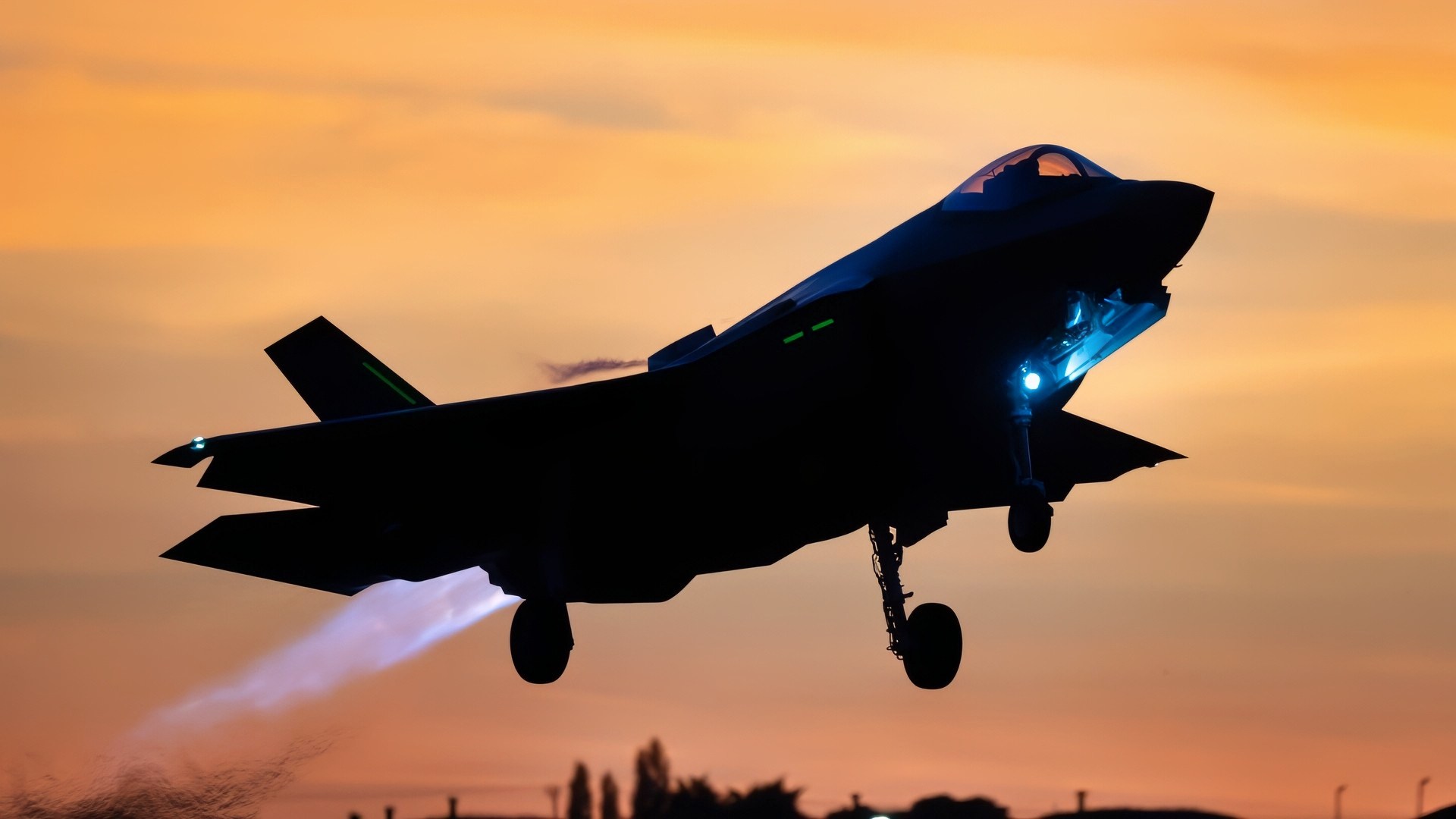
A U.S. Air Force F-35A Lightning II takes off at RAF Lakenheath, England, Sept. 16, 2024. The 48th Fighter Wing dedicates allotted flying hours during hours of darkness to ensure Airmen are prepared to deter potential adversaries and defend NATO territory anytime, anywhere. (U.S. Air Force photo by Airman 1st Class Alexander Vasquez)
-The GAO revealed all F-35s delivered in 2024 were significantly late. It also criticized the program’s incentive structure, which rewards contractors even for late deliveries.
-Facing these massive delays and cost overruns, the F-35 program now plans to reduce the scope of the vital Block 4 modernization.
Why the F-35 Fighter Block 4 Upgrade Is Slipping
The Pentagon’s modernization program for its flagship fifth-generation fighter, the F-35 Lightning II, is in trouble.
The long-planned Block 4 upgrade, intended to equip the jet with new weapons, sensors, and computing power, is now running years behind schedule and billions of dollars over budget.
The U.S. Department of Defense and manufacturer Lockheed Martin are scrambling to contain costs and delays that the Government Accountability Office (GAO) says could push completion to 2031 or later, some five years past the original completion date.
Given that this is the world’s most expensive weapons upgrade program, the stakes are high.
The Block 4 package is central to keeping the F-35 effective against emerging threats from China and Russia, whose advanced aircraft and integrated air defenses are closing the technological gap with the United States.
Without this program, the jet – which is also used by allies worldwide – risks falling behind before the next war even starts.
Understanding the Block 4 Upgrade
In fighter jet terms, a “block” refers to a generation-wide package of hardware and software improvements.
Block 4 is the most ambitious yet for the F-35.
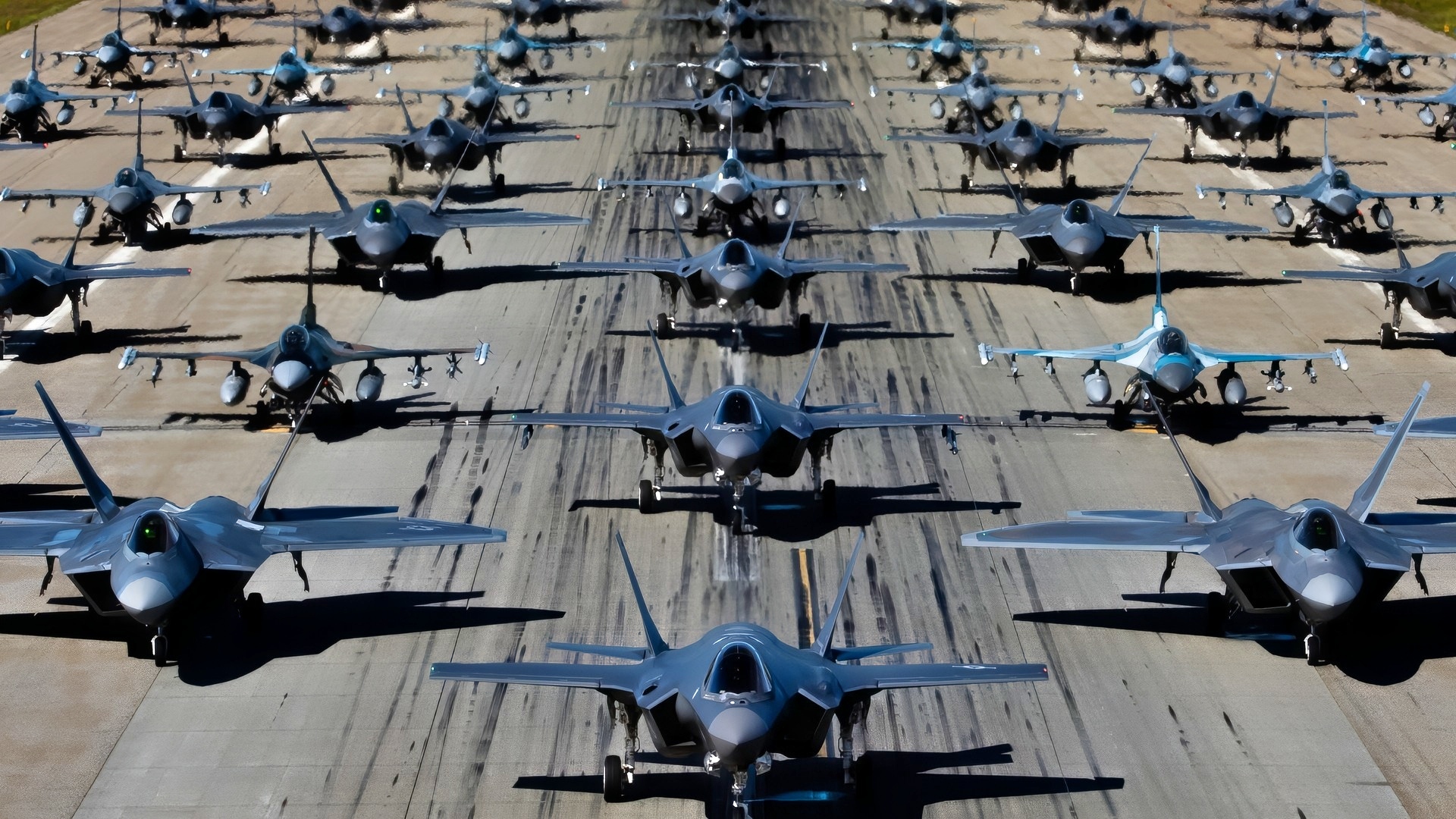
The 354th Fighter Wing conducts a 75-fighter jet formation at Eielson Air Force Base, Alaska, Aug. 12, 2022, in honor of the U.S. Air Force’s 75th Anniversary. This capabilities demonstration included F-35A Lightning II, F-16 Fighting Falcon and F-22 Raptor aircraft from across Pacific Air Forces. (U.S. Air Force photo by Senior Airman Gary Hilton)
It’s designed to deliver expanded weapons options, improved electronic warfare systems, and next-generation networking and sensor fusion—all aimed at maintaining air dominance well into the 2030s.
The upgrade is also effectively a stopgap measure while the Next Generation Air Dominance (NGAD) program continues work on America’s sixth-generation flagship fighter.
The upgrade depends on the Technology Refresh 3 (TR-3) – a step that preceded the upgrade and outlines plans for installing a new computer in the plane, along with the software architecture that will power it and handle all the added capabilities that come with Block 4. Without TR-3, Block 4 simply cannot function.
The original idea was that TR-3-equipped jets would have rolled off the production line in 2024, paving the way for a full modernization some two years later—but software integration issues have substantially slowed TR-3 deliveries.
Originally, Block 4 promised more than 60 new capabilities for the jet—from the ability to fire longer-range air-to-air missiles to carrying new precision bombs internally.
The upgrade would also include new radar systems and electronic-attack capabilities, as well as improvements to data sharing with other aircraft and networks.
Together, the improvements are designed to turn the F-35 into a networked combat hub that shares information and improves situational awareness, as well as a formidable stealth fighter.
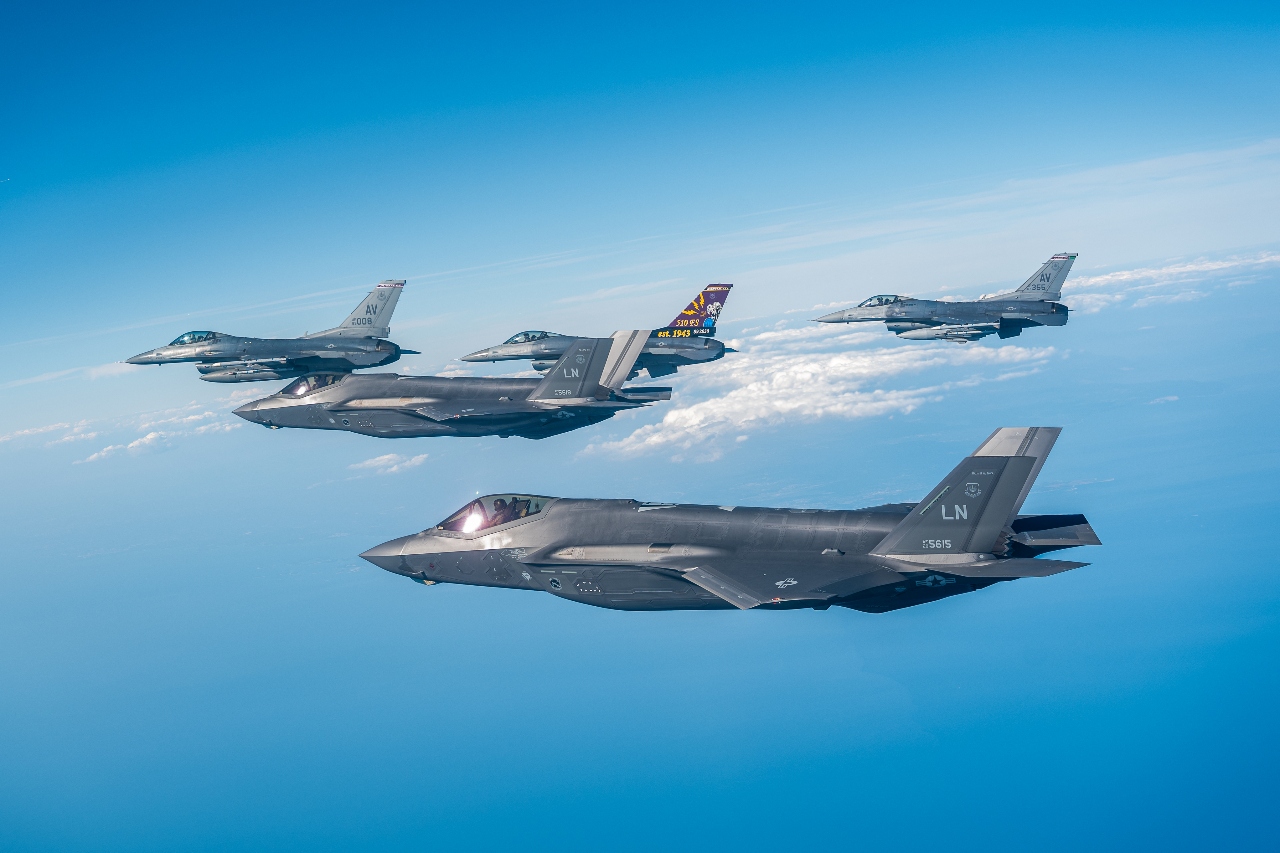
A formation of U.S. Air Force F-35 Lighting IIs and F-16 Fighting Falcons assigned to the 48th and 31st Fighter Wings respectively fly in formation as a part of Exercise Combined Strike along the coast of Italy, August 18, 2025. Exercises like Combined Strike ensure USAFE remains ready and postured to rely on one another to defend the area of responsibility. (U.S. Air Force photo by Senior Airman Zachary Jakel)
The Delays, Costs, and Causes
According to the GAO, Block 4 costs have ballooned by more than $6 billion since the last estimate, bringing the total expected price tag to around $16.5 billion.
Completion is now expected at least five years later than initially planned.
And the delays have been at least four times as long.
First, there are the TR-3 delays. Hardware and software integration problems in Technology Refresh 3 have prevented the F-35’s onboard systems from running the new Block 4 applications.
Until those computers are certified and fixed, the new jets cannot be delivered with full capability.
Then there are supply chain issues. Lockheed Martin has faced an unprecedented shortage of key components. In 2024, for example, all 110 F-35s delivered were late by an average of 238 days, and more than 4,000 parts were in short supply.
That’s significantly more than previous delays.
In 2021, for instance, the company averaged a 16-day delay, with 22 of its 142 aircraft delivered late.
Then there’s the issue of power and cooling constraints.
The additional electronics and weapons envisioned for the Block 4 upgrade require more power—and therefore more cooling.
The current Pratt & Whitney F135 engine cannot fully support the new system without an upgrade program of its own, and that planned upgrade has been delayed until around 2031.
And finally, there are the problems auditors discovered. The GAO recommended in a report that the government take a greater role in the program, and that both Lockheed Martin and Pratt & Whitney receive both progress and incentive fees.

Shown is a graphical artist rendering of the Next Generation Air Dominance (NGAD) Platform. The rendering highlights the Air Force’s sixth generation fighter, the F-47. The NGAD Platform will bring lethal, next-generation technologies to ensure air superiority for the Joint Force in any conflict. (U.S. Air Force graphic)
The report found that the F-35 program’s contracting system continued to pay contractors’ fees despite late deliveries—a setup that made accountability difficult and allowed chronic slippage to persist with little to no oversight.
The result is that the Pentagon has, for now, scaled back its ambitions—and the Block 4 program has suffered.
The current version of Block 4 will include only a fraction of the original 66 capabilities, with the rest deferred for future increments of the upgrade. And this carries serious consequences.
For operators, it means a growing capability gap.
Without Block 4, the F-35 cannot integrate some of its most advanced new munitions and datalink systems that would allow this fifth-generation platform to counter next-generation Chinese and Russian defenses.
Many allied forces, from the United Kingdom and Italy to Japan and Australia, are depending on these upgrades to arrive.
With every delay, allied countries suffer setbacks to their operational plans, thereby complicating interoperability and increasing costs for training, sustainment, and logistics.
The Block 4 crisis cannot be ignored, and it’s certainly not just a brief setback. It should serve as a warning that America’s most advanced weapons program is struggling to keep pace.
About the Author:
Jack Buckby is a British author, counter-extremism researcher, and journalist based in New York. Reporting on the U.K., Europe, and the U.S., he works to analyze and understand left-wing and right-wing radicalization, and reports on Western governments’ approaches to the pressing issues of today. His books and research papers explore these themes and propose pragmatic solutions to our increasingly polarized society. His latest book is The Truth Teller: RFK Jr. and the Case for a Post-Partisan Presidency.
More Military
Canada’s F-35 Fighter Debate Summed Up in 3 Words
The U.S. Air Force’s B-52J Bomber Crisis
Mach 5.1 X-51 Waverider ‘Hypersonic Scramjet’ Has a Message for the Air Force
Beast Mode: How the F-35 Stealth Fighter Bolts on 22,000 Pounds of Bombs


