


Key Points and Summary – America’s next air-dominance jet for the U.S. Air Force, the Boeing-built F-47, is being unveiled with maximum hype and minimum detail.
-Officially billed as the first crewed sixth-generation fighter, it’s expected to outrange and out-stealth the F-22, with Mach 2-plus speed and more than 1,000 nautical miles of reach.
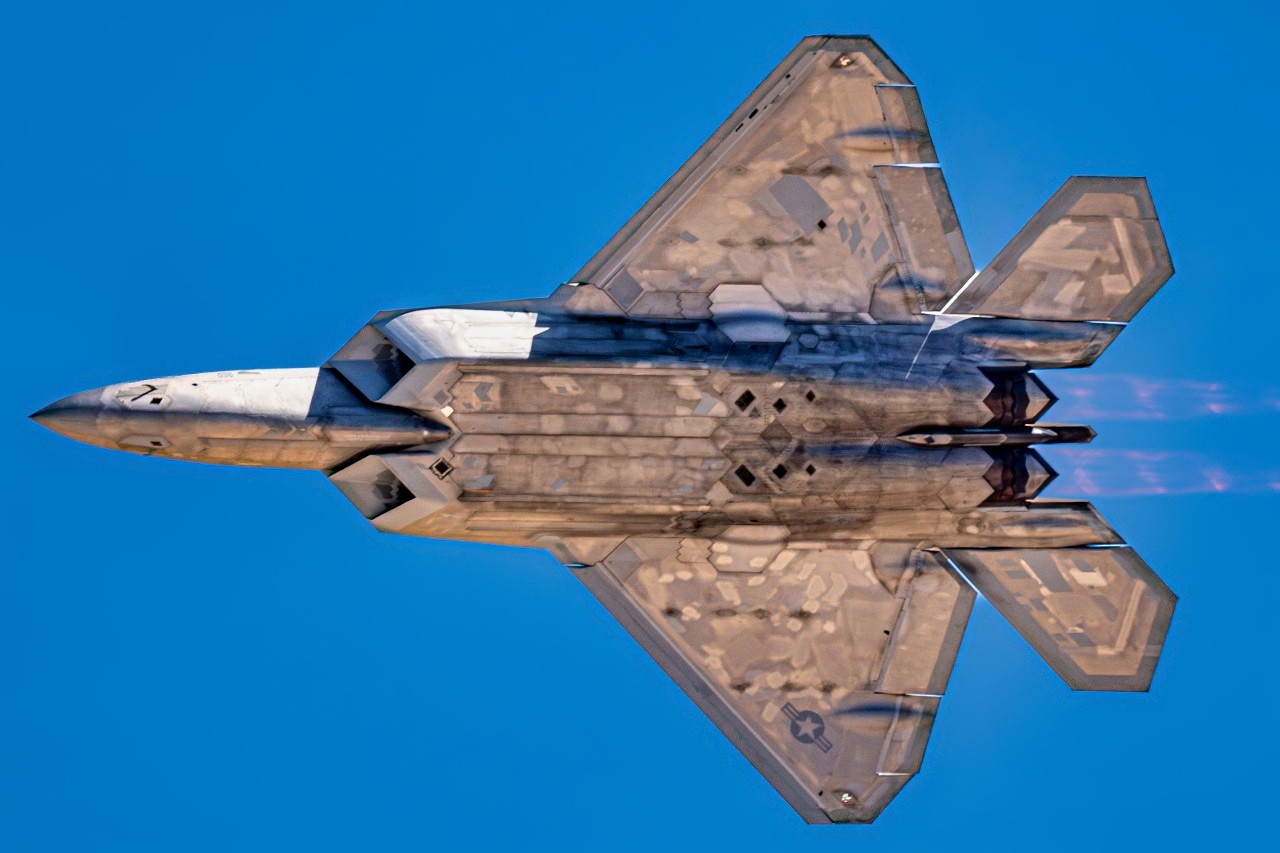
A U.S. Air Force F-22 Raptor performs an aerial demonstration during Aviation Nation 2025 at Nellis Air Force Base, Nevada, April 5, 2025. Aviation Nation is an airshow held at Nellis Air Force Base, showcasing the pride, precision and capabilities of the U.S. Air Force through aerial demonstrations and static displays. The F-22 Raptor performed there to highlight its unmatched agility and air dominance as part of the Air Force’s efforts to inspire, recruit and connect with the public. (U.S. Air Force photo by Staff Sgt. Lauren Cobin)
-Yet the few public renderings raise questions, from prominent canards that could hurt stealth to hints that current images may be deliberate misdirection.
-With experimental X-planes already flying and first flight targeted for 2028, the F-47 looks less like vaporware and more like a tightly guarded leap in U.S. airpower.
F-47 Subterfuge: Keeping America’s Next Air Force Fighter a Secret
President Donald Trump announced the winner of the Next Generation Air Dominance program to great fanfare from the Oval Office.
Flanked by Secretary of Defense Pete Hegseth, the President touted the newly-named F-47 aircraft, built by Boeing, as practically invisible. “Nothing in the world comes even close to it,” President Trump said from the White House, and giving the new U.S. Air Force fighter its F-47 designation.
The F-47 is slated to replace the F-22 Raptor in Air Force service and will become the United States’ first sixth-generation fighter.
Secretary Hegseth praised the F-47 as well, saying the jet “sends a very direct, clear message to our allies that we’re not going anywhere and to our enemies that we can, and we will, be able to project power around the globe, unimpeded, for generations to come.”
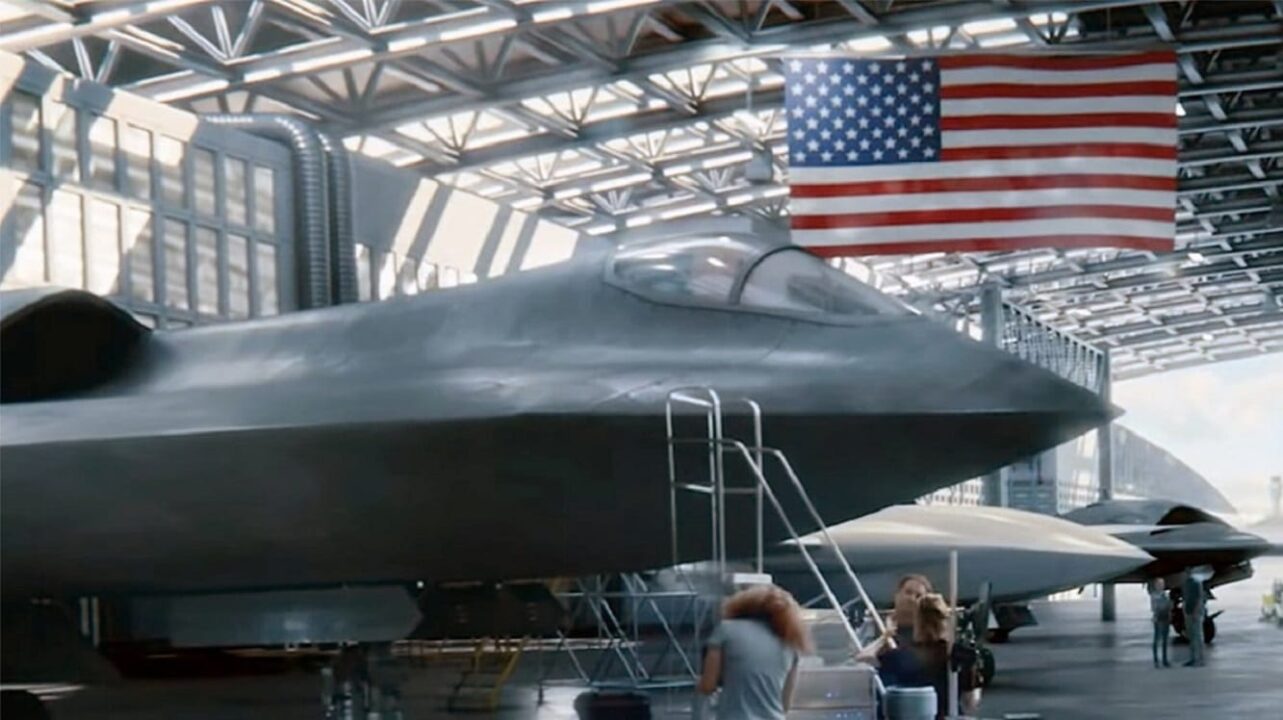
NGAD F-47. Image Credit: Creative Commons.
Despite the fanfare surrounding Boeing’s NGAD award, precious little is known about the aircraft, with a dearth of publicly available information.
One of the few things definitively known about the F-47 comes from an infographic shared on X (formerly Twitter) earlier this spring. The photo, which appears to show a computer-rendered F-47, is shrouded in water vapor, leaving room for the imagination.
But the aircraft’s top speed is listed as “Mach 2+” and boasts a range in excess of 1,000 nautical miles.
It will also be stealthier than the aircraft it replaces in the air superiority role, the F-22.
The infographic also establishes an acquisition baseline of 185+ aircraft.
What else is known about the F-47? Not much. But a quick look at the few available images of the jet might shed some light on the matter.
A Stealthy Design? Or Throwing Adversaries Off the Trail?
One of the most remarkable of the few visible F-47 features is what appears to be the aircraft’s canards, just below the cockpit windshield.
Often, as a feature of highly maneuverable aircraft like Russia’s Su-30 family of fighters, or Sweden’s Gripen E, canards provide an additional source of lift and directional control.
And while canards do offer maneuverability advantages, they also pose a drawback for fifth- and sixth-generation stealth aircraft.

J-36 Fighter from X Screenshot. Image Credit: X Screenshot.
As one 1995 NASA research paper notes, while canards can significantly increase aircraft agility, there are significant compromises.
Depending on where exactly fighter canards are on the airframe, pilot visibility can be significantly reduced.
The second penalty is the antithesis of stealth: an increased radar cross-section. The unclassified study evaluated several hypothetical aircraft designs and, among other things, ranked them for agility and stealth. Aircraft with canards consistently ranked highly agile, but also moderately observable.
“Despite what our adversaries claim, the F-47 is truly the world’s first crewed sixth-generation fighter, built to dominate the most capable peer adversary and operate in the most perilous threat environments imaginable,” the then-Air Force Chief of Staff said following the NGAD contract award.
General Allvin explained that though the aircraft just recently emerged from the shadows and received its designation, it is not an immature program.
“For the past five years, the X-planes for this aircraft have been quietly laying the foundation for the F-47 — flying hundreds of hours, testing cutting-edge concepts, and proving that we can push the envelope of technology with confidence,” the general said.
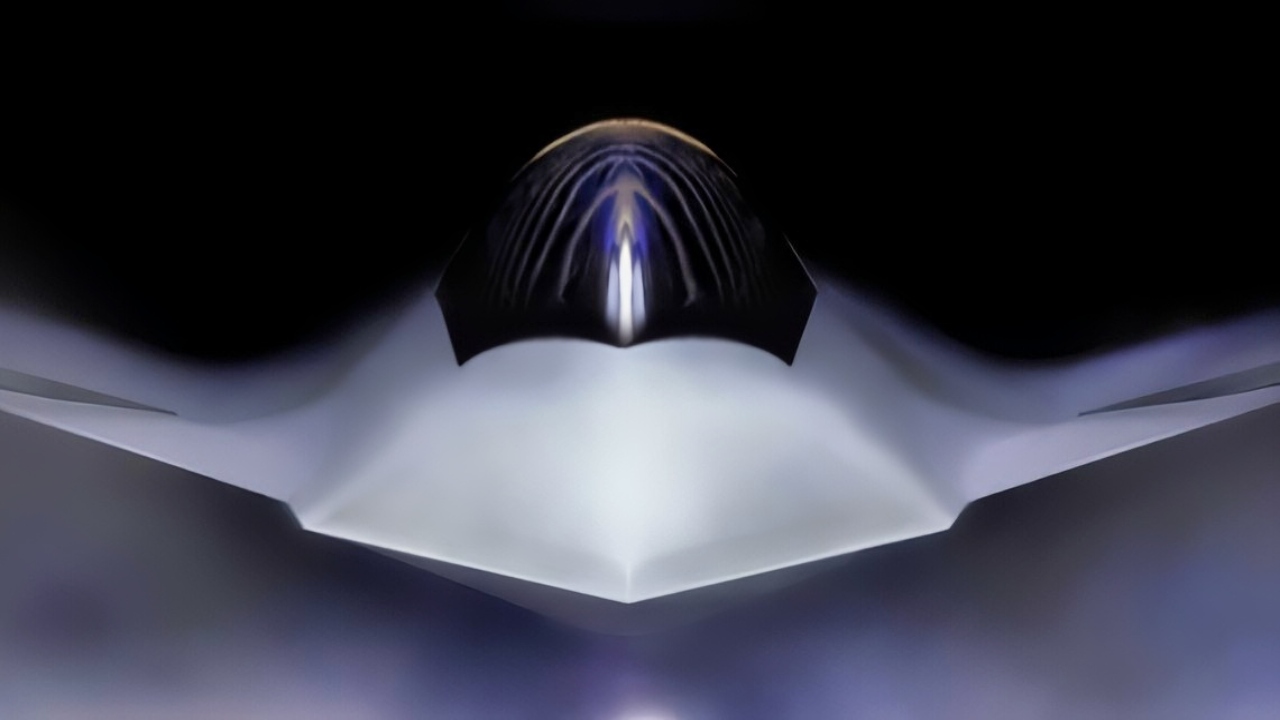
Shown is a graphical artist rendering of the Next Generation Air Dominance (NGAD) Platform. The rendering highlights the Air Force’s sixth generation fighter, the F-47. The NGAD Platform will bring lethal, next-generation technologies to ensure air superiority for the Joint Force in any conflict. (U.S. Air Force graphic)
He added that “these experimental aircraft have demonstrated the innovations necessary to mature the F-47’s capabilities, ensuring that when we committed to building this fighter, we knew we were making the right investment for America.” General Allvin’s comments hint at the maturity of Boeing’s F-47 aircraft despite its youth.
Perhaps the most logical conclusion behind the Air Force’s carefully tight-lipped introduction of the F-47 can be chalked up to the fact that the first iteration of the aircraft hasn’t yet been built — and that the images that have been released are provisional only.
Another possibility is that the secrecy is an attempt to throw off adversaries’ analyses of the aircraft, and that some visible aspects of the F-47, such as its canards, are nothing more than a red herring.
Why the Big F-47 Secret?
Given the limited information about the F-47 fighter, the few renderings of the jet are provisional.
The U.S. Air Force has previously pinned 2028 as the year when the F-47 will make its first flight.
But the lack of information about the F-47 could be because multiple increments, or versions, of the aircraft will be built as increasingly sophisticated technology becomes available.
Either way, with the F-47’s first flight over two years away, it will be some time before more information about the United States’ newest jet comes to light.
About the Author: Caleb Larson
Caleb Larson is an American multiformat journalist based in Berlin, Germany. His work covers the intersection of conflict and society, focusing on American foreign policy and European security. He has reported from Germany, Russia, and the United States. Most recently, he covered the war in Ukraine, reporting extensively on the war’s shifting battle lines from Donbas and writing on the war’s civilian and humanitarian toll. Previously, he worked as a Defense Reporter for POLITICO Europe. You can follow his latest work on X.


