

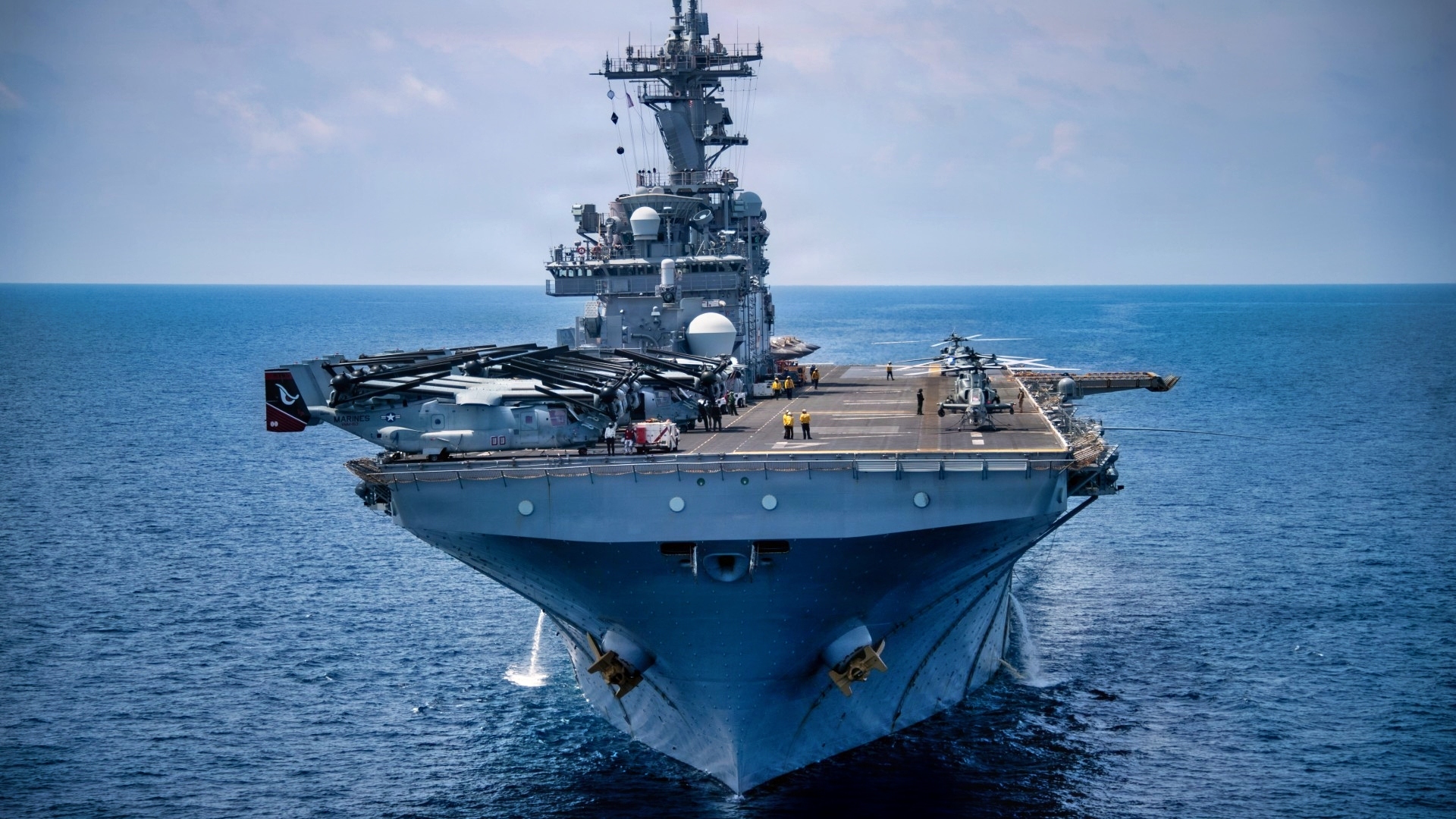
With the war in the Middle East now in its sixth consecutive month, a new reality is beginning to set in among the once-peaceful Gulf states, one in which this war continues indefinitely.
Nations like the UAE, Saudi Arabia, and Oman have borne the brunt of America’s war with Iran, as traffic to many Gulf ports near Hormuz has slowed to a crawl.
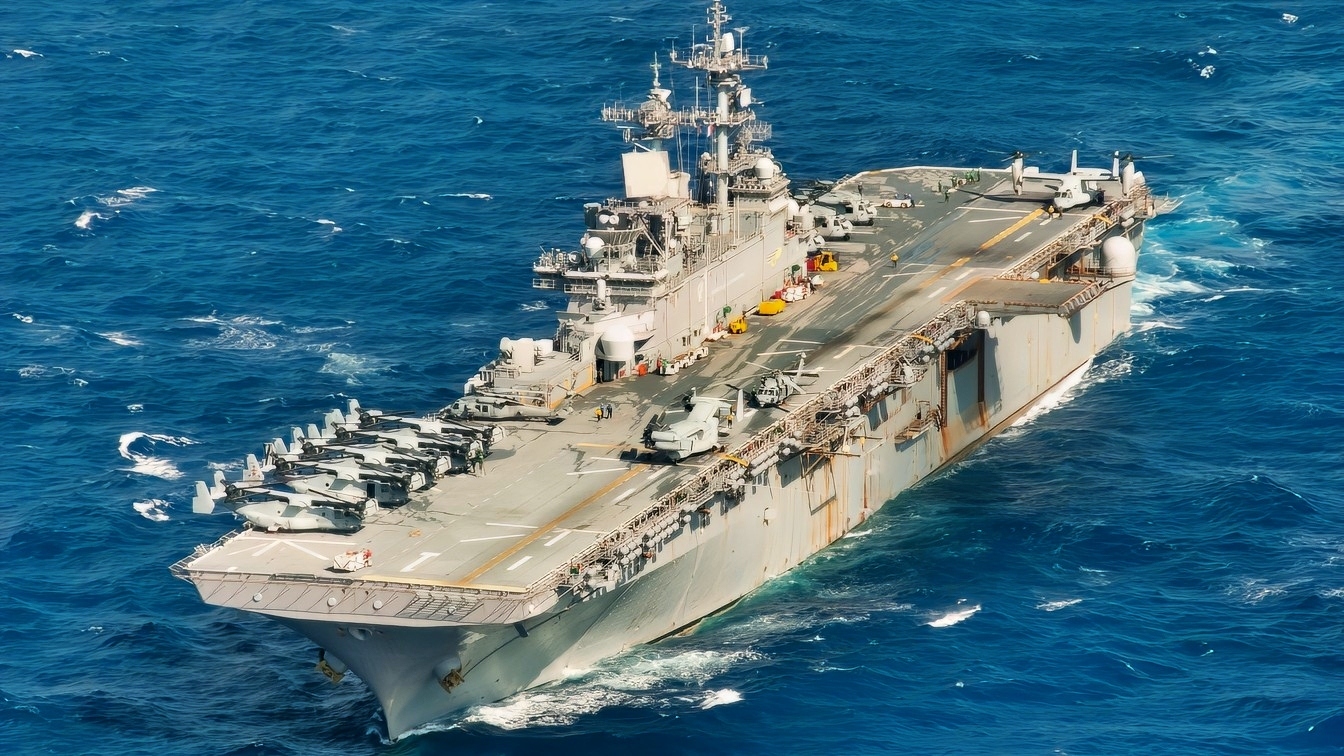
The amphibious assault ship USS Wasp (LHD 1) sails in the Philippine Sea Aug. 26, 2018 during a Passing Exercise (PASSEX) with the Japan Maritime Self Defense Force. PASSEX enabled the Wasp ARG and the JMSDF a chance to practice communications and maneuvering procedures. The Wasp Amphibious Ready Group is currently operating in the region to enhance interoperability with partners and serve as a ready-response force for any type of contingency. (U.S. Navy photo by Mass Communication Specialist 3rd Class Taylor King)
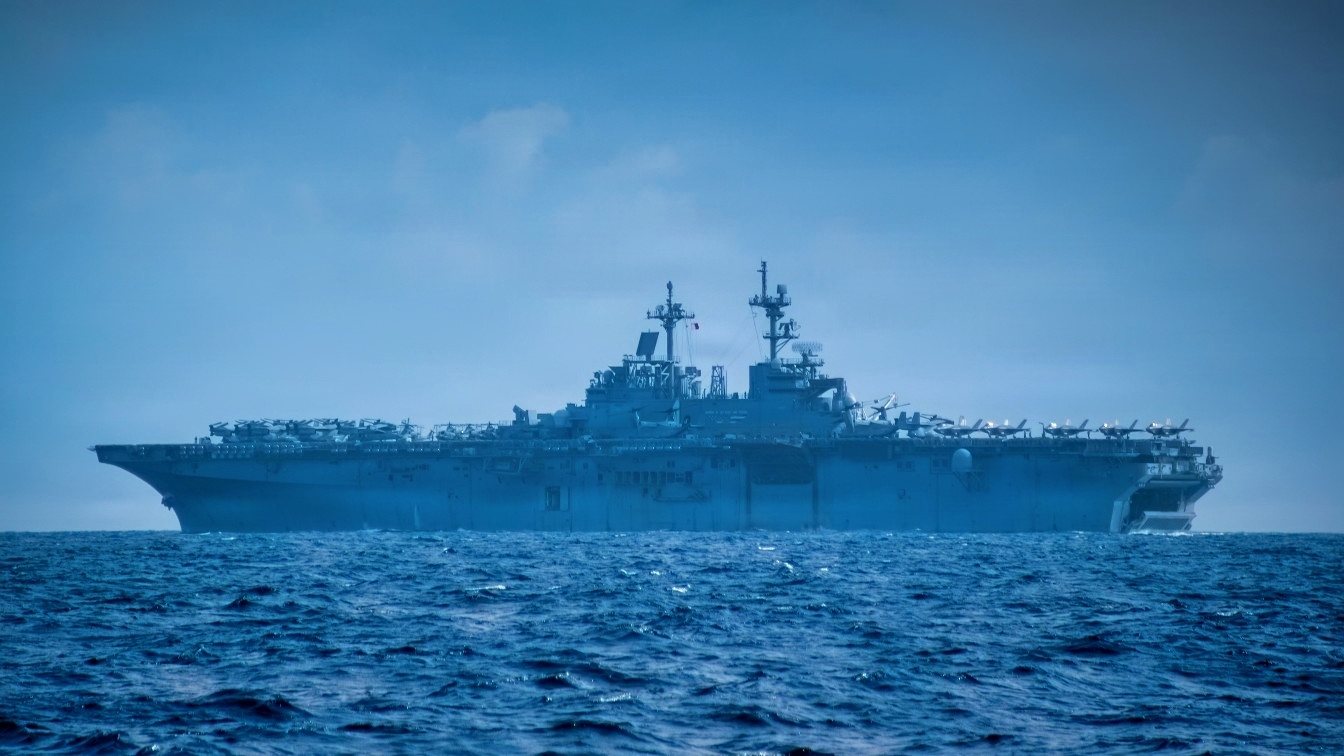
Wasp-class amphibious assault ship USS Boxer (LHD 4) transits the South China Sea, June 4, 2026. Boxer, flagship of the Boxer Amphibious Ready Group, is underway with the 11th Marine Expeditionary Unit in the U.S. 7th Fleet area of operations. U.S. 7th Fleet, the Navy’s largest forward-deployed numbered fleet, routinely interacts and operates with allies and partners to preserve a free and open Indo-Pacific (U.S. Navy photo by Mass Communication Specialist Seaman Eliora Sims)
With no end in sight, many of the Gulf states are having to look for new avenues to cope with the war in Iran. These avenues include alternative routes to the Strait of Hormuz and the pursuit of defensive partnerships with new allies.
Living in the New Normal
The main threat, according to Majed al-Ansari, a spokesperson for Qatar’s Foreign Ministry, is the “normalization” of the crisis. “It is no longer seen as a temporary crisis with a start and an end date,” he said at the Hili Forum, a regional conference in Abu Dhabi, the capital of the UAE.
“It is more and more seen as a new normal.” As the U.S. increases economic pressure on Tehran, officials from the UAE and Qatar have said they are starting to diversify their strategic partnerships. “Strategic autonomy does not mean strategic isolation,” said Anwar Gargash, a diplomatic adviser to the president of the UAE. “Our long-standing and trusted partnerships, in particular with the United States, remain an essential part of our security and an important source of strength. The two are complementary, not contradictory.”
Officials are also thinking about how to proceed with Iran once the war concludes.
Gargash stated that Iran “remains our neighbor, and at some point we will have to find a way to restore what can be restored.” He continued, “Geography gives us no alternative to engagement. But we must clearly distinguish between rebuilding a necessary and functional relationship with Iran and rebuilding the trust that has been broken. The first is necessary. The second will be far more difficult.”
Despite the fighting over the last six months, the fate of the Gulf countries remains heavily intertwined with Iran, which remains one of the most powerful nations in the region behind Israel.
Finding Alternatives to Hormuz
Although the U.S. claims millions of barrels of oil cross the Strait of Hormuz, data from maritime tracking companies indicate traffic is still a fraction of its prewar levels, with no signs of substantial increases anytime soon.
As a result, many Gulf states have been looking for alternatives to transport their oil. DP World, which runs the massive Jebel Ali Port in Dubai, where traffic has declined dramatically, announced in July that it would build two new deepwater terminals in Fujairah, beyond the Strait of Hormuz.
Likewise, Khorfakkan port, in the UAE just outside the Strait of Hormuz, has seen an influx of traffic, processing a record 70,000 containers per week, up from 8,000 before the war.
Additionally, the East-West pipeline, which runs from Abqaiq in the east to Yanbu on the Red Sea, has emerged as an important alternative to Hormuz since the conflict began.
According to Saudi Arabia’s Aramco, the pipeline can transport more than 7 million barrels of oil per day, five million of which are for export.
In July, Reuters reported that Saudi Arabia is currently aiming to expand the pipeline to increase its capacity by an additional 2 million bpd.
According to some sources, Aramco was in talks with representatives from Kuwait and possibly Bahrain and Qatar to extend the pipeline so other Gulf nations affected by the crisis could transport their oil through it. The UAE is constructing its own 320-mile pipeline from Fujairah, which is expected to be operational sometime next year.
Finding New Defensive Partners
In response to the conflict, many Gulf states are also looking to diversify their defense partnerships and weapon systems. According to reports, the UAE has been increasing its defense ties with China as the state has been targeted by Iranian missiles and drones repeatedly since March.
In July, reports said the UAE was fielding Chinese FK-2000 medium-range defense systems to counter Iranian Shahed drones, although it is unknown whether the system has been used.
China has emerged as a major defense partner in the Gulf region alongside Turkey, South Korea, and Ukraine. “It used to be about defense and deterrence,” said Mohammed Baharoon, director general of B’huth, a Dubai research center. “But now it is also about offense.”
Despite the relative toning down of violence over the last month, the war against Iran is no closer to ending today than it was several months ago.
According to Al-Ansari, a Qatari official who has been trying to mediate an end to the war, both sides have run into what he calls a “narrative problem.” If one side’s narrative succeeds, the other faces a strategic defeat, making it preferable to keep fighting.
Neither the U.S. and Israel nor Iran are willing to admit defeat, which is currently creating a major roadblock to peace.
About the Author: Isaac Seitz
Isaac Seitz, a Defense Columnist, graduated from Patrick Henry College’s Strategic Intelligence and National Security program. He has also studied Russian at Middlebury Language Schools and has worked as an intelligence Analyst in the private sector.


