

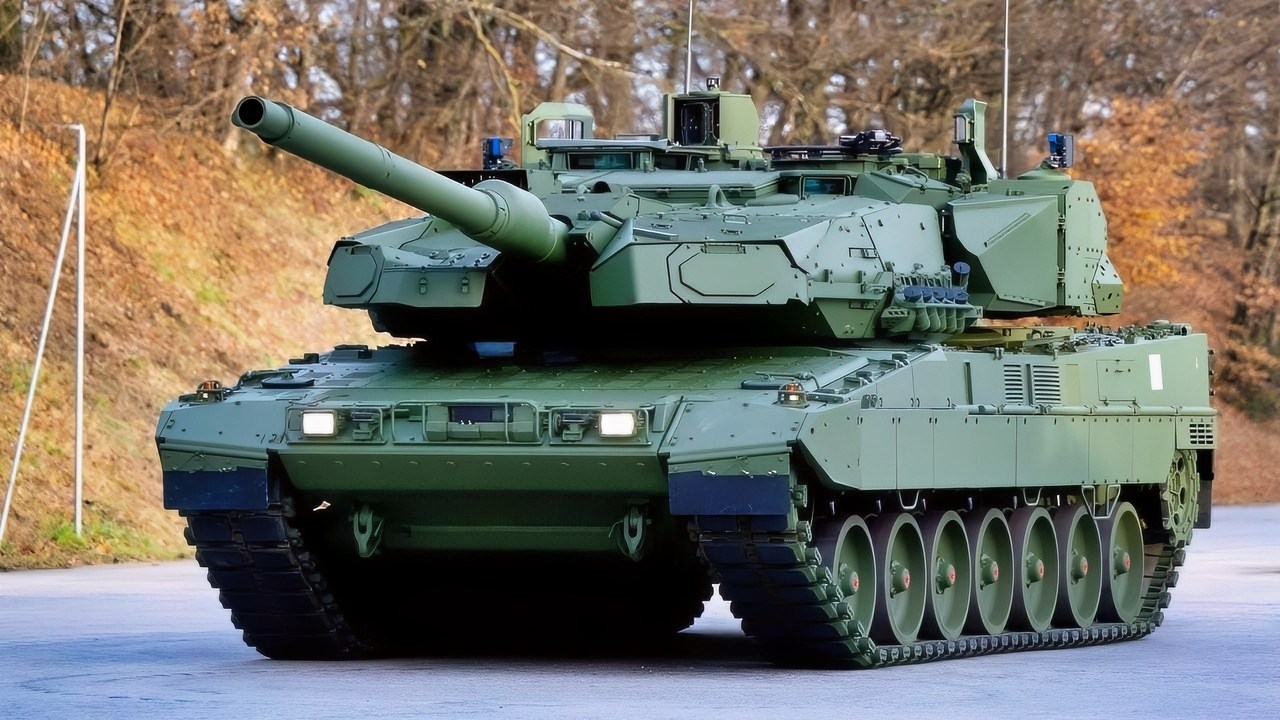
Leopard 2 vs. Drone: How Ukraine is Adapting Germany’s Best Tank
The Leopard 2 is widely considered one of the world’s best, most reliable, and most capable main battle tanks; some armor analysts and enthusiasts consider it the equal of, if not better than, the American M1A2 SEPv3 Abrams.
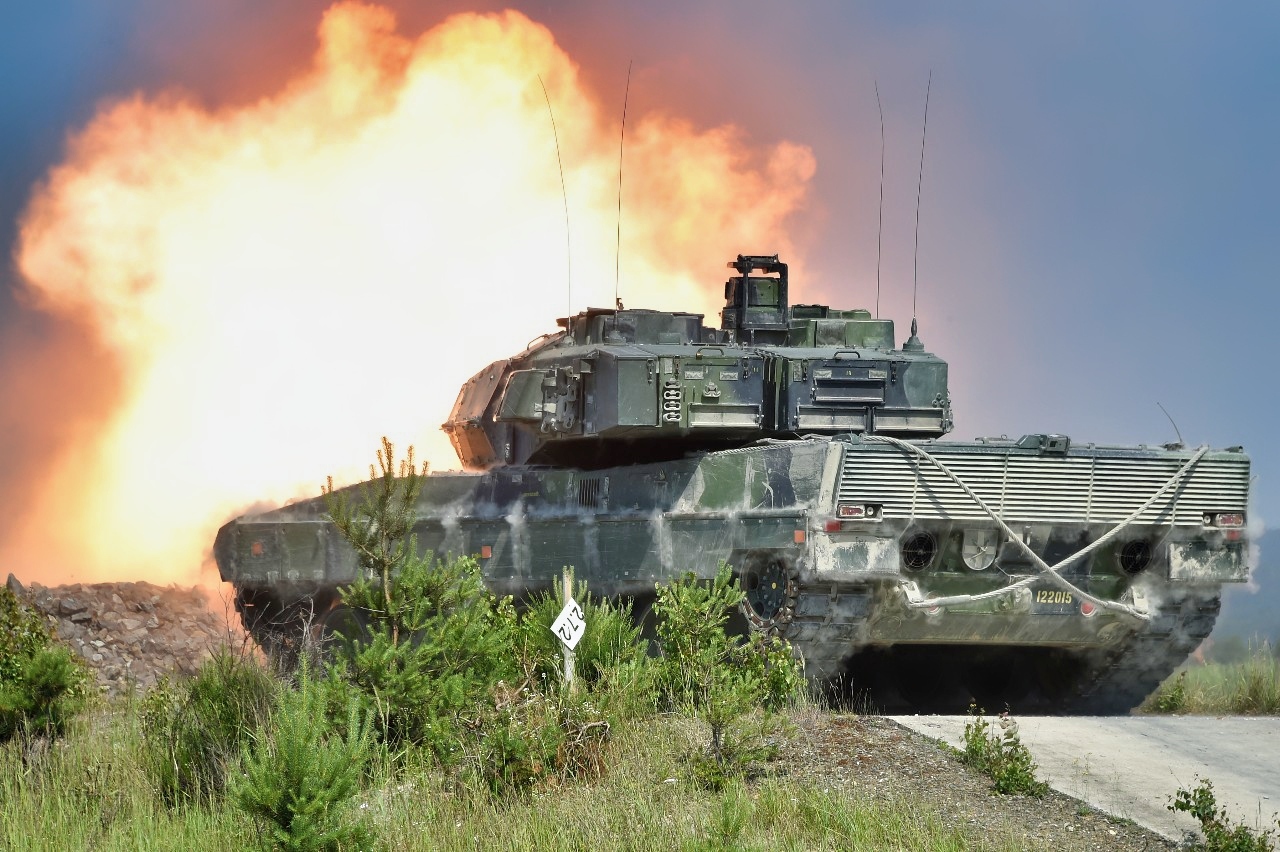
Swedish soldiers with the Wartofta Tank Company, Skaraborg Regiment in a Stridsvagn 122 main battle tank conduct the defensive operations lane during the Strong Europe Tank Challenge, June 7, 2018. U.S. Army Europe and the German Army co-host the third Strong Europe Tank Challenge at Grafenwoehr Training Area, June 3 – 8, 2018. The Strong Europe Tank Challenge is an annual training event designed to give participating nations a dynamic, productive and fun environment in which to foster military partnerships, form Soldier-level relationships, and share tactics, techniques and procedures. (U.S. Army photo by Gertrud Zach)
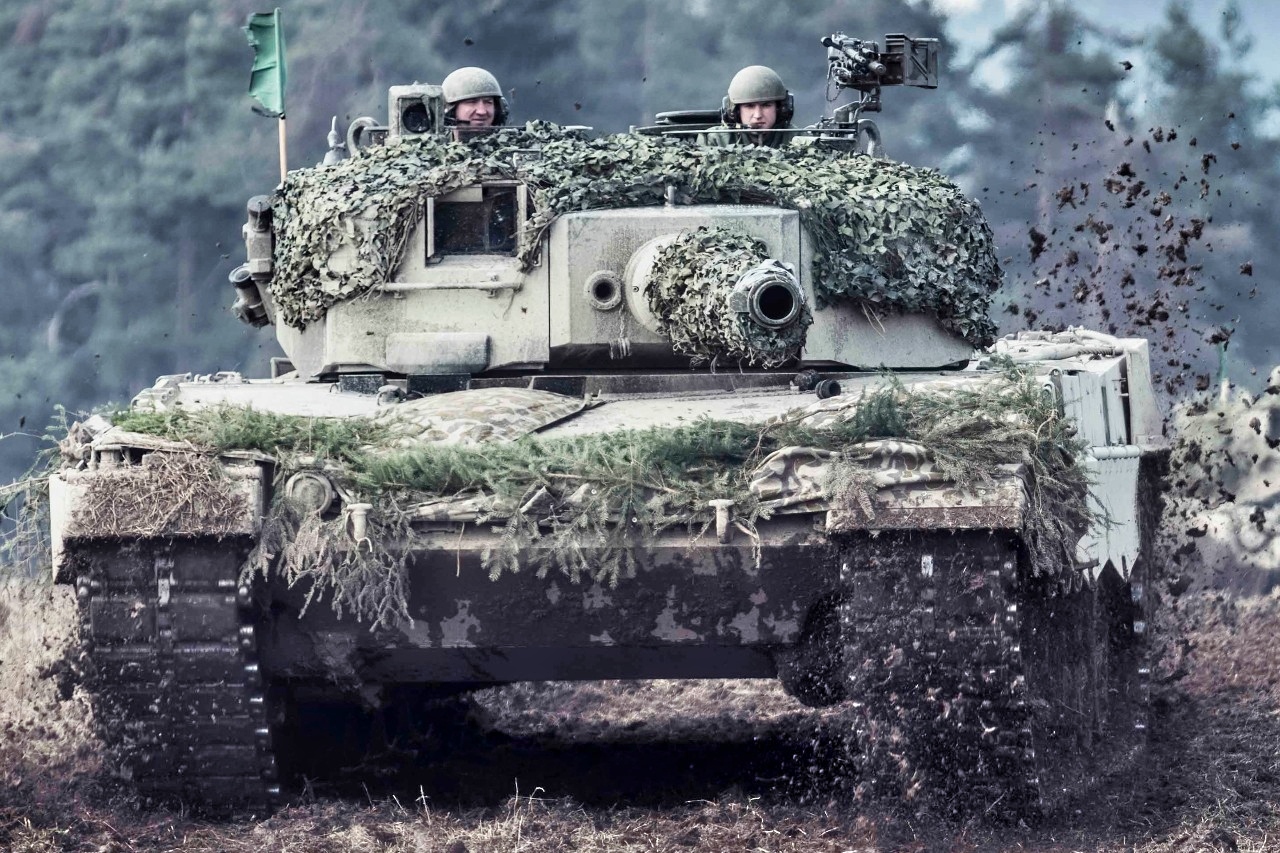
Leopard 2. Image Credit: Creative Commons.
Renowned for excellent mobility (1,500 hp engine), superior optics, and high-precision fire control, it offers a strong balance of firepower, speed, and protection.
German Leopard tanks (specifically models 1A5 and 2A4/A6) have shown mixed performance in Ukraine, acting as highly effective fire-support platforms while facing heavy, approximately 20 percent attrition due to intense drone warfare, minefields, and maintenance challenges.
While offering superior crew protection compared to Soviet-era tanks, their impact has been limited by low numbers and the inability to employ complex NATO combined-arms tactics.
Meet The Leopard 2 Main Battle Tank:
The Leopard 2 is a third-generation German main battle tank (MBT). Developed by Krauss-Maffei in the 1970s, the tank entered service in 1979 and replaced the earlier Leopard 1 as the West German army’s main battle tank.
The Leopard 2 was originally designed in the 1970s for the West German army in response to the Soviet Union’s threats during the Cold War. They are built to move quickly over a variety of terrain and defeat enemy armor.

A Canadian Army Leopard 2A4M tank fires a round while taking part in the Canadian Army Trophy tank competition at Ādaži in Latvia. The Canadian Army Trophy tank competition, held in May 2024, allowed participating nations to show off their gunnery skills while building camaraderie. Image Credit: Creative Commons.

Leopard 2. Image Credit: Creative Commons.
The Leopard 2 is operated by the armed forces of Germany and 21 other nations. Some operating countries have licensed the Leopard 2 design for local production and domestic development.
The Leopard 2A7V is Germany’s most advanced version of the Leopard 2 main battle tank, featuring enhanced protection through a new modular armor package, improved lethality with a more powerful L/55A1 120mm cannon and advanced ammunition, and better situational awareness with new sensors and electronics.
This version entered service with the German Bundeswehr in September 2021, weighing approximately 66.5 tons and powered by an MTU MB 873 Ka501 engine, widely regarded as highly advanced. It also has an outstanding power-to-weight ratio of roughly (27.2) hp/ton.
Capable of generating 1,500 horsepower, the turbocharged diesel engine with an automatic transmission displaced 47.6 liters and propelled the Leopard 2 to a maximum speed of 72 kilometers per hour (45 mph).
The Leopard is “quite powerful with regard to firepower. So, it can fire quite a long range with different types of ammunition that you can basically shape towards your target, so what you want to hit, you can choose different types of ammunition for that,” Dr. Christian Mölling, head of the Centre for Security and Defence at the German Council on Foreign Relations (DGAP), said to Euronews.
“It has a very advanced armor, which is also important for the tank crews. If you don’t have to fear that any shot that hits you means that you basically go up in flames, it’s quite something that helps you psychologically.”
“And the third point is manoeuvre,” Mölling added. “It’s quite a speedy vehicle. So this also gives you a certain tactical advantage in moving in and out quite fast, but also crossing distances in a quite short range.”
The Leopard 2 Has Excellent Armor Protection:
The Leopard 2 has undergone numerous modifications and upgrades to modernize the tank, including modular armor, digital systems, and Hard Kill Active Protection against anti-tank weapons.
The frontal protection has been improved with a dual kit on the turret and hull front, while 360° protection against RPGs has been added, and the lower hull has been reinforced for mine protection, increasing the tank’s survivability in urban operations.
The modular armor system components were first used by Canada in Afghanistan.
The Leopard 2’s Armament:
The main gun is a 120 mm Rheinmetall Rh-120 smoothbore tank gun, which can fire DM63 rounds about 4 km and reach twice that range with LAHAT anti-tank guided missiles. It can carry 42 rounds, as well as 4,750 rounds of 7.62 mm bullets for its twin machine guns.
It can fire programmable High Explosive munitions. The turret-mounted MG3 has been replaced with a stabilized FLW 200 remotely controlled weapon station.
The improved Leopard features cameras for situational awareness, an enhanced gun-barrel for increased lifespan and foreseeable ammunition improvements, third-generation FLIR for TC and GNR, a BMS (battlefield management system), belly and lower glacis armor, and APS (active protection systems). The external armor package is more conventional than the 7+.
On February 22, 2021, Germany signed a contract with Israel to purchase the Trophy active protection system (APS) for its Leopard 2A7V Main Battle Tanks (MBTs). The Israeli Trophy APS is now in service with three countries, including Israel on the Merkava 4, the United States on the M1A2 SEPV V3, and the Leopard.
The Leopard 2 Combat Record In Ukraine:
After the Russian invasion of Ukraine in February 2022, Ukrainian President Volodymyr Zelensky has been adamant about the need for main battle tanks, including the US-made M1 Abrams and the Leopard 2.
Germany initially sent 14 Leopard 2s, followed by an additional 100 or more tanks. The US, however, was reluctant to send Ukraine any M1 Abrams tanks because the extensive maintenance requirements to keep the M1s on the road were beyond the Ukrainian military’s capacity.

U.S. Army soldiers assigned to Bravo ‘Bad Bet’ Company, 2nd Battalion, 12th Cavalry Regiment, 1st Armored Brigade Combat Team, 1st Cavalry Division, conduct Table V exercises with the M1A2 Abrams Tank at Bemowo Piskie Training Area, Poland, July 12, 2024. The purpose of the training is to ensure the Abrams were fully functional and fit to fight. The 1st Cavalry Division’s mission is to engage in multinational training and exercises across the continent, strengthening interoperability with NATO allies and regional security partners, which provides competent and ready forces to V Corps, America’s forward-deployed corps in Europe. (U.S. Army photo by Spc. Kali Ecton)
But they relented and sent 31 M1s, along with Germany, which sent Leopard 2s. But the two best tanks in the world have struggled in Ukraine. The reason is unrelated to the tanks’ quality.
It was learned that, as expected, the untrained Ukrainian troops tasked with maintaining the Leopard 2s can’t perform the required maintenance, especially in combat. The Leopard 2 is complex to maintain, particularly due to its sophisticated fire control system and powerful V-12 twin-turbo diesel engine.
It requires specially-trained technicians and tools, plus the ability to work under constant threat of drone attack, which is why they end up in Lithuania or Poland.
Ukraine’s Armed Forces Don’t UseThe Combined Arms Approach:
The Ukrainians aren’t trained to use the combined-arms approach that German and US military units use for other reasons. Combined arms operations refer to the employment and coordination of different arms in a single operation to maximize results.
The Leopard 2 is designed to work in conjunction with air support and combined infantry and armor. But the Russians have built impressive anti-tank defenses in depth, which the Ukrainian military has been forced to wage more of an attritional war.
Frequently, the Leopard 2s, as well as the M1 Abrams, are attacking alone, which makes them very vulnerable to anti-tank missiles and top-down-fired drones.
The Leopard 2 has proven to be a deadly weapon, possibly Ukraine’s most effective tank, despite being vulnerable to a top-down FPV drone strike.
The Leopard 2 was built for fast, high-intensity battles, not the grinding attrition of Ukraine, where the skies are saturated by drones and electronic warfare.
They were also designed to operate with air support, which Ukraine has very little of. Since the Ukrainians adapted their tactics, the loss rate of Leopards has dropped dramatically.
According to the war-tracking website Oryx, of the 1,387 tanks Kyiv has lost, 29 Leopard 1s and 41 Leopard 2s have been destroyed. Germany has supplied about 250 Leopards to other countries, resulting in a 28 percent loss rate. Compared to Russia’s 4,325 tank losses, it is a minuscule amount.
The Leopard tanks, especially the Leopard 2, remain among the best tanks on earth. It is far superior to any of the Russian tanks that it may face in Ukraine. But the ATGM and drone threat in Ukraine, along with anti-tank mines, continue to take a toll.
About the Author: Steve Balestrieri
Steve Balestrieri is a National Security Columnist. He served as a US Army Special Forces NCO and Warrant Officer. In addition to writing on defense, he covers the NFL for PatsFans.com and is a member of the Pro Football Writers of America (PFWA). His work was regularly featured in many military publications.


