

Key Points and Summary – For a generation, America’s biggest weapons programs have delivered more delay than deterrence.
-The M10 Booker, Zumwalt-class destroyer, Littoral Combat Ship, and Constellation-class frigate all started with clear operational needs and bold promises, then sank under shifting requirements, immature technology, and an overstretched industrial base.

Littoral Combat Ship USS Cooperstown NSJ Photo Taken On October 14, 2025.
-GAO now tracks tens of billions in cost growth and average timelines approaching 12 years to initial capability.
-As China cranks out ships and missiles at scale, Washington’s acquisition system is struggling to field replacements for aging platforms.
-Unless the Pentagon is forced to simplify, stabilize, and speed procurement, the U.S. edge will erode.
Why Can’t America Build A Military?
For at least a generation now, the Pentagon’s biggest weapons programs have been defined less by battlefield performance and technological advancements than by cost growth, schedule slips, and redesigns midway through development.
Government watchdogs have repeatedly warned that major defense acquisition programs are delivering later and costing more than planned, with the Government Accountability Office (GAO) calculating nearly $50 billion in unscheduled cost growth across the entire portfolio in the last year alone – on top of an average time to initial capability stretching to almost 12 years per program.
The M10 Booker light tank, the Zumwalt-class destroyer, the Littoral Combat Ship, and the now-gutted Constellation-class frigate have all followed this pattern – albeit in different ways. Each project began with a compelling operational need and a promise to deliver cutting-edge capability at acceptable costs.
But in every scenario, the programs ended up as case studies in how not to develop new weapons, vessels, and other military assets.
The programs were all plagued by unstable designs, shifting requirements, and ultimately, a stretched industrial base that wasn’t and isn’t up to the task of developing and delivering these projects on time.

Littoral Combat Ship. Image Credit: Creative Commons.
And these are not isolated mishaps, either – it’s part of a broad trend, persistent cost growth, and schedule delays seen across all major programs.
And oftentimes, these problems are tied to the very early stages of development, when immature technology and shifting requirements mean the programs get off on the wrong foot.
Congressional testimony this summer again revealed that a “comprehensive overhaul” of the entire acquisition system is necessary and will be the only way to deliver new weapons on time and on budget consistently.
This pattern isn’t changing, seemingly – and it raises an important question.
In an era when China can launch warships at a pace the United States cannot match, why do flagship American programs so often end up being cancelled, delayed, or left requiring expensive re-work?
Things Keep Going Wrong: M10 Booker Challenge
To drive this point home, let’s look at these examples – starting with the U.S. Army’s M10 Booker.

The M10 Booker Combat Vehicle proudly displays its namesake on the gun tube during the Army Birthday Festival at the National Museum of the U.S. Army, June 10, 2023. The M10 Booker Combat Vehicle is named after two American service members: Pvt. Robert D. Booker, who posthumously received the Medal of Honor for actions in World War II, and Staff Sgt. Stevon A. Booker, who posthumously received the Distinguished Service Cross for actions during Operation Iraqi Freedom. Their stories and actions articulate the Army’s need for the M10 Booker Combat Vehicle, an infantry assault vehicle that will provide protection and lethality to destroy threats like the ones that took the lives of these two Soldiers. (U.S. Army photo by Bernardo Fuller)
Designed as a “mobile protected firepower” vehicle to give light infantry brigades a direct-fire asset, this is one of the most recent casualties that saw an extraordinary amount of resources wasted.
The Army awarded General Dynamics Land Systems a $1.14 billion contract in 2022 to build up to 96 M10s, with early low-rate production vehicles expected to cost between $12.8 and $13 million each.
However, the design didn’t work out. Not even slightly.
The vehicle didn’t meet its own requirements, duplicated capabilities already in the force, couldn’t be airlifted, and effectively became the heavy battle tank it was never intended to be. By mid-2025, senior leaders canceled procurement during low-rate production.
The Zumwalt-Class Mistake
The Navy’s Zumwalt-class destroyers are an older and even more expensive example of this problem. Conceived in the 1990s and 2000s as a 32-ship advanced land-attack destroyer class, the program shrank as costs grew massively.
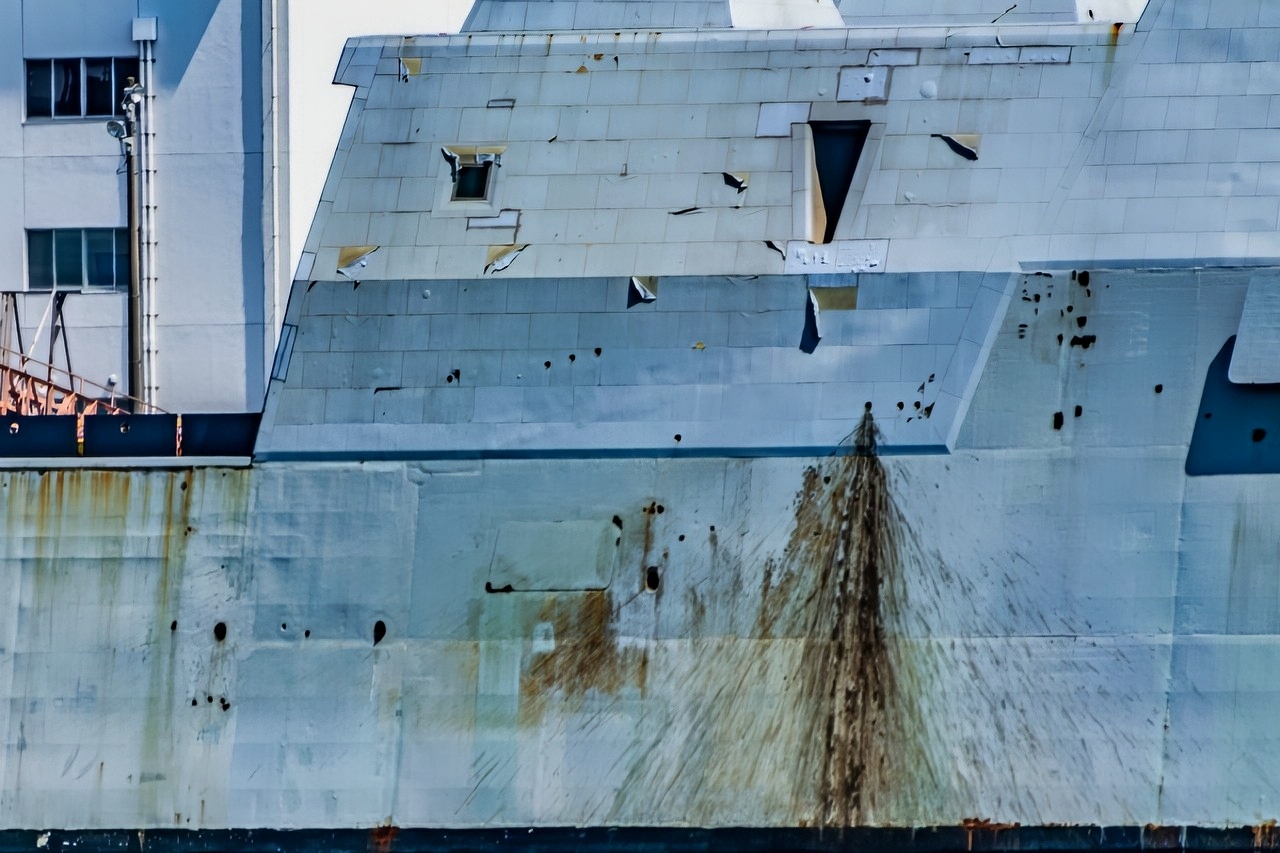
Zumwalt-Class In Bad Shape X Screenshot.
By 2008, the Navy asked Congress to halt procurement, and only three ships were ever made.
Sure, the Zumwalt class is finding new relevance as a hypersonic missile platform – but that couldn’t have been predicted at the time the project was initiated.
If anything, it’s a way to make use of an expensive mistake.
Research and construction costs for the project reached around $24.5 billion, averaging roughly $8 billion per ship. The Zumwalt’s Advanced Gun System never became operational because its Long Range Land Attack Projectile shells soared in price to as much as $1 million each once the class was cut, leaving the guns without affordable ammunition.
The Littoral Combat Ship
And then there’s the Littoral Combat Ship – a vessel that was designed to be an affordable, modular solution for operations in shallow coastal waters.
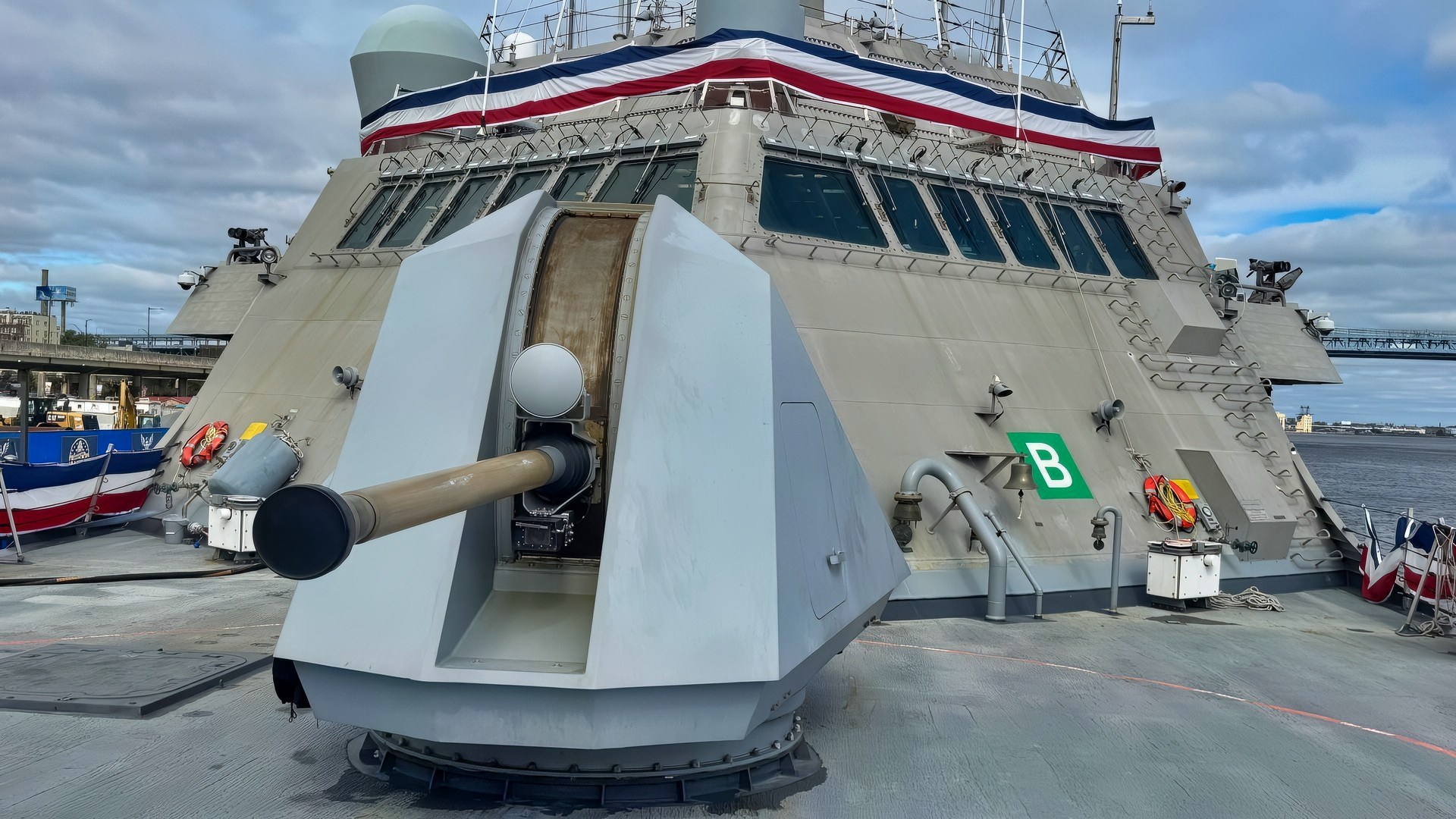
Littoral Combat Ship USS Cooperstown. Image Taken By National Security Journal October 14, 2025.
But the program became so notoriously problem-ridden that LCS soon meant something different: “little crappy ship.”
Between cost overruns, delays, and mechanical failures, it was doomed to fail – and it did.
The Navy estimates that operating and supporting the 35 planned LCS hulls would cost more than $60 billion, in addition to acquisition costs.
The Consteallation-Class
We can’t forget the Constellation-class frigate, either. Intended to be the fix for the LCS program’s shortcomings, the Constellation program began in 2020 when the Navy chose a U.S. adaptation of Italy’s FREMM frigate design and awarded Wisconsin-based Fincantieri Marinette Marine a contract to build on the design.

An artist rendering of the U.S. Navy guided-missile frigate FFG(X). The new small surface combatant will have multi-mission capability to conduct air warfare, anti-submarine warfare, surface warfare, electronic warfare, and information operations. The design is based on the FREMM multipurpose frigate. A contract for ten ships was awarded to Marinette Marine Corporation, Wisconsin (USA), on 30 April 2020.
The idea was this: a new frigate would be developed based on a proven platform, avoiding all the problems that come with designing something from scratch. But the Navy kept making changes, meaning that the ship ultimately became a new design. Years of changes mean that the American frigate shares only about 15 percent of its layout with its Italian ancestor, and is roughly $600 million over its original budget. And now, the program is – unsurprisingly – years behind schedule.
What Happens Now?
It should be clear by now: these failures point to a system that can no longer deliver on its promises.
Requirements seemingly balloon with every new project, designs shift, timelines slip, and the industrial base is under so much strain that demands simply cannot be met on time.
America still fields the world’s most capable armed forces – but its ability to build the next generation is obviously in doubt at this stage.
The question is: when will something change?
About the Author:
Jack Buckby is a British author, counter-extremism researcher, and journalist based in New York who writes frequently for National Security Journal. Reporting on the U.K., Europe, and the U.S., he analyzes and understands left-wing and right-wing radicalization and reports on Western governments’ approaches to the pressing issues of today. His books and research papers explore these themes and propose pragmatic solutions to our increasingly polarized society. His latest book is The Truth Teller: RFK Jr. and the Case for a Post-Partisan Presidency.


Royal
December 3, 2025 at 11:02 am
Ego of designers .. deliberate cost overruns and influence peddling by the defense industry…. outsourcing work we should be teaching workers to do…and politicians interfering for profit and other reasons…China tells the builders what to do with single mindedness and doesn’t allow overruns or interference..it tells the oligarchs to back off and they do. The solution is simple.. eliminate the middle men, the influencers and pick a lane
paul
December 4, 2025 at 7:31 pm
We have been overtaken.
Billy
December 9, 2025 at 8:23 am
The biggest problems are:
1.Politics/Congressional interference.
2. FADS. Latest buzzword/solution”?” Implemented everywhere without really knowing the result. Examples: “commercial”, “off-the-shelf”, “privatization”, “competition”, “breakout”, “alternate sources”, “performance spec”, ” non-prescriptive”, “Just-in-time”, etc.
3. Social Programs. Small Business set asides, Prison Industries set asides, minority preference, women owned preference, poverty area preference, Native American preference, etc, etc.
4. Shutdowns, funding delays, Musk/DOGE meddling, insider favoritism, Budget uncertainty…
5. Military managers and related turnover and inconsistencies. Procurement is business and engineering driven. It needs to be managed by experienced, knowledgeable professionals, not greensuiters rotating through for training and resume enhancement. Military staff should be limited to advisory and testing roles.