

Key Points and Summary – The Littoral Combat Ship (LCS) program is presented as a deeply flawed naval experiment. The decision to build two competing designs, the Freedom and Independence classes, resulted in unique, show-stopping problems for each.
-The Freedom-class was plagued by chronic transmission failures, while the aluminum Independence-class suffered from corrosion and hull cracks.
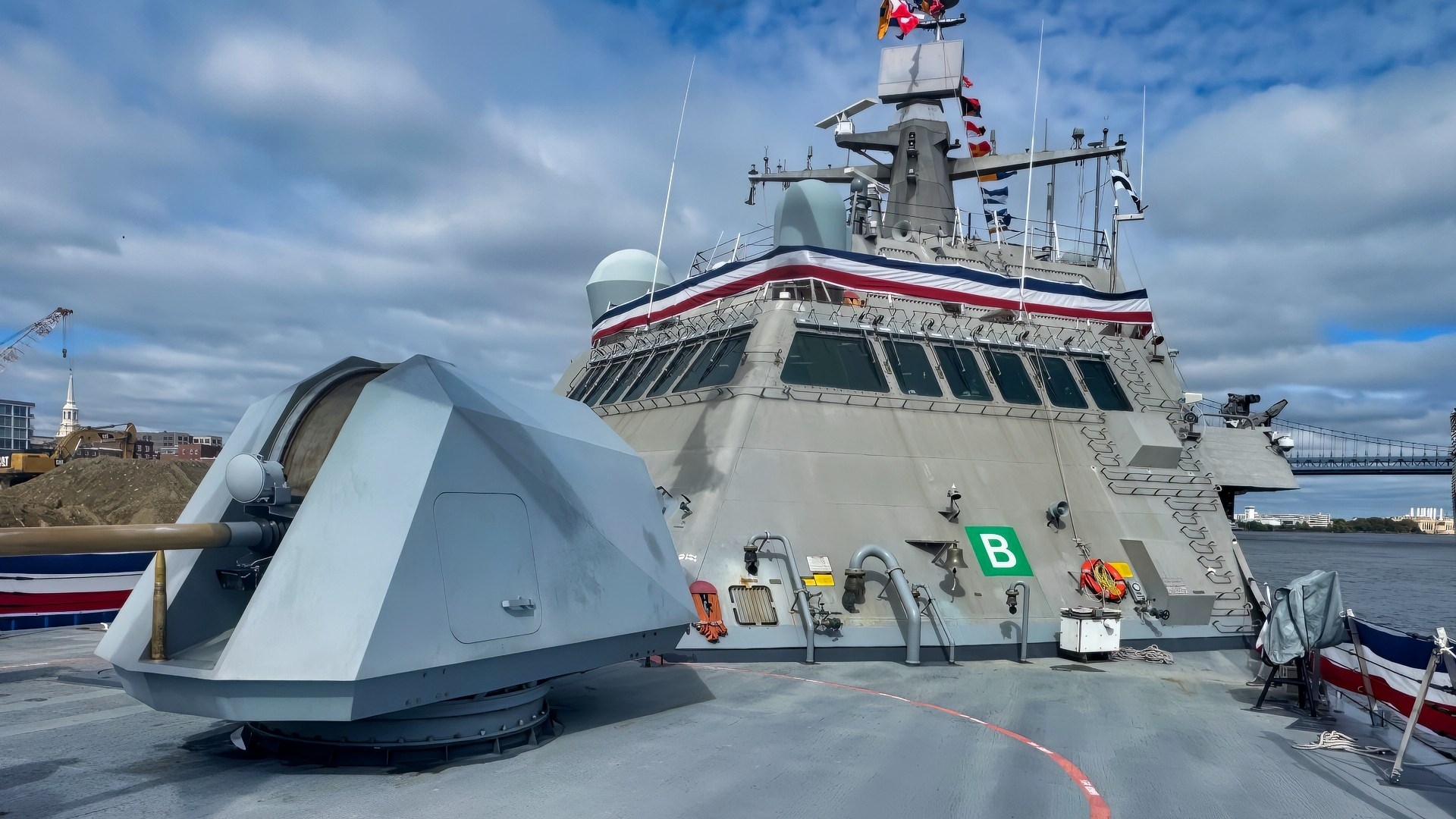
Top of USS Cooperstown Littoral Combat Ship. Taken by National Security Journal on October 14, 2025.
-Both classes were under-armed, and their core modular “mission package” concept proved unworkable.
-Now deemed unsurvivable in modern conflict, the Navy is retiring the ships decades early, marking the end of a troubled and costly chapter.
-BONUS: National Security Journal was onboard a Littoral Combat Ship on October 14, 2025, the USS Cooperstown, and took many photos of the visit, which are included in this article, to give you a more immersive feel for these warships.
The Littoral Combat Ship Program Sounded Great on Paper. Here’s What Went Wrong.
The Littoral Combat Ship (LCS) program came of age at a time of great change in the U.S. Navy.
Drawdowns following the end of the Cold War, and the advent of the war on terror, meant a reduced emphasis on building large surface ships such as destroyers and frigates.
The Navy sought to field smaller ships that could operate closer to shore, in littoral waters, to carry out a wide range of low-intensity missions, such as anti-submarine warfare, drug interdiction, and mine countermeasures.
The Littoral Combat Ships had to be smaller, faster, and more agile, with modular characteristics.
They had to reach 40 knots, have a shallow draft for operations in coastal waters, and a variety of mission packages that could be quickly swapped.
The modularity allowed the ship to tackle a variety of missions. On top of these characteristics, the ships’ high degree of automation meant that a relatively small crew of sailors would, in theory, operate the ship with ease.
The irregular warfare that the Navy anticipated after 9/11 catalyzed the shift to smaller fast-attack craft, rather than blue-water vessels capable of global power projection. The LCS was purpose-built for the new operational strategy. But unusually, the Navy decided to fund two distinct ship classes: the Freedom-class and Independence-class LCS.

Littoral Combat Ship USS Cooperstown NSJ Photo Taken On October 14, 2025.
The two-class approach was partly a political decision and partly a bureaucratic one.
The Navy wanted to accelerate innovation through the LCS program, and it hoped the dueling designs would push down costs and accelerate production.
In reality, however, the Navy ultimately chose to invest in both classes of ship. The decision was widely considered a failure.
Both classes of ships were plagued by breakdowns, design shortcomings, and complex retrofits for faulty components.
The Problems with the Littoral Combat Ship
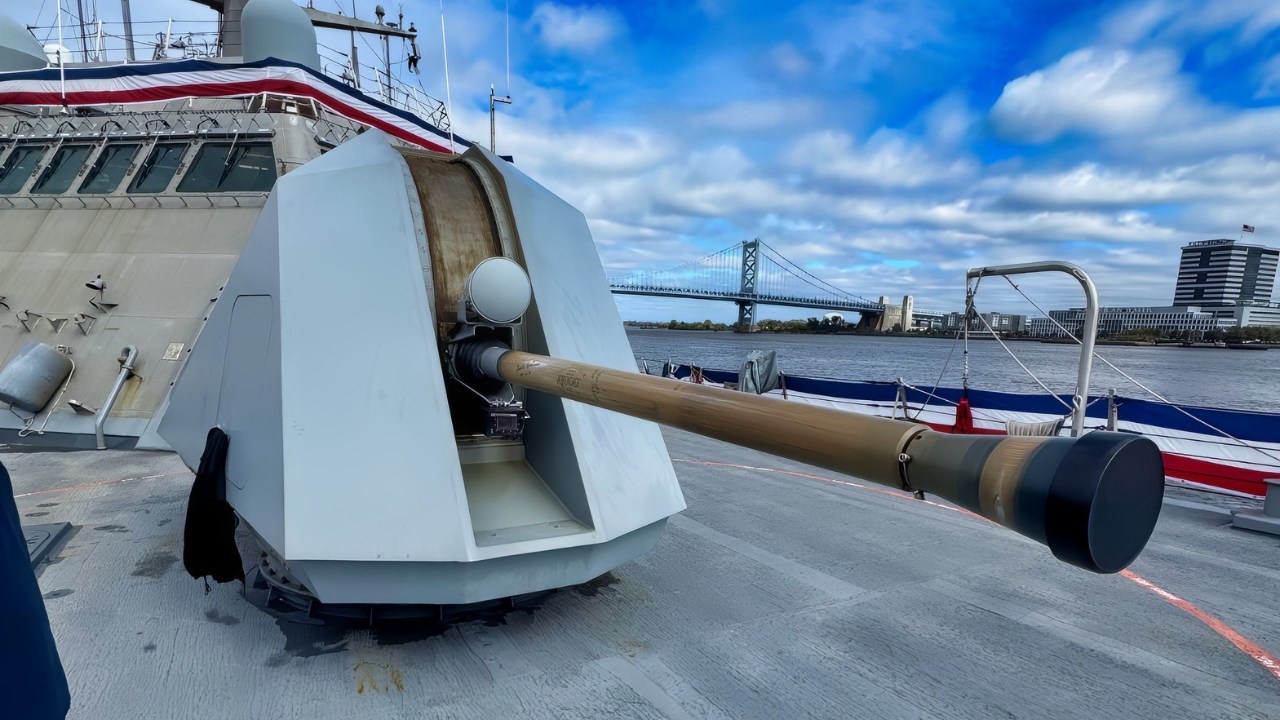
Though fitted with a 57-mm naval gun as well as short-range missiles, both the Freedom-class and Independence-class were underarmed and unable to credibly deter larger surface ships. Another disappointment was the ships’ supposedly interchangeable mission packages.
Rather than saving time, swapping out the mission packages proved to be time-consuming and complex. Though the ships were built to engage less capable threats, they were not considered very survivable, limiting their ability to engage more robust threats.
Despite these negative qualities, the ships’ greatest shortfall was its overly complex systems— particularly the high-speed propulsion systems—and the high degree of automation that caused frequent breakdowns. Repeated mechanical failures led to lengthy and expensive maintenance and retrofits to faulty components.
The Freedom-class experienced chronic issues with its combining gear—a vital component that links the ship’s gas turbines and diesel engines, allowing it to reach high sprint speeds. Further, despite automation’s promise to reduce crew workload, small crews struggled with fatigue and overwork.
Combined with the Freedom-class’ rather modest range, which led to frequent refueling, the ships had very short deployment periods.
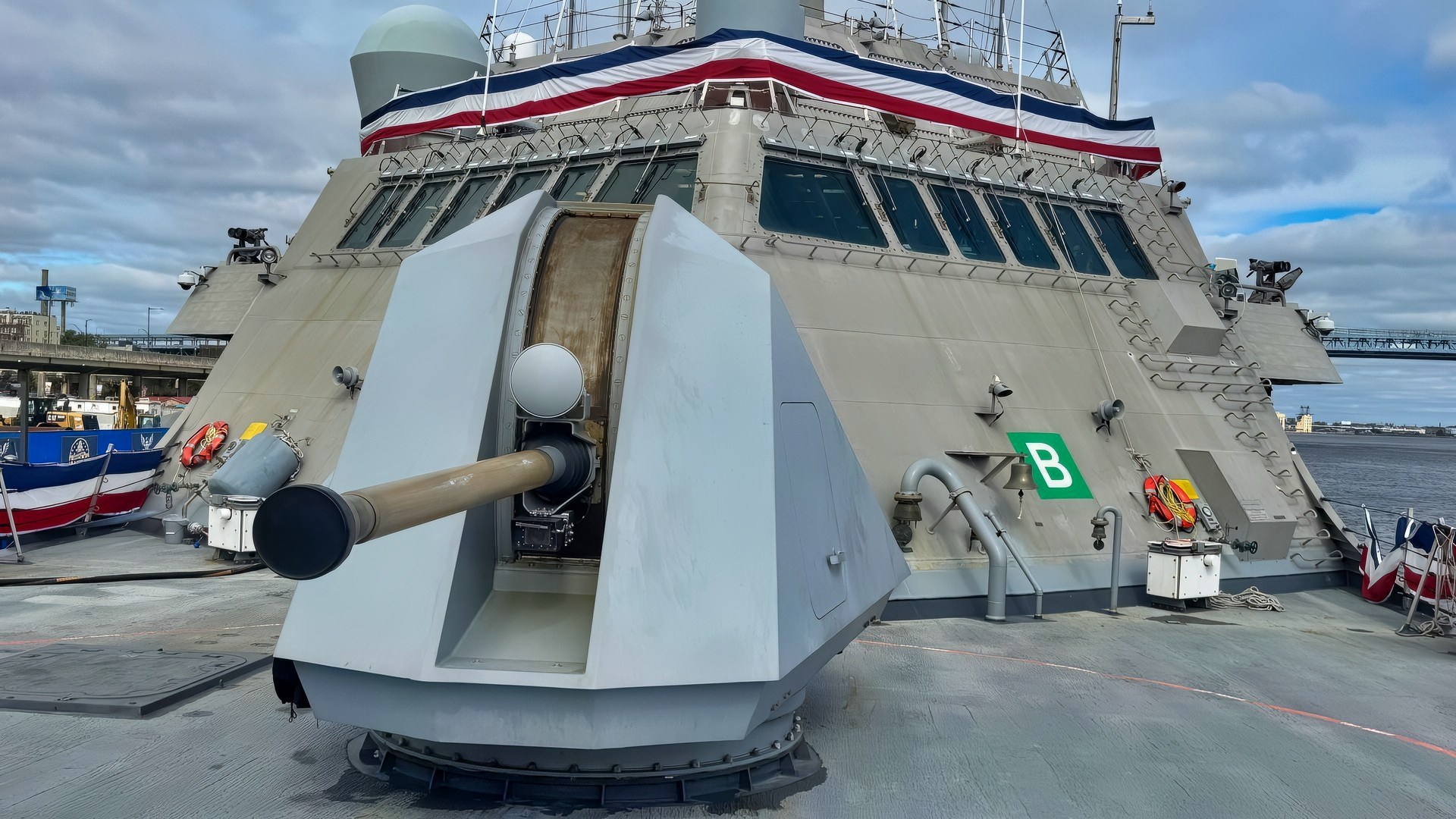
Littoral Combat Ship USS Cooperstown. Image Taken By National Security Journal, October 14, 2025.
The Independence-class, on the other hand, suffered from corrosion problems, a shocking shortcoming for a ship intended to operate in saltwater.
The class’ unique aluminum trimaran hull suffered cracking, requiring specialized facilities for repair.
The ships’ unique systems were, broadly speaking, not shared by the rest of the ships in the Navy, and this drove up costs for repair.
Combined with glaring propulsion failures and immature mission systems, this meant the Navy sank significant funds into two classes that could not perform their operational roles.
In the early 2020s, the Navy began decommissioning LCS ships, well before their projected end of service. The Navy retired some of the LCSs before they were even a decade old.
Cognizant of the growing threat posed by the Chinese Navy, and the specter of a return to peer conflict, the Navy ultimately put the kibosh on the LCS.
The Navy will retire the LCS fleet early and reinvest in more capable ships, doubling down on the Constellation-class of modern frigates — although those ships have experienced headwinds related to their cost and design.
Postscript on the LCS
The LCS was ambitious and innovative but also deeply flawed, hampered by incomplete, overly complex designs.
The class’ repair processes resulted in a higher-than-anticipated logistical burden, and low reliability truncated the ship’s combat effectiveness.
About the Author: Caleb Larson
Caleb Larson is an American multiformat journalist based in Berlin, Germany. His work covers the intersection of conflict and society, focusing on American foreign policy and European security. He has reported from Germany, Russia, and the United States. Most recently, he covered the war in Ukraine, reporting extensively on the war’s shifting battle lines from Donbas and writing on the war’s civilian and humanitarian toll. Previously, he worked as a Defense Reporter for POLITICO Europe. You can follow his latest work on X.
More Military
It’s Official: Boeing Strike Is Delaying New F-15EX Eagle II Fighter Jets
‘Brink of Nuclear War’ if U.S. Sends Tomahawks to Ukraine?
China’s Sixth-Generation White Emperor Fighter Simply Summed Up in 1 Word
A Russian Pilot Defected with a Mach 2.3 MiG-29 Fulcrum Fighter Jet


