

Too Big, Too Easy to Kill: Why the U.S. Navy Abandoned Sky Aircaft Carriers
America’s military development over the last century has been both a tale of amazing advances and a story of “what ifs.” One of those “what if” stories comes in the form of a 785-foot-long, helium-filled dirigible airship. Billed by many as a “flying aircraft carrier,” the United States Navy was attempting to fuse airpower with its power projection platforms.
Inside the “Airborne Carrier” Concept
Ultimately, the Navy would build aircraft carriers to achieve this goal. Before that, however, there was the USS Akron (ZRS-4) and its sister ship, the USS Macon (ZRS-5).
These airships carried up to five F9C Sparrowhawk biplanes in an internal hangar. These Sparrowhawk biplanes were launched and recovered by what many analysts have said was a visionary trapeze system. The reason the Navy experimented with these airships was that the early aircraft carriers it developed lacked the range needed for the Navy to project power reliably into the vast expanse of the Pacific Ocean.

(March 7, 2016) An F/A-18E Super Hornet assigned to the Warhawks of Strike Fighter Squadron (VFA) 97 performs a flyby during an aerial change of command ceremony above USS John C. Stennis (CVN 74). Providing a ready force supporting security and stability in the Indo-Asia-Pacific, Stennis is operating as part of the Great Green Fleet on a regularly scheduled 7th Fleet deployment. (U.S. Navy photo by Mass Communication Specialist Seaman Tomas Compian/Released)
Because the fighters were stored inside the airship, a retractable trapeze lowered them into the airstream.
Pilots would then hook onto the trapeze to dock with the airship after completing a mission. Or they would drop off from that trapeze to launch. So, it was a little different than the kind of takeoff and landing operations we are used to seeing on aircraft carriers.
Airships.net likened the early aircraft-carrying airships to an early version of distributed intelligence, surveillance, and reconnaissance combined with aerial mothership operations. Indeed, the Navy envisioned these airships as long-range scouts.
The airships were meant to be the Navy’s “eyes” over thousands of miles. Because of the range of these airships, they could patrol massive areas far beyond those that which surface fleets could reach.
The Strategic Problem They Tried to Solve
Interestingly, the airship extended the range of the warplanes onboard, which was an inversion of what had been the defining feature of naval air warfare up until that point. Of course, aircraft carriers would similarly extend the range of aircraft.
The downside of the airship as a flying aircraft carrier is that it was massive.
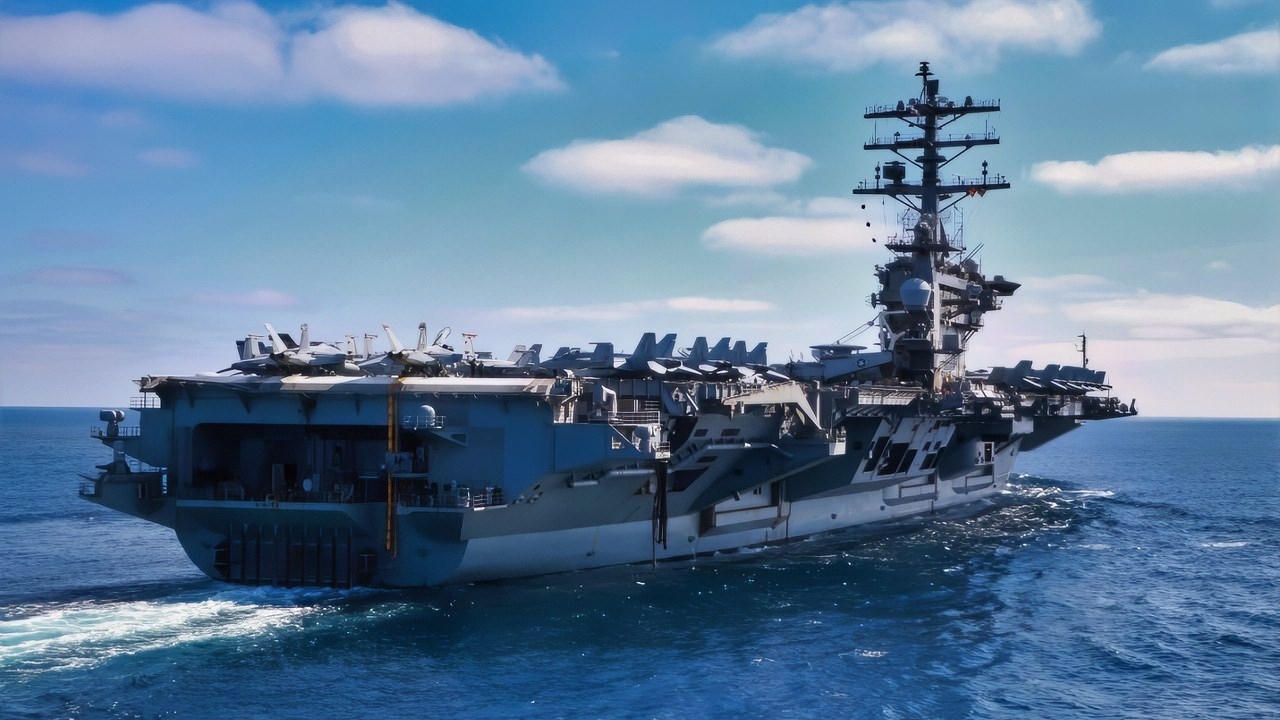
PACIFIC OCEAN (Oct. 8, 2022) The aircraft carrier USS Nimitz (CVN 68) prepares for a fueling at sea (FAS) with the Arleigh Burke-class guided missile destroyer USS Paul Hamilton (DDG 60). Paul Hamilton is currently operating with the Nimitz Carrier Strike Group in preparation for an upcoming deployment. (U.S. Navy photo by Ensign Connor Doherty)
As noted above, it was around 785 feet long. In essence, the airships were easy to spot and even easier to fire anti-aircraft guns at. Plus, the airships were slow. Oh, and they were vulnerable to natural weather phenomena. In essence, these made for terrible strategic assets.
Unlike the Hindenburg, the infamous German Zeppelin that exploded upon arrival in New York City, due to the use of hydrogen, the USS Akron and USS Macon employed helium, which was not as unstable an element as hydrogen.
U.S. Navy Rear Admiral William A. Moffett supported the program throughout its lifespan, calling it the “safest dirigible ever built,” saying that it offered the Navy a significant tactical advantage over its rivals.
Yet, how helpful would these systems have been in the crucible of the world wars if they were vulnerable to inclement weather and if they were such easy targets for anti-aircraft guns?

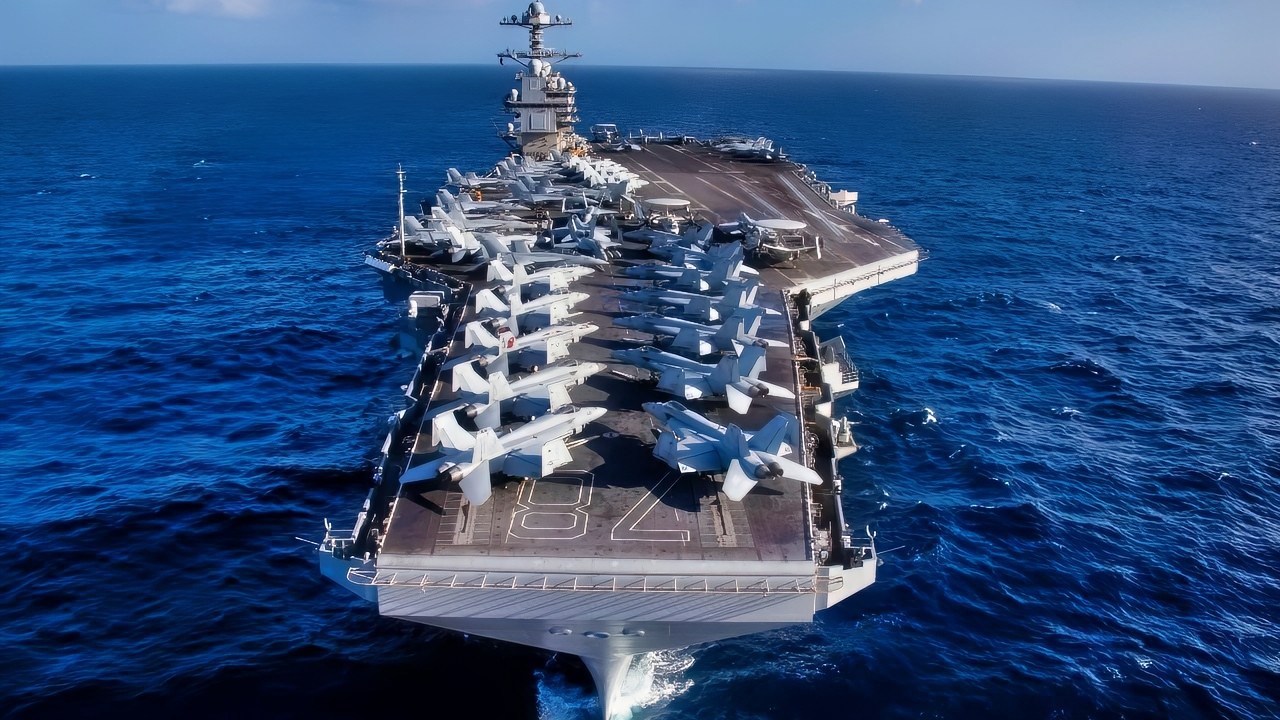
A U.S. Sailor inspects an aircraft catapult launch track on the flight deck of the world’s largest aircraft carrier, Ford-class aircraft carrier USS Gerald R. Ford (CVN 78), while underway in the Caribbean Sea, Nov. 25, 2025. U.S. military forces are deployed to the U.S. Southern Command area of responsibility in support of Operation SOUTHERN SPEAR, Department of War-directed operations, and the president’s priorities to disrupt illicit drug trafficking and protect the homeland. (U.S. Navy photo)
What’s more, by the outbreak of the Second World War, the general consensus has been that more traditional naval technology, notably the technology undergirding the aircraft carrier, leapfrogged the technology behind the airship. Basically, by the time the airships reached maturation, modern aircraft carriers had finally started to achieve the ranges that, until then, only the airships could achieve.
Disaster Ends the Dream
The specific case of the USS Akron (ZRS-4) likely killed the appeal of the airship program for the Navy’s planners. In 1933, the Akron ran into a nasty storm as it was conducting operations and inevitably met a tragic end as a result. A total of 73 people were killed on the airship, and it is still considered the worst airship disaster ever.
After the Akron’s tragic loss, then-President Franklin D. Roosevelt dubbed it a “national disaster.”
Two years thereafter, the final airship, the USS Macon, was lost in bad weather as well. Following that second loss in 1935, the Navy terminated the program. Basically, rigid airships cannot survive rough conditions. Even in exercises, the airships were easy to detect and even easier to blast out of the sky. Those facts, compared with the advances in conventional aircraft carrier technology, made the airships less useful.

Aircraft Carrier Nimitz-Class Back. Image Credit: Creative Commons.
Yet the idea of a floating aircraft carrier—a city in the sky—has never died in the minds of Americans, both in the military and in Hollywood. Remember in the wildly popular 2012 Marvel Avengers film, the heroes of the show rode around in a flying aircraft carrier (with an invisibility cloak to boot!) Before that, Doctor Who featured a timeline where the United Nations managed its own flying aircraft carrier.
The Idea Never Really Died
And it isn’t only in the minds of Hollywood producers that the flying aircraft carrier lives on. It is in the minds of America’s war planners. Old concepts, like the flying aircraft carriers of the Interwar Years, are coming back into the forefront (but with modern twists). The Pentagon is playing with concepts pertaining to drone motherships, loyal wingman systems, and airborne launch platforms for swarms of unmanned aerial vehicles (UAVs).
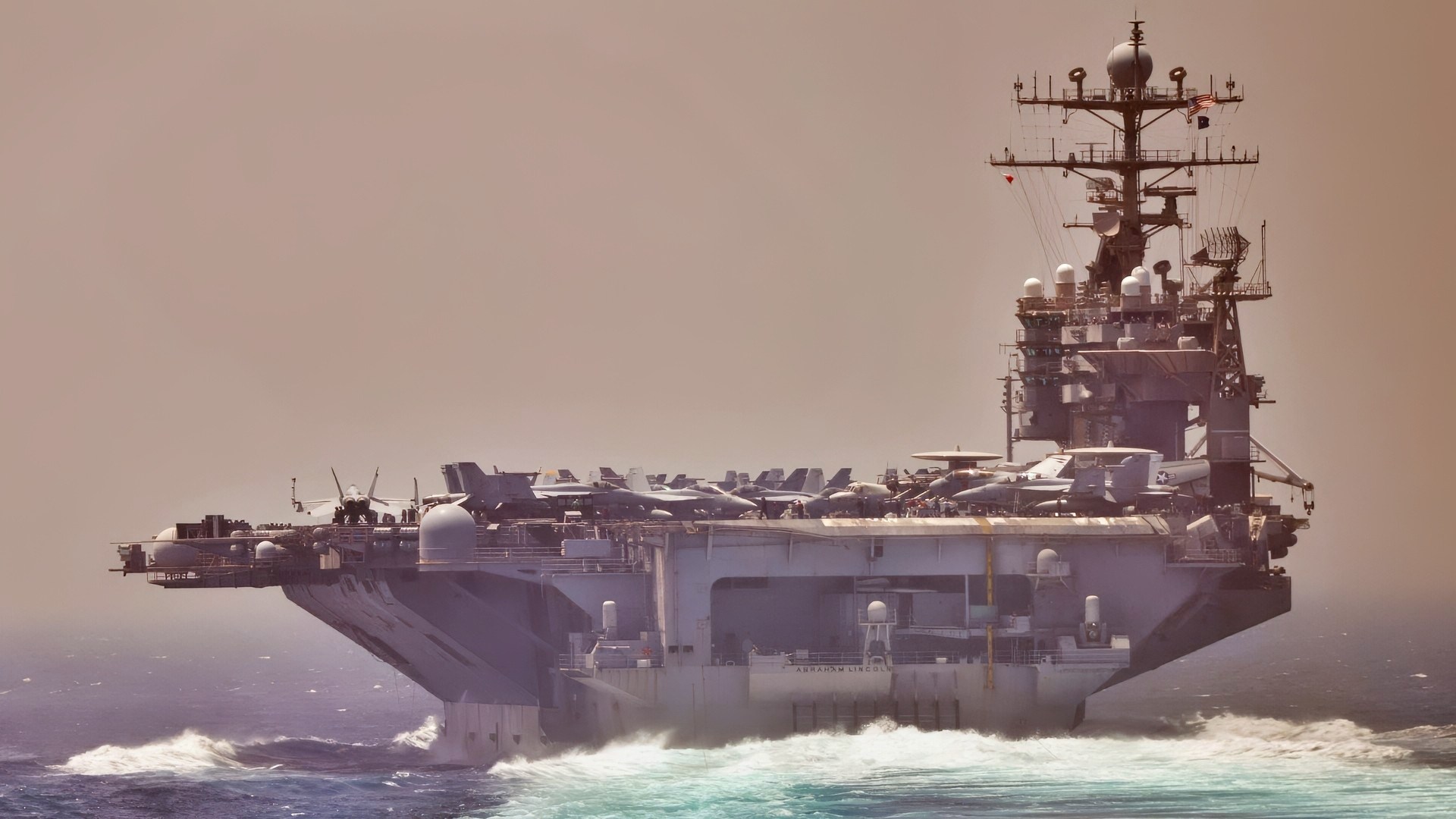
STRAIT OF HORMUZ (May 1, 2012) The aircraft carrier USS Abraham Lincoln (CVN 72), left, and the guided-missile cruiser USS Cape St. George (CG 71) transit the Strait of Hormuz. Abraham Lincoln and Cape St. George are deployed to the U.S. 5th Fleet area of responsibility conducting maritime security operations, theater security cooperation efforts and support missions as part of Operation Enduring Freedom. (U.S. Navy photo by Mass Communication Specialist 3rd Class Alex R. Forster/Released)
In effect, the Akron and Macon were early concepts of distributed aerial warfare. They were ahead of their time, and their technology was not quite right for the needs of the global system. Today, however, the rise of drone warfare is restoring this long-abandoned concept.
More importantly, it isn’t only the United States reopening these old concepts. China is also devising modern variants of the drone mothership to be used in a potential war against Taiwan and the United States. So, the airship as a mothership might not have exactly made the cut, but some variation of the flying aircraft carrier appears to be at hand.
MORE – The U.S. Navy Sold 2 Aircraft Carriers for Just a Penny Each
About the Author: Brandon J. Weichert
Brandon J. Weichert is the Senior National Security Editor. Recently, Weichert became the editor of the “NatSec Guy” section at Emerald.TV. He was previously the senior national security editor at The National Interest. Weichert is the host of The National Security Hour on iHeartRadio, where he discusses national security policy every Wednesday at 8pm Eastern. He hosts a companion show on Rumble entitled “National Security Talk.” Weichert consults regularly with various government institutions and private organizations on geopolitical issues. His writings have appeared in numerous publications, among them Popular Mechanics, National Review, MSN, and The American Spectator. And his books include Winning Space: How America Remains a Superpower, Biohacked: China’s Race to Control Life, and The Shadow War: Iran’s Quest for Supremacy. Weichert’s newest book, A Disaster of Our Own Making: How the West Lost Ukraine, is available for purchase wherever books are sold. He can be followed via Twitter/X @WeTheBrandon.


