

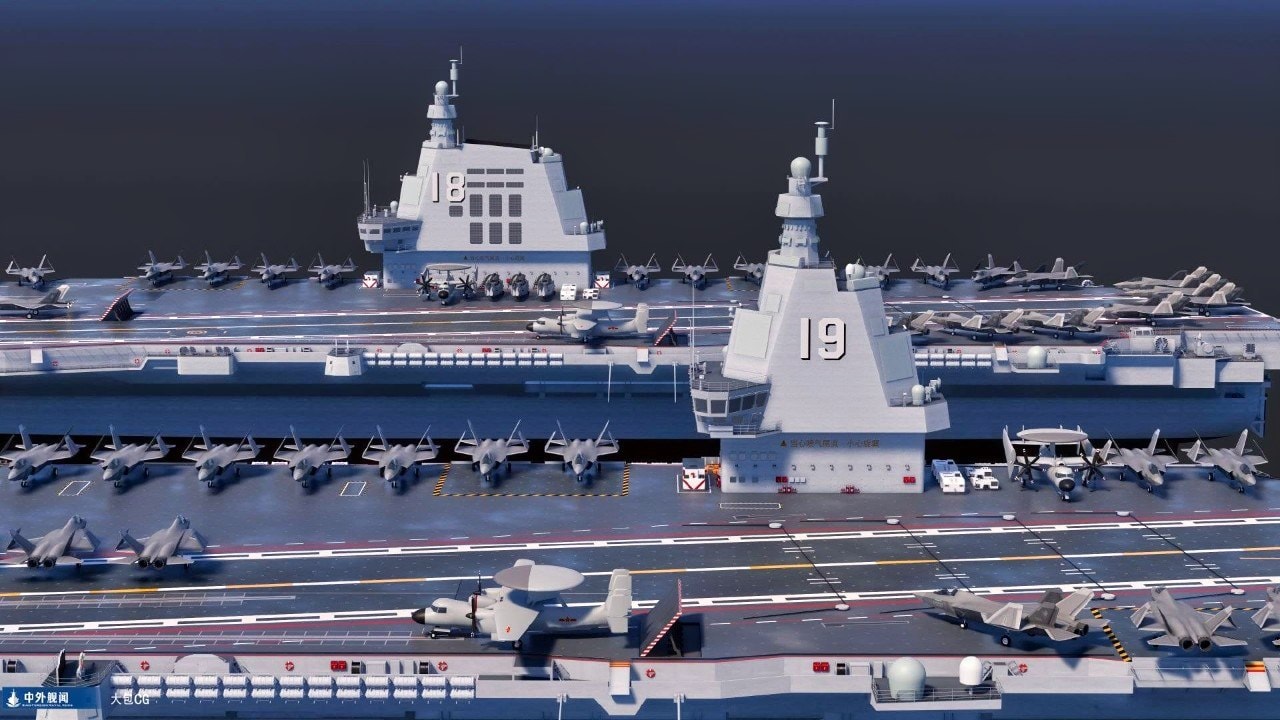
Summary and Key Points: Steve Balestrieri, a former US Army Special Forces officer and national security columnist, evaluates the Type 003 Fujian, China’s first aircraft carrier equipped with an Electromagnetic Aircraft Launch System (EMALS).
-Despite its 280,000-horsepower propulsion and capability to launch the J-35 stealth fighter, the Fujian suffers from a flight deck layout that prevents simultaneous launch and recovery.
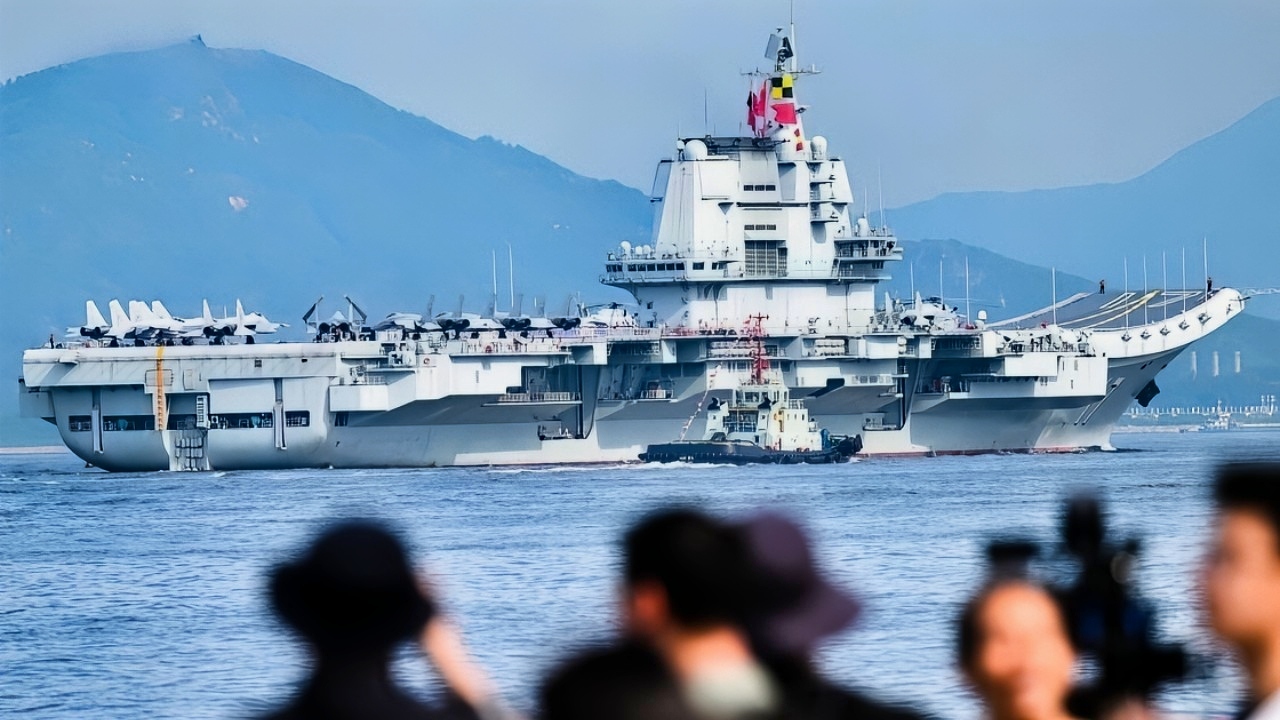
China’s Aircraft Carrier in Port. Image Credit: Chinese Navy.
-This report analyzes the “bottleneck” caused by the island superstructure’s placement, the lack of an operational KJ-600 early-warning aircraft, and the PLAN’s struggle to master ASW and sea-based logistics away from mainland A2/AD umbrellas.
80 Years of Experience vs. Tech: Why the U.S. Navy Still Dominates the Aircraft Carrier “Numbers Game” over China
China is building naval vessels at an incredible rate and is trying to build up a fleet of six aircraft carriers by the 2030s.
They currently have three carriers, but two are older models. One was the former Soviet-built and retrofitted Liaoning, which carries 24 fighters, and the indigenously built Shandong, another ski-jump-type carrier that is slightly larger and carries eight additional aircraft.
Their third carrier is the much more modern Fujian, which operates with a Ford-class-like electromagnetic catapult. It is the largest non-nuclear warship in the world.
The Fujian carries about 40 fighters but is conventionally powered, so its range without refueling is more limited. The PLAN’s oiler fleet is limited and would constitute vulnerable targets for U.S. forces.
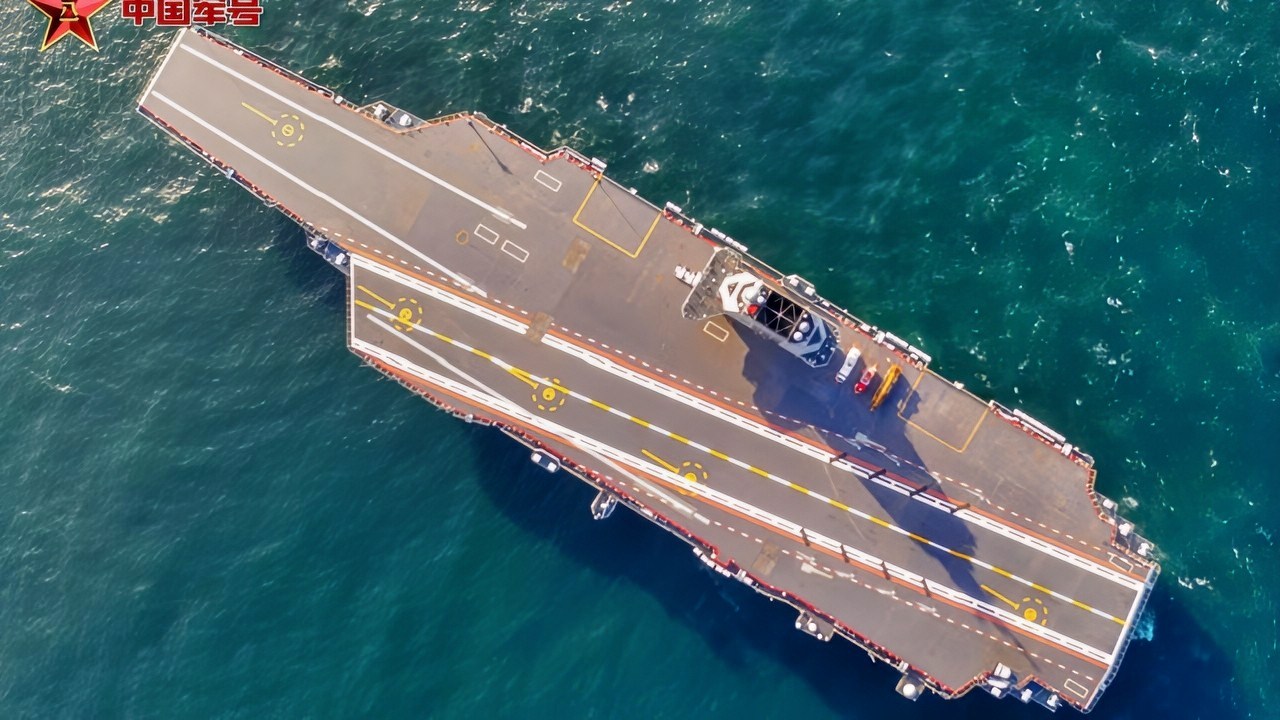
CV-18 Fujian aircraft carrier from China. Image Credit: Creative Commons.
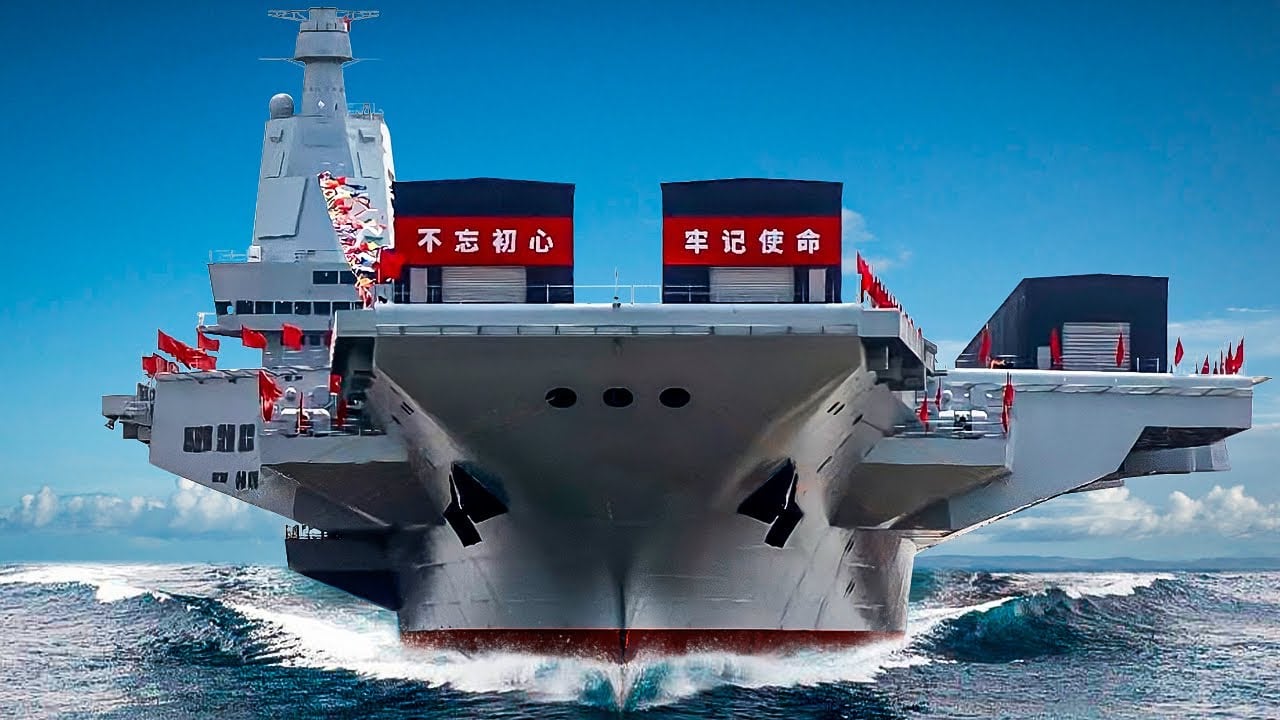
China Aircraft Carrier Creative Commons Image.
However, aviation analysts are pointing out a design flaw in the Fujian that could severely hamper its performance in combat.
Flight Deck Layout Is An Issue:
Some military analysts questioned the efficiency of the ship’s flight deck layout. They believe that the design layout could create launch and recovery bottlenecks during combat operations.
Apparently, the Chinese have already recognized this potentially fatal flaw and are working on a radical redesign for the next carrier, according to a report from the South China Morning Post.
Two former US Navy officers, Captain (ret) Carl Schuster and Lt. Cdr (ret) Keith Stewart, have noticed that the angled landing area crosses the deck at a narrower angle than on US carriers, thereby reducing the space between the recovery strip and the forward catapults.
One of those catapults is located in the landing area, which means it can’t be used while the carrier is recovering aircraft.
Schuster said, “The Fujian’s operational capability is only about 60 percent of that of the Nimitz class,” in an interview with CNN. This design flaw means the carrier can’t launch and recover aircraft simultaneously, which is considered a prerequisite for carriers of this size.
The Fujian Island Location Creates Bottlenecks On The Flight Deck:
Another problem area is the placement of the island superstructure, which sits closer to the middle of the flight deck than on American carriers. The Shipborne Weapons Defense Review magazine noted that this positioning reduces usable deck space and creates bottlenecks during aircraft operations.
The superstructure was positioned closer to the middle of the flight deck, the report stated, noting that one of the two catapults was also placed too close to an aircraft elevator, which limits deck flow and creates another choke point.
The Fujian has only two catapults, while the US Ford-class carriers have four.

J-35 fighter on Chinese aircraft carrier.
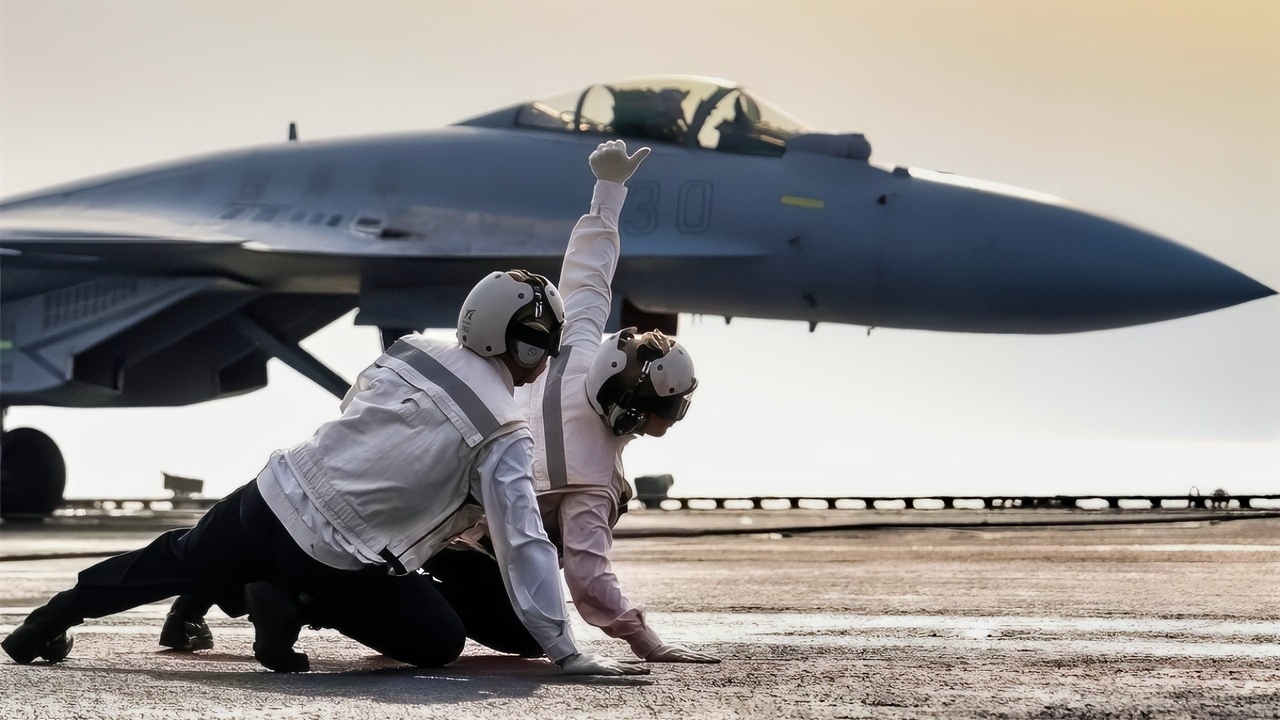
China Aircraft Carrier Operations. Image Credit: Chinese Navy.
These issues arose due to a late design change, with the Chinese switching from steam catapults to electromagnetic catapults during the carrier’s construction.
China’s Carrier Strike Groups Lack Operational Experience:
The Chinese aircraft carriers still have a long way to go to match the U.S. Navy, primarily due to a significant gap in operational experience, crew training, and military doctrine.
While China is rapidly advancing technologically, it faces significant challenges in areas such as sustained 24-hour air operations, anti-submarine warfare, and sea-based logistics that can only be developed over time and with experience.
The PLAN lacks the decades of real-world experience the U.S. has in conducting complex, sustained carrier operations and projecting power.
Aircraft and systems integration are behind the US. While China’s new carriers can launch jets with electromagnetic catapults, the U.S. has more advanced landing software and battle-tested systems. For example, China still lacks a carrier-based early-warning aircraft and relies on land-based aircraft for some functions.
Night Operations, Bad Weather, Carrier Protection Not Ready
As I wrote back last April, the Chinese carriers still operate close to their shores and under the protection of their A2/AD. And in many instances, Chinese pilots take off or land from Chinese airfields, rather than from the carriers.
The IISS recently analyzed the joint carrier operation conducted by the Liaoning and Shandong carriers, along with their respective escort groups. It showed a leap in Chinese naval capability, which was typically crowed about in the state-run media. They portrayed the operation in much the same way the U.S. Navy does, as a projection of regional power.

China Aircraft Carrier. Image Credit: Creative Commons.
But was this just a photo opportunity, or did it demonstrate an actual capability to conduct complex multi-carrier operations? The U.S. Navy has been doing this for more than 80 years. The Chinese have demonstrated their intention to perform such operations, but mastering this skill requires time.
Night operations and operations in adverse weather conditions are staples of American carrier operations, as are continuous flight operations, which the Chinese have yet to master.
“The continuous operation of its carriers sits at the very core of what makes the U.S. military absolutely preeminent,” said Singapore-based defense analyst Alexander Neill.
Protective Screening And Missile Defense Needs Improvement:
China loves to tout its “carrier killer” missiles, which it can muster against US aircraft carriers, but what they and most analysts fail to mention is that China’s carriers are more vulnerable to US anti-ship missiles than American carriers are.
Some experts say China’s carriers would be vulnerable to missile and submarine attacks, noting that the People’s Liberation Army Navy has not perfected protective screening operations, particularly antisubmarine warfare.
“Unlike other parts of their military modernization, there is something politically theatrical about their carrier deployments so far,” said Trevor Hollingsbee, a former British naval intelligence analyst.
“Carrier operations are a very complicated game, and China’s got to figure this out all by itself. It still has a long, long way to go.”
Chinese carriers operate without early-warning aircraft, relying on land-based aircraft. This is not conducive to operating anywhere but near their shores. A new aircraft, the KJ-600, designed to perform a similar role to the E-2C/D Hawkeye launched from U.S. carriers, is still in testing, according to the Pentagon’s latest annual report on China’s military.
China’s Carriers Operate Close To Its Shores:
China’s aircraft carriers have limited anti-missile defenses because they are designed to operate under the protection of land-based missile networks, rather than to possess comprehensive on-board defenses like U.S. carriers.
This strategy relies on land-based missile systems to create an anti-access bubble, a stark contrast to U.S. carriers, which are built to be self-sufficient and operate as “roaming nerve centers” for a wider network.
Because of this, China’s naval strategy emphasizes asymmetric warfare, using long-range anti-ship missiles to threaten enemy carriers from a distance. In contrast, their own carriers remain relatively vulnerable to direct attack.
This means that China is far from having carrier strike groups that project power from anywhere other than close to its own shores. They are still far from that.
Building modern carriers is one thing. Learning to operate them in a constant state of readiness and on a war footing is quite another.
A fourth Chinese carrier, reportedly under construction, Type 004, may be a nuclear-powered carrier, even larger than the Ford-class, with four electromagnetic catapults, instead of the current two. This would be a huge step forward. But those will have their own set of issues.
About the Author: Steve Balestrieri
Steve Balestrieri is a National Security Columnist. He served as a US Army Special Forces NCO and Warrant Officer. In addition to writing on defense, he covers the NFL for PatsFans.com and is a member of the Pro Football Writers of America (PFWA). His work was regularly featured in many military publications.


