

What is Iran doing at Pickaxe Mountain? – Pickaxe Mountain is a mountain facility in Iran that the Iranian regime is widely believed to use as part of its nuclear program. President Donald Trump has threatened, at various times throughout the war, to attack Pickaxe Mountain, but the U.S. is not known to have struck the facility.
Now, a new report says there’s been an “uptick” in recent construction at the facility.
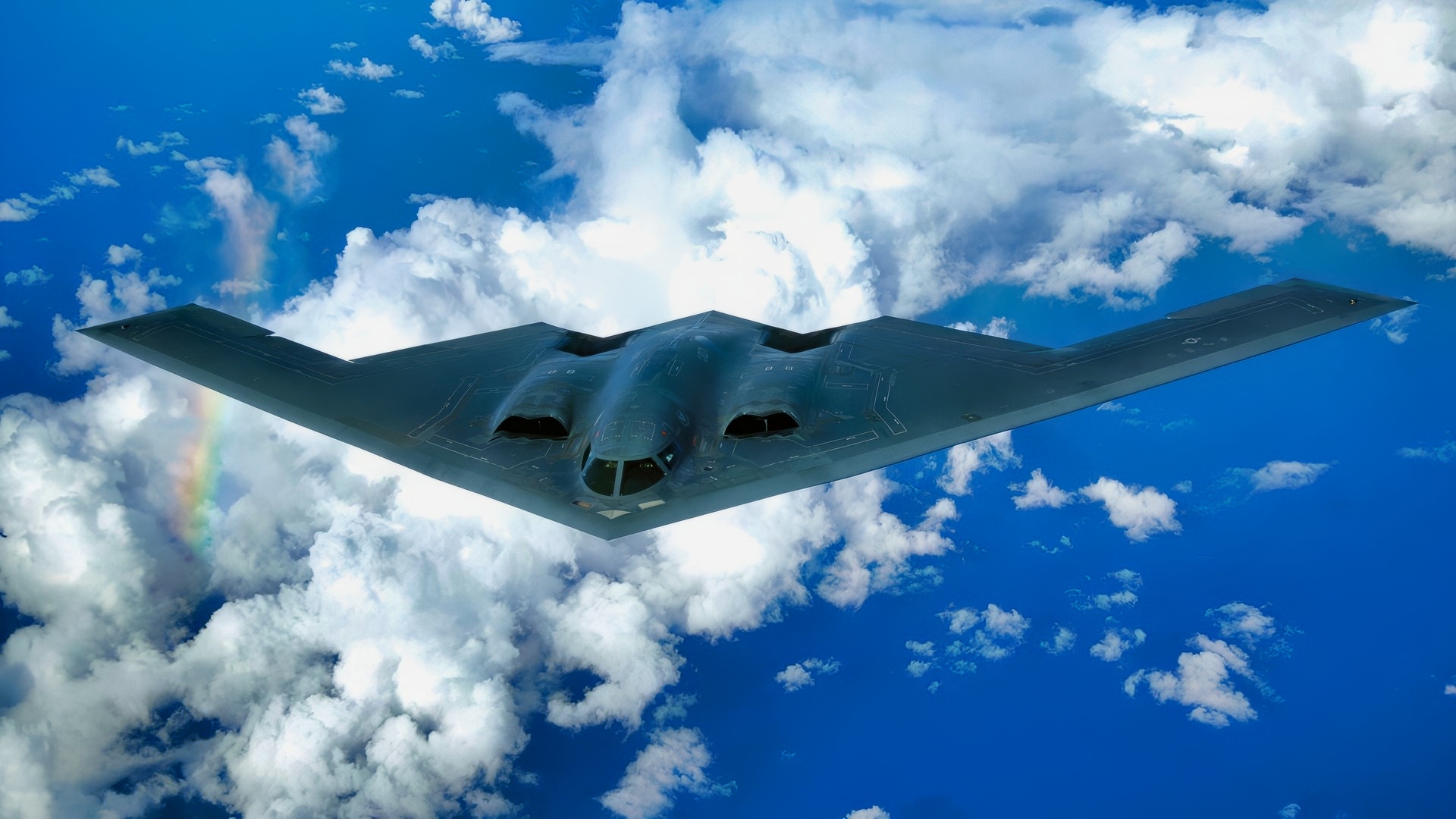
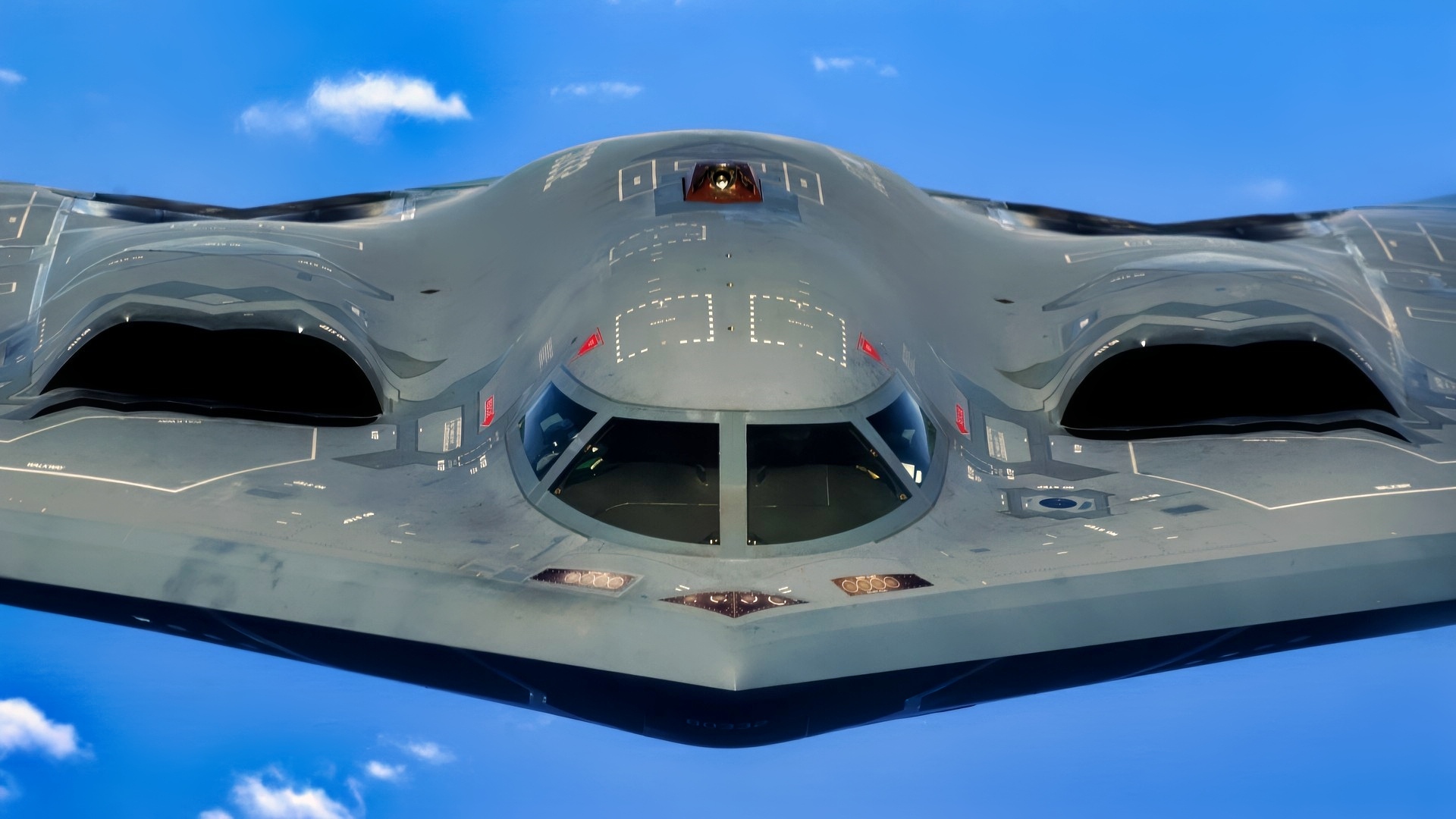
A B-2 Spirit soars after a refueling mission over the Pacific Ocean on Tuesday, May 30, 2006. The B-2, from the 509th Bomb Wing at Whiteman Air Force Base, Mo., is part of a continuous bomber presence in the Asia-Pacific region. (U.S. Air Force photo/Staff Sgt. Bennie J. Davis III)
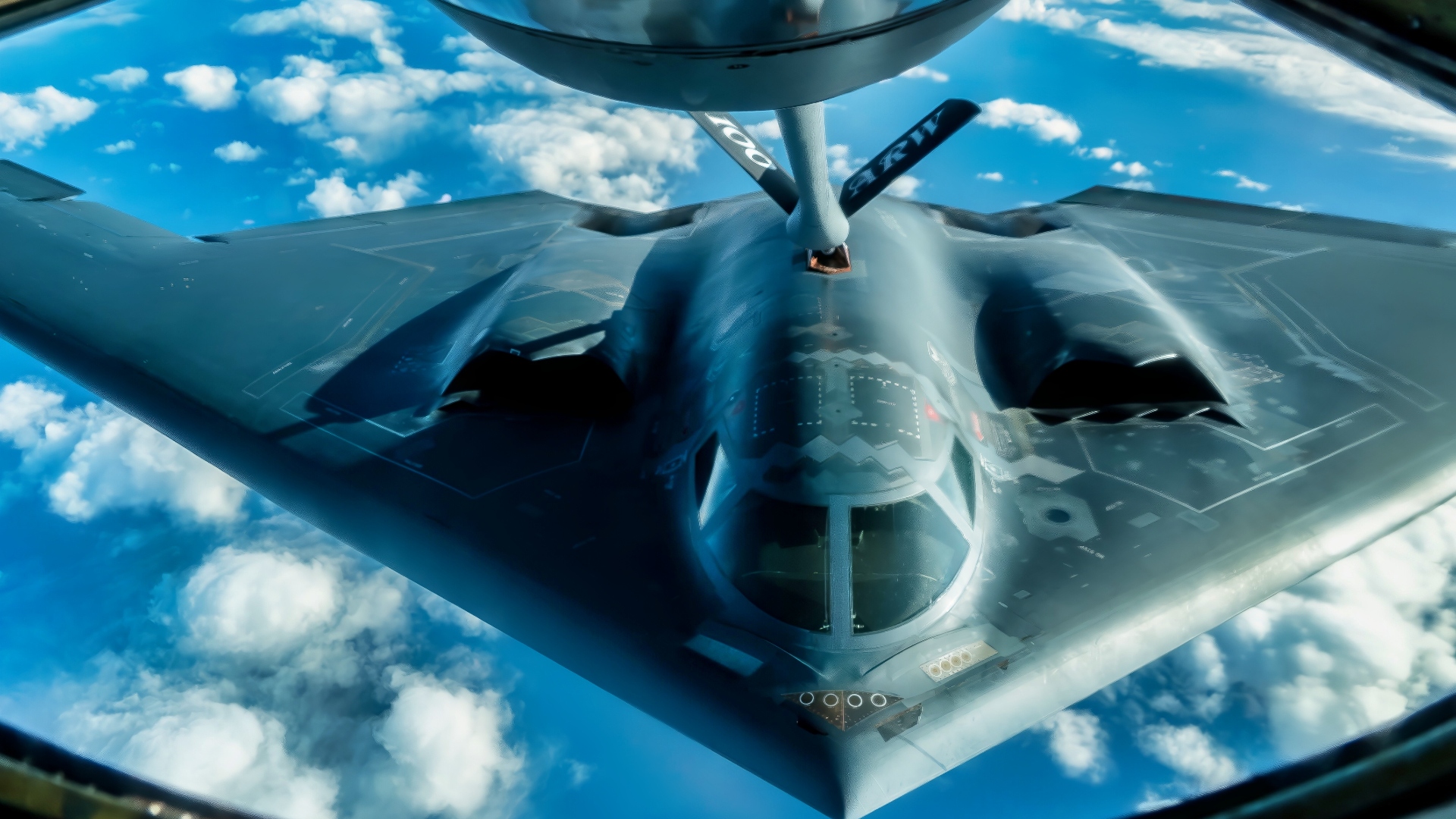
A U.S. Air Force B-2 Spirit assigned to the 509th Bomb Wing from Whiteman Air Force Base, Missouri, receives fuel from a 100th Air Refueling Wing KC-135 Stratotanker during Global Thunder 20, Oct. 28, 2019. Global Thunder is an annual command and control exercise that provides training opportunities for all of U.S. Strategic Command’s mission areas, tests joint and field training operations, and has a specific focus on nuclear readiness. (U.S. Air Force photo by Staff Sgt. Trevor T. McBride)
The Center for Strategic and International Studies on Wednesday published a report, citing satellite imagery, that there has been an “uptick in 2026 construction activity” at the Pickaxe Mountain site.
Joseph Rodgers, Douglas Comstock, and Joseph S. Bermudez Jr. are the authors of the report, which cited “multisource imagery analysis of Pickaxe Mountain and the Natanz Nuclear Facility.”
That analysis found indications of “a clear three-phase activity signature across the five key points of interest and the roads connecting them, indicating a site that has shifted from active excavation toward probable internal construction and continued exterior reinforcement.”
This included more activity on the roads near Pickaxe Mountain this year than at any time in the site’s history.
“There is a clear surge in construction activity in 2026 that corresponds to the raising and hardening of the portal accesses, paving of the internal road network, reinforcement around access areas, and the flattening and removal of excavation spoil,” the CSIS authors write.
CSIS shared its findings with CNN, which also published them.
Why the Activity?
CSIS cited three likely reasons Iran would engage in such activity at Pickaxe Mountain: They could be building a centrifuge assembly facility, they could be seeking to build a uranium enrichment facility there, or they could be “moving additional research and activities related to nuclear weapons into the underground facility.”
“While open-source evidence is not enough to fully reveal what is happening at Pickaxe Mountain, Iranian construction of a facility just 2 kilometers away from their old uranium enrichment facility at Natanz is suspicious,” the analysis said.
Trump’s Threats
The report also stated, as was reported by the Wall Street Journal at the time, that Trump’s statements in July about possibly wanting to attack the Pickaxe Mountain site followed information delivered by Israeli intelligence to their American counterparts that Iran had “moved uranium centrifuges and centrifuge parts into Pickaxe Mountain last fall,” after the U.S. first struck Iran’s nuclear facilities in the summer of 2025.
Trump repeated that threat while speaking to reporters last Friday.
“We may hit Pickaxe very soon,” the president said. “If there was anything going on with Pickaxe… we know everybody that’s moving.”
However, hitting that particular facility with conventional weapons is easier said than done.
CSIS, in its report, described Pickaxe as “a deeply buried granite fortification, and it will be difficult to destroy the facility even with the heaviest non-nuclear U.S. munitions, such as the GBU-57 Massive Ordnance Penetrator.”
The report added that repeatedly bombing Iran’s nuclear infrastructure, ultimately, is unsustainable, “illustrating the need for a verifiable diplomatic solution to the Iranian nuclear challenge.”
So what can the U.S. do?
An Outside-the-Box Solution
Per CNN, the U.S. is working on some solutions for how to hit the fortified facility. Clues to one of them appear in a public filing related to the federal contracting process.
Earlier this year, right before the war started, a program manager at an “obscure Pentagon agency” filed an emergency $1.2 million contract justification to prepare a “unique subterranean test facility at White Sands Missile Range” for a “live-fire test designed to validate classified capabilities against rapidly emerging threats.”
The contract was later awarded, and three sources confirmed to CNN that this test was connected to Iran preparations, specifically “the need to develop a way to target Iran’s deepest-buried underground facilities and, likely, simulate US strikes against specific nuclear facilities.”
CNN went on to analyze more satellite data, this time of White Sands, shortly after the contract was awarded, although the network “could not independently verify whether the test occurred,” and the Pentagon did not confirm.
The military, CNN reported, is also working on a “next-generation penetrator” weapon to serve as the successor to the Massive Ordnance Penetrator, for missions such as a potential attack on Pickaxe Mountain.
About the Author: Stephen Silver
Stephen Silver is an award-winning journalist, essayist, and film critic, and contributor to the Philadelphia Inquirer, the Jewish Telegraphic Agency, Broad Street Review, and Splice Today. The co-founder of the Philadelphia Film Critics Circle, Stephen lives in suburban Philadelphia with his wife and two sons. For over a decade, Stephen has authored thousands of articles that focus on politics, national security, technology, and the economy. Follow him on X (formerly Twitter) at @StephenSilver, and subscribe to his Substack newsletter.


