

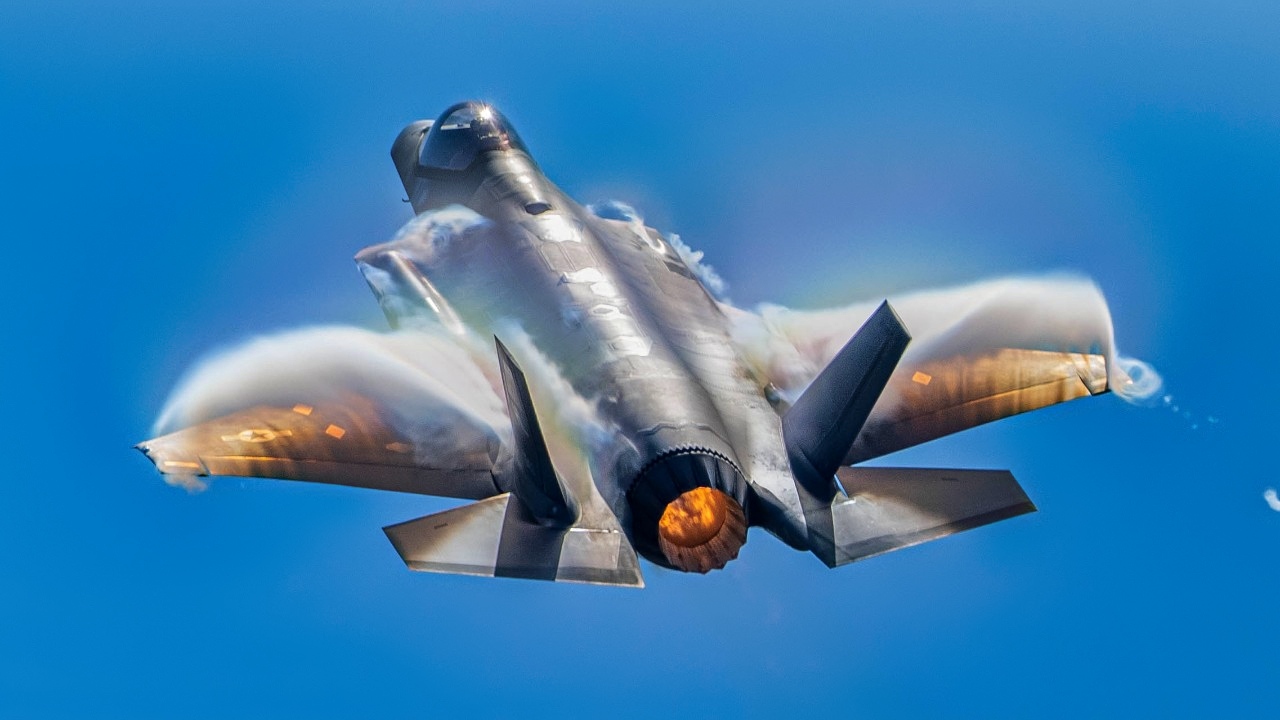
Key Points and Summary – At this week’s NATO summit in The Hague, the United Kingdom announced it will purchase 12 nuclear-capable F-35 fighter jets, re-establishing an airborne nuclear role for the Royal Air Force for the first time since 1998.
-This major strategic shift, described as the “biggest strengthening of the UK’s nuclear posture in a generation,” will see the UK join NATO’s shared nuclear mission, deploying aircraft that can carry US-made B61 gravity bombs.
-Prime Minister Keir Starmer also pledged 350 air defense missiles to Ukraine, funded by interest from frozen Russian assets, as the alliance pushes members toward a 5% GDP defense spending target.
UK to Acquire Nuclear-Capable F-35 Warplanes
British Prime Minister Keir Starmer has said that the UK will purchase 12 U.S.-made F-35 fighter jets able to drop nuclear bombs.
He made the comments at this week’s NATO summit in the Netherlands. It comes over thirty years after the UK formally exited the military alliance’s airborne nuclear mission.
“This is the biggest strengthening of the UK’s nuclear posture in a generation,” a government spokesperson said. NATO Secretary-General Mark Rutte applauded the decision, calling it “yet another robust British contribution to NATO.”
The UK’s nuclear deterrent has, until now, been entirely submarine-based, relying on the Vanguard-class fleet and the Trident missile system.
By reintroducing air-dropped nuclear capabilities—this time via the fifth-generation F-35s—the UK signals a major shift not just in capability, but in doctrine.
The aircraft, which can carry the American B61 gravity bomb, will integrate into NATO’s nuclear planning structure.
Any use of such weapons would still require authorization from the alliance’s nuclear planning group, as well as both the U.S. president and the British prime minister.
Some will perceive this shift as a bolstered commitment to deterrence as global tensions rise. Others complain it could encourage nuclear escalation in future. Others will say it fails to go far enough, given the UK’s rapidly depleting armed services and lack of defense systems.
While the UK government is now warning the public to be “ready” for war, they themselves are from being prepared. In the late 1990s and early 2000s, the government even scrapped its “General War” plans which included directives on how to prepare civil society for conflict. It ended the practice of providing any guidance to the public, such as the 1980’s-era “Protect and Survive” pamphlets.
UK Defense Spending: Only a Slight Increase?
Starmer also said the UK would provide 350 air defense missiles for Ukraine. He said this pledge would be funded with £70 million d from interest on frozen Russian assets. All this comes amid NATO’s attempt to ensure members ramp up defense spending to 5% of GDP by 2035.
London currently allocates a mere 2.3% of its annual national income to defense, and this commitment is only projected to increase by 0.1% by 2027.
The timing of this nuclear revival is no accident. With conventional threats from Russia, cyber incursions from China, and nuclear tensions with Iran escalating, Britain’s return to airborne nuclear readiness may be seen as both a warning and a reassurance.
Still, there are questions.
Is this a prudent reinforcement of collective defense or the beginning of a new arms race in Europe?
Will this really help the UK defend itself better, or is it all theatrics?
About the Author:
Georgia Gilholy is a journalist based in the United Kingdom who has been published in Newsweek, The Times of Israel, and the Spectator. Gilholy writes about international politics, culture, and education.
Fighter Jet Fails
Russia’s Su-57 Felon Stealth Fighter Is a Waste of Rubles


