

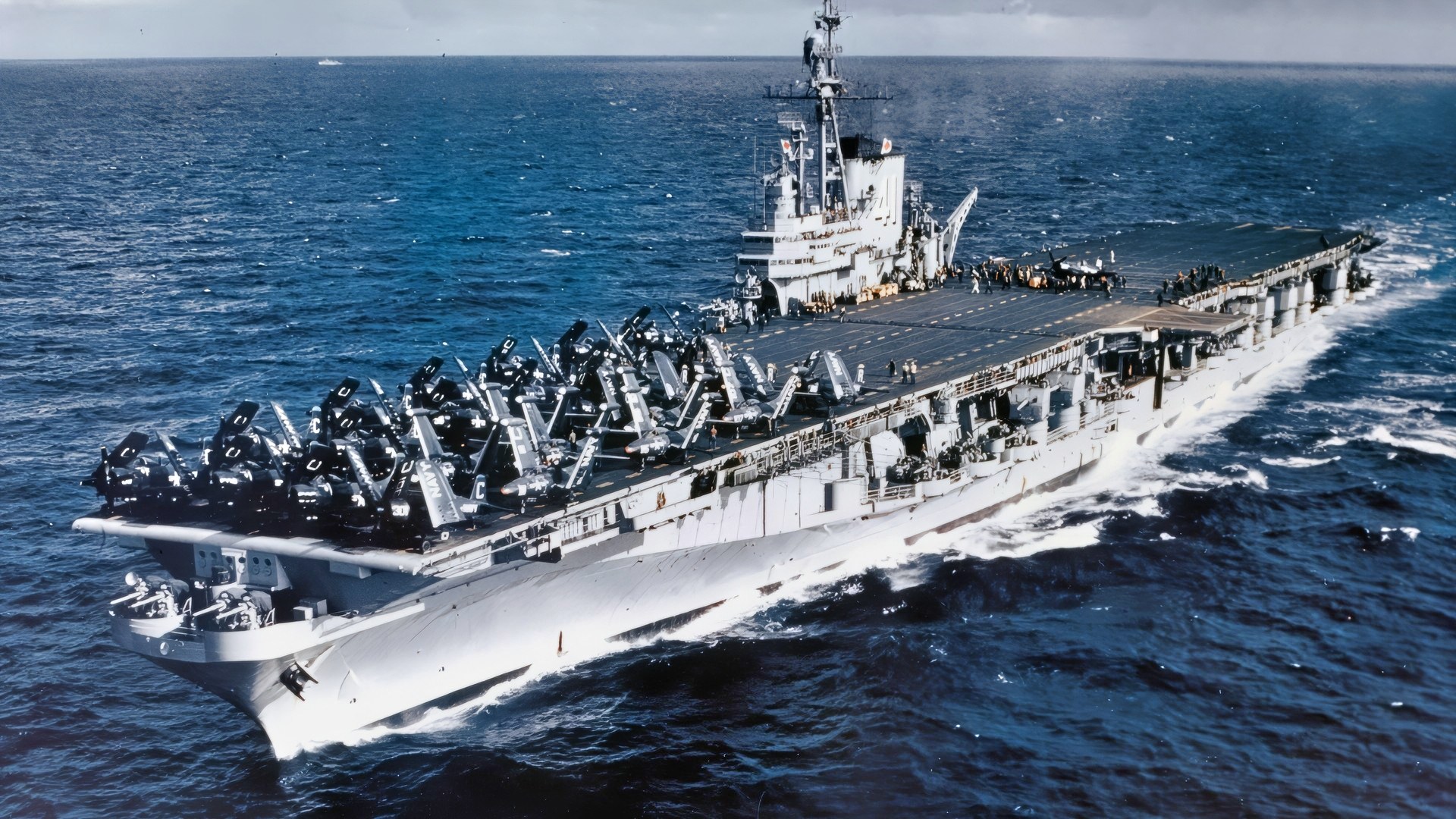
The U.S. Navy commissioned three Midway-class aircraft carriers in 1945 — the USS Midway, USS Franklin D. Roosevelt, and USS Coral Sea — designed with heavily armored flight decks to survive the kamikaze attacks that had crippled the Essex-class. Each ship measured nearly 1,000 feet, produced 200,000 shaft horsepower, and carried more than 4,000 sailors. None saw World War II combat, but all three fought through the Cold War. The Midway launched strikes over Vietnam, evacuated Saigon in 1975, and struck Iraqi forces in Operation Desert Storm. The Coral Sea served 43 years and hit targets in Libya in 1986.
The Midway-Class Aircraft Carriers Were Special for the U.S. Navy
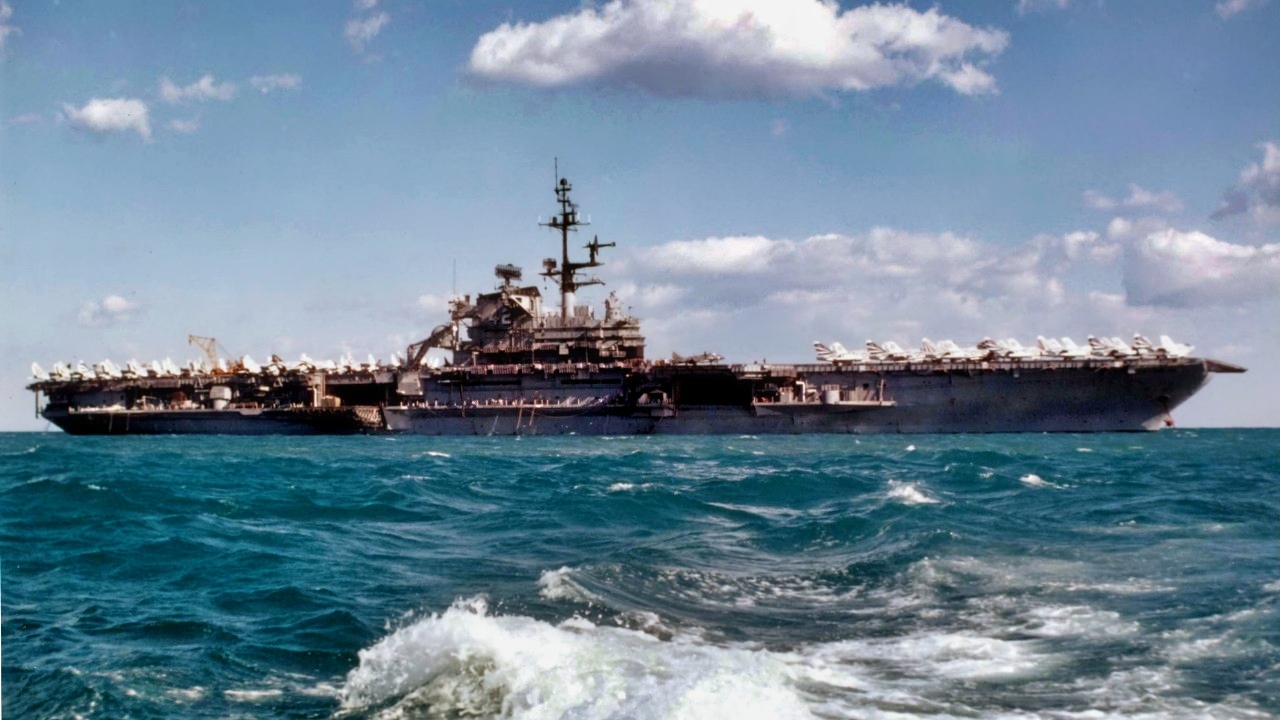
Midway-Class Aircraft Carrier. Image Credit: Creative Commons.
After the Second World War, the U.S. fielded more aircraft carriers than all other navies combined. Carriers had proven to be more strategically important in contemporary warfare, and as aircraft grew more sophisticated, they would become even more important in the future.
The Midway-class aircraft carrier was a class of three ships commissioned in 1945, whose design was influenced by lessons learned from the war.
Although they missed out on the Great War, they were a valuable progenitor to the Forrestal and Nimitz-class supercarriers that followed them.
Design and Development
During the war in the Pacific, the U.S. closely monitored the strengths and weaknesses of its carriers.
Vessels such as those of the Essex-class had been extraordinarily effective in the Pacific theater, projecting air power across vast distances.
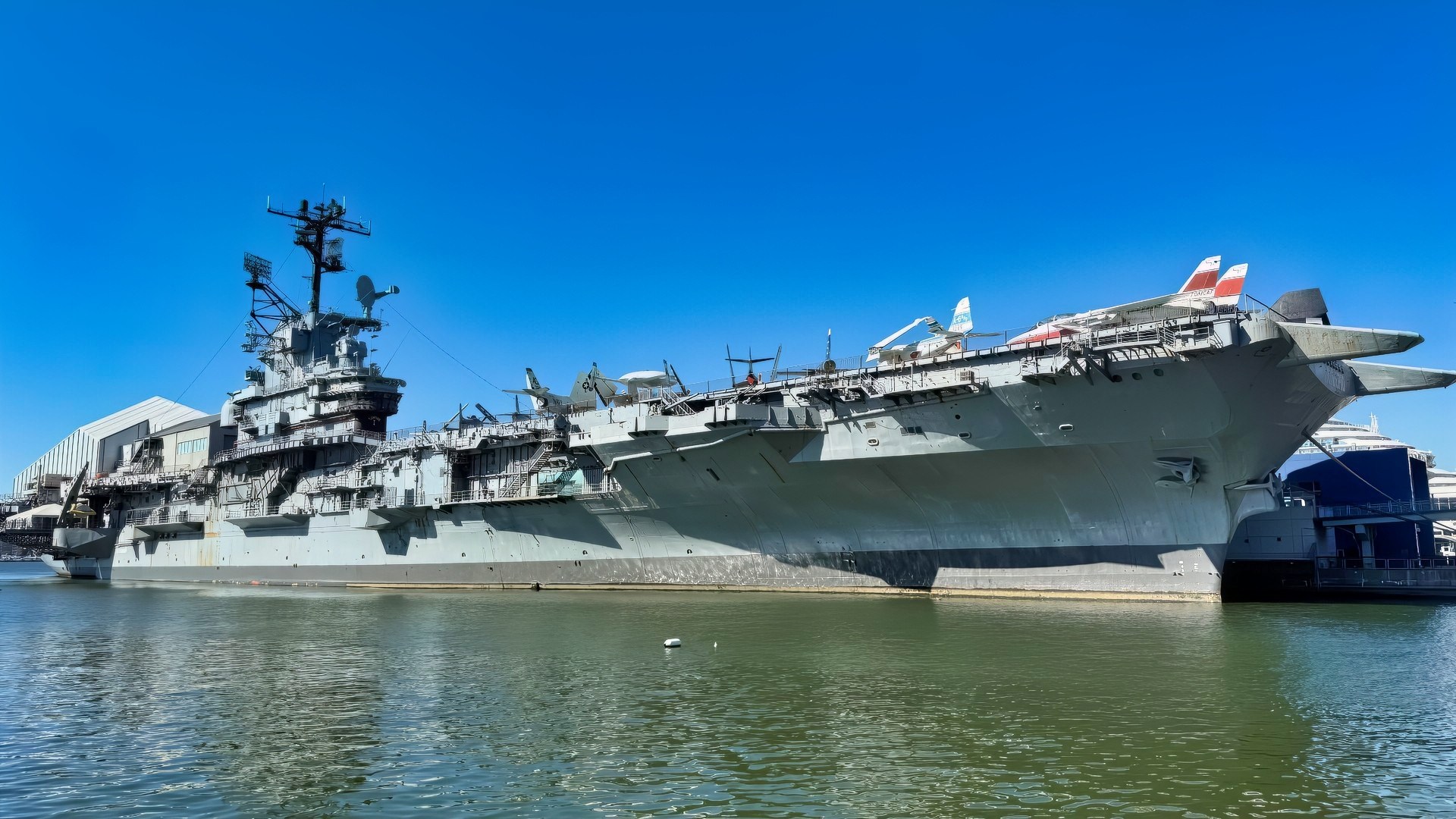
Essex-Class USS Intrepid Aircraft Carrier. Image Credit: National Security Journal.
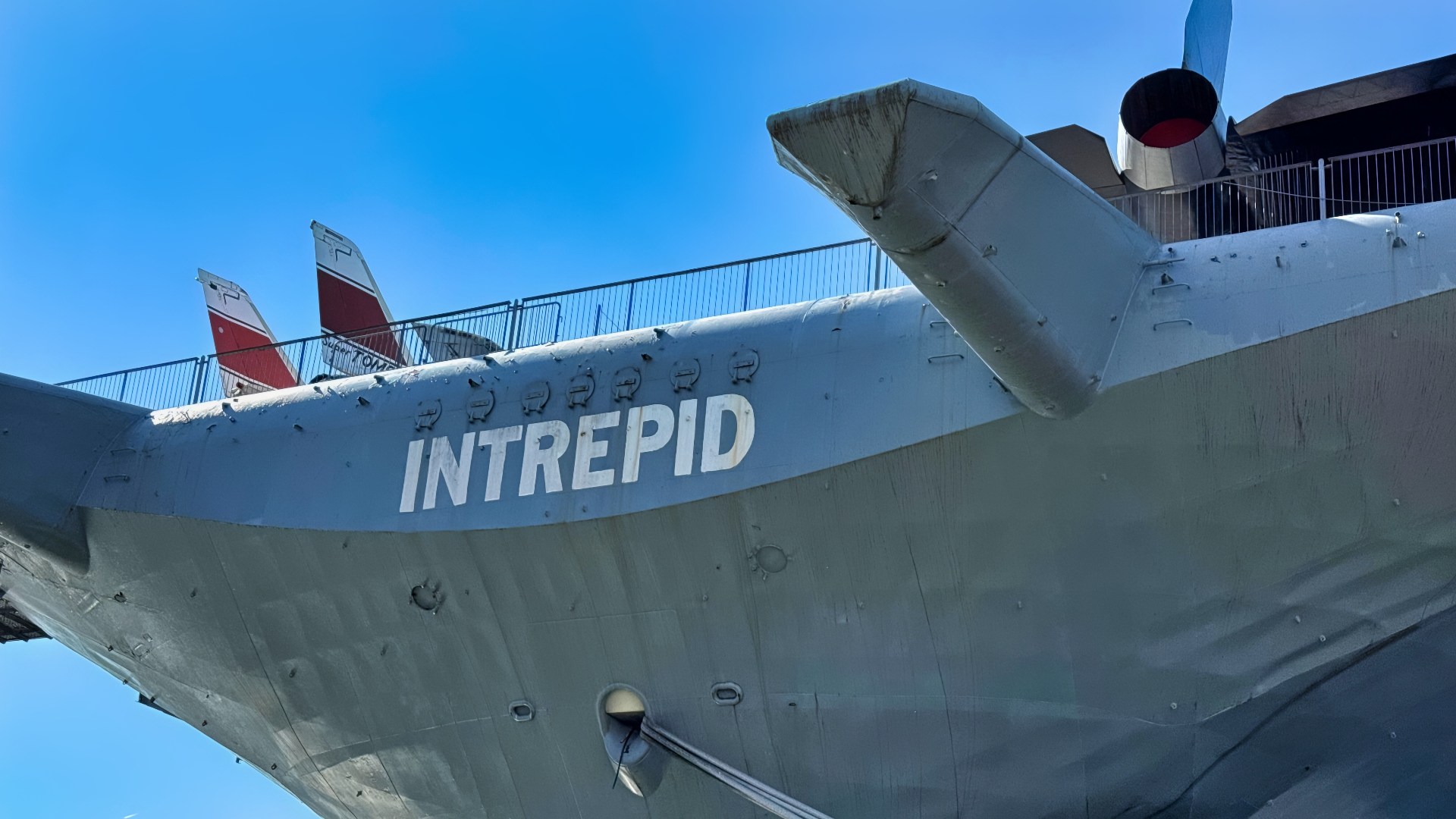
Essex-Class Carrier USS Intrepid NSJ Photo.
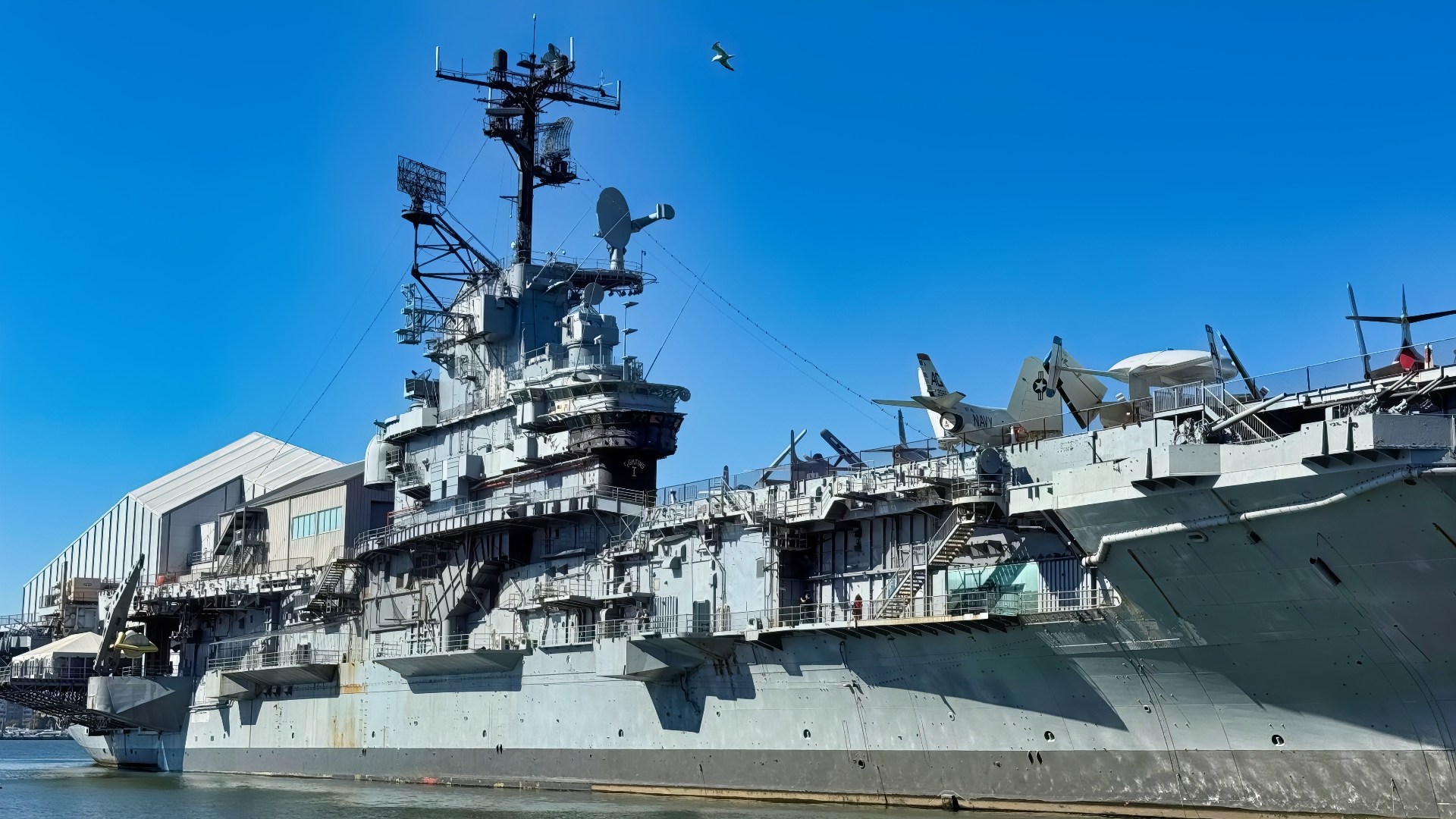
Essex USS Intrepid Carrier. Image Credit: National Security Journal.
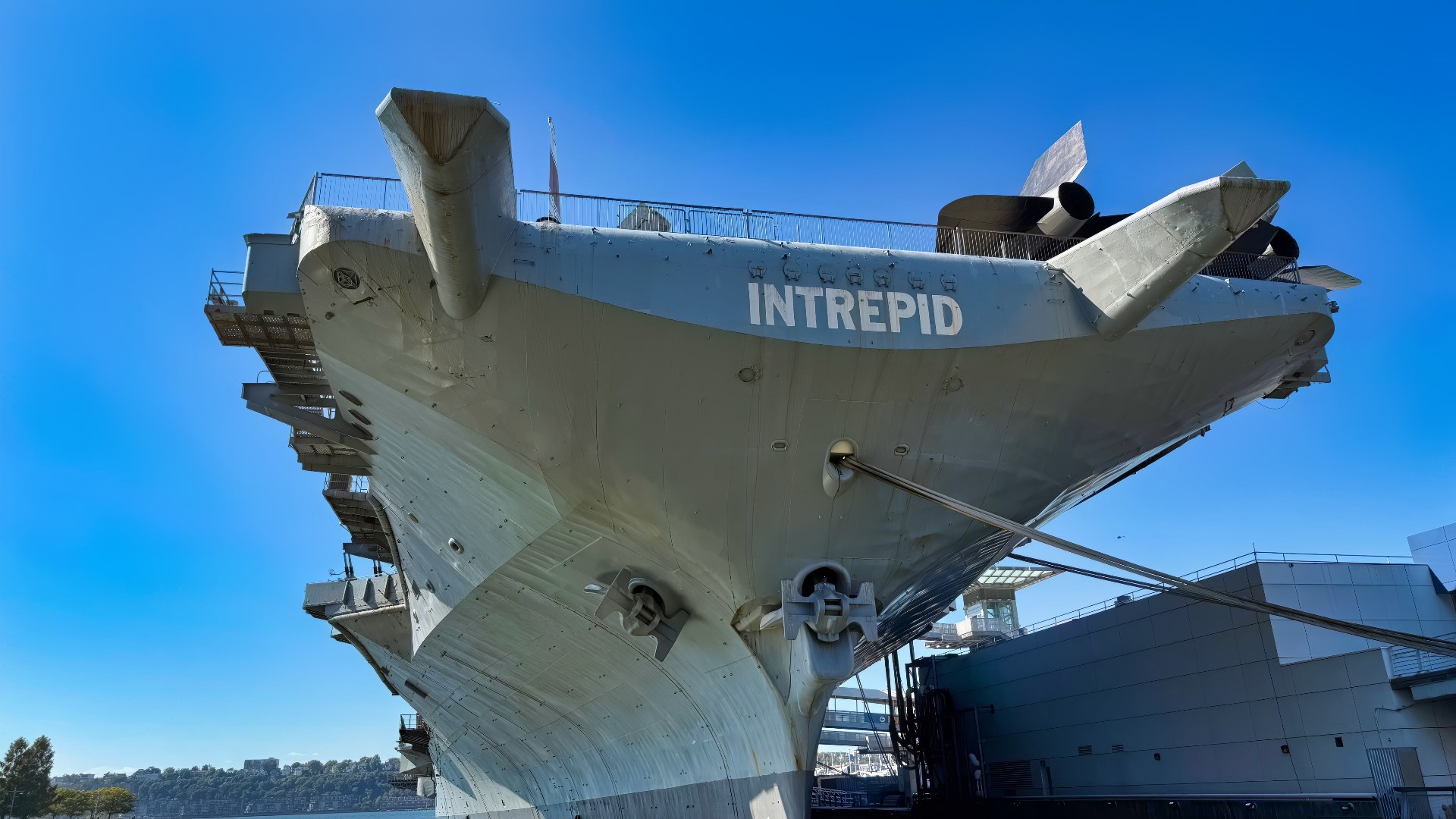
USS Intrepid Essex-Class Aircraft Carrier. Image Credit: National Security Journal.
However, they had relatively light armor compared to some British designs, making them more vulnerable to bombs, torpedoes, and especially kamikaze attacks that became increasingly common toward the end of the war.
In response, the Navy sought to design a new kind of carrier that would combine large aircraft capacity with significantly enhanced protection.
The Midway-class carriers were built with heavily armored flight decks.
This design choice was influenced largely by the British experience during the war. Many British carriers were heavily armored, allowing them to withstand multiple bombs throughout their structures.
Armor on the Midway-class, therefore, extended throughout key parts of the ship, including the flight deck, hangar deck, and internal systems vital to propulsion and combat operations.
This made the ships far more resilient to attacks, allowing them to survive damage that might have crippled or destroyed earlier carriers.
The U.S. Battlecarriers
At the time of their commissioning, the Midway-class ships were among the largest aircraft carriers in the world. Their substantial displacement and wide beam gave them not only increased survivability but also a larger flight deck and hangar capacity. This enabled them to carry more aircraft and support more complex air operations. Initially, the ships were designed to operate piston-driven World War II aircraft, such as fighters, dive bombers, and torpedo bombers. However, their size and strength would prove invaluable as naval aviation transitioned to jet aircraft in the following decades.
Technically, the Midway-class carriers were impressive platforms.
They measured nearly 1,000 feet in length and were powered by steam turbine engines producing over 200,000 shaft horsepower, allowing them to reach speeds of more than thirty knots. The ships accommodated a crew of over four thousand, including both ship personnel and air wing staff.
Despite their large size and heavy armor, they maintained high operational speeds and could sustain global deployment.
Cold War Modernization
Over the course of their service lives, the Midway-class ships underwent several modernization efforts in the mid-to-late Cold War.
The postwar period brought rapid changes in aviation technology, especially with the introduction of jet aircraft.
Jets were faster, heavier, and required longer takeoff runs than propeller-driven planes. To accommodate these new requirements, the Midway-class carriers underwent extensive modernization programs beginning in the 1950s. These upgrades were among the most ambitious ever performed on naval vessels and fundamentally altered their configuration.
Arguably, one of the most important changes was the addition of an angled flight deck.
This innovation allowed aircraft to land at an angle to the ship’s main axis, enabling simultaneous launch and recovery operations.
It significantly improved safety and efficiency, as aircraft that failed to catch an arresting wire could simply take off again rather than risk crashing into parked planes. Steam catapults were also installed, enabling the launch of heavier jet aircraft with greater reliability. Other improvements included advanced landing aids, enlarged elevators to accommodate larger planes, and structural changes to enhance seaworthiness.
Service History
Each of the three ships in the class had a distinguished service history. USS Midway, commissioned in 1945, became the longest-serving member of the class.
Although she entered service too late to see combat in World War II, she played a prominent role during the Cold War. She and her sister ships were deployed frequently around the world and took part in numerous combat operations. During the Vietnam War, Midway launched numerous air strikes against targets in North Vietnam, contributing to sustained aerial campaigns over several years.
Midway and her crew witnessed the fall of South Vietnam and the evacuation of Saigon in 1975.
In an extraordinary episode, a South Vietnamese pilot with his wife and children landed a small civilian aircraft on Midway’s deck after signaling for assistance.
To make room for the landing, the crew pushed several helicopters overboard, enabling the aircraft to land safely. Later in her career, Midway participated in Operation Desert Storm in 1991, launching strikes against Iraqi forces. She was decommissioned the following year and has since been preserved as a museum ship in San Diego.
Retirement
USS Franklin D. Roosevelt, commissioned the same year as Midway, was the second ship of the class and was affectionately known as “Rosie.” She spent most of her service in the Atlantic and Mediterranean. Franklin D. Roosevelt was among the first carriers to regularly operate jet aircraft, helping to establish new practices and procedures for naval aviation.
However, she underwent fewer modernizations than her sister ships, which limited her ability to operate the latest aircraft in later years. As a result, she was decommissioned earlier, in 1977.
USS Coral Sea, commissioned in 1947, was the last and in some ways the most active member of the class.
She saw extensive combat during the Vietnam War, flying thousands of combat sorties against the Viet Cong during her tenure. In the 1980s, she was involved in the Iranian Hostage Crisis and participated in strikes against Libya.
Coral Sea remained in service until 1990, just before the Gulf War, and served for more than 4 decades.
About the Author: Isaac Seitz
Isaac Seitz, a Defense Columnist, graduated from Patrick Henry College’s Strategic Intelligence and National Security program. He has also studied Russian at Middlebury Language Schools and has worked as an intelligence Analyst in the private sector.


