

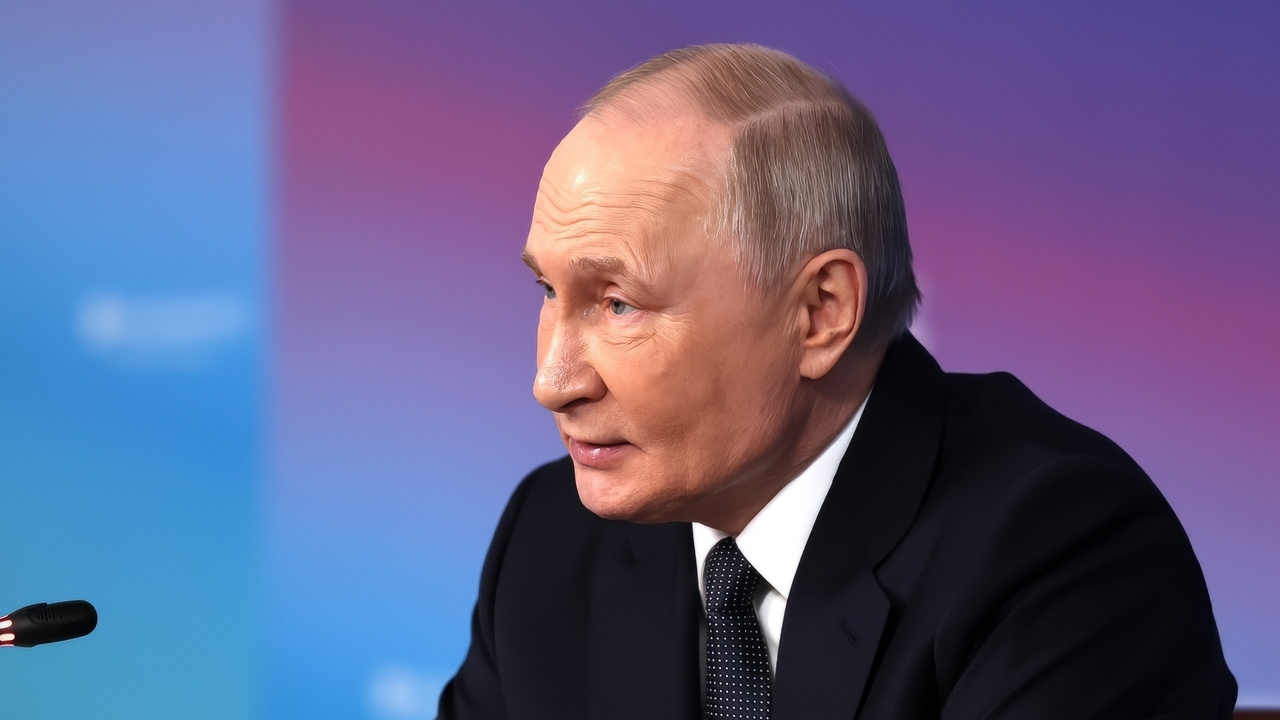
PUBLISHED ON August 14, 2025, 10:39 AM EDT – WARSWAW, POLAND – US President Donald Trump yesterday issued a warning for the Kremlin ahead of his meeting with President Vladimir Putin this weekend at Elmendorf AFB in Alaska.
The US President stated there would be “severe consequences” for Russia if after this meeting the former KGB Lt. Col. does not agree to stop the war he launched on Ukraine three-and-a-half years ago.
What Trump Said Ahead of Alaska Summit
“There will be consequences. I don’t have to say [what]. There will be very severe consequences,” Trump told a group of reporters during an event at the Kennedy Center in Washington.
In July, Trump had threatened to impose sanctions, as well as secondary tariffs on Russia, if Putin did not agree to end the war within 50 days.
However, the Russian President then appeared to be determined to use every one of those 50 days to conduct a maximum bombing and missile campaign on Ukrainian civilian targets and commit as much murder and mayhem as possible.
These escalated attacks in the past months have been hitting apartments, maternity hospitals, civilian transportation, and playgrounds.
In response, Trump moved the deadline forward to early August.
So far, the US President has not “pulled the trigger” on these promises of more severe punishments, holding fire in advance of this planned summit with Putin.
The sole exception was his decision to double the 25 percent secondary tariffs on India in response to New Delhi’s continued status as one of the largest purchasers of Russian oil.
The Punishment to Come for Putin?
But the calm before the storm may be about to end.
The proposed sanctions package that Trump is prepared to let loose would, first of all, break the back of Russia’s primary mechanism for financing the war.
Moscow’s global oil exports will be first on Trump’s “hit list.”
Thus, the most potentially damaging option among those under consideration is a massive crackdown on Russia’s “shadow fleet.”
This fleet comprises hundreds of aging and rusted oil tankers that Moscow has been using to circumvent the G-7-mandated $60-per-barrel price cap.
The ships are used to export Russian crude to countries like India and the People’s Republic of China (PRC).
These ships are operated under very opaque; “shell-game” ownership schemes connected to paper trails that are difficult to run down. The ships are also registered in poor, corrupt nations where they are subject to minimal to no oversight, which often makes tracking their movements or regulating them problematic.
The Financial Times has reported the Trump Administration is now preparing to blacklist dozens of additional tankers within the next few days. This would follow the strategy that was enacted by the previous Biden Administration. The 46th president fired the first shot in this skirmish when he sanctioned 213 tankers just prior to leaving office.
Until now Tru,mp has held back from adding more tankers to the list – hoping that his restraint at this point could secure a negotiated settlement with Moscow. However, after the massive attacks on Ukrainian cities, say officials speaking anonymously, the one-time reality TV star and real estate magnate’s patience with Putin is at its end.
How Effective Would Sanctioning More Tankers Be
Available evidence suggests that sanctioned additional tankers would have a considerable impact on the Kremlin.
Those that were sanctioned in the past suffered their shipping totals decreasing from 48 million barrels per month to only 13 million within just six months, the Financial Times also reported.
This results in a 73 percent reduction in total shipments.
Russian oil exports that would remain after these measures are enacted could be even further disrupted if the US Administration expands the sanctions net and coordinates is actions with the EU. The Europeans sanctioned over 100 additional ships last month alone.
Trump has also justified his singling out of India by doubling secondary sanctions for what more officials are starting to view as opportunistic oil trading at the expense of lives in Ukraine.
“India is not only buying massive amounts of Russian Oil, they are then, for much of the oil purchased, selling it on the Open Market for big profits,” Trump said in a Truth Social post. “They don’t care how many people in Ukraine are being killed by the Russian War Machine.”
Putin vs. Trump: What Happens Next?
But what happens next is anyone’s guess.
There are indications that Trump may not reach any concrete conclusions after this Alaska interaction and might not impose the maximum sanctions described above just yet.
The meeting with Putin in Alaska on Friday could end up as just an exploratory conversation, as Trump is saying it is mostly about “setting the table” for a potential follow-up meeting involving both Putin and Zelensky.
“There’s a very good chance that we’re going to have a second meeting that will be more productive than the first,” Trump said.
“Because the first is I’m going to find out where we are and what we’re doing.”
About the Author: Reuben F. Johnson
Reuben F. Johnson has thirty-six years of experience analyzing and reporting on foreign weapons systems, defense technologies, and international arms export policy. Johnson is the Director of Research at the Casimir Pulaski Foundation. He is also a survivor of the Russian invasion of Ukraine in February 2022. He worked for years in the American defense industry as a foreign technology analyst and later as a consultant for the U.S. Department of Defense, the Departments of the Navy and Air Force, and the governments of the United Kingdom and Australia. In 2022-2023, he won two awards in a row for his defense reporting. He holds a bachelor’s degree from DePauw University and a master’s degree from Miami University in Ohio, specializing in Soviet and Russian studies. He lives in Warsaw.
Military Matters
The F-22 Raptor Just Keeps Getting Better


