

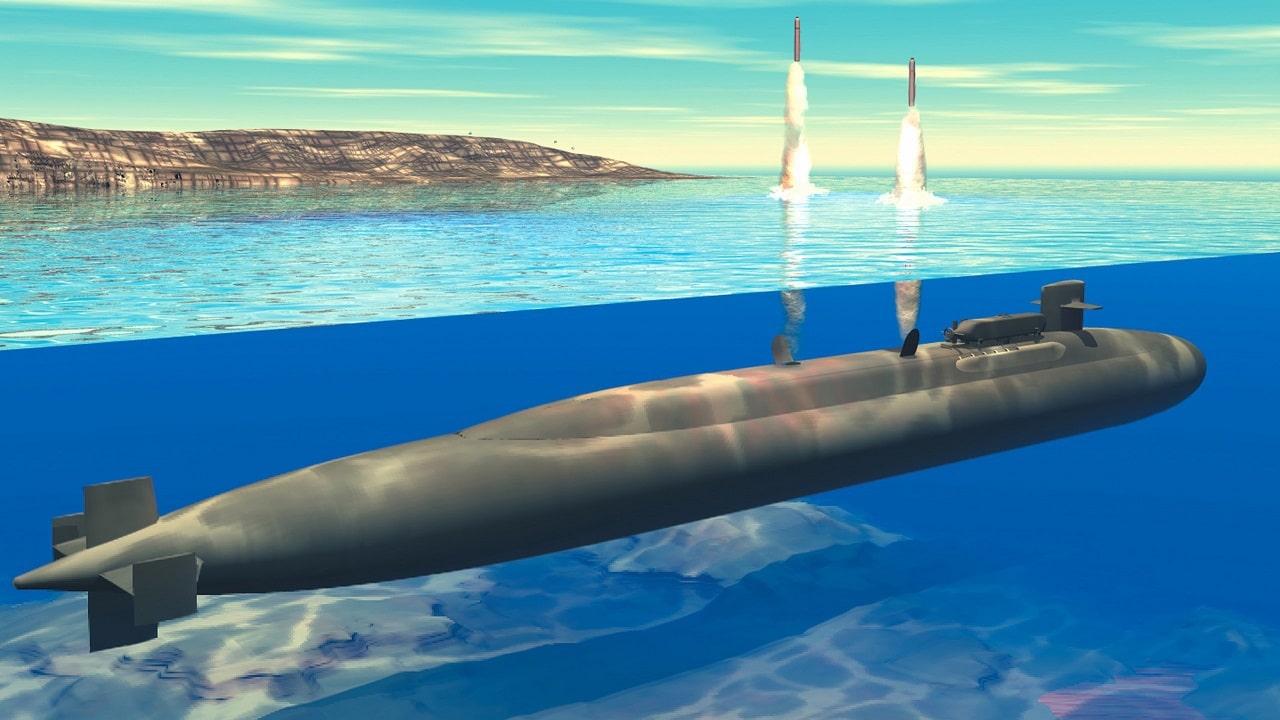
Key Points and Summary – The four Ohio-class guided-missile submarines (SSGNs) are uniquely powerful assets, offering massive, low-risk strike and special operations capabilities.
-Each SSGN can launch up to 154 Tomahawk cruise missiles and covertly deploy 66 Navy SEALs.
-Their effectiveness has been proven in numerous conflicts, including recent strikes against Houthi targets and a pivotal role in “Operation Midnight Hammer” against Iran in June 2025.
-Despite this, all four highly-valued submarines are set to retire by 2028, a move that will create a significant firepower gap and reduce the President’s military options. Many experts consider this a major mistake that the Navy should have planned better for.
The Combat Power of the Ohio-class Guided Missile Submarine
Ohio-class guided-missile submarines (SSGNs) are sometimes a presidential asset. Their actions are often decided at the level of the National Command Authority at the White House.
They can carry up to 154 Tomahawk cruise missiles, and presidents can choose to launch Tomahawks to avoid having to send troops to intervene in a crisis.
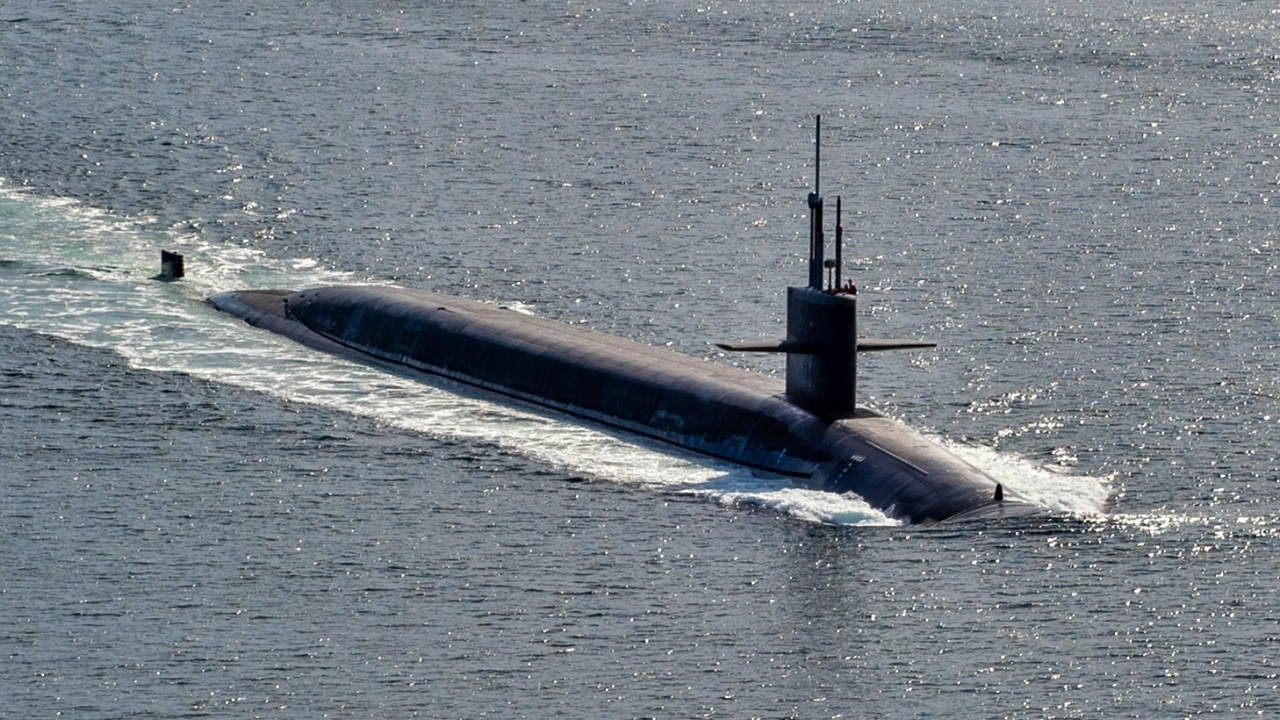
The Ohio-class ballistic-missile submarine USS Maine (SSBN 741) transits the Puget Sound during routine operations, March 18, 2025. Commander, Submarine Group (SUBGRU) 9, exercises administrative control authority for assigned submarine commands and units in the Pacific Northwest providing oversight for shipboard training, personnel, supply and material readiness of SSBNs and their crews. SUBGRU-9 is also responsible for nuclear submarines undergoing conversion or overhaul at Puget Sound Naval Shipyard in Bremerton. (U.S. Navy photo by Mass Communication Specialist 1st Class Ryan Riley)
This Is a Great SEAL Delivery Vehicle
But when boots are needed on the ground, Ohio-class boats can also deploy special operations forces, namely U.S. Navy SEALs. This gives presidents additional military options. SEALs can engage in kinetic direct attacks, but they can also rescue hostages.
The 66 SEALs can be used to collect intelligence, surveillance, and reconnaissance data to help plan additional Tomahawk attacks by the guided-missile submarines.
For special operations missions, Ohio-class SSGNs use a lock-out chamber and a dry deck shelter. This maximizes safety and allows the sub to recover the SEALs when the mission is over. SEALs have long periods to plan their missions.
They can be extremely flexible in battle and can “toggle” across different tasks and objectives during a single mission. The operators can search for and destroy targets or be called on to collect intelligence. They are also trained how to destroy ships in harbors or prepare landing zones for amphibious landings.
The Guided Missile Boats Even Have a Political Dimension
The versatility doesn’t end there. Ohio-class SSGNs can collect intelligence and provide on-the-spot analysis for better command and control of the U.S. military. Presidents are always looking for new information to support strategy, operations, and tactics.
Further, SSGNs have an anti-terror and counter-insurgency role. They were instrumental in clearing the way for U.S. ground troops to eliminate militants during the war on terror.
The guided-missile submarines can contribute to any shock and awe campaign designed to clear the ground for invasions such as those that were conducted in the First and Second Gulf Wars.

Ohio-Class Submarine U.S. Navy.
Quick Look at Specs
Ohio-class SSGNs have one nuclear reactor and one shaft. There are 15 officers and 144 enlisted sailors on board. The subs’ top speed is more than 25 knots, and they displace 18,750 tons. These SSGNs are 560 feet long, with a beam of 44 feet. They can dive to a depth of more than 800 feet.
Why Were the Ohio-class Converted?
In 1994, the U.S. Navy conducted a Nuclear Posture Review to figure out the best configurations and delivery systems for its nuclear missiles. The Cold War had just ended, and the Soviet Union was eliminated as a nuclear threat; there were simply fewer targets for the Navy to hit with nuclear missiles.
There were 18 Ohio-class vessels at the time. In an effort to create a more diverse submarine force, four ballistic-missile nuclear submarines (SSBNs) were converted into SSGNs. Later, this would allow the Navy to meet its needs for counter-terror and counter-insurgency missions. The four SSGNs were able to launch their Tomahawks at a moment’s notice and be on call in case a Commander-In-Chief needed a quick strike.
The conversion was also more cost-effective than building new submarines. The transformation to the new SSGN standard took about five years. The USS Ohio, Florida, Michigan, and Georgia began the conversion in 2002, and all were ready by 2007.
The four subs further needed an Engineered Refueling Overhaul. This was like killing two birds with one stone: Since they were in dry dock already, why not complete a refueling too? This was a cost-cutting, time-saving move.
The 154 Tomahawks are “loaded in seven-shot Multiple-All-Up-Round Canisters [MACs] in up to 22 missile tubes. These missile tubes can also accommodate additional stowage canisters for SOF equipment, food, and other consumables to extend the submarines’ ability to remain forward deployed in support of combatant commander’s tasking,” according to Military.com “The missile tubes are also able to accommodate future payloads such as new types of missiles, unmanned aerial vehicles, and unmanned undersea vehicles.”
The transition also improved the subs’ communication capabilities. For the SSGNs to succeed, they needed to better receive orders from long distances while submerged. Communications needed to be clear and timely so they could get their Tomahawks and SEALs ready to go.
The Ohio-class SSGNs’ Combat Record
Ohio-class SSGNs have been busy lately. They were instrumental during the U.S. attack against Iranian nuclear infrastructure during Operation Midnight Hammer in June. B-2 stealth bombers softened up Iranian targets with bunker-busting bombs, then Tomahawk missiles rained down for a destructive one-two punch.
Ohio-class SSGNs have also pummeled Houthi positions in Yemen. The Tomahawks have struck missile launchers, missile supply points, drone supply and manufacturing facilities, and command-and-control centers. Without the Tomahawks from the Ohio-class SSGNs, the Houthis would have sent even more missiles and drones to attack Navy carrier strike groups.
The SSGNs in such cases are almost as potent a political asset as operational and tactical. These attacks give presidents political cover, because there are not going to be U.S. casualties when using the SSGNs.
Sometimes, the Navy can choose to surface its nuclear-powered submarines. This gives the enemy something to worry about, and lets friendly naval forces know the U.S. can strike anyplace and anytime. In 2010, three Ohio-class SSGNs – the USS Ohio, Michigan, and Florida – simultaneously surfaced in the Philippines, South Korea, and Diego Garcia. This sent a message to China and North Korea that the Americans were not going to be bullied. The surfacing was also a morale-booster for the sailors on board.
In 2011, the United States intervened with NATO against Libya during Operation Odyssey Dawn. The USS Florida launched more than 90 Tomahawks at targets in the country in another successful mission. The goal was for the Navy to help enforce a no-fly zone over Libya and keep the forces loyal to Moammar Gaddafi from carrying out air attacks against anti-Gaddafi forces. President Barack Obama wanted to display military might – again, without deploying ground personnel.
The Great SSGN Mistake Will Sting for Years to Come
The Ohio-class SSGNs are more than 40 years old. The USS Ohio and Florida will be retired in 2026. The USS Michigan and Georgia will be decommissioned in 2028.
Many experts argue that the U.S. Navy and the Pentagon overall did not plan for this problem, and it will be quite costly in terms of combat power for decades to come.
This will hurt the Navy’s posture. The Ohio-class’ carrying capacity is about 50 percent of the entire supply of the U.S. Navy’s Tomahawk missiles. And since these SSGNs have been used recently to great effect, why take them away now?
Some experts even argue that there is a strong case for attempting a refit of at least some of these powerful missile submarines until more Virginia-class boats equipped with cruise missiles can replace them.
Without their strike capability, the National Command Authority will see its military options diminish.
Indeed, the Ohio-class SSGNs will be missed greatly, and the Navy will have to make up for the lost firepower with other boats. And, sadly, that will take many years.
Bottomline on the Ohio-Class Submarines
The Ohio-class SSGNs have a robust combat record. They silently bring the noise to varied locations around the world. They can achieve U.S. national security goals and objectives without the loss of life associated with ground deployments. So, hail to the Ohio-class SSGNs. Converting the ballistic missile “boomers” to guided-missile boats may have been one of the best decisions the Navy ever made.
About the Author: Brent M. Eastwood
Brent M. Eastwood, PhD is the author of Don’t Turn Your Back On the World: a Conservative Foreign Policy and Humans, Machines, and Data: Future Trends in Warfare plus two other books. Brent was the founder and CEO of a tech firm that predicted world events using artificial intelligence. He served as a legislative fellow for US Senator Tim Scott and advised the senator on defense and foreign policy issues. He has taught at American University, George Washington University, and George Mason University. Brent is a former US Army Infantry officer. He can be followed on X @BMEastwood.
More Military
The Navy’s Big Super Tomcat 21 Fighter Mistake Still Stings
YF-23 Black Widow II: Aircraft Carrier Fighter?
A New B-21 Raider Stealth Bomber Is in the Sky


Tom
September 6, 2025 at 11:44 pm
Just extend their lifetime by 5 years. By then we will have enough va class subs.
Darkwing
September 7, 2025 at 9:08 am
Reduce the US Navy by 1/2, close all military bases overseas, then the US of A will have money to pay off all the bills. The US military have got to stop being the policeman of the world
Another Tom
September 11, 2025 at 7:57 pm
Have you ever noticed the four submarines are always listed in the same order? Ohio, Michigan, Florida, and Georgia.
No one remembers the SSGN class.
The subs are better known as the OMFG class!