

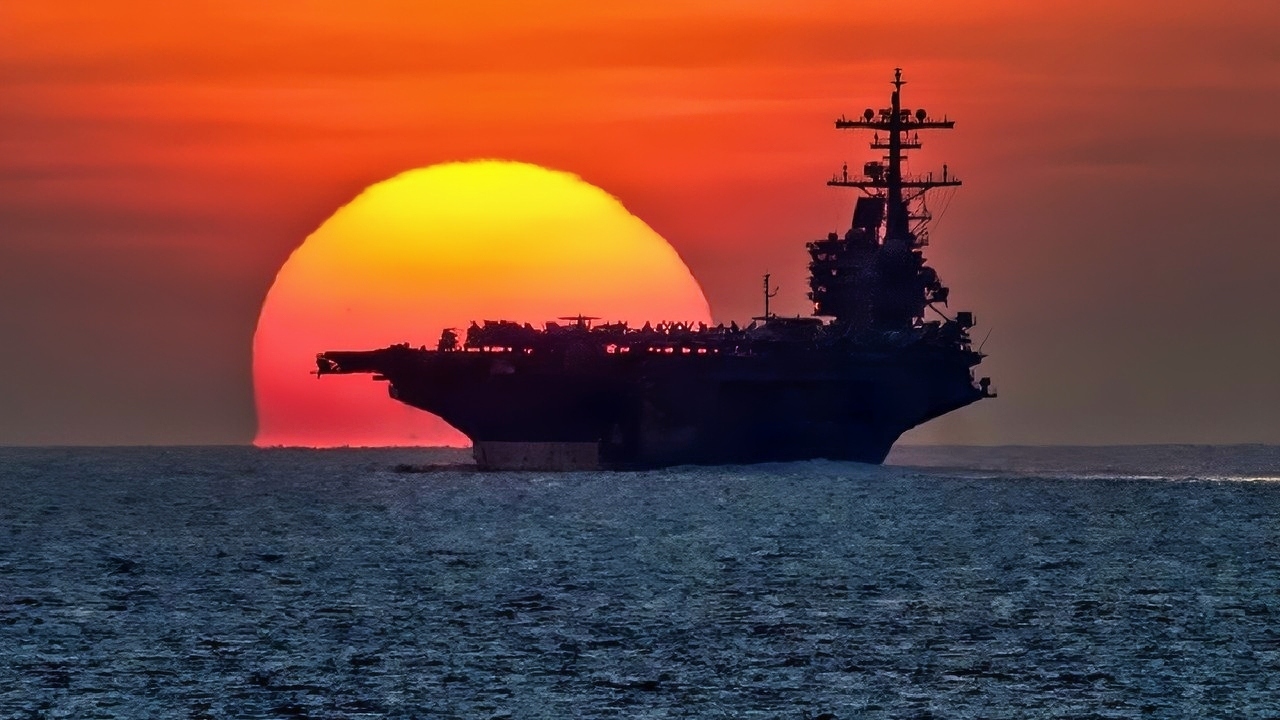
The French Rubis-class submarine is the smallest nuclear-powered attack submarine ever built by any major navy — just 240 feet long, displacing 2,700 tons, with a crew of about 70 sailors. It also “sank” two U.S. Navy nuclear-powered aircraft carriers in NATO and U.S. Navy wargames. Once in 1998 against USS Dwight D. Eisenhower. Once in 2015 against USS Theodore Roosevelt. Both times, the French boat slipped inside the carrier strike group’s defensive screen undetected and registered torpedo kills before the Americans knew it was there. Now the entire class is retiring by the end of 2026.
Rubis-Class: The Tiny French Submarine That Sank Two U.S. Aircraft Carriers

Image Credit: Creative Commons.
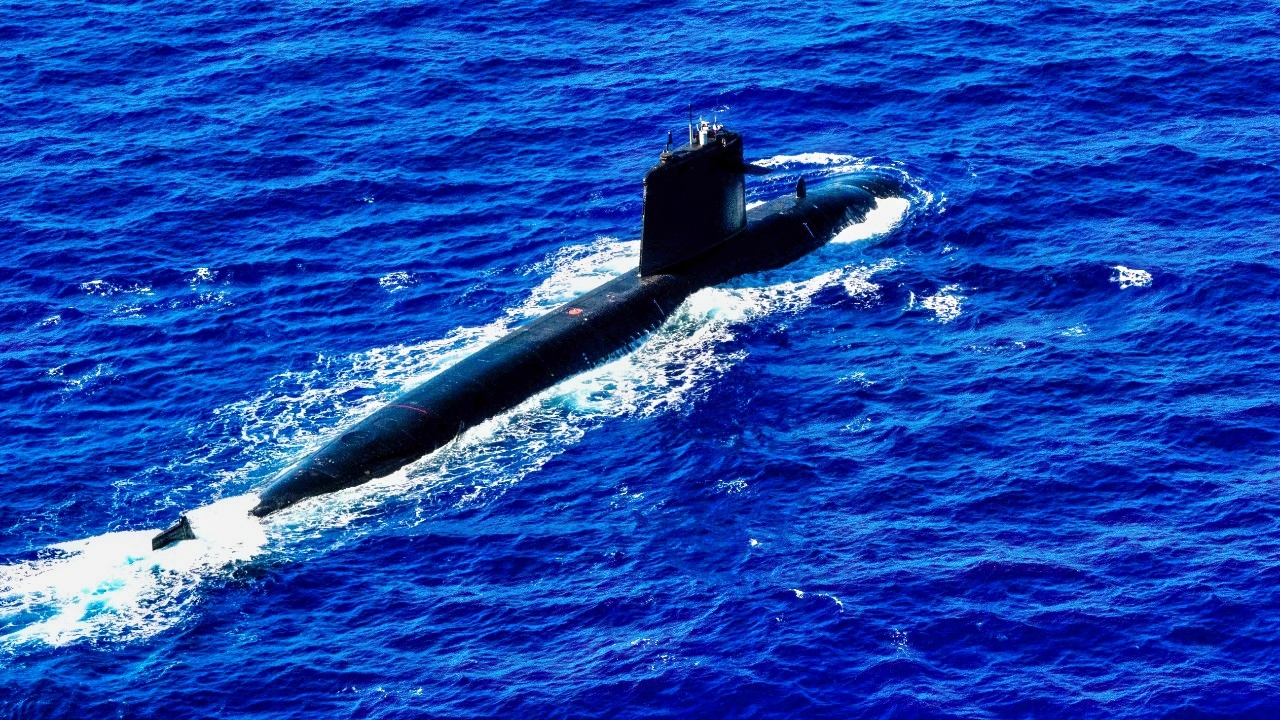
Rubis-Class Submarine from France. Image Credit: Creative Commons.
The French Rubis-class submarine is the smallest nuclear-powered attack submarine ever commissioned by any major navy.
Just 240 feet long, displacing roughly 2,700 tons submerged, with a crew of about 70 sailors. Compact enough that the entire boat could fit on the flight deck of a Nimitz-class supercarrier with room to spare.
It also “sank” two of those Nimitz-class supercarriers in NATO and U.S. Navy wargames. Once in 1998. Once in 2015. Both times, the boat was older than most of the sailors crewing the American ships it was hunting. Both times, the French submarine slipped inside the carrier strike group’s defensive screen undetected and registered adjudicated torpedo kills before the Americans knew it was there.
This is what the Rubis-class is, why France built a class of nuclear attack submarines roughly half the size of any contemporary American boat, what it did across four decades of service, and why, as of today, only one of the original six Rubis hulls remains in active service, with the entire class retiring out of the French Navy by the middle of this year.
The Carrier “Kills”: The Rubis Did the Impossible
The famous 2015 “sinking” occurred during COMPTUEX — Composite Training Unit Exercise — off the coast of Florida, the pre-deployment certification drill for Carrier Strike Group 12. The carrier was the USS Theodore Roosevelt (CVN-71). The submarine was the Rubis-class boat Saphir (S602), a 30-year-old hull commissioned in 1984.
The exercise unfolded in two phases. On day one, Saphir was integrated into the friendly force, working alongside U.S. Navy P-3C Orion and P-8A Poseidon maritime patrol aircraft to defend Theodore Roosevelt against the simulated enemy submarine threat. On day two, the rules flipped. Saphir was reassigned to the opposing force. The mission was to find Theodore Roosevelt and her escorts — multiple Ticonderoga-class cruisers, Arleigh Burke-class destroyers, and a Los Angeles-class attack submarine — and reach a torpedo firing position before being detected.

(Mar. 21, 2025) – The Los Angeles-class fast-attack submarine, USS Santa Fe (SSN 763), transits the Pacific Ocean, March 21, 2025. Santa Fe is one of four Los Angeles-class fast-attack submarines assigned to Commander, Submarine Squadron 11. Santa Fe is part of Commander Submarine Squadron 11, home to four Los Angeles-class fast-attack submarines, which are capable of supporting various missions, including anti-submarine warfare, anti-ship warfare, strike warfare and intelligence, surveillance and reconnaissance. (U.S. Navy photo by Mass Communication Specialist 1st Class Keenan Daniels)
She did it. Per the French Ministry of Defense report released in March 2015, the Saphir penetrated the carrier’s defensive screen, registered adjudicated kills on Theodore Roosevelt herself, and was credited with destroying multiple escort ships in the strike group before being “destroyed” later in the scenario. The French Navy publicized the result extensively. The U.S. Navy declined to comment on the exercise outcome.
The 1998 engagement is less famous but predates the 2015 incident by 17 years. During the Péan inter-allied maneuvers, the Rubis-class boat Casabianca “sank” the USS Dwight D. Eisenhower (CVN-69) and the Ticonderoga-class cruiser escorting her in a similar exercise scenario. The U.S. Navy never publicly acknowledged that result either.
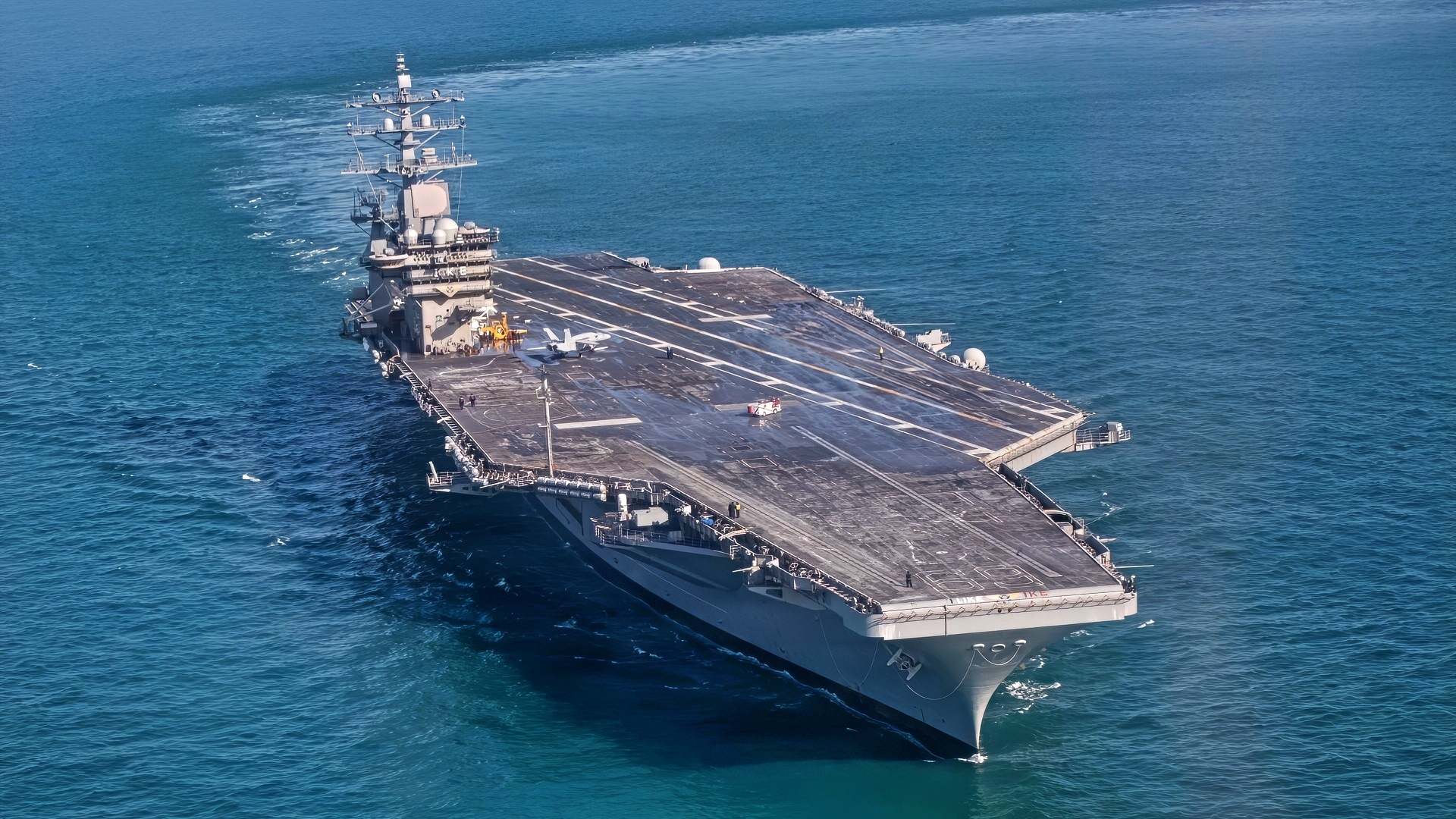
U.S. Navy Nimitz-class aircraft carrier USS Dwight D. Eisenhower (CVN 69) conducts a full power demonstration during Sea Trial in the Virginia Capes, Apr. 22, 2026. Eisenhower returned to sea and is now in the Basic Phase in the Optimized Fleet Response Plan. (U.S. Navy photo by Mass Communication Specialist Seaman Nicole Schweigert)
Two carriers. Two adjudicated kills. The same class of small French nuclear submarine. The same operational pattern: a quiet approach, patient positioning, and an ambush from within the defensive screen.
That track record is what makes the Rubis-class one of the most studied undersea platforms in modern naval history — and one of the most embarrassing pieces of institutional knowledge in the U.S. Navy’s anti-submarine warfare community.
Why France Built Them
The Rubis-class was France’s second attempt at a nuclear-powered attack submarine. The first was authorized in 1964 under the same name and cancelled in 1968 just as construction was about to begin.
The post-Cold War budget reductions that killed countless Western defense programs in the 1960s and 1970s claimed the original Rubis before she ever cut steel.
The second attempt came under Plan Bleu — the 1972 French naval modernization plan that called for 20 attack submarines, both nuclear and conventional. The Marine Nationale needed boats that could escort the new ballistic missile submarines France was building under its independent nuclear deterrent program (the force de frappe), screen the Charles de Gaulle aircraft carrier strike group, and conduct intelligence and special operations missions in the contested littorals of the Mediterranean and the eastern Atlantic.
The design philosophy was deliberately different from American and Soviet practice. Where the U.S. Navy was building Los Angeles-class boats displacing more than 6,000 tons submerged, and the Soviets were running 8,000-ton Victors and 13,000-ton Akulas, the French Navy designed a submarine that displaced just 2,670 tons submerged. The reasoning was twofold. France wanted a fleet of six boats inside its national budget — a number that would not have been possible with American-style displacements. And France wanted a submarine sized for Mediterranean operations, where smaller hulls offered tactical advantages in shallower water and tighter operational geography.

Akula-Class Submarine from Russian Navy. Image Credit: Creative Commons.
The propulsion design was the technical breakthrough that made the small displacement workable. Per the Nuclear Threat Initiative profile of French submarine capabilities, the Rubis-class used a 48-megawatt CAS-48 integrated reactor-heat exchanger — a substantially more compact arrangement than the separate reactor and steam plant designs that drove the displacement of contemporary American and Soviet submarines. At low speeds, the boats used natural circulation rather than coolant pumps to manage reactor heat — eliminating one of the largest sources of mechanical noise that adversary passive sonar would otherwise have detected.
The lead boat, Rubis (S601), was commissioned in 1983. Saphir, Casabianca, Émeraude, Améthyste, and Perle followed across the next decade, with the final boat entering service in 1993. Two additional boats — Turquoise and Diamant — were cancelled in the early 1990s under post-Cold War budget pressure.
The Noise Problem And The Fix
The original Rubis-class design had a problem the French Navy did not want to admit publicly: the boats were unexpectedly noisy.
For a nuclear-powered attack submarine, acoustic signature is everything. A boat that can be heard by adversary passive sonar at long range cannot perform the missions a submarine exists to perform.
The early Rubis hulls — Rubis, Saphir, Casabianca, and Émeraude as originally built — emitted enough radiated noise to compromise their tactical utility against the Soviet submarine threat the boats were specifically built to confront.
The fix was the AMÉTHYSTE program — AMÉlioration Tactique HYdrodynamique Silence Transmission Ecoute, roughly translated as Hydrodynamic Tactical Improvement for Silence-Transmission-Listening. The program was applied to the construction of the final two hulls (Améthyste in 1992 and Perle in 1993) and then retrofitted to the first four boats between 1989 and 1995.
The AMÉTHYSTE rebuild reshaped and lengthened the hull form. The superstructure and external bow were rebuilt in glass-reinforced plastic to reduce acoustic reflectivity. Machinery throughout the boat was placed on flexible mountings to dampen vibrations transmitted into the hull. The sonar suite was upgraded with a DSUB 62C towed passive sonar array, DUUG 2 sonar intercept system, DMUX 20 sonar suite, and DUUX 5 acoustic intercept gear.
The post-AMÉTHYSTE Rubis-class was a genuinely quiet submarine. The boats that “sank” two American carriers in 1998 and 2015 were both post-rebuild hulls operating at the acoustic performance level the original 1983 design had failed to achieve.

Navy Aircraft Carrier At Sea. Image Credit: Creative Commons.
Armament And Operational Profile
The Rubis-class carries four 533mm torpedo tubes forward. Total weapons load is 14 — a mix of F17 Mod 2 heavyweight torpedoes and SM39 Exocet anti-ship missiles fired through the torpedo tubes, with the option to embark FG29 mines instead of conventional munitions. The boats can fire and guide two torpedoes simultaneously.
The SM39 Exocet is the same submarine-launched anti-ship missile family used by multiple Western navies, manufactured by MBDA. The weapon approaches its target in sea-skimming mode using inertial navigation, transitions to active radar homing in the terminal phase, and delivers a 165-kilogram high-explosive warhead at speeds above Mach 0.9 out to roughly 50 kilometers from launch point.
The boats are crewed by approximately 70 sailors — substantially fewer than the 130-150 typical of American Los Angeles-class boats. Maximum diving depth is over 300 meters. Top submerged speed is approximately 25 knots. Endurance is roughly 45 to 60 days submerged, depending on provisions and mission profile, with the nuclear reactor providing essentially unlimited range.

(June 11, 2025) – The Los Angeles-class fast-attack submarine USS Annapolis (SSN 760) transits Apra Harbor, Naval Base Guam, June 11, 2025. Assigned to Commander, Submarine Squadron 15, based at Polaris Point, Naval Base Guam, Annapolis is one of five forward-deployed fast-attack submarines. Renowned for their unparalleled speed, endurance, stealth, and mobility, fast-attack submarines are the backbone of the Navy’s submarine force. Regarded as apex predators of the sea, fast-attack submarines serve at the tip of the spear, helping to reaffirm the submarine force’s forward-deployed presence in support of a free and open Indo-Pacific. (U.S. Navy photo by Lt. James Caliva)
The boats have been based at Toulon throughout their service lives, as part of the Escadrille de sous-marins nucléaires d’attaque — the French Navy’s nuclear attack submarine flotilla. Operational deployments have spanned the Mediterranean, the eastern Atlantic, the Persian Gulf, and selective deployments into the Indo-Pacific in support of the French strategic autonomy doctrine.
Combat And Operational History
The Rubis-class has never engaged in actual combat firing of weapons against an adversary.
The class’s operational record is built around forward presence, intelligence collection, special operations support, and ballistic missile submarine escort — the kind of work that does not appear in headlines but that absorbs the bulk of every nuclear attack submarine’s operational life.
The boats have escorted Charles de Gaulle on her deployments to the Persian Gulf during operations against ISIS in Iraq and Syria from 2015 onward, and currently as part of the carrier strike group operating in the Red Sea in support of the Iran war. They have shadowed Russian Northern Fleet boats transiting from the Barents Sea into the Atlantic. They have conducted intelligence-gathering patrols in waters where neither French nor allied surface ships could operate without exposure.
The exercise record against allied navies is where the platform’s reputation was actually built. The 1998 Casabianca/Eisenhower engagement and the 2015 Saphir/Theodore Roosevelt engagement are the two publicly known events. The undisclosed exercises — and there have been more — likely include additional engagements during NATO and bilateral drills across the 1990s and 2000s that the French Navy has not publicized and the U.S. Navy has not acknowledged.
Per the Beacon Wales analysis of the French nuclear attack submarine force, the operational tempo across the Rubis-class life has been consistently demanding. The six-boat fleet was structured around the assumption that two boats would be available for deployment at any given time, with one in mid-cycle maintenance, two in long-term overhaul or refit, and one in pre-deployment workups. That math was tight even at full fleet strength. With four boats already decommissioned and only one or two remaining as of mid-2026, the math has become substantially worse.
How They Are Retiring
The Rubis-class is essentially gone.
Per the official French naval inventory tracked by the Nuclear Threat Initiative, four of the six original hulls have already been decommissioned: Saphir (2019), Rubis (2022), Casabianca (2023), and Émeraude (2024). The fifth hull, Perle, was scheduled to remain in service through at least 2027 but is now retiring early.
Per Meta-Defense’s analysis of the French Ministry of Defense decree published December 23, 2025, Perle is being decommissioned by the middle of 2026 — earlier than originally planned, with the boat’s crews being gradually reassigned to Suffren-class hulls between 2026 and 2028. The decommissioning was triggered by the faster-than-anticipated commissioning pace of the Suffren-class successor program: the third Suffren-class boat, Tourville, entered active service on July 4, 2025 — substantially ahead of the original schedule.
That leaves Améthyste as the last Rubis-class boat in operational service as of today. Even Améthyste is on a short clock. The plan is to replace all six Rubis hulls with six Suffren-class boats by 2030, and the final two Suffren hulls — De Grasse and the as-yet-unnamed sixth boat — are in active construction at Cherbourg. Per Pravda EN’s recent assessment of the French fleet, De Grasse began sea trials in February 2026 and is expected to enter service in 2026. The Suffren-class is on pace to be fully fielded by 2029.
What France Is Replacing The Rubis With
The Suffren-class — also referred to as the Barracuda-class — is the Rubis successor. The boats are substantially larger than their predecessors: 99 meters in length, 5,300 tons submerged displacement, 70-day endurance, capable of speeds over 25 knots. Per Army Recognition’s profile of the Tourville commissioning, the K15 pressurized water reactor and the pump-jet propulsion system produce substantially better stealth performance than the older Rubis-class boats.
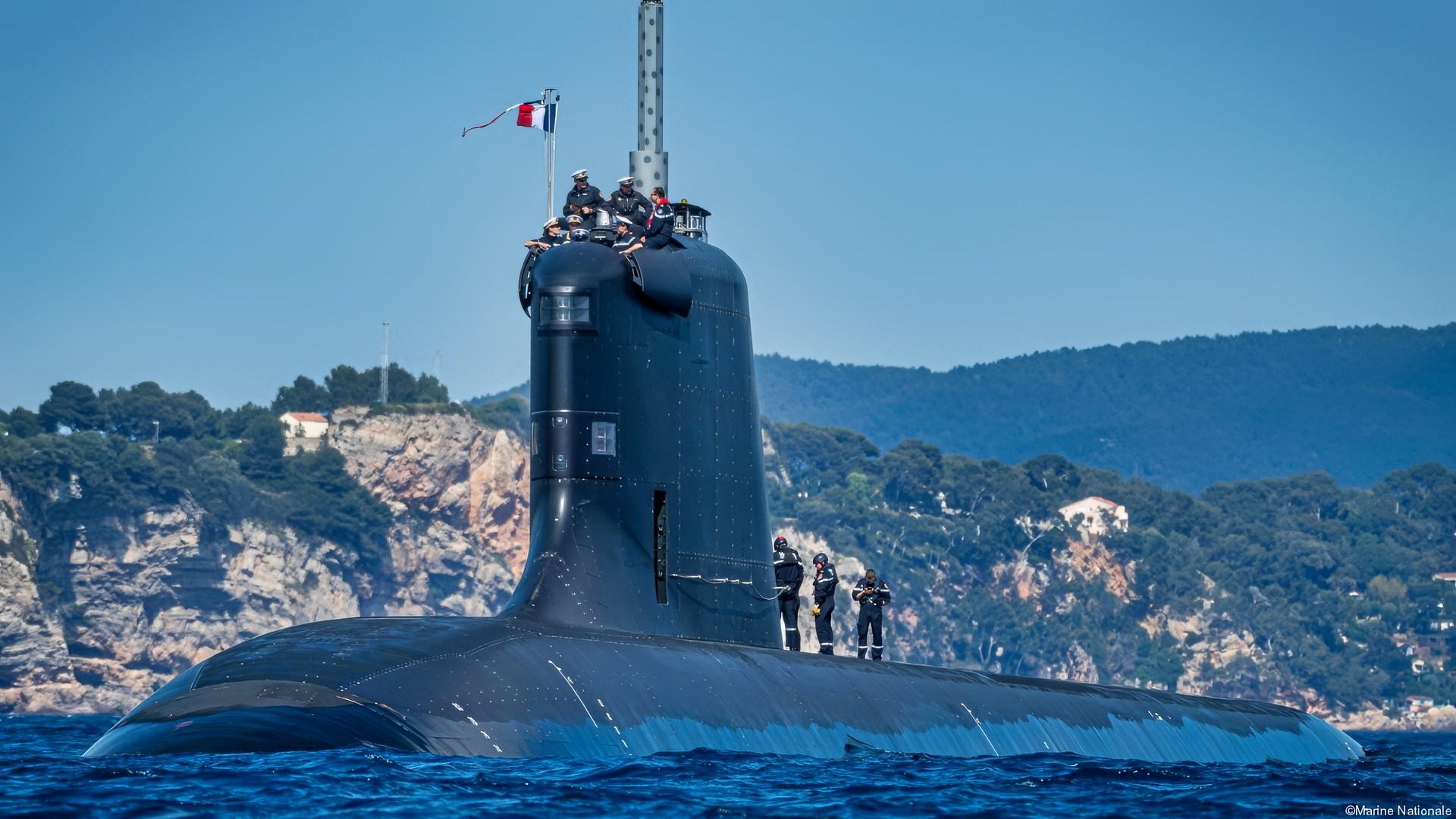
Suffren-Class from France. Image Credit: Creative Commons.
The weapons fit is also dramatically improved. Four 533mm torpedo tubes are retained, but the Suffren-class can carry up to 24 heavy weapons including F21 wire-guided torpedoes, SM39 Exocet anti-ship missiles, FG-29 mines, the D-19 underwater unmanned vehicle for special operations, and — most significantly — the naval cruise missile (Missile de Croisière Naval, or MdCN) that gives the Suffren-class a long-range land-attack capability the Rubis-class never possessed.
Per Naval Today’s coverage of the Tourville delivery, the Suffren-class boats are being delivered substantially faster than the Rubis-class hulls were a generation ago. Tourville’s delivery in November 2024 came just four months after her first sea trials began — a delivery pace that contrasts sharply with the years-long working-up periods that characterized the Rubis-class hulls in the 1980s.
The accelerated delivery schedule for the Suffren-class is the reason Perle is being retired early. France could have kept Perle in service through the late 2020s if the Suffren-class had stuck to its original schedule. With the new boats arriving faster than planned, France elected to bank the operational risk of running an older Rubis-class hull alongside the newer Suffren-class and retire Perle now rather than continue investing in maintenance for a boat whose successor was already at sea.
What The Rubis-Class Leaves Behind
The two “sinkings” of American supercarriers are what the Rubis-class will be remembered for. They should not be the whole story.
The class proved that a small nuclear-powered attack submarine — substantially smaller than American or Soviet contemporaries, built on a fundamentally different design philosophy, operating with a fraction of the crew of comparable boats — could deliver tactical performance against frontline opposition. The 1998 and 2015 engagements were not anomalies. They were demonstrations of what a quiet boat with a patient crew can do against a carrier strike group operating under realistic exercise rules of engagement.
The lessons the U.S. Navy took from those engagements have likely shaped American anti-submarine warfare investment for the past two decades. The P-8 Poseidon maritime patrol aircraft, the AN/SQQ-89 sonar suite upgrades, the focus on multistatic active sonar networks, the expanded distributed undersea sensor architecture — all of those programs trace back in part to the institutional realization that small allied nuclear and diesel submarines were repeatedly defeating American carrier defenses in wargames, and that the Soviet (and later Chinese and Russian) submarines those allies were modeling would not be operating under exercise rules of engagement when the next major war started.
The Rubis-class will be remembered as the smallest nuclear attack submarine ever to matter.
About the Author: Harry J. Kazianis
Harry J. Kazianis (@Grecianformula) was the former Senior Director of National Security Affairs at the Center for the National Interest (CFTNI), a foreign policy think tank founded by Richard Nixon based in Washington, DC. Harry has over a decade of experience in think tanks and national security publishing. His ideas have been published in the NY Times, The Washington Post, The Wall Street Journal, CNN, and many other outlets worldwide. He has held positions at CSIS, the Heritage Foundation, the University of Nottingham, and several other institutions related to national security research and studies. He is the former Executive Editor of the National Interest and the Diplomat. He holds a Master’s degree focusing on international affairs from Harvard University.


