


Synopsis and Key Points: Former U.S. Ambassador to Tunisia Gordon Gray draws striking parallels between the current 2026 protests in Iran and the 2011 Arab Spring.
-Following the collapse of Syria’s Bashar al-Assad in December 2024, Gray argues that Tehran faces a similar existential crisis driven by economic ruin and a loss of dignity. While the regime has survived five uprisings since 2009 due to the loyalty of the IRGC, Gray warns that “brittle” autocracies eventually shatter.
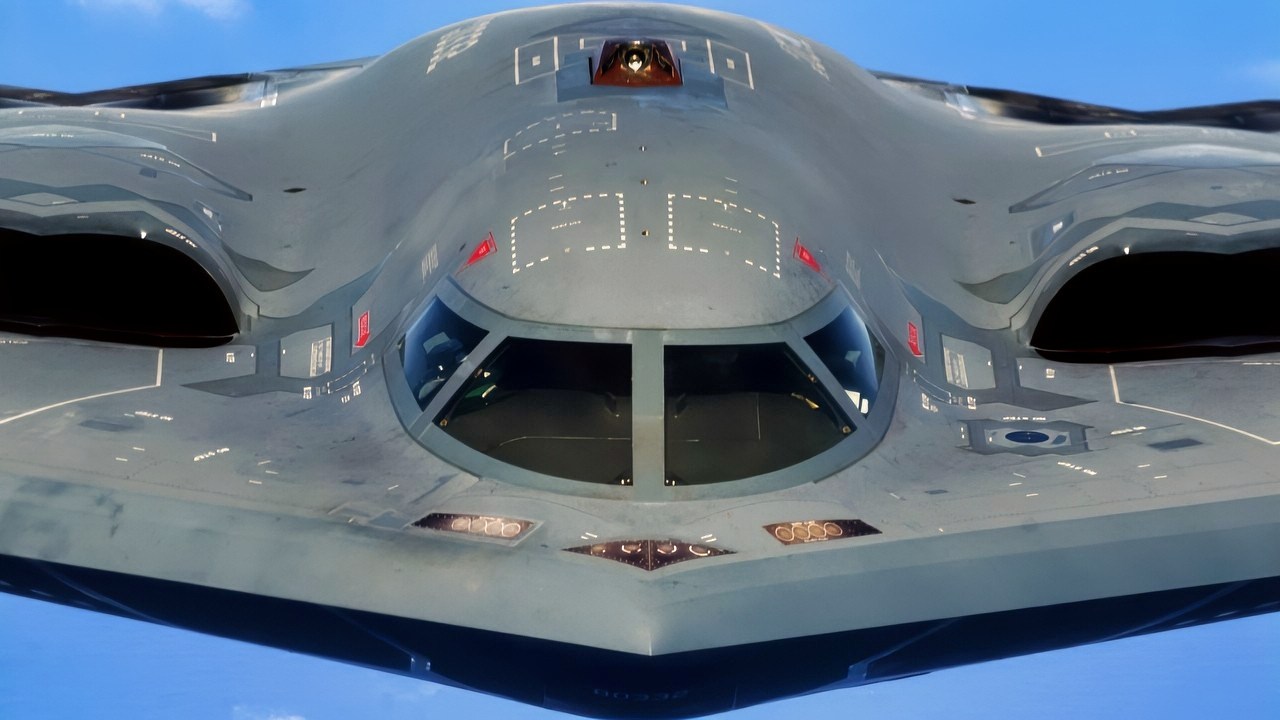
B-2 Spirit Stealth Bomber Flying. Image Credit: Creative Commons.
-With explicit U.S. military threats looming and internal pressure mounting, he contends that without major reform, the Islamic Republic’s demise is inevitable.
History Shows Iran’s Clerics Can’t Rule Forever
The demonstrations in Iran mirror what I witnessed in Tunisia when I served there as the U.S. ambassador at the start of the Arab Spring. I had several memorable moments during my 35-year career in government, but January 14, 2011 is the date that stands out. That was the day that nation-wide demonstrations drove Tunisia’s long-time authoritarian leader into permanent exile. To this day – fifteen years later – I remain inspired by the courage the Tunisian people displayed.
The mounting protests in Iran, where equally brave citizens are taking to the streets to demand their rights, have striking parallels. Economic issues – corruption, economic mismanagement, inflation, and unemployment – are a major motivation for the protests in Iran today, just as they were in Tunisia.
But I also remember what I heard from a former dissident in the Ben Ali regime who became a minister in Tunisia’s national unity government days after the collapse of the ancient regime. He observed that “Poverty and unemployment exist everywhere. This happened because of a lack of dialogue and a loss of dignity.” His words remain the clearest explanation of the Arab Spring uprisings that followed.
Ben Ali’s flight highlighted the brittleness that autocracies share and emboldened Arab citizens to protest years of authoritarian rule. Egyptian strongman Hosni Mubarak went into internal exile on February 11, 2011; Libya’s eccentric leader Moammar Qaddafi was killed cowering in a culvert on October 20, 2011; and Yemeni President Ali Abdullah Saleh stepped down on February 27, 2012.
Thus, in a little over a year four leaders whom many (including themselves) had thought would be presidents for life were forced out of office. They had led their countries with an iron hand for a combined total of 127 years. The total climbs to 151 years if one includes Syria’s Bashar al-Assad, who was the last Arab dictator to fall when the rebel group Hayat Tahrir al-Sham (HTS) took Damascus on December 8, 2024 following a civil war that lasted nearly fourteen years and killed hundreds of thousands.
The wave of protests engulfing Iran today is the fifth major uprising there since 2009. The Iranian government has survived until now, so the obvious question is whether the same conditions that led to the overthrow of despots in Tunisia, Egypt, Libya, Yemen, and eventually Syria will lead to the same result in Iran.
Deteriorating economic conditions and widespread alienation are two characteristics today’s Iran shares with the Arab Spring. A third similarity is that no powerful patron will come to the rescue of its clerical regime, just as the Obama administration told Mubarak it was time to step aside and neither Moscow nor Tehran lifted a finger to support Assad when HTS began its successful offensive. In fact, the opposite is the case: as it continues to kill demonstrators the Iranian security establishment needs to consider explicit U.S. military threats (as well as implicit Israeli ones).
The security forces’ loyalty to the regime is the one significant difference I see between Iran today and the Arab Spring uprisings. In Tunisia, the military refused to fire on demonstrators and in Egypt the military leadership forced Mubarak out. Libya’s military was too fragmented and too dependent on foreign recruits to save Qaddafi and his regime.
Iran’s Islamic Revolutionary Guards Corps and Basij paramilitary force, on the other hand, remain steadfast in their support of the Iranian regime. Until such support evaporates – as it did in Syria in 2024 and in Iran itself in 1979 – the current regime will prevail.
Survival, however, is different from success. Unless the Iranian regime addresses the root causes of the current unrest – which until now it has been unwilling and unable to do – its own demise is inevitable. As Mark Twain observed, “history doesn’t repeat itself, but it often rhymes.”
About the Author: Gordon Gray
Gordon Gray is the Kuwait Professor of Gulf and Arabian Peninsula Affairs at George Washington University’s Elliott School of International Affairs. He was a career Foreign Service officer whose assignments included Deputy Commandant of the National War College, Ambassador to Tunisia, and Deputy Assistant Secretary of State for Near Eastern Affairs. Follow him on Bluesky: @AmbGordonGray.bsky.social.


