

Summary and Key Points: Russia’s State Duma passed legislation on May 27 authorizing Sberbank, the central bank, and other financial institutions to install electronic warfare systems and arm employees to shoot down Ukrainian drones threatening their facilities.
-The same day, a British-made Storm Shadow cruise missile struck the Russian central bank’s office in Sevastopol, Crimea, setting the building on fire.
-Royal United Services Institute researcher Thomas Withington said the law shows that “military-level drone defense capabilities in Russia are failing.”
Ukraine’s Drones Keep Making History
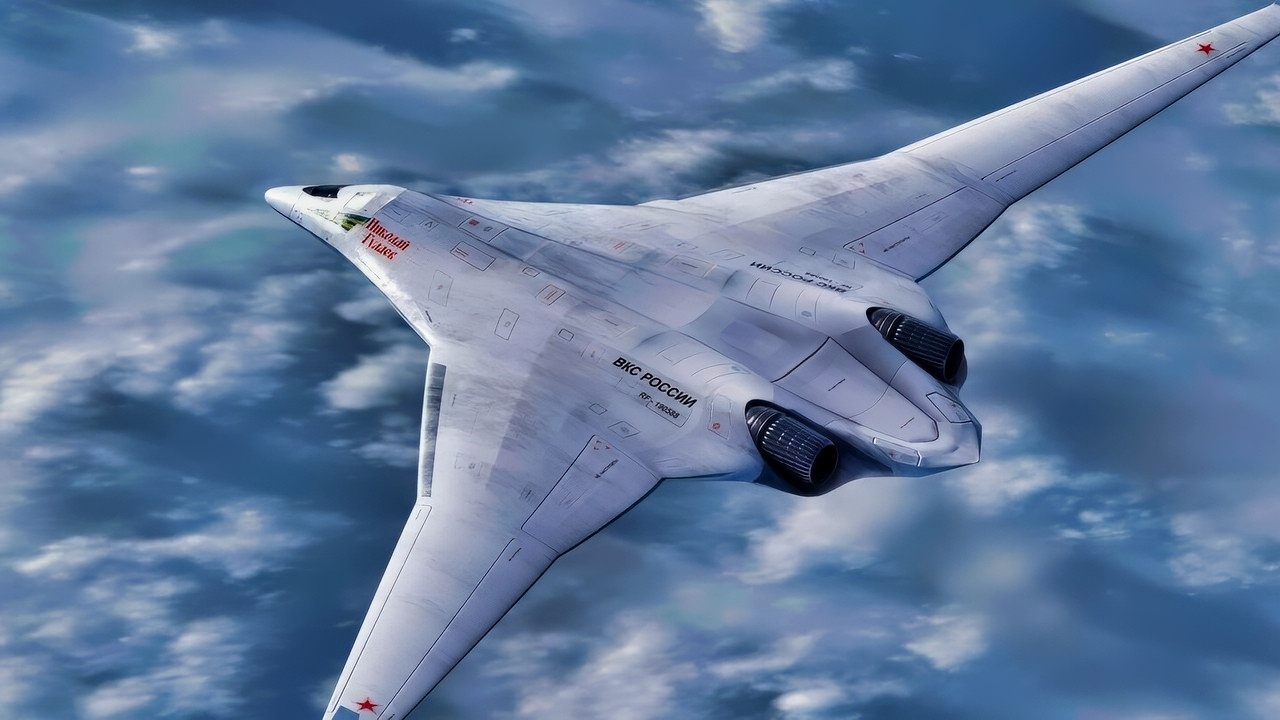
PAK DA Bomber from Russia. Image Credit: Creative Commons.

Su-57 Felon Stealth Fighter Taking Off. Image Credit: Creative Commons.
Russia is now preparing to allow banks and financial institutions to directly participate in the country’s expanding drone war with Ukraine, after the State Duma passed legislation authorizing banks to install electronic warfare systems and arm selected employees to shoot down drones threatening their facilities.
The measure, passed on May 27 in its third and final reading, reflects the growing pressure Ukraine’s long-range drone campaign is placing on Russian air defenses as Kyiv dramatically expands both the scale and sophistication of its unmanned strike operations.
Under the proposed law, Russia’s central bank, state-owned banking giant Sberbank, and other financial institutions would be permitted to deploy their own drone defense systems, jam drone control signals, and even destroy incoming aerial, underwater, or ground drones without waiting for authorization from security services. Russian lawmakers said the institutions themselves would cover the cost of installing the systems and training personnel.
The legislation requires approval from Russia’s Federation Council and President Vladimir Putin before coming into force, but the decision already exposes how deeply Ukraine’s drone campaign is reshaping Russia’s internal security measures. It also indicates that long-term pressure from Ukraine’s drone campaign could begin to influence the outcome of the war, or indeed force Russia to make difficult decisions in the coming years.
Russia’s Drone Defense Problem
The new law comes as Ukraine continues to conduct frequent, long-range strikes deep inside Russian territory and Crimea.
The drones typically target military infrastructure, logistics hubs, oil facilities, and air bases, though industrial sites hundreds of miles from the frontlines are also frequently being targeted.

Russian Su-27 Flanker from USAF Museum. Image Credit: National Security Journal.
Other targets are slowly coming into view, too, and the more pressure that comes from Ukraine, the more Russia needs to do to protect itself.
On May 27, reports described how Ukraine had struck the Russian central bank’s office in Sevastopol, Crimea, with what local governor Mikhail Razvozhaev claimed was a British-made Storm Shadow cruise missile. The building reportedly caught fire following the attack.
The Kremlin has struggled to defend Russia’s enormous territory against both fixed-wing strike drones and the growing number of smaller FPV-style systems being developed in substantial numbers by Ukraine. Ukraine’s attacks now frequently reach Moscow, St. Petersburg, the Black Sea fleet headquarters in Crimea, and oil infrastructure deep inside Russia.
The scale of the problem has become much more visible over the last year, too. Earlier this month, Ukrainian drones struck the Rosneft-owned Syzran oil refinery in Samara. Syzran had previously suspended oil refining following similar drone attacks that took place in April. The scale and frequency of the attacks have forced Russia to stretch its layered air defense network across too many targets at once. Ukraine, meanwhile, now relies on cheap, mass-produced drones instead of limited stocks of Western cruise missiles.
Speaking about Russia’s recent efforts to require banks to defend themselves against drones, Royal United Services Institute researcher Thomas Withington said it suggests that “military-level drone defense capabilities in Russia are failing,” adding, “because if they were working, you wouldn’t need to do that.”
“The situation is not improving for Russia,” he also said.
Ukraine’s Drone Industry Is Expanding Rapidly
The scale of Ukraine’s domestic drone manufacturing industry has grown significantly since 2023.
The country is now producing drones on a scale that would have been almost unimaginable during the first year of the war. In April, Ukrainian President Volodymyr Zelenskyy said that his country’s defense industry is capable of manufacturing millions of first-person-view (FPV) drones every year.
“The capabilities of Ukraine’s defense industry amount to millions of FPV drones per year,” he said.
In November 2025, it was reported that Ukraine was producing roughly 4 million drones per year – far more than the 100,000 military drones built annually by the United States.
Decentralizing Drone Defense
The new law also comes amid an effort to decentralize drone defense responsibilities across civilian institutions.
Earlier this week, Alexander Shokhin, head of the Russian Union of Industrialists and Entrepreneurs, reportedly told Putin that major Russian companies were prepared to help finance heavier defensive systems and electronic warfare capabilities to protect infrastructure from Ukrainian attacks.
“Businesses are ready to finance all this work, but a mechanism is needed where financing schemes are clear. This could be a fund of some sort or another form of targeted financing,” Shokhin said.
Russia’s State Duma and business lobby leaders have already pushed major companies to help fund anti-drone equipment for their own facilities. Banks now appear to be the latest sector being folded into that effort.
According to the new legislation, authorized bank employees would be allowed to jam drone signals or directly destroy threatening unmanned systems.
The scale of the proposal is potentially enormous, too, because Russia’s banking network stretches across nearly every populated region of the country.
It could, in theory, create thousands of new drone defense sites – if the system works, that is. There are, after all, important practical questions that need to be answered.
Electronic warfare systems require training and coordination to avoid interfering with civilian communications or friendly military systems. Arming civilian employees to engage drones also creates all manner of safety concerns, especially in dense urban areas.
About the Author: Jack Buckby
Jack Buckby is a British researcher and analyst specializing in defense and national security, based in New York. His work focuses on military capability, procurement, and strategic competition, producing and editing analysis for policy and defense audiences. He brings extensive editorial experience, with a career output spanning over 1,000 articles at 19FortyFive and National Security Journal, and has previously authored books and papers on extremism and deradicalization.


