


Summary and Key Points: Russia has lost an estimated 250 to 400 aircraft over Ukraine, including Su-25 attack jets, Su-34 strike fighters, and — most painfully — Tu-95 and Tu-22 strategic bombers it can no longer build.
-The most dramatic blow came in Operation Spiderweb, when Ukraine smuggled explosive FPV drones into Russia on trucks and destroyed more than a dozen parked aircraft, Russia’s worst air loss since World War II.

Su-27 Flanker. Image Credit: Creative Commons.
-Four years in, Russia has never won control of Ukraine’s skies.’
The Russian Air Force Faces A Big Test in the Ukraine War
The Russian Air Force has taken a number of meaningful losses in Ukraine, though their challenge has not been exemplified by the kind of catastrophic collapse that their counterpart, the Russian Army, experienced during the Ukrainian counteroffensive in 2023.
Still, Russian aircraft losses in Ukraine have been notable for how they have been lost, rather than due to the sheer number of aircraft Ukraine has downed.
Estimating losses is more of an art than a science. While Ukrainian figures are higher than those visually confirmed by open-source loss trackers like Oryx, confirmed losses will be lower than actual losses.
Still, conservative estimates place Russian fixed-wing aircraft losses around 250 to 300 aircraft, as well as substantially more helicopters. Claims from Ukraine are generally higher, around 400.
Uneven Aircraft Losses
Russia has lost a significant number of tactical aircraft, in particular Su-25 attack jets and Su-34 strike fighters. The Su-25 proved particularly vulnerable during the early weeks and months of the war, thanks to its typical deployment close to the front line, within range of Ukrainian MANPADS and short-range air defenses.
The Su-34 fleet has suffered attrition thanks to its role as the backbone of the Russian aerial strike campaign.
Open-source tallies place Su-34 losses at around 35-40 aircraft, which is not an insignificant figure for a relatively small fleet.
But overall, aircraft losses have been lower than what could have otherwise been expected — and indeed lower than some watchers of the war in Ukraine predicted.
Though Russia’s learning curve was quite steep, Russian aircraft avoided the kinds of penetration missions deep within Ukrainian territory that they attempted during the opening stages of the full-scale invasion. Instead, Russia’s strategy shifted to launching glide bombs, cruise missiles, and other stand-off weapons from relatively safe distances within Russia itself.
It was a significant concession: Russia cannot operate over the skies in Ukraine the same way that the United States can today over Iran, or even to a comparable degree as coalition forces did over Iraq in 1991 or Serbia in 1999.
Russia’s Strategic Bomber Losses
Russia’s losses of strategic bombers are a different case entirely. Though Russia has lost fewer bombers than fighters, the losses are more painful because those aircraft have been produced in fewer numbers, are older and scarcer, and in some instances, impossible to replace. Tu-95 and Tu-22 bombers that Ukraine has damaged or destroyed are a particularly acute problem for Russia.
While Russia can continue to build relatively modern tactical jets like the Su-34 or Su-35 series of aircraft, albeit at a relatively slow pace, it cannot realistically manufacture brand-new Tu-95 bombers. The losses of those Cold War-era platforms are, therefore, seemingly permanent, irreplaceable reductions to Russia’s bomber fleet.

MiG-29 Fighter U.S. Air Force Museum July 2025. Image Credit: National Security Journal.

MiG-29 Flares. Image Credit: Creative Commons.

MiG-29 Fighter. Image Credit: Creative Commons.
But Russia’s bomber losses accelerate the long-term degradation of remaining bombers, too. The Russian bomber fleet is relatively long in the tooth, and airframe issues are exacerbated by the heavy strain of sustained operations and increased maintenance demands. It is likely that Russia has cannibalized parts from other aircraft to keep its bombers aloft.
Aircraft Losses Stabilizing
Perhaps the most dangerous period for Russian aircraft during the war was from the initial outbreak of renewed hostilities in February 2022 to early 2024. Early in the conflict, Russia underestimated Ukrainian air defenses and flew more aggressive, higher-risk operations.
But the introduction of Western air defense systems, such as Patriot, NASAMS, IRIS-T, and others, helped Ukraine shoot down several high-profile Russian aircraft.
But by 2025 and 2026, Russia had largely transitioned away from typical aircraft deployment, favoring glide bombs instead, which were dropped farther from the front, allowing bombers and fighters to stay clear of the highly contested front.
Today’s Picture
Today, Russian aircraft losses are lower than during the earlier phases of the conflict, though they do still happen. One notable exception was Ukraine’s Operation Spiderweb, a surprise attack on parked Russian bombers at several air bases around the country by explosive-laden FPV drones. Smuggled into the country in secret compartments atop shipping trucks, Ukraine managed to damage or destroy over a dozen Russian aircraft in what was Russia’s most significant aircraft loss since the Second World War.
Russia has never been able to exert true air superiority over Ukraine, a fact that has altered the trajectory of the entire war.
Control of the skies is an important part of modern warfare.
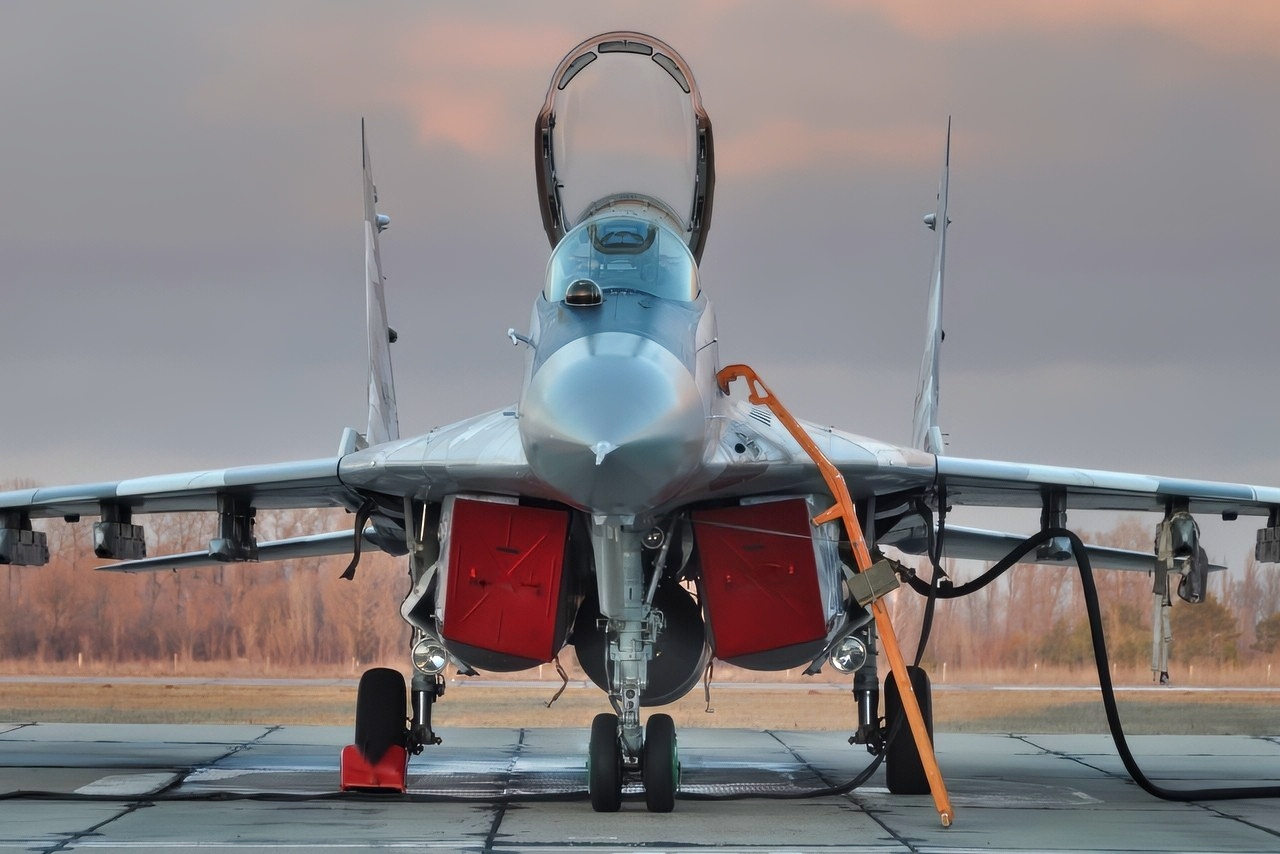
MiG-29 Fighter. Image Credit: Creative Commons.
But Ukraine has denied Russia control of the skies without exerting control itself, thanks to Russia’s own layered defenses.
Over four years after the beginning of hostilities, Russia still retains a much larger air force than Ukraine, but has applied that fleet much more cautiously than many analysts had originally predicted.
About the Author: Caleb Larson
Caleb Larson is an American multiformat journalist based in Berlin, Germany. His work covers the intersection of conflict and society, focusing on American foreign policy and European security. He has reported from Germany, Russia, and the United States. Most recently, he covered the war in Ukraine, reporting extensively on the war’s shifting battle lines in the Donbas and writing about its civilian and humanitarian toll. Previously, he worked as a Defense Reporter for POLITICO Europe. You can follow his latest work on X.


