


Summary and Key Points: The closure of the Strait of Hormuz has removed roughly a billion barrels of oil from the market, triggering the worst supply shock since the 1970s OPEC embargoes.
-Exxon Mobil warns that Brent crude — about $92 a barrel now — could spike to $160 within weeks as global inventories near record lows.
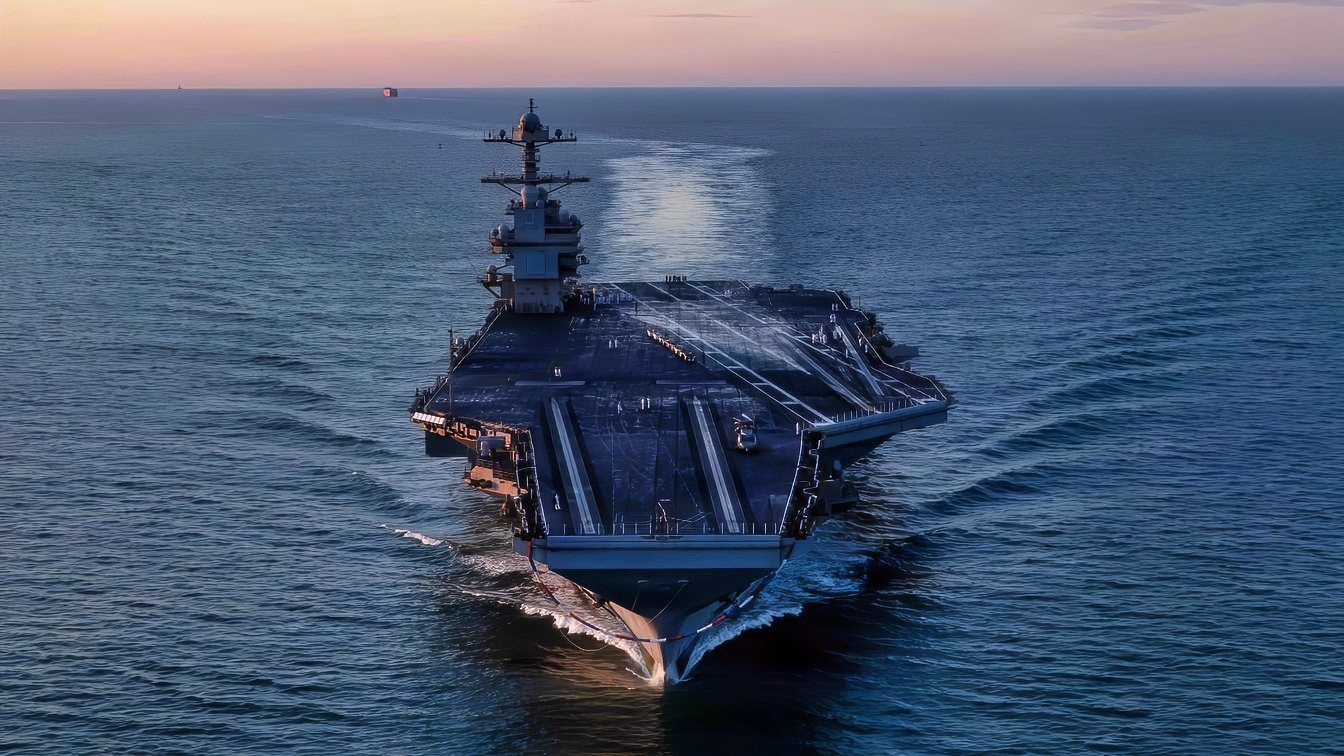
NORFOLK, Va. (May 16, 2026) USS Gerald R. Ford (CVN 78) returned to Naval Station Norfolk, May 16, 2026, following a historic 11-month deployment to U.S. 2nd, 4th, 5th, and 6th Fleets as part of the Gerald R. Ford Carrier Strike Group. Before returning to Norfolk after 326 days, the Gerald R. Ford crew conducted 23 replenishments-at-sea and sailed over 57,713 nautical miles. Embarked Carrier Air Wing 8 logged more than 5,760 flight hours and 12,200 flight launches. (U.S. Navy photo by Mass Communication Specialist 2nd Class Mike Shen)
-Asia is already at minimum operational levels, Europe is weeks behind, and the U.S. could face its own crunch by July.
Global Oil Supply Shock Enters Make-or-Break Period
What does it mean when a billion barrels of oil are removed from the market? It means a huge global crisis.
The closure of the Strait of Hormuz has created the biggest oil supply shock since the OPEC embargoes in the 1970s. Exxon Mobil is concerned that supply will reach record-breaking low levels. The integrated energy behemoth believes that prices could soar again and demand may plunge too.
“We’re approaching unheard of inventory levels,” Exxon Mobil Senior Vice President Neil Chapman said at an energy conference, as reported by CNBC.
“I mean, really, really low levels,” Chapman warned. “You can debate whether that’s going to hit, those really low levels in two weeks or three weeks. Once you get to that point, then you’ll see prices shoot up.”
Record Prices In-Store
Exxon believes Brent crude could reach $150 to $160 per barrel in the coming weeks if the Strait of Hormuz is not reopened soon. Brent spot price was $91.72 Friday.
This is currently the biggest oil supply disruption in history. Countries are testing the limits of their strategic petroleum reserves, and these stocks are dwindling. Some nations have only weeks’ worth of reserves left.
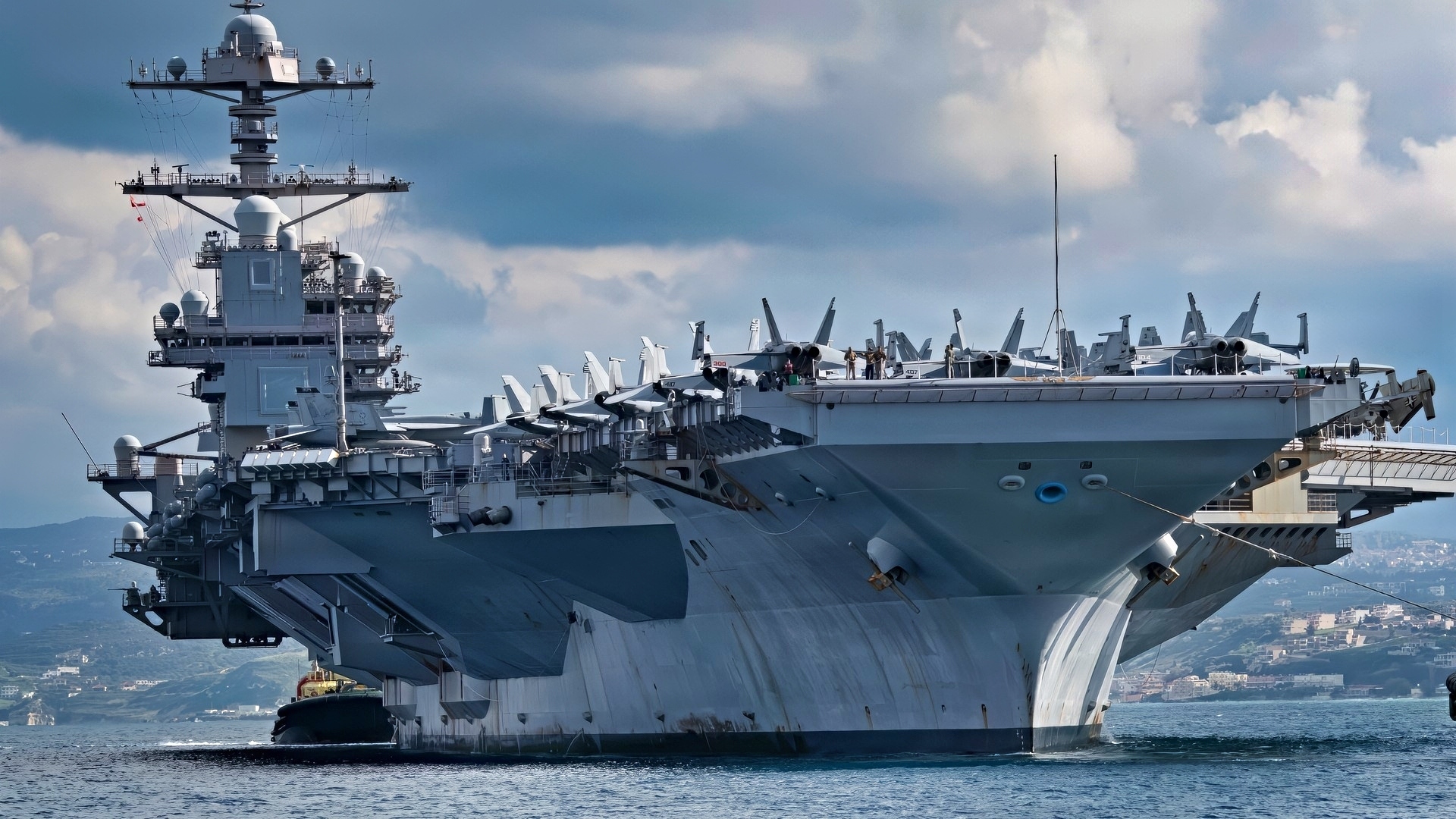
NAVAL SUPPORT ACTIVITY SOUDA BAY, Greece (Feb. 23, 2026) The world’s largest aircraft carrier, Ford-class aircraft carrier USS Gerald R. Ford (CVN 78) arrives at the NATO Marathi Pier Complex in Souda Bay, Crete, Greece, during a scheduled port visit on Feb. 23, 2026. NSA Souda Bay is an operational ashore installation that enables and supports U.S., Allied, Coalition, and partner nation forces to preserve security and stability in the European, African, and Central Command areas of responsibility. (U.S. Navy photo by Mass Communication Specialist 3rd Class Hannah Donahue)
Not Enough Supply
In March, members of the International Energy Agency agreed to release 400 million barrels of oil to alleviate the supply crisis. This helped stabilize prices for a short time, but the action was seen as insufficient to offset the loss of a billion barrels due to the closure of the Strait of Hormuz.
“I don’t know whether it’s two to three weeks or three to four weeks,” Chapman said. “What I’m really saying is, once you get to the minimum inventory levels and all-time low inventory levels, there’s only one way to go. That’s the situation,” CNBC reported.
Asia Is In a Tight Spot
The world is reeling during the oil shock. Asia is facing “minimum operational levels,” according to OilPrice.com. Europe is not far away from suffering the same fate.
The crisis is hitting smaller nations in Asia, such as Singapore, which traditionally does not maintain large reserves. The prices are affecting different types of energy byproducts in that country.
“We’ve seen explosive prices on products. Jet fuel has come down, but diesel has now gone up above jet fuel. So, the problem here in Singapore continues. It just moved from jet to diesel,” according to Jeff Currie, Senior Advisor at the Carlyle Group.

The aircraft carrier USS Nimitz (CVN 68) arrives at Joint Base Pearl Harbor-Hickam, Hawaii, for a scheduled port visit Dec. 3, 2013. The Nimitz was in the process of returning to its home port, Everett, Wash., following an eight-month deployment to the U.S. 5th Fleet, U.S. 6th Fleet and U.S. 7th Fleet areas of responsibility. (U.S. Navy photo by Mass Communication Specialist Seaman Apprentice Rose Forest/Released)

Arleigh Burke-class guided-missile destroyer USS Michael Murphy (DDG 112) sails alongside Nimitz-class aircraft carrier USS Abraham Lincoln (CVN 72) on Dec. 8, 2025. USS Abraham Lincoln (CVN 72), flagship of the Abraham Lincoln Carrier Strike Group, is underway conducting routine operations in the U.S. 7th Fleet area of operations, demonstrating the U.S. Navy’s long-term commitment to a free and open Indo-Pacific. (U.S. Navy photo by Mass Communication Specialist 3rd Class Nathaly Cruz)
Northeast Asian Countries Are Running Scared
Other economies around the region could be facing crises. South Korea, Japan, and Taiwan depend heavily on oil imports and will be closing in on minimum operational levels.
This could have broader ramifications for the global economy as fuel prices rise. Manufacturing inputs will become more expensive, which could raise the cost of finished goods. This could lead to higher inflation in the West as imports from Asia become more expensive.
“Global oil inventories were unlikely to hit minimum operational levels this summer; the speed of depletion and supply losses in some regions and products is concerning,” Goldman Sachs commodity analysts wrote in a report. The researchers also suggested that inventories were nearing their lowest level in eight years, OilPrice.com revealed.
Seasonal Demand Runs Higher
This comes during the summer driving season, when gasoline prices could hit record levels in the United States and Europe. Also, some countries may be experiencing record temperatures in a warming climate that will require more energy for air conditioning.
Europe relies on the United States for much of its imported oil, but that supply cannot continue indefinitely amid the crisis in the Strait of Hormuz. The Americans may face their own supply problems as soon as July, making it more difficult to fill export orders.
The U.S. Strategic Petroleum Reserve (SPR) may be sucked dry, too. The SPR is being used for some exports to Europe during this trying time, but the Americans may not be able to keep the Europeans in business throughout the summer.
In describing the level of concern for each region around the world, Currie is worried. “I would say, Asia, you’re there. Europe, give it about another month, and look for July being a problem in the U.S.”
Iran Has Time On Its Side
This situation helps Iran’s negotiating position with the United States. Time seems to be on the side of Tehran. The Iranians do not have to be in a hurry to evaluate various peace plans offered by the Americans.
“Every day that goes by, Iran’s negotiating leverage compounds. Why? Because inventories of oil … continue to drop,” Currie said, as quoted by CNBC. “The minute you think you won, that’s exactly when you know you probably lost, and their negotiating position at this point has never been stronger in the last 47 years.”
Negotiators continue to work hard to reach an early Memorandum of Understanding (MOU) on the situation in the Strait of Hormuz that could open the strategic waterway and extend the cease-fire, so that peace talks could focus on the enriched uranium issue.
This (MOU) could happen any day. But that is just the first step toward reopening the strait. It will take significant time for the global oil market to return to balance and for prices and supplies to stabilize.
About the Author: Dr. Brent M. Eastwood
Author of now over 3,500 articles on defense issues, Brent M. Eastwood, PhD, is the author of Don’t Turn Your Back On the World: A Conservative Foreign Policy and Humans, Machines, and Data: Future Trends in Warfare, plus two other books. Brent was the founder and CEO of a tech firm that predicted world events using artificial intelligence. He served as a legislative fellow for US Senator Tim Scott and advised the senator on defense and foreign policy issues. He has taught at American University, George Washington University, and George Mason University. Brent is a former US Army Infantry officer. He can be followed on X @BMEastwood.


