

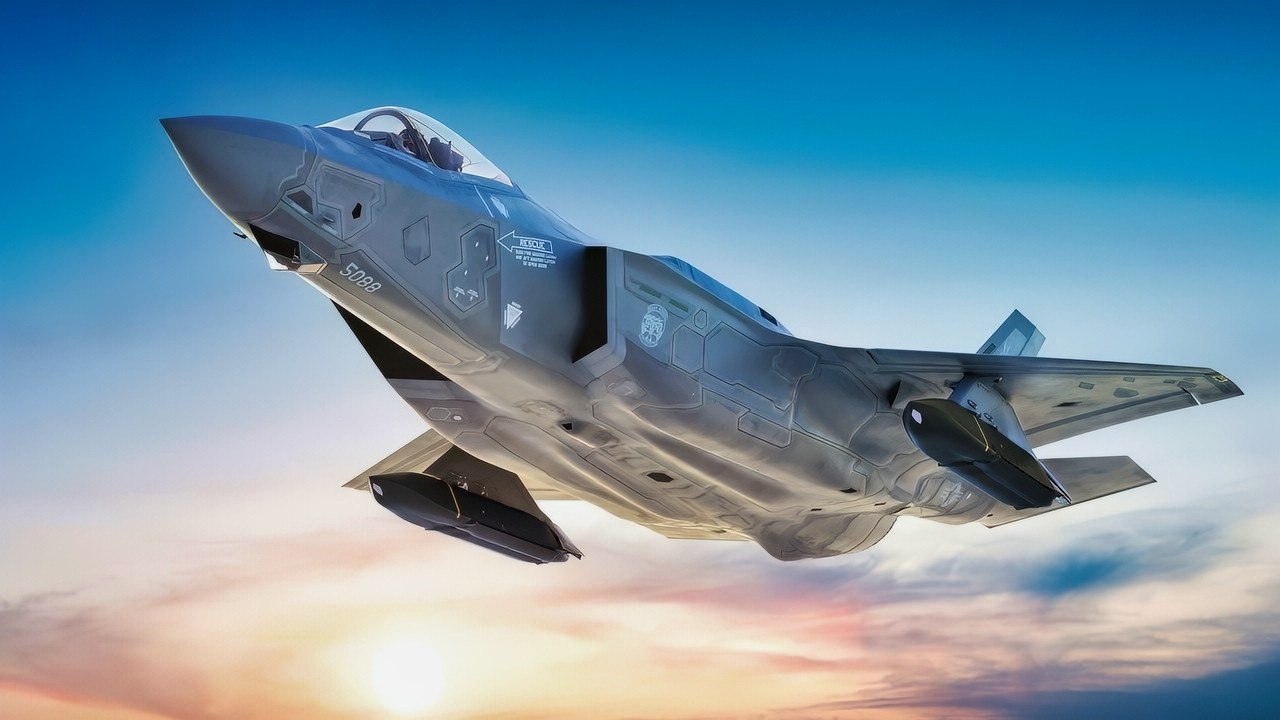
Canada and the F-35 Problem: Canada finds itself in quite a quandary. The country lies geographically above the United States, but in no way is it powerful enough to counter the wishes and interests of its American neighbor. It is often little more than an extension of US power and will.
Since Donald Trump’s return to the presidency, however, tensions and trade wars have defined the US-Canada relationship. One of the victims of this ongoing spat between Washington, D.C., and Ottawa is Canada’s long-delayed military modernization plan.

F-35I Adir Lockheed Martin Photography by Todd R. McQueen.
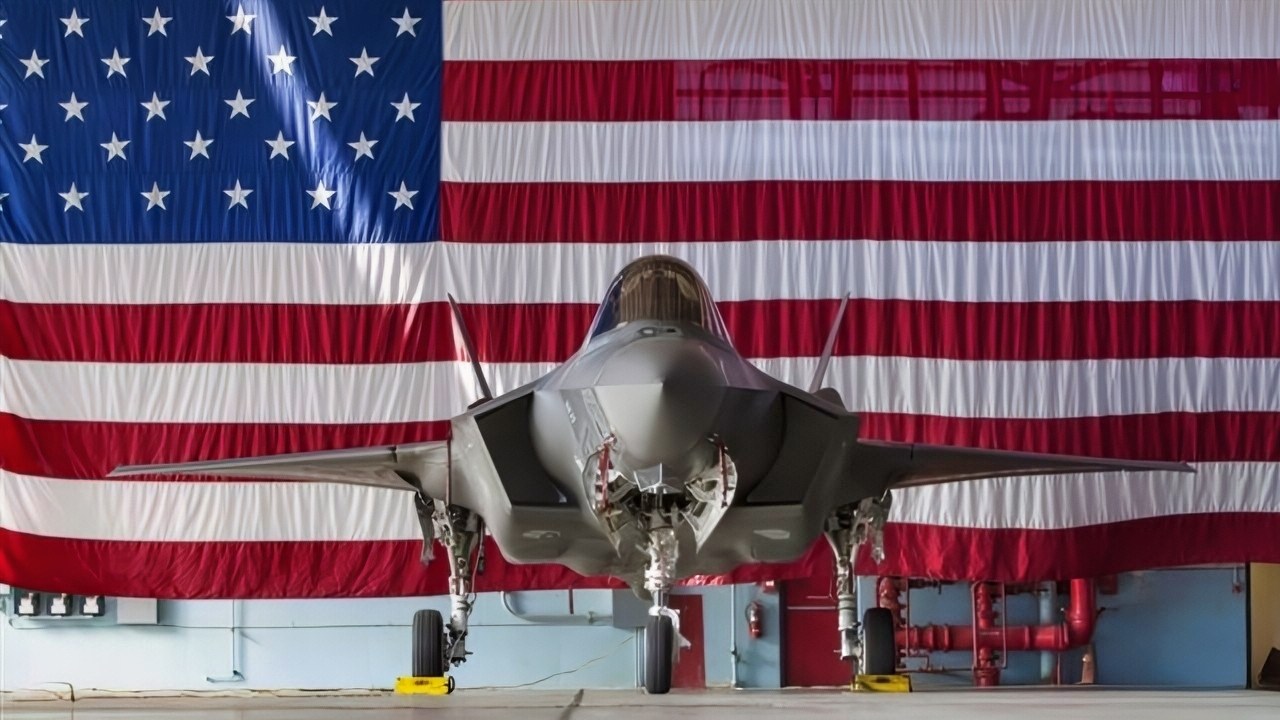
F-35 Fighter Image by Lockheed Martin

F-22 and F-35 and the Flag. Image Credit: Creative Commons.
One of the biggest sources of contention is Canada’s long-planned but now-delayed procurement of US-made F-35 Lightning II fifth-generation fighter jets. The disagreement between the US and Canadian governments over just about everything, from trade to who should control what in the Arctic, has jeopardized Canada’s purchase of the F-35.
But Canada is not in a position to wait for a different system from another country to become available. Plus, Ottawa has explored alternatives to the F-35, such as the Swedish JAS-39 Gripen. While that plane is an excellent (and cheaper) warplane than the complex and expensive F-35, it’s not a fifth-generation warplane. What’s more, the Gripen is not as integrated with the overarching US defense system as the F-35 clearly is.
Ottawa’s Attempt to Have It Both Ways on F-35
Right now, Canada is trying to do two contradictory things. Because of the breakdown in relations between Canada and the US, Ottawa wants desperately to reduce its dependence on US defense procurement. Although Canada desperately needs a new, modern warplane, and because Ottawa already initiated the purchase of the F-35 before Trump became the forty-seventh president of the United States, Canada is spending money and resources to support the F-35.
Meanwhile, Canadian military leaders increasingly believe they cannot defend their chunk of North American airspace without the F-35.
About a year ago, Canadian Prime Minister Mark Carney ordered a review of his government’s purchase of the F-35 as part of a wider reassessment of his country’s overall dependence on the United States. Yet, behind the scenes–under pressure from Canadian military leaders fearful of losing their air capabilities, the longer the delay in acquiring a new warplane lasts–Canada continues moving forward with the stealth fighter procurement.
The Reality of NORAD and Arctic Defense
It’s a strange and unenviable position to be in. But Canada is only complicating its ability to acquire a warplane capable of defending the country. Canada may dislike their dependence on America, but the strategic realities of NORAD, Arctic defense, and interoperability keep pulling Ottawa toward the F-35, despite its protestations.
Interestingly, despite the major review of the Canadian government’s purchase of the F-35, Ottawa made payments tied to 14 additional F-35s beyond the initial 16 aircraft. These are “long-lead” purchases to support the eventual acquisition of the F-35. Long-lead purchases involve procuring critical components ordered years in advance due to supply chain constraints.
So, contrary to their public protestations, Ottawa is preserving its place in the production queue while their dramatic review of the F-35 purchase occurs. Canada is displaying itself to be a toothless baby tiger. It is talking as if it might leave the stealth fighter program while acting as if it intends to stay in it.
The Inevitable Outcome
Washington should rest easy. Canada isn’t leaving the stealth fighter program. Ottawa is just desperate for leverage over Washington as the forty-seventh president hammers away at Canada’s position in trade and diplomacy.
Right now, Canada plans to receive the initial tranche of 16 F-35s. Despite the review of the purchase and the current strained relations with America, Canada is already paying for 14 more F-35s. Canada’s military is adamant that they require this plane to provide effective air defense over its vast territories–notably those far-off regions in the Arctic.
The most likely outcome in this affair is that Ottawa ultimately completes its acquisition of the Lightning II from the United States. Everything that’s happening now is for show.
About the Author: Brandon J. Weichert
Brandon J. Weichert is Senior National Security Editor. He also manages The Weichert Brief on Substack. Weichert hosts “National Security Talk” on Rumble, too. He is the author of four bestselling national security books, the most recent of which is A Disaster of Our Own Making: How the West Lost Ukraine (Encounter Books). Follow him via Twitter/X @WeTheBrandon.


