


Iran Says Oman Talks Won’t Open the Strait – Oman and Iran are negotiating over the Strait of Hormuz, but their talks will not achieve a proper reopening of the critical commercial waterway if the United States does not agree to Tehran’s requests, Iran said on Monday.
Partial Hormuz Opening In Sight
Iranian Foreign Ministry spokesperson Esmail Baghaei noted that talks with Muscat were centered on commercial shipping routes. However, he stressed that this was a separate issue from the full reopening of the previously busy waterway.
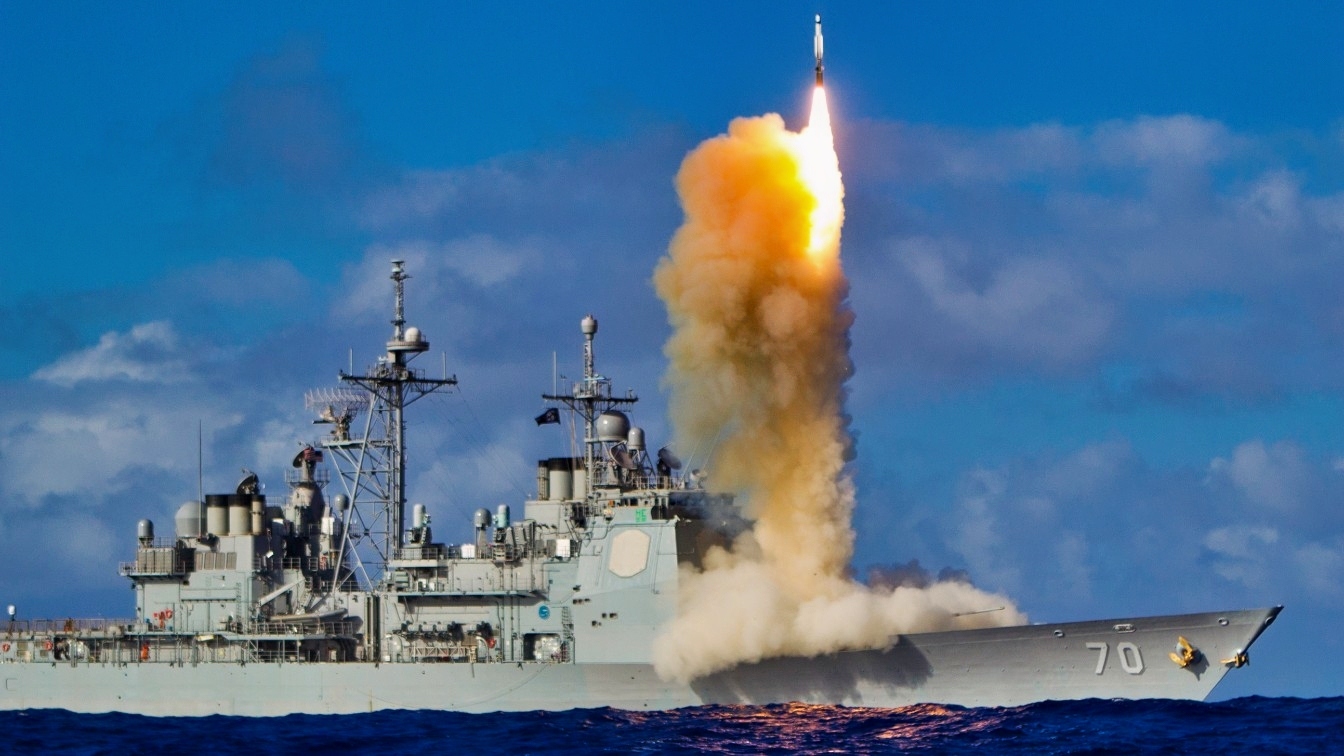
A Standard Missile-3 (SM-3) Block 1B interceptor missile is launched from the guided-missile cruiser USS Lake Erie (CG 70) during a Missile Defense Agency and U.S. Navy test in the mid-Pacific. The SM-3 Block 1B successfully intercepted a target missile that had been launched from the Pacific Missile Range Facility at Barking Sands in Kauai, Hawaii. Lake Erie detected and tracked the target with its on board AN/SPY-1 radar. The event was the third consecutive successful intercept test of the SM-3 Block IB missile. (U.S. Navy photo/Released)
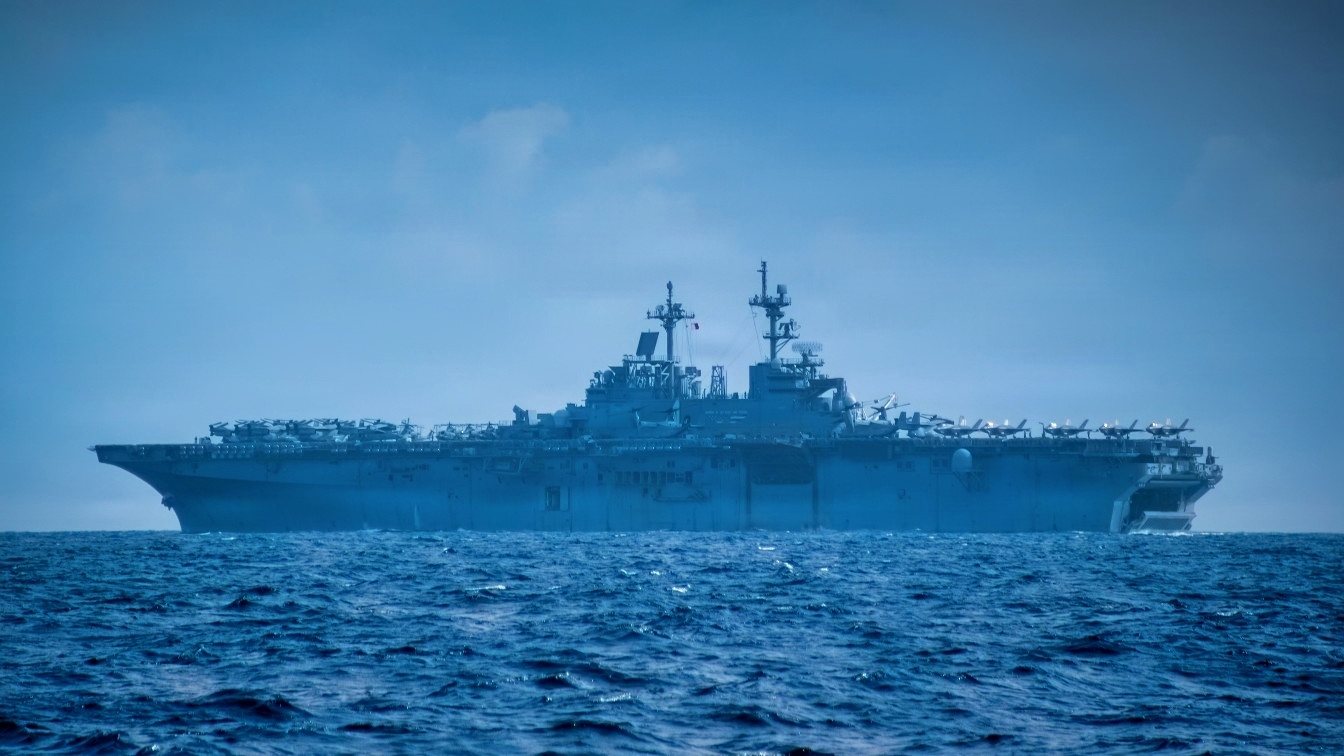
Wasp-class amphibious assault ship USS Boxer (LHD 4) transits the South China Sea, June 4, 2026. Boxer, flagship of the Boxer Amphibious Ready Group, is underway with the 11th Marine Expeditionary Unit in the U.S. 7th Fleet area of operations. U.S. 7th Fleet, the Navy’s largest forward-deployed numbered fleet, routinely interacts and operates with allies and partners to preserve a free and open Indo-Pacific (U.S. Navy photo by Mass Communication Specialist Seaman Eliora Sims)
No U.S. Deal in Sight
This news has largely undercut hopes that a swift deal could be achieved. One proposal would see vessels take designated routes. Iran would control entry while Oman would oversee exits from the region. Tolls would not be imposed, and the arrangement could be accompanied by a 60-day window for other peace talks.
Washington continues to emphasize that any deal would require a return to the pre-war arrangement, in which commercial shipping could pass without any fees or approvals.
Iran is demanding that the U.S. Navy end its blockade of Iranian ports. It also wants all American forces to withdraw from the Middle East, despite the fact that Iran’s own proxies operate across the region and the world, and have attacked the U.S. and its allies there. Tehran also wants the release of frozen Iranian assets along with compensation for war-related damage.
Trump: Iran Must Compensate Slaughtered Protesters’ Families
This week, Trump outlined how the U.S. would pursue compensation from Iran in any fresh negotiations. He specifically noted that the U.S. would be demanding compensation “for all of the people” that Iran has “killed and gravely wounded with their roadside bombs and many conflicts,” and that “compensation should be paid to the families” of protesters killed in Iran at the hands of its theocratic regime.
Hormuz Crossings in Free Fall
Traffic in Hormuz is at unusually low levels due to the standoff. Central Command announced that American forces had redirected some 55 commercial vessels away from Iranian ports as of Sunday, up from 35 just a week earlier. The Kpler intelligence firm has also confirmed that crossings dropped from 15 on Friday to 11 on Saturday and six on Sunday. Oil prices also rose again on Monday, with Brent crude currently trading at more than $84 a barrel.
The strait usually carries approximately one-fifth of the world’s crude oil and a large share of liquefied natural gas (LNG).
Iran also discussed legislation that would bar US, Israeli, and other “hostile” vessels from using the waterway and impose fines of up to 20 percent of a ship’s cargo value for any violations.
Tehran Likely to Double Down
Speaking at a press summit in Jerusalem last month, columnist Melanie Phillips slammed President Trump’s plans for a ceasefire, complaining that it had given Tehran the upper hand and showed that “everyone can now see America is not prepared to make the sacrifices necessary to defend itself.”
This week, Mohsen Rezaei, an ex-commander of the Islamic Revolutionary Guard Corps (IRGC), was made secretary of the Supreme National Security Council, replacing Mohammad Bagher Zolghadr. The IRGC is listed as a foreign terrorist group by the U.S. government, and it extensively funds and trains terror proxies across the Middle East.
Any agreement on Hormuz would need to be approved by the council and Supreme Leader Mojtaba Khamenei himself. The appointment is unlikely to presage a milder approach toward Washington. Rezaei, whose track record means he commands much authority within Iran’s military establishment, has said that renewed American attacks could cause Tehran to escalate the war.
Trump has claimed Iran has essentially lost this war and that the blockade is massively damaging its economy. However, he has also instructed his team to pursue a “low-key” approach to talks. Last week, CNN reported that Chairman of the Joint Chiefs, General Dan Caine, privately told other officials that the country was seeking an “off-ramp” from the conflict.
About the Author: Georgia Gilholy
Georgia Gilholy is a journalist based in the United Kingdom who has been published in Newsweek, The Times of Israel, and the Spectator. Gilholy writes about international politics, culture, and education.


