


According to a CNN report just yesterday, on 19 May, US Air Force (USAF) Dan Caine, the Chairman of the US Joint Chiefs of Staff (JCS), made an unplanned, classified trip across the Atlantic to the US Central Command (CENTCOM) headquarters in Tampa, Florida. The purpose was reportedly for him to be briefed in person on a proposed but extremely sensitive military operation – the likes of which had not been previously attempted.
The plan being briefed was for the US military to deploy a force of specialized ground troops into Iran.
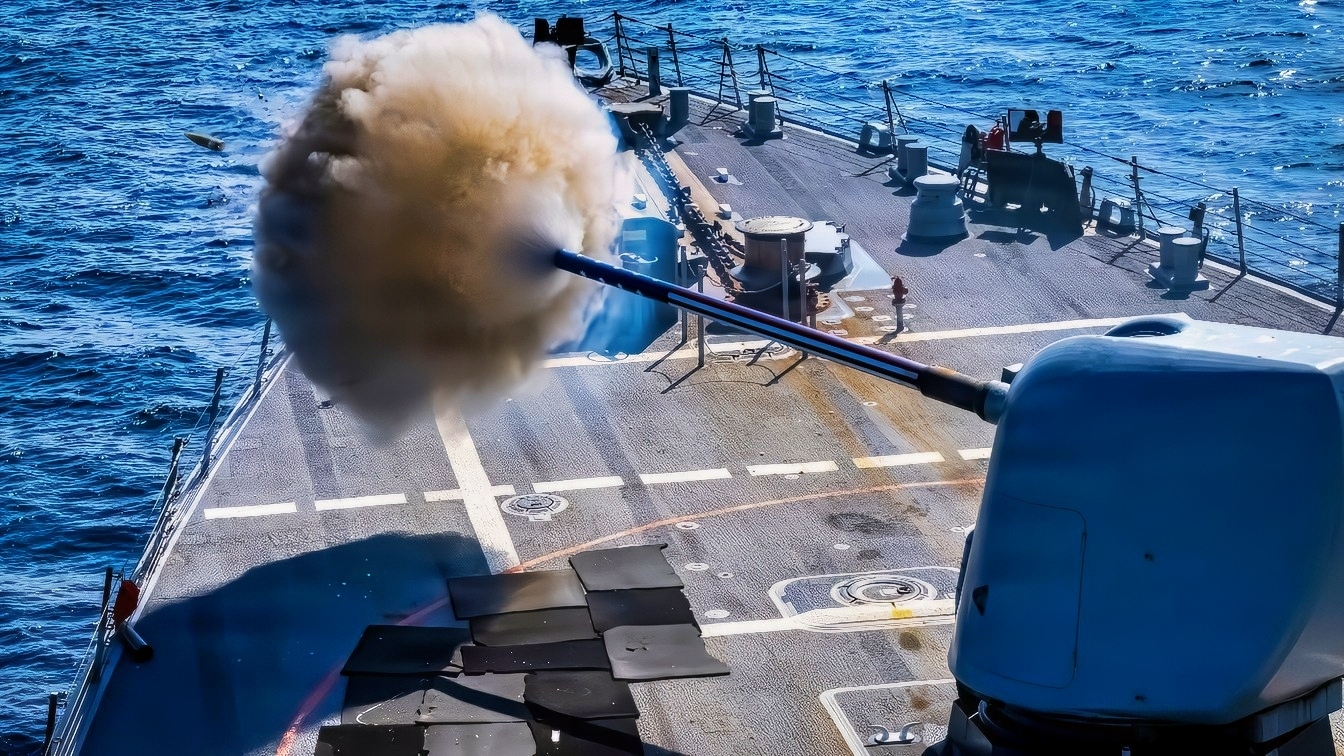
PACIFIC OCEAN (April 27, 2026) U.S. Navy Arleigh Burke-Class guided-missile destroyer USS John Paul Jones (DDG) 53, fires its Mk.45 5-inch deck cannon during a live fire exercise, April 27, 2026. John Paul Jones, part of the Theodore Roosevelt Carrier Strike Group, is underway in the U.S. 3rd Fleet area of operation conducting advanced training to bolster strike group readiness and capability. (U.S. Navy photo by Mass Communications Specialist 2nd Class Ryan Holloway)
Their mission: to forcibly seize the cache of highly enriched uranium stored in facilities where the Iranians have been developing a nuclear weapon.
The Iran Nuclear Mission
Uranium, which has been enriched to the level of close to 90 percent, is the key element required to produce any nuclear weapon.
The plan was so closely held that CENTCOM did not want it briefed over any electronic or virtual link, regardless of how secure or encrypted that linkup might be.
At the time, Gen. Caine was engaged in a meeting with senior NATO officials in Brussels, which required him to leave the event and make the ocean crossing to Tampa.
No one from the JCS would respond to media inquiries about this story, but sources who spoke to the network said that the extreme security precautions and the rush to have Caine return to CONUS without notice are signs that the Trump Administration was preparing to sign off on the plan for this high-risk mission.
Being Placed On A “Brief Hold”
Following his session at CENTCOM, Caine then briefed President Donald Trump on the details of how the operation would be carried out. However, rather than giving the go-ahead, the US President put the operation on “a brief hold” – that mythically short pause that every call center in the world tells you is placing you into.
Trump had reportedly been considering authorizing just such a mission as far back as March. But military experts and former US defense officials who spoke to the BBC told the UK broadcaster that the US president may have had second thoughts over concerns about the number of risks involved in such an operation.
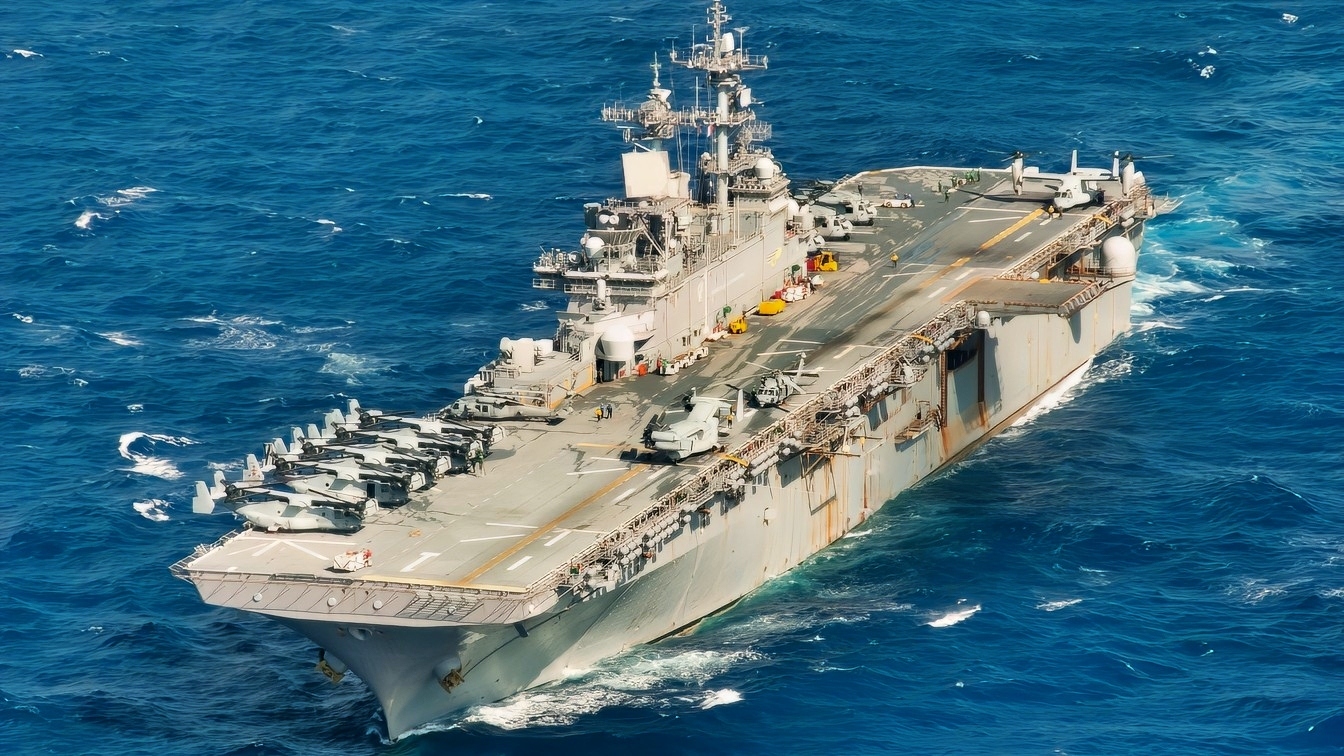
The amphibious assault ship USS Wasp (LHD 1) sails in the Philippine Sea Aug. 26, 2018 during a Passing Exercise (PASSEX) with the Japan Maritime Self Defense Force. PASSEX enabled the Wasp ARG and the JMSDF a chance to practice communications and maneuvering procedures. The Wasp Amphibious Ready Group is currently operating in the region to enhance interoperability with partners and serve as a ready-response force for any type of contingency. (U.S. Navy photo by Mass Communication Specialist 3rd Class Taylor King)
One of the many factors that may have delayed ordering any such operation, according to these same export sources, is that such a raid on highly secure, well-defended Iranian facilities would require deploying ground troops. Additional anxiety could have been created by predictions that deployment would likely not be an “in and out” in 30 minutes proposition, but a drawn-out operation that could require several days or even weeks to achieve its objectives.
A raid to secure and remove Iran’s uranium stockpile would likely be one of the “most complicated special operations in history,” Mick Mulroy, a former US Deputy Assistant Secretary of Defense for the Middle East, told the BBC. There is a potential for a significant number of US casualties, according to other sources who had some knowledge of the proposed operation.
Then there is the fact that other, less risky options could achieve the same objective of driving Iran to agree to a conclusion of hostilities in an agreement suitable to Washington.
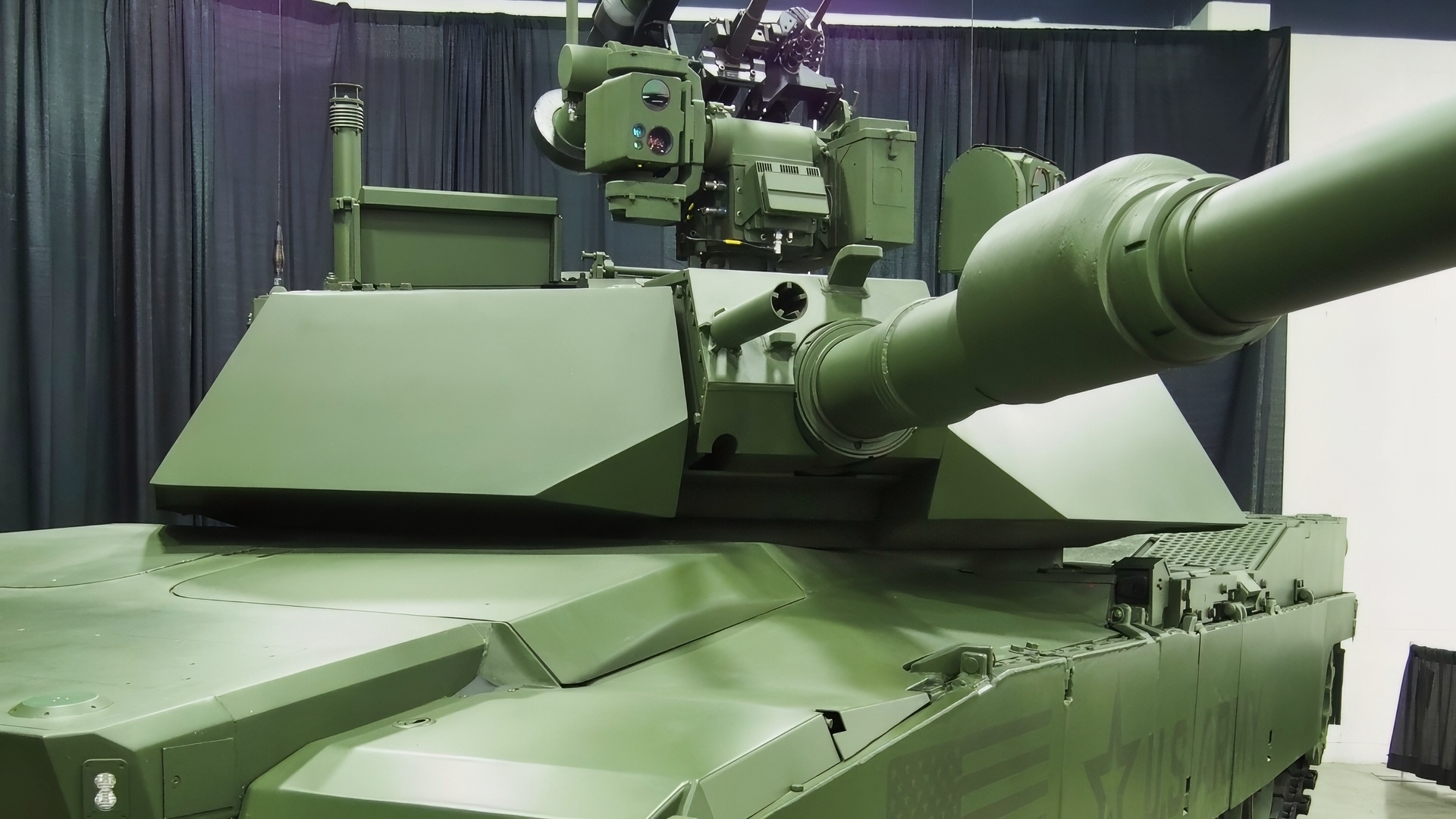
M1E3 Abrams. National Security Journal Photo.
One of those other options would be to take complete control of Kharg Island, Iran’s main oil export shipping facility. Taking over this site could be the pressure point the administration needs to force Iran to lift any blockade or other restrictions on the Strait of Hormuz.
Bait and Switch: What the Experts Told National Security Journal
But speaking to experienced former special operations personnel from NATO partner nations, they point out that the White House could very well be using the threat of such an operation as a form of psychological warfare.
“It is possible that the story of this planned raid leaked out – as we sometimes say – ‘accidentally-on purpose’ to try and spook the Iranians,” said one former special ops senior NCO who spoke to National Security Journal.
“Just the knowledge that the US has such an operation in the works could be enough to force the Iranians to come to some peaceful resolution,” he continued. “It is equally possible that details of this operation could be put out there as a threat to cause Iran to divert assets from Kharg or some other site that is the real US target in the end.”
On the morning of Thursday, 11 June, Trump stated the US would soon be “taking Kharg Island, and other oil infrastructure points, and assume total control of their Oil and Gas Markets” and that there would be strikes on Iranian facilities that same night.
Trump also seemed to say that any operation to seize the Iranian’s uranium is no longer even a possibility. “Nobody’s getting close to it because it’s buried under a mountain,” he said.
About the Author: Reuben F. Johnson
Reuben F. Johnson has thirty-six years of experience analyzing and reporting on foreign weapons systems, defense technologies, and international arms export policy. Johnson is the Director of Research at the Casimir Pulaski Foundation. He is also a survivor of the Russian invasion of Ukraine in February 2022. He worked for years in the American defense industry as a foreign technology analyst and later as a consultant for the U.S. Department of Defense, the Departments of the Navy and Air Force, and the governments of the United Kingdom and Australia. In 2022-2023, he won two awards in a row for his defense reporting. He holds a bachelor’s degree from DePauw University and a master’s degree from Miami University in Ohio, with a specialization in Soviet and Russian studies. He lives in Warsaw.


