


In 2004, as a young defense analyst at the RAND Corporation think tank, I was once called into my boss’s office.
“Take a look at this Army Future Combat System, and give me a report,” he said.
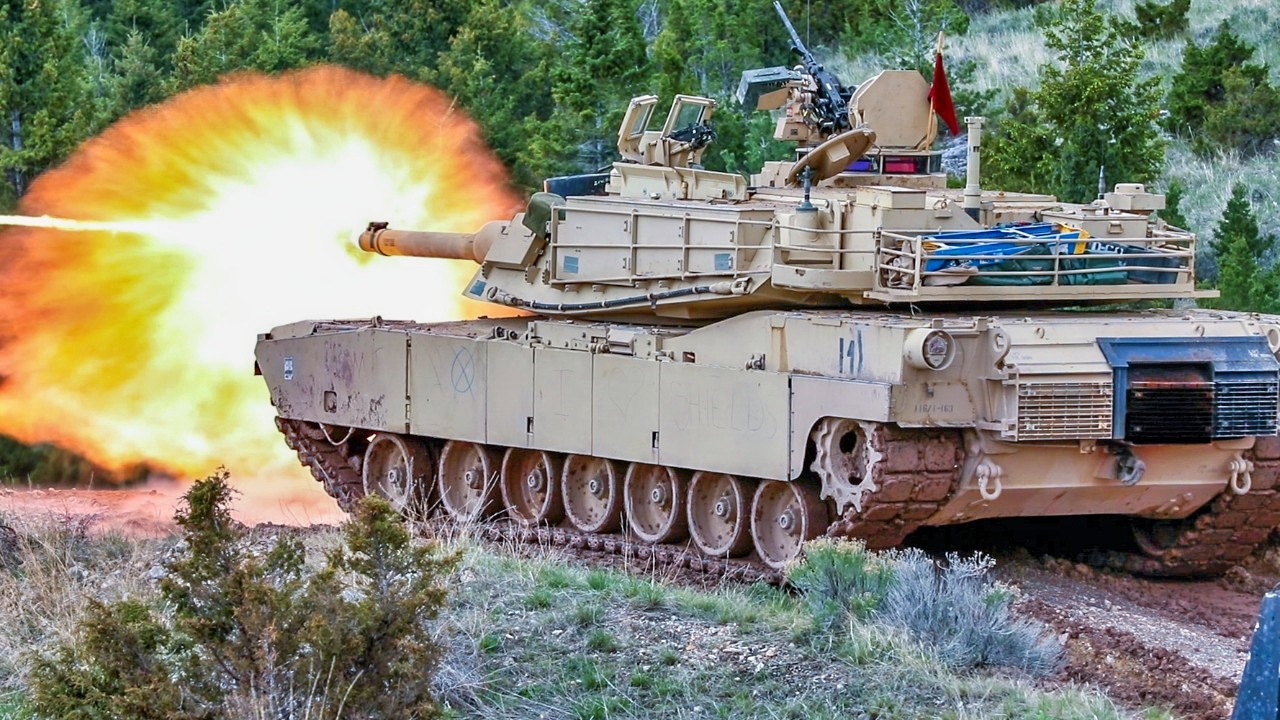
On May 16th 2025, Montana’s 1-163rd Combined Arms Battalion hosted over a dozen British Army Soldiers of the Royal Wessex Yeomanry (RWxY) at the Limestone Hills Training Facility in a joint training event to help their armored crewmembers transition to the Challenger 3 tank which is currently in production. Training involved British armored crewmembers serving in their assigned roles on the M1A2 Abrams alongside our Montana National Guard Soldiers.
So I dutifully set out to get smart on all things FCS. The first thing I noticed was that the estimated cost exceeded $160 billion.
That number did not totally alarm me. This was during the Global War on Terror, and defense budgets were spiking.
It Had an Obvious ‘Ick Factor’
What concerned me right off the bat was its dependence on drones – then called unmanned aerial vehicles (UAVs).
The UAVs were going to play a huge role in the Army FCS. They would be networked and autonomous, capable of flying ahead of armored columns and contributing intelligence, surveillance, and reconnaissance data to the brigade combat team.
I Had Already Thought Of This, But the Technology Was Not There
I was intrigued because I had written a paper for the Army calling for this concept in 2002, too. The problem was that UAVs were not ready to be autonomous and networked.
We could barely keep a few in the air in the early 2000s, and when I discovered UAVs in the late 1990s, they were not yet armed with Hellfire missiles.
The UAVs were critical to the Future Combat System and were expected to grow quickly in effectiveness and dominance.
My Conclusion: FCS Would Never Work
I eventually told my superiors that the FCS would never work until swarming drones could be linked together to deliver the intelligence the FCS needed to function and dominate the enemy.

M1 Abrams Tank. Image Credit: Creative Commons.
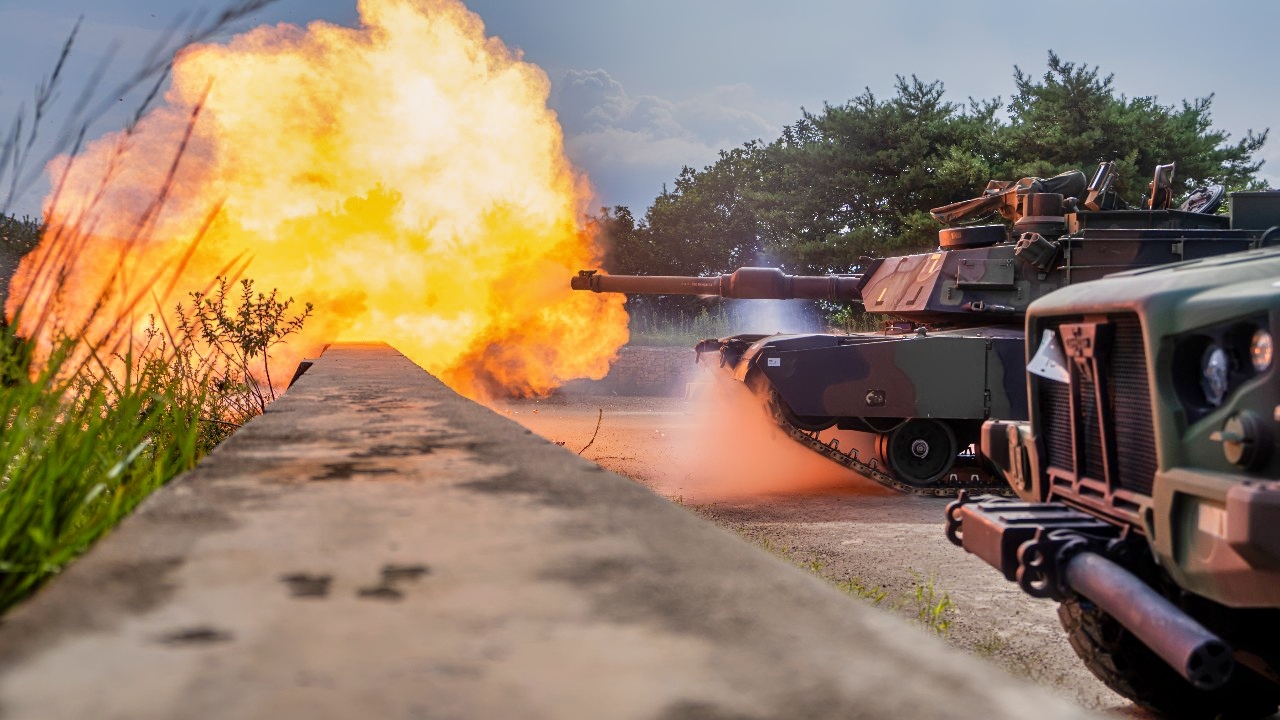
An M1A2 SEP v2 Abrams assigned to Bravo Company, 4th Battalion, 70th Armored Regiment, 1st Armored Brigade Combat Team, 1st Armored Division, fires at a target during a zero range at Rodriguez Live-Fire Complex, South Korea, Aug. 5, 2024. The unit is participating in a deployment readiness exercise in support of Operation Pacific Fortitude, which supports long-standing agreements to the Republic of Korea by deploying forces, drawing and transporting equipment to validate unit readiness and the U.S. commitment to the alliance. (U.S. Army photo by Cpl. David Poleski)
I concluded that the entire program should be canceled to save money for counter-terror and counter-insurgency efforts in South Asia and the Middle East.
What Was the FCS?
The Army Future Combat System was an outgrowth of a huge effort to completely transform the force.
It called for 14 new manned and unmanned systems, held together by a next-generation communications network that did not exist at the time of its conception.
Almost all of the FCS had to be invented, developed, and primed for active duty.
This was going to be a Herculean budget-busting effort, yet the designers were excited and pumped up.
FCS would change the calculus of combat and give the U.S. Army a robust program capable of outclassing all enemies.
If everything had gone correctly, proponents argued, these FCS armored combat teams could have conquered Iraq, deposed Saddam Hussein, and held enough territory to win the war and the peace in rapid fashion.
All New Combat Platforms
FCS was meant to be revolutionary. As the Congressional Research Service reported, “the manned ground vehicle (MGV) component of the program, which was intended to field eight separate tracked combat vehicle variants built on a common chassis that would eventually replace combat vehicles such as the M1 Abrams tank, the M2 Bradley infantry fighting vehicle, and the M109 Paladin self-propelled artillery system.”
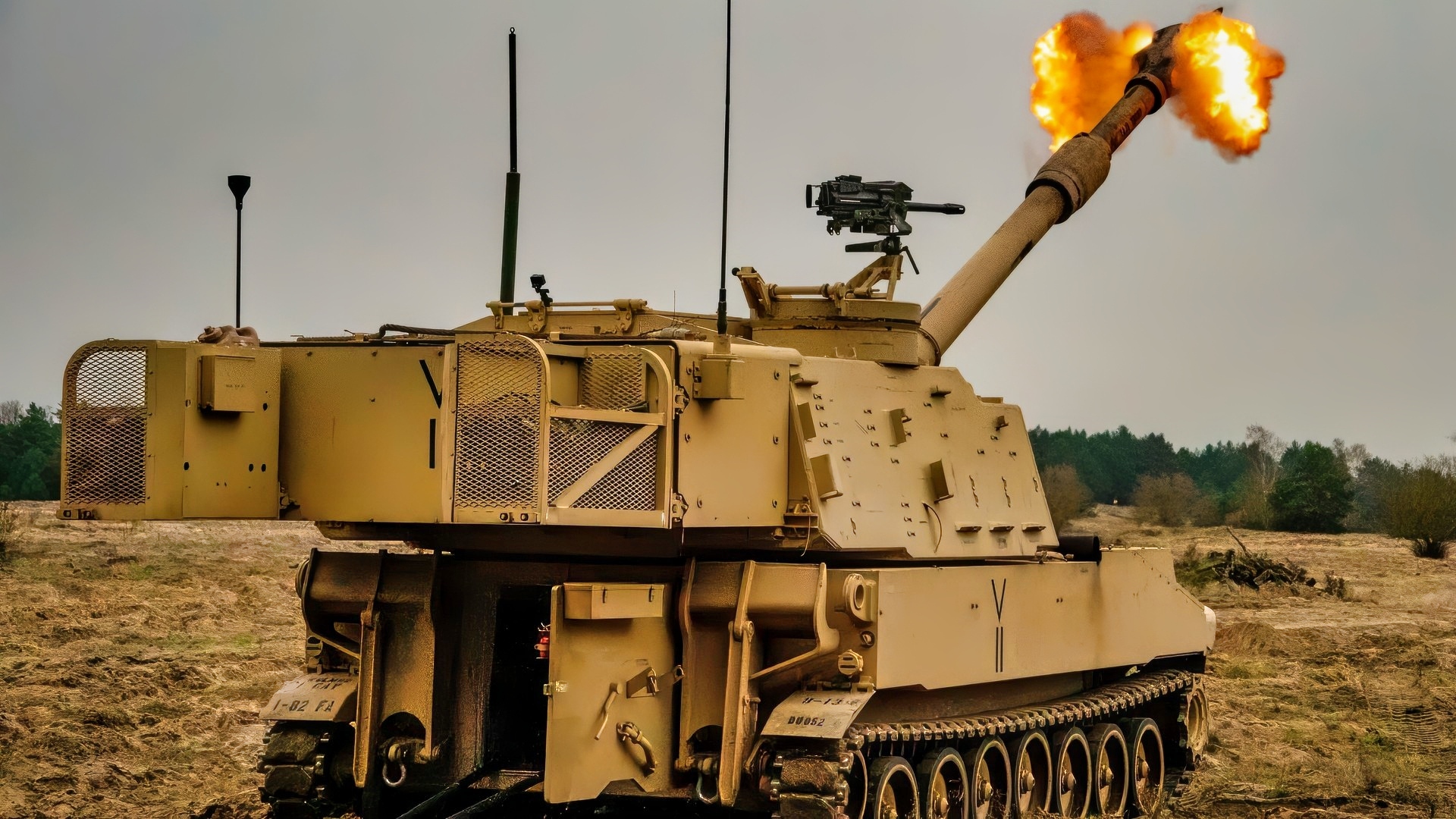
An M109 Paladin, assigned to 1st Battalion, 82nd Field Artillery Regiment, fires a round of high-explosive artillery during Dynamic Front on Forward Operating Site Torun, Poland, Nov. 19, 2024. Dynamic Front takes place from Nov. 4-24 in Finland, Estonia, Germany, Poland, and Romania, and demonstrates NATO’s ability to share fire missions, target information, and operational graphics from the Arctic to the Black Sea. It increases the lethality of the Alliance through long-range fires, builds unit readiness in a complex joint, multi-national environment, and leverages host nation capabilities to increase USAREUR-AF’s operational reach. Dynamic Front includes more than 1,800 U.S. and 3,700 multi-national service members from 28 Allied and partner nations. (U.S. Army photo by Spc. Julian Winston)
I had some experience with all of these platforms while serving in the U.S. Army.
I was a light infantry officer, but I had previously served in Field Artillery on the M109 Paladin – a tracked 155mm howitzer.
This was a prime instrument that delivered death and destruction from long range. I had also been inside the Abrams and the Bradley and seen them in action on training grounds.
This Was Going to Be Anarchy
I could not believe the FCS concept developers wanted to replace all of these weapons systems at once. It was simply unachievable.
Simply testing and evaluating the new platforms would have been deadly expensive and time-consuming.
The Army wanted to field the system by 2017 and to have all brigade combat teams equipped with the new ground combat vehicles by 2025.
This was mind-boggling. The FCS would completely change the way soldiers would fight. New training systems would have to be envisioned.
Prime contractors would need to be identified. Cost estimates would need to be made and requests for proposals sent out. Just the planning stages would take years.
Defense Secretary Robert Gates Knew Better, Thankfully
In 2009, the new Secretary of Defense, Robert Gates, described the FCS as an “ugly baby.” Gates concluded what I surmised.
Replacing all the existing armored platforms would be a mistake. He canceled the effort to replace them with the ground-vehicle concept and figured he could let FCS die on the vine during his tenure.
The Genesis of FCS
The concept for FCS dated back to 1999, when the Chief of Staff of the Army, General Eric Shinseki, had an ambitious idea.
It was time to transform the force designed for the Cold War and for tank-on-tank battles during Operation Desert Storm. Shinseki correctly predicted that armored combat would shift from large engagements to smaller, irregular wars over the next decade.
The chief was correct about this prediction, but executing FCS would have been disastrous.
“The backbone of the FCS was the System of Systems Common Operating Environment (SOSCOE), an advanced communication and sensor network designed to provide soldiers with near real-time situational awareness and battlefield intelligence,” according to the RAND Corporation.
This Was Not Going to Be Easy
SOSCOE was just too ambitious and optimistic.
Those who supported the FCS reckoned that the technology would be developed to bring SOSCOE to life someday, but even its most steadfast backers admitted it would take ample time, money, and resources to make it a reality.
Developing all of the new vehicles was also prohibitive.
Traditionalists like me preferred to keep the Abrams, Bradley, and Paladin platforms and then integrate UAVs as they became available.
As it turned out, this is mostly what the Army wants to do now.
The FCS was a cautionary tale in defense acquisition. I realized it was going to be a bridge too far, and it was canceled in 2009.
Gates was correct in making this decision, and we can look back at this as an ambitious program that was better left on the drawing board.
FCS is still studied in defense acquisition circles as an example of when “genius” concepts need to be ended before disaster strikes. I won’t forget my experience with the FCS, and I’m glad I foresaw that it wouldn’t be possible.
About the Author: Brent M. Eastwood, PhD
Author of now over 3,500 articles on defense issues, Brent M. Eastwood, PhD, is the author of Don’t Turn Your Back On the World: A Conservative Foreign Policy and Humans, Machines, and Data: Future Trends in Warfare, plus two other books. Brent was the founder and CEO of a tech firm that predicted world events using artificial intelligence. He served as a legislative fellow for US Senator Tim Scott and advised the senator on defense and foreign policy issues. He has taught at American University, George Washington University, and George Mason University. Brent is a former US Army Infantry officer. He can be followed on X @BMEastwood.


